
Ultimate Guide to Parental Leave Planning
Ultimate Guide to Parental Leave Planning
Planning for parental leave can feel overwhelming, but with the right approach, you can navigate legal rights, financial preparations, and work transitions smoothly. Here's what you need to know:
- Legal Protections: The Family and Medical Leave Act (FMLA) offers 12 weeks of unpaid, job-protected leave for eligible employees. Some states provide paid family leave programs, with wage replacement rates ranging from 60% to 100%. Check your state’s policies and employer benefits for additional support.
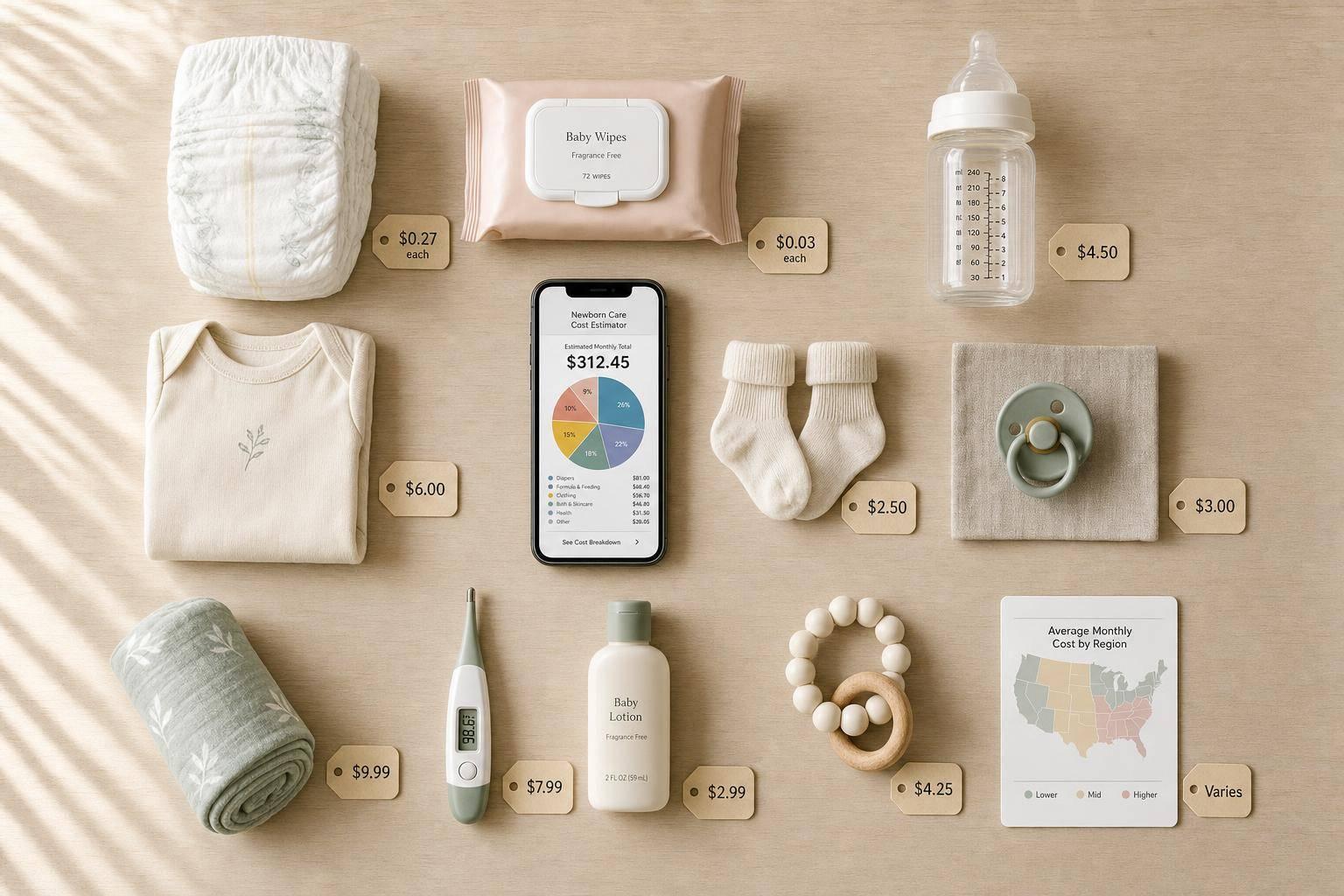
- Budgeting: Estimate costs like lost income, medical expenses, and baby supplies. Start saving early and explore options like short-term disability benefits or employer "top-off" programs to supplement income during leave.
- Work Transition: Notify your employer 6 months in advance, create a coverage plan for your responsibilities, and reduce your workload as your due date approaches. Open communication ensures a smoother handoff.
- Postpartum and Newborn Care: Build a support network, prepare your home with essentials, and consider professional caregivers like postpartum doulas or lactation consultants. Early planning can reduce stress during recovery.
- Returning to Work: Ease back with a phased return, secure childcare early, and set boundaries to balance work and parenting. Flexible schedules and workplace support can make the transition easier.
Maternity & Paternity Leave: How to Plan Your Income During Time Off
sbb-itb-9ce2258
Know Your Legal Rights and Protections
State Paid Family Leave Programs 2026: Duration, Wage Replacement & Benefits Comparison
Understanding your legal rights is a critical step in planning for parental leave. In the United States, federal laws provide basic job protection, while state laws and employer policies determine whether paid leave is part of the equation.
FMLA: Who Qualifies and What It Covers
The Family and Medical Leave Act (FMLA) sets the federal standard for parental leave, offering up to 12 weeks of unpaid, job-protected leave for events like childbirth, adoption, or foster care placement. During this time, your employer must maintain your health insurance and ensure you return to a similar position when your leave ends.
That said, not everyone qualifies. About 56% of U.S. employees are eligible for FMLA, but this drops to around 38% for low-wage workers. To qualify, you need to meet these criteria:
- Worked for your employer for at least 12 months (nonconsecutive periods count).
- Logged at least 1,250 hours in the past year.
- Work at a location with at least 50 employees within a 75-mile radius.
"The FMLA entitles eligible employees of covered employers to take unpaid, job-protected leave for qualifying family and medical reasons and requires continuation of their group health benefits under the same terms and conditions as if the employee had not taken leave."
If your leave is foreseeable, notify your employer at least 30 days in advance. Also, confirm how your employer calculates the 12-month eligibility period with HR. Starting January 2026, FMLA will include travel time for medical appointments tied to your qualifying condition, as long as there are no unrelated stops.
Now, let’s take a closer look at state programs that provide paid leave to complement FMLA.
State Laws for Parental Leave
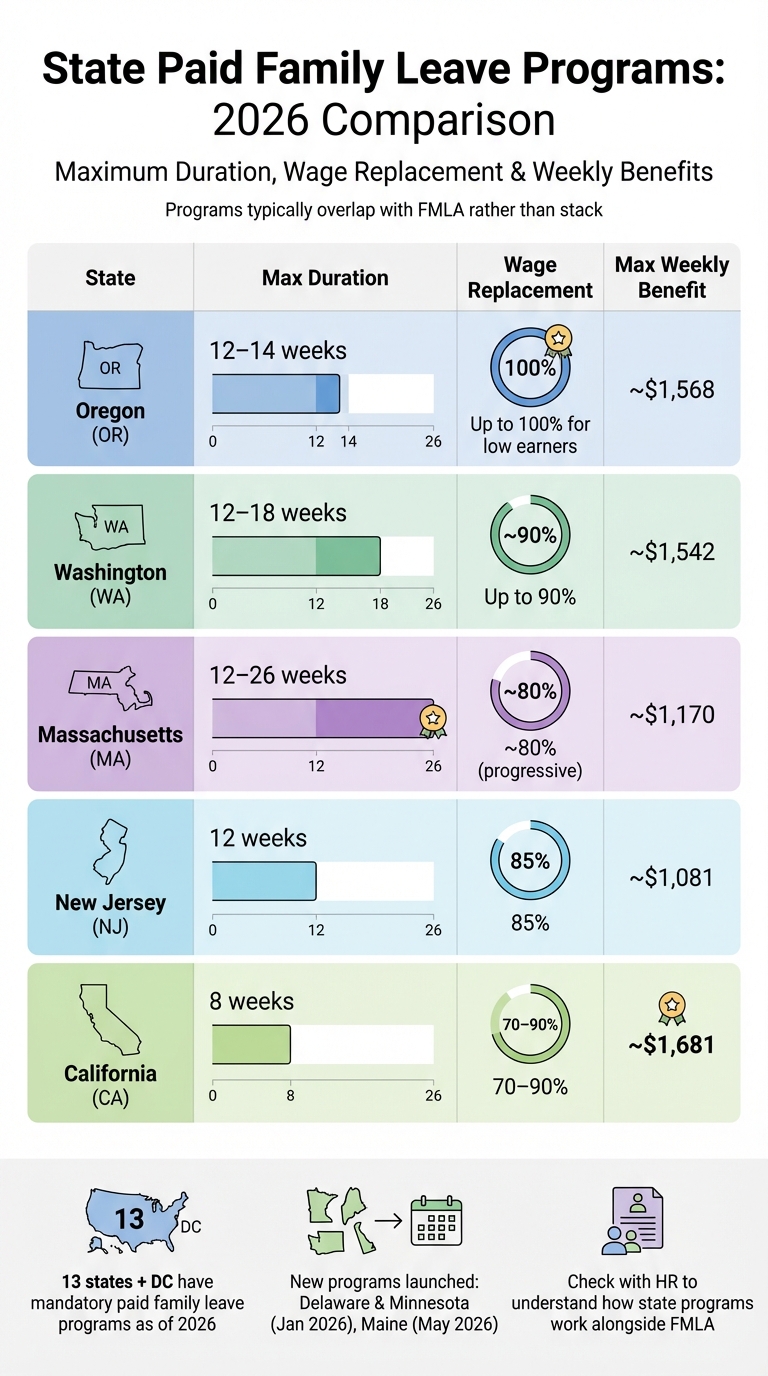
FMLA secures your job, but it doesn’t provide income. That’s where state Paid Family Leave (PFL) programs can help. As of 2026, 13 states and the District of Columbia have mandatory paid family leave programs. For instance, Delaware and Minnesota launched their programs on January 1, 2026, and Maine is set to follow in May 2026.
These state programs typically offer wage replacement ranging from 60% to 90% and often apply to employers of all sizes. Eligibility requirements also vary; for example, New York requires 26 weeks of employment for full-time workers, while Oregon requires just 90 days for job protection.
| State | Max Duration | Wage Replacement | Max Weekly Benefit |
|---|---|---|---|
| Oregon | 12–14 weeks | Up to 100% for low earners | ~$1,568 |
| Washington | 12–18 weeks | Up to 90% | ~$1,542 |
| Massachusetts | 12–26 weeks | ~80% (progressive) | ~$1,170 |
| New Jersey | 12 weeks | 85% | ~$1,081 |
| California | 8 weeks | 70–90% | ~$1,681 |
It’s important to note that in most states, FMLA and state PFL overlap rather than stack. For example, if you take 12 weeks under FMLA, those same 12 weeks count toward your state leave. However, Wisconsin allows some flexibility, letting you combine six weeks of state leave with 12 weeks of FMLA for up to 18 weeks total. Always check with HR to understand how your state’s program works alongside FMLA.
What Your Employer Offers
Beyond federal and state laws, your employer might offer additional benefits. Start by reviewing your employee handbook for details on paid parental leave, short-term disability, and how these integrate with FMLA and state programs. Some employers provide "top-off" benefits, which fill the gap between state benefits and your regular pay. For example, in Massachusetts, employees can use their PTO to supplement state benefits and get closer to their full salary.
Roughly 27% of private-sector workers have access to employer-provided paid family leave. If you’re among them, confirm whether PTO must be used concurrently with FMLA or if it can extend your leave period. Also, ask about phased return-to-work options, which allow you to ease back into your role with reduced hours.
To avoid delays, gather all necessary medical certifications early. Benefits often require documentation from a healthcare provider, such as DOL Form WH-380, to verify the birth or medical necessity. Submitting paperwork promptly can prevent issues with your leave approval.
Build Your Leave Timeline and Coverage Plan
After understanding your legal rights, the next step is to figure out how long you'll be away and ensure your work is handled smoothly in your absence. This involves open communication with your employer, careful budgeting, and a well-thought-out transition plan.
Decide How Long to Take Off
The length of your leave will depend on your legal entitlements, financial situation, and personal preferences. Under FMLA, you can take up to 12 weeks of unpaid, job-protected leave. If your employer offers paid leave, you may be able to extend it by combining it with accrued vacation or sick days.
To figure out what’s financially feasible, calculate the cost of your leave. Multiply your monthly take-home pay by the number of months you plan to be off, then add anticipated medical expenses. Don’t forget to include recurring costs like diapers and baby supplies. Setting up a savings account early in your pregnancy and automating contributions can help you build a financial cushion over time.
Interestingly, companies offering 12 weeks of paid maternity leave report 70% lower employee turnover. If you’re debating whether to take the full time, keep in mind that recovery and bonding time benefit both you and your employer. You might also explore a phased return to work, such as reduced hours during your first month back, to ease the transition.
Once you’ve decided on your leave duration, it’s time to coordinate with your employer for a smooth handoff.
Work with Your Employer on Transition Plans
Notify your employer about your leave approximately six months in advance. This gives your team time to adjust, train replacements, or even hire temporary help. Create a list of your responsibilities, broken down by priority, deadlines, and what must be handled during your absence.
A RACI chart can help clarify who is responsible for each task while you’re away. Train your backup in stages: start by demonstrating tasks, then supervise as they complete them, and finally, let them work independently. Document detailed workflows with screen captures, and prepare a "SNAFU" guide covering three to five common issues - like website outages or vendor problems.
"When things get uncertain, you can turn to a set of first principles for guidance and direction."
- Elaine, Manager, Atomic Object
To avoid surprises, reduce your workload significantly about three weeks before your due date, allowing for the possibility of early labor. You might also run a trial week where your backup takes over fully while you’re available to troubleshoot any issues.
While planning your work transition, don’t forget to finalize your financial preparations.
Budget for Your Time Away
Start saving as early as possible. Review your medical insurance to understand costs related to pediatric care, feeding support, and postpartum services. Keep in mind that daycare providers often require a deposit and the first month’s tuition upfront, even if you don’t need childcare immediately.
If you have high-interest debt, consolidating it into a personal loan could lower your monthly payments and reduce financial stress during unpaid leave. Check if you’re eligible for short-term disability benefits, which can cover a portion of your income during recovery. For remote workers, confirm which state’s regulations apply to determine your leave entitlements, as they may depend on your employer’s location.
About two-thirds of the way through your leave, reconnect with your manager to confirm your return date and discuss any flexibility you might need. This ensures you stay informed without constant check-ins during your time away.
Prepare for Newborn and Postpartum Care
Getting ready for postpartum recovery and newborn care can make the transition into the fourth trimester smoother. This period demands thoughtful coordination for both the baby's needs and the mother's recovery.
Build Your Support Network
Your support system should include both personal connections and professional resources. Identify a group of trusted family and friends who can step in during those exhausting moments. Assign them specific tasks like walking the dog, folding laundry, or picking up groceries - clear instructions are more helpful than vague offers to assist. Schedule daily check-ins with your partner to coordinate responsibilities, such as night shifts and feeding plans. This practice helps avoid misunderstandings and keeps everyone on the same page during those early, chaotic weeks.
Set boundaries for visitors right away. Invite only those who can genuinely help, as Diane Ortega, DNP, CNM, advises:
"The only ones allowed [as visitors] should be ones who are actually there to help, not be entertained."
Keeping visitors to a minimum in the first few days fosters bonding and recovery. It’s also worth noting that 30% of maternal deaths occur after the six-week postpartum period.
Before your baby arrives, review your daily routine to pinpoint tasks that might need extra support when sleep-deprived. Use pregnancy as a time to research lactation consultants, postpartum doulas, and pelvic floor therapists so you’re prepared to reach out if challenges arise. Also, check whether your employer offers childcare benefits like backup care or nanny placement services.
Get Help from Expert Caregivers
Professional caregivers can ease the burden during the postpartum phase. Postpartum doulas, for example, provide wide-ranging support, including help with maternal recovery, breastfeeding, sibling adjustment, and emotional well-being. They can also take on practical tasks like meal prep, bottle sterilization, and light housekeeping, giving you more time to rest and bond with your baby.
For families requiring more intensive care, Newborn Care Specialists vs. baby nurses focus on infant sleep patterns, feeding schedules, and overall safety. Lactation consultants are invaluable for navigating breastfeeding, pumping, and feeding goals, which are essential for both the baby's nutrition and the mother's recovery. If your baby is premature or medically fragile, NICU doulas can provide specialized guidance to help with feeding and transitioning home from the hospital.
Platforms like Nestling connect families with vetted professionals, including postpartum doulas, lactation consultants, and infant care specialists. These services include thorough background checks, certification verification, and the ability to book care on-demand or in advance, with options for daytime, overnight, or live-in support. Payments are secure, and backup care is available.
Consider taking preparatory classes like "Life with Baby" or "Infant CPR & Safety" before your due date to learn essential skills such as swaddling, bathing, and responding to emergencies. Joining local or online support groups can also provide practical advice and emotional encouragement from other parents in similar stages. Setting up mental health support during pregnancy can significantly lower the risk of postpartum anxiety and depression, which affect many mothers yet often go untreated.
Get Your Home Ready
A well-prepared home can make recovery and daily life much easier. Set up a postpartum recovery station - this could be a dedicated corner or a portable cart stocked with essentials like peri bottles, cooling pads, maxi pads, witch hazel, nipple balm, and high-protein snacks. A rolling cart keeps these supplies within easy reach wherever you are.
Create multiple feeding stations with all the necessary supplies nearby. Adding a wedge or U-shaped pillow can help reduce strain on your core muscles during feedings and rest. To improve sleep, consider blackout curtains, which can enhance rest by up to 30%.
For your baby's sleep setup, follow AAP guidelines: use a firm, flat mattress in a crib or bassinet, and avoid soft items like pillows, blankets, bumpers, or toys. Wash all new baby clothes, swaddles, and bedding in hypoallergenic, fragrance-free detergent before your due date to prevent irritation. Don’t forget to install the rear-facing car seat base ahead of time, ensuring it moves less than one inch when secured.
Before the baby arrives, deep clean your home using non-toxic, baby-safe products. Focus on eating iron-rich foods to combat post-delivery anemia, which affects a large percentage of mothers worldwide. Prepare meals ahead by doubling recipes during your third trimester and freezing extras for later. Soups, casseroles, and other easily reheated dishes are ideal.
By week 32 of pregnancy, shortlist pediatricians - only 20% of parents schedule a prenatal visit with one before the baby arrives. Keep emergency contact info, including your pediatrician, lactation consultant, and postpartum doula, in a visible spot. Despite all the preparation, 88% of mothers report feeling unprepared for the physical and emotional demands of recovery.
A combination of personal preparation and professional support can help ease the challenges of this life-changing time.
Plan Your Return to Work
Heading back to work after parental leave takes some thoughtful preparation. Balancing your job with your new responsibilities as a parent can feel overwhelming, but a well-laid plan can make the transition smoother for you and your family.
Ease Back into Work Gradually
Jumping straight into full-time work can be jarring, so consider easing in with a phased return. A quick check-in with your manager 1–2 weeks before your return can help you get up to speed on major updates and arrange re-onboarding meetings. This conversation might also open the door to flexible working options, like starting with fewer hours or incorporating remote work.
Some companies have already adopted policies to help with this transition. For example, in September 2022, the law firm Duane Morris introduced a Ramp Down/Ramp Up Parental Leave Policy. This policy gave attorneys a three-month adjustment period with reduced billable-hour expectations - 30% less in the first month, 20% in the second, and 10% in the third - while maintaining full base pay. Attorney Elinor Murarova successfully used this program to re-enter her practice while managing client expectations.
To prepare, try a "dry run" about a week before your return. This can help you identify and resolve any timing or logistical hiccups. Streamline your mornings by prepping outfits and bags the night before, setting up your coffee maker, and stocking your freezer with 10–15 ready-to-go meals to ease your first month back. If you're breastfeeding, plan ahead by securing a private space for pumping and setting fixed pump breaks. Equip yourself with a professional tote that includes essentials like a double-electric pump, insulation, and sanitizing wipes for convenience.
Once you're back at work, the next challenge is finding a balance between your job and parenting.
Balance Work and Parenting
Successfully juggling work and parenthood means being intentional about managing your time and setting clear boundaries. Time-blocking can help you focus on important tasks during the day, while a firm "hard stop" at the end of your workday ensures you can shift gears and be fully present with your family. Brief update sessions with colleagues can also help you catch up on key decisions and stay in the loop.
At home, open communication with your partner about childcare and morning routines is crucial. Start looking for childcare at least two months in advance, as availability can be limited, and make sure to have a backup plan for emergencies. Don't forget to carve out time for self-care - whether that's hitting the gym, scheduling therapy sessions, or simply enjoying some quiet moments. These small acts can help you manage the stress of this new chapter.
These strategies build on the financial and logistical steps you've already taken, helping you maintain balance in the long run.
Continue Getting Support After Leave
Adjusting to work and parenthood doesn't end after the first few weeks back. Ongoing support is key as you settle into this new phase. As Elinor Murarova from Duane Morris points out:
"It is important for organizations to recognize that employees require support when children join their lives, not only during leave itself but also when returning to work."
Services like Nestling can help you adapt as your needs evolve. Whether you need daytime care while at work, overnight help to catch up on sleep, or lactation consulting to maintain breastfeeding, their vetted caregivers offer flexible options to fit your schedule.
You can also find valuable support by joining or starting parental affinity groups at your workplace. These groups provide a space to share practical advice and connect with colleagues who understand the unique challenges of balancing work and parenting. Emotional encouragement from others in the same boat can make all the difference.
Conclusion
Preparing for parental leave requires thoughtful planning across legal, financial, and personal aspects. With a solid plan in place, the process becomes more manageable. Start by understanding your rights - whether it’s the 12 weeks of unpaid, job-protected leave under the FMLA or your state’s specific paid family leave programs. At least 3–4 months before your due date, create a timeline and budget while documenting your daily tasks and outlining a coverage plan.
Early communication is essential for a smooth transition. Notify your manager during your first trimester, aim to have your coverage plan ready by 28 weeks, and finalize everything at least four weeks before your due date. This timeline accounts for the unpredictability of birth, with only 5% of babies arriving on their exact due date and nearly 11% born before 37 weeks.
Support doesn’t end when your leave begins. Research shows that paid parental leave reduces turnover by 70% and improves the likelihood of a successful return to work. Whether you need help with lactation support, overnight care, or adjusting to your new routine, services like Nestling connect you with trusted caregivers tailored to your needs.
"A well-thought-out transition plan not only ensures a smooth departure but also sets you up for a stress-free return."
FAQs
How do I find out if I qualify for FMLA?
To find out if you're eligible for FMLA, you'll need to meet the criteria outlined by the U.S. Department of Labor. Here's what to check:
- Employer type: You must work for a covered employer, such as a private company with 50 or more employees or a public agency.
- Work history: You need at least 12 months of employment and 1,250 hours worked in the past year.
- Work location: Your workplace must have 50 or more employees within a 75-mile radius.
By going through these points, you can determine if you qualify for FMLA.
Will my state paid leave run at the same time as FMLA?
In many situations, state-paid leave is used at the same time as FMLA if the leave meets the requirements for both programs. However, certain states have laws that provide separate or longer leave periods beyond what FMLA offers. Be sure to review your state’s specific rules to understand how these programs work together in your case.
What paperwork should I gather to avoid leave delays?
To avoid any hiccups with your parental leave, it’s smart to prepare your documents ahead of time. Make sure you have the essentials, like proof of employment, a medical certification confirming the birth or adoption, and any state-specific forms that might be required. Double-check your employer’s leave policy to ensure you’ve covered everything. Also, don’t overlook tasks like adding your baby to your health insurance plan - some providers require this to be done within 30 days of birth. Staying organized can save you from unnecessary stress.






 Sign up with Google
 Sign up with Facebook