
When to Call the Doctor for Your Newborn

When to Call the Doctor for Your Newborn
When caring for a newborn, knowing when to seek medical help can be overwhelming. Here's a quick guide:
-
Call 911 or Visit the ER:
- Breathing issues (stopped breathing, gasping, grunting, ribs pulling in).
- Skin turning blue, gray, pale, or blotchy.
- Rectal fever of 100.4°F (38°C) or higher in babies under 3 months.
- Seizures, limpness, or trouble waking up.
- Persistent rash that doesn’t fade with the "glass test."
-
Call Pediatrician Same Day:
- Skipped multiple feedings or fewer than 6 wet diapers daily.
- Yellowing skin worsening (jaundice) or spreading rash.
- Umbilical cord redness or foul-smelling discharge.
- Circumcision site bleeding or oozing pus.
-
Bring Up During Routine Visits:
- Mild congestion or cough.
- Frequent spitting up (not vomiting).
- Concerns about growth or feeding patterns.
Trust your instincts - if something feels off, don’t hesitate to contact your pediatrician. Always have your baby’s details ready (age, weight, symptoms, temperature readings) when calling or visiting.
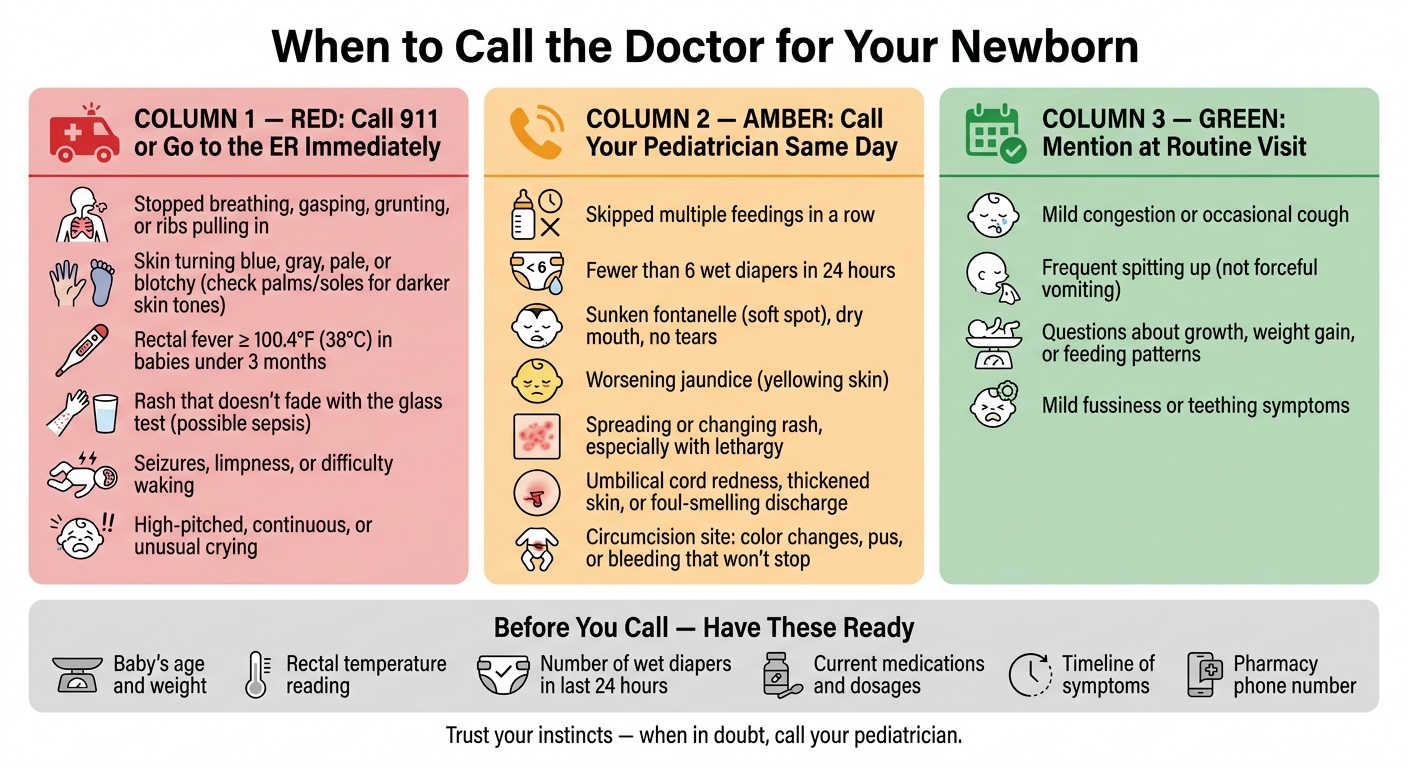
When to Call the Doctor for Your Newborn: Emergency vs. Same-Day vs. Routine
Is This Normal? Newborn Behaviors and When to Contact Your Pediatrician
sbb-itb-9ce2258
Emergency Situations: When to Call 911 or Go to the ER
Some symptoms in babies require immediate medical attention. If you notice any of the following signs, don't wait for a doctor's appointment - call 911 or head to the nearest emergency room.
Breathing Problems and Skin Color Changes
Breathing issues in babies are always serious. If your baby stops breathing, breathes very quickly, pants, or makes grunting noises, call 911 right away. Another red flag is if their stomach pulls in under the ribs while breathing, which points to severe respiratory distress.
Skin color changes can also signal trouble. Look out for blue, pale, gray, or blotchy skin, especially around the lips, as this may mean your baby isn't getting enough oxygen. For babies with darker skin tones, check the palms of their hands or the soles of their feet for unusual color changes. If your baby develops a persistent rash that doesn't fade when you press a clear glass against it (the "glass test"), this could be a sign of sepsis, and you should call 911 immediately.
These signs demand quick action, as delays can worsen the situation. Temperature changes are another critical warning to watch for.
Fever and Dangerous Temperature Changes
Temperature shifts in babies can indicate serious problems. A rectal temperature of 100.4°F (38°C) or higher in a baby under 3 months old is a medical emergency that requires immediate evaluation. For newborns, rectal thermometers provide the most accurate readings - methods like ear, forehead, or armpit thermometers aren't reliable enough.
On the other hand, an unusually low temperature, such as cold skin or shivering, should also raise alarms. Both high and low temperatures in young babies need urgent medical attention.
Seizures, Limpness, or Inconsolable Crying
Neurological symptoms should never be ignored. If your baby experiences a seizure, becomes limp, has trouble moving, or is difficult to wake, call 911 immediately. Even a brief seizure warrants an emergency evaluation.
While crying is normal for newborns receiving newborn care, a high-pitched, continuous cry or one that sounds drastically different from their usual cries could indicate a serious issue. As the NHS emphasizes:
"You know better than anyone else what your child is usually like, so you'll know when something is seriously wrong."
The table below outlines the most critical emergency signs to keep in mind:
| Symptom Category | Emergency Signs - Call 911 or Go to the ER |
|---|---|
| Breathing | Stopped breathing, gasping, grunting, or ribs pulling in |
| Skin Color | Blue, gray, or very pale skin or lips |
| Rash | Rash that doesn't fade when pressed with a glass |
| Temperature | Rectal fever ≥ 100.4°F (38°C) in babies under 3 months |
| Responsiveness | Difficulty waking, limpness, or seizures |
| Crying | High-pitched, continuous, or unusual crying |
Symptoms That Need a Same-Day Call to Your Pediatrician
Some situations with your newborn require prompt attention, even if they don't seem like emergencies. Delaying a call to your pediatrician can allow certain issues to escalate, especially with newborns, who can experience rapid changes in their condition. Let’s take a closer look at feeding problems, dehydration, and other signs that need same-day attention.
Feeding Problems and Signs of Dehydration
If your baby skips several feedings in a row, it’s time to call your pediatrician. A newborn typically has 6–8 wet diapers daily, so fewer than six is a warning sign. Other dehydration indicators include a sunken soft spot (fontanelle), dry mouth, or no tears when crying.
Dehydration can worsen quickly in newborns. Even something as common as diarrhea can become serious if not addressed. Continue breastfeeding or formula feeding as usual, but offer smaller, more frequent amounts. Avoid diluting formula or giving juices or sodas, as these can make diarrhea worse.
Jaundice, Rashes, and Skin Changes
Skin changes in newborns are another area to monitor. Mild jaundice is common, but if the yellowing becomes more pronounced, contact your pediatrician immediately. Similarly, new rashes that spread or change in texture need evaluation. If a rash is paired with lethargy or feeding refusal, don’t wait to make the call. Checking your baby’s skin in natural light can help you notice subtle changes early.
Umbilical Cord, Circumcision, or Genital Concerns
The umbilical cord stump should dry up and fall off within 1–3 weeks. During this time, watch for signs of infection like redness at the base, hard or thickened skin, or foul-smelling yellow or green discharge. Avoid pulling on the stump or any scabs, even if they seem loose. These signs could point to omphalitis, a rare but serious cord infection that needs immediate attention.
For circumcised boys, call your doctor if the circumcision site changes color, oozes pus, or bleeds persistently. While a few drops of blood as the stump separates are normal, bleeding that doesn’t stop with gentle pressure is not. Staying vigilant about any unusual changes, no matter how minor they seem, is essential for safeguarding your baby’s health.
Here’s a quick summary of when to call your pediatrician the same day:
| Concern | Same-Day Call Signs |
|---|---|
| Feeding & Hydration | Refusing multiple feedings, fewer than 6 wet diapers daily, sunken fontanelle, dry mouth |
| Jaundice & Skin | Worsening yellowing, spreading rash, or skin changes with lethargy or feeding refusal |
| Umbilical Cord | Redness, thickened skin, foul-smelling discharge |
| Circumcision/Genitals | Color changes, pus, or bleeding that won’t stop |
Symptoms to Watch and Bring Up at Routine Visits
Some symptoms don't require immediate attention but are worth discussing during regular pediatric visits to ensure your baby’s health stays on track.
Mild Fevers and Cold Symptoms
A bit of congestion, occasional fussiness, or a mild cough can usually wait until your next scheduled visit. At home, tools like a humidifier and saline nasal drops can help ease your baby’s discomfort. While teething is often blamed for fevers, it typically causes only mild symptoms. A true fever - defined as a rectal temperature of 100.4°F (38°C) or higher - should prompt an immediate call to your doctor. Pay attention to other signs, like spitting up versus vomiting, so you know what to mention at your next visit.
Spitting Up vs. Vomiting: What Is Normal
Spitting up after meals is pretty common for newborns and usually nothing to worry about. The difference between spitting up and vomiting often comes down to how often it happens, how forceful it is, and whether other symptoms are present. If vomiting becomes frequent or your baby starts refusing to eat, it’s time to call the pediatrician. Blood in vomit or stool is another red flag that requires immediate attention. Simple steps like burping your baby during and after feedings can help with regular digestive issues. If your baby is gaining weight, staying hydrated, and feeding well despite spitting up, keep track of these details to share at your next check-up. Tracking growth alongside feeding patterns can also provide helpful insights.
Growth, Weight, and Feeding Questions
Growth and weight are frequent topics during pediatric visits. For newborns, regaining their birth weight within 10–14 days is a good benchmark. If your baby isn’t gaining at least 1 ounce per day after that, it’s worth checking in with your pediatrician.
"Growth is a key sign of overall health, so when a child's growth changes, we want to notice it early." - Erica Braswell, MD
Keeping a log of feeding times, formula amounts, and diaper changes can make these discussions more productive. If you’re struggling with breastfeeding - like latch issues or your baby falling asleep during feedings - a lactation consultant could be a game-changer. Services like Nestling connect families with experienced lactation consultants who can provide hands-on help, often without the wait for a clinic appointment.
How to Contact Your Pediatrician Effectively
When it comes to your baby's health, clear communication with your pediatrician can make all the difference. Knowing when to reach out is important, but how you communicate is just as crucial for getting the right guidance quickly.
What to Prepare Before You Call
Before picking up the phone, make sure you have a few key details ready. These include your baby's age, weight, rectal temperature, any current medications with dosages, and your pharmacy's phone number. It’s also a good idea to keep a pen and paper handy to jot down any instructions or advice. A little preparation can go a long way in making the conversation smoother and more efficient.
How to Describe Symptoms Clearly
When explaining symptoms, aim to be as specific as possible. For example, instead of saying your baby seems "fussy", describe the type of cry - does it sound unusual, high-pitched, or is your baby inconsolable? Pay attention to other details like changes in skin color (pale, blue, or yellow), breathing sounds (grunting or whistling), or activity levels (if your baby seems limp or unusually difficult to wake).
Providing measurable details can also help. Mention things like the number of wet diapers in the last 24 hours, whether your baby has missed any feedings, and how long the symptoms have been present. These specifics give your pediatrician a clearer picture of what’s going on.
What to Bring to an Appointment or ER Visit
If your pediatrician advises an in-person visit or a trip to the ER, bring all the essential information with you. This includes immunization records, a list of current medications with dosages, and a written timeline of symptoms. Add recent temperature readings and note how you measured them. Keeping everything organized ensures the medical team can quickly assess your baby's condition and provide the right care without delays.
Conclusion: Trust Your Instincts and Ask for Help
Caring for a newborn often requires quick decisions, and trusting your instincts plays a big role. If something feels off with your baby, don’t hesitate to act - prompt action can make all the difference. Even if there are no clear signs, reaching out to your pediatrician is always a good idea. Make sure you’re familiar with your pediatrician’s after-hours procedures ahead of time. This preparation can help reduce stress when those late-night concerns arise.
In addition to your pediatrician, having a reliable support system is invaluable. Expert guidance can make navigating newborn care much less overwhelming. Services like Nestling connect families with trusted postpartum doulas, lactation consultants, and infant care specialists. These professionals can assist with everything from sleep routines and feeding to emotional recovery and light household tasks. With their support, you’ll have the confidence and resources to handle the challenges of newborn care without feeling alone.
FAQs
What counts as vomiting vs. normal spit-up?
Vomiting involves the forceful expulsion of stomach contents, often in larger quantities and with a strong projection out of the mouth. In contrast, spit-up is a gentler, more passive release of stomach contents, usually occurring alongside a burp. The main distinction lies in the intensity and volume of what is expelled.
What should I do if my newborn won’t stop crying?
Newborns express themselves through crying - it’s their primary way to communicate. However, if the crying feels excessive, it might indicate something more. Start by addressing common needs: check if your baby is hungry, needs a diaper change, or is feeling uncomfortable.
If the crying persists despite your efforts or is accompanied by other worrisome signs, it’s important to reach out to your pediatrician. Trust your instincts, and don’t hesitate to seek medical advice if you’re concerned about your baby’s well-being.
How do I accurately take my newborn’s rectal temperature?
To accurately measure your newborn’s rectal temperature:
- Carefully spread your baby’s buttocks to expose the rectum.
- Gently insert a lubricated thermometer about ½ inch for infants under 6 months, or up to 1 inch for older babies. If you encounter resistance, stop immediately.
- Keep the thermometer steady until it finishes reading, then remove it and clean thoroughly.
This approach provides the most reliable temperature reading.









 Sign up with Google
 Sign up with Facebook