
Breastfeeding Diet: What to Eat and Avoid

Breastfeeding Diet: What to Eat and Avoid
Breastfeeding requires extra calories and nutrients to support milk production and your baby’s development. Here's what you need to know:
- Calories: Aim for 2,000–2,800 daily (330–500 more than pre-pregnancy).
- Hydration: Drink about 16 cups (128 oz) of fluids daily.
- Key Nutrients: Focus on iodine (290 mcg), choline (550 mg), calcium (1,300 mg), and omega-3s (2 servings of fatty fish/week).
- Foods to Include: Lean proteins, whole grains, fruits, vegetables, and healthy fats like avocados and nuts.
- Foods to Limit: High-mercury fish, excessive caffeine (under 300 mg/day), and alcohol (if consumed, wait 2–3 hours per drink before breastfeeding).
To ensure a balanced diet, eat a variety of nutrient-rich foods and avoid restrictive calorie cutting. Adjust based on your baby’s reactions and consult a lactation expert if needed.
Breastfeeding: Maintaining a Nutritious Diet
sbb-itb-9ce2258
Daily Nutrition Targets for Breastfeeding Mothers
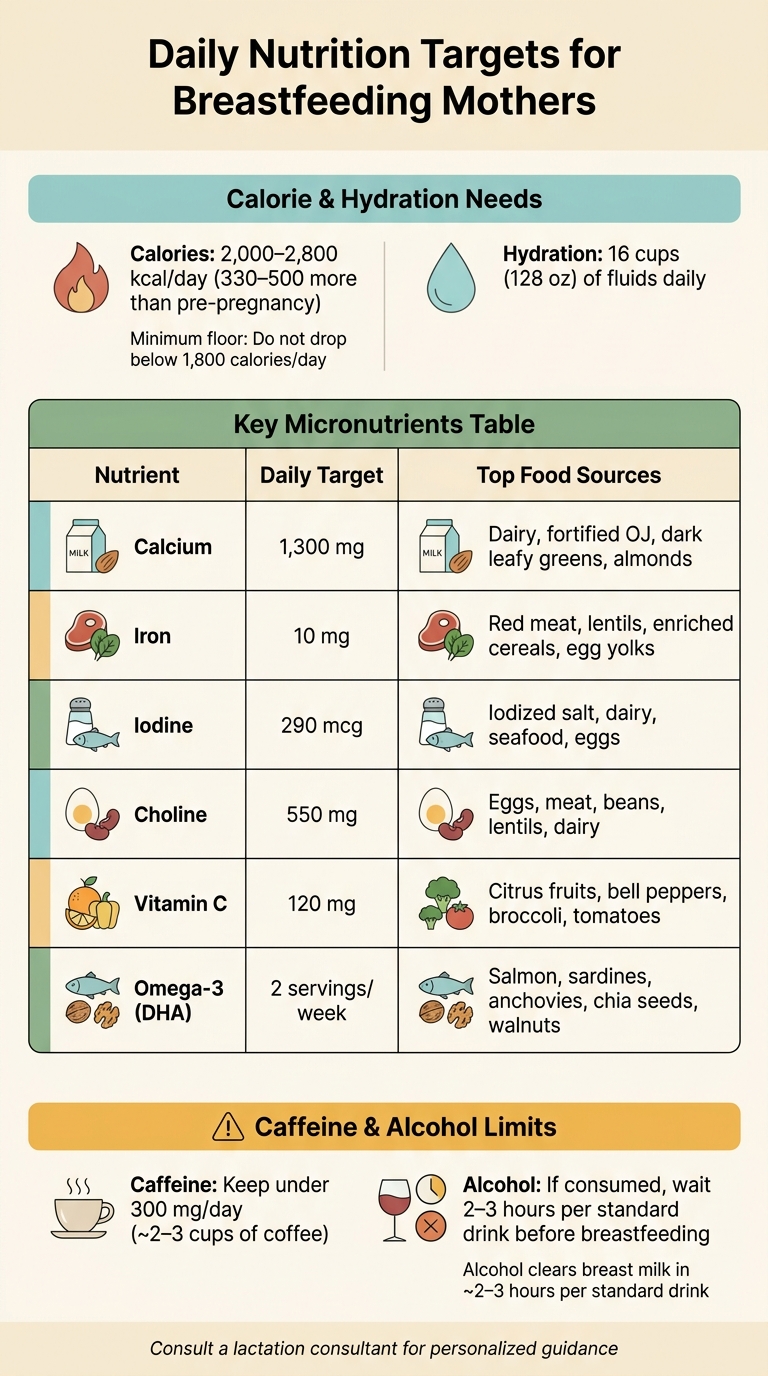
Breastfeeding Diet: Daily Nutrition Targets at a Glance
Supporting your body with the right nutrients is essential during breastfeeding. Here's how to meet your daily needs.
Hydration Guidelines
Since breast milk is about 87% to 90% water, staying hydrated is crucial. Nursing alone can cause your body to lose around 25 ounces of fluid daily. To compensate, aim for about 16 cups (128 ounces) of fluids each day. A good rule of thumb? Drink a large glass of water every time you breastfeed or pump. If your urine is dark yellow, it’s a sign to up your water intake.
"The recommendation is about 125 ounces, which is 16 cups. That's a lot of water." - Carla Ornelas, RD, Registered Dietitian, AltaMed Health Services
Keep caffeine intake under 300 mg daily to avoid potential effects on your baby’s sleep or mood.
Once hydration is on track, focus on fueling your body with a variety of nutrient-rich foods to support milk production.
Core Food Groups for Balanced Nutrition
Breastfeeding increases your calorie needs to about 2,000–2,800 calories daily, which is 330–400 calories more than before pregnancy. This extra energy supports milk production, making it important to eat a well-rounded diet.
Include these food groups in your daily meals:
- Protein: 2–3 servings of lean meats, eggs, beans, or tofu.
- Fruits and Vegetables: For vitamins, minerals, and fiber.
- Whole Grains: Provides long-lasting energy.
- Dairy or Fortified Alternatives: Supplies calcium and other essential nutrients.
"It's best not to restrict calories or diet while breastfeeding because your body may make less milk." - UPMC HealthBeat
Even if you’re aiming to lose postpartum weight, don’t drop below 1,800 calories per day. A safe pace for weight loss is about one pound per week.
Key Micronutrients to Prioritize
Certain nutrients play a major role in supporting both you and your baby’s health. Here’s what to focus on:
| Nutrient | Daily Target | Top Food Sources |
|---|---|---|
| Calcium | 1,300 mg | Dairy, fortified orange juice, dark leafy greens, almonds |
| Iron | 10 mg | Red meat, lentils, enriched cereals, egg yolks |
| Iodine | 290 mcg | Iodized salt, dairy, seafood, eggs |
| Choline | 550 mg | Eggs, meat, beans, lentils, dairy |
| Vitamin C | 120 mg | Citrus fruits, bell peppers, broccoli, tomatoes |
| Omega-3 (DHA) | 2 servings of fatty fish/week | Salmon, sardines, anchovies, chia seeds, walnuts |
To maximize iron absorption, pair foods like lentils or leafy greens with a vitamin C source - think a squeeze of lemon or a side of bell peppers. If you follow a vegan or vegetarian diet, add a vitamin B12 supplement (at least 10 mcg daily) to support your baby’s neurological development. Continuing your prenatal vitamin for up to a year postpartum can also help fill any nutritional gaps.
Foods to Include in a Breastfeeding Diet
Focusing on specific food groups can help meet the nutritional demands of breastfeeding more effectively.
Protein-Rich Foods
Protein plays a crucial role in postpartum recovery, muscle maintenance, and energy levels. Aim for 2 to 3 servings daily, with each serving being around 3 to 4 ounces of meat, fish, or poultry.
Eggs are particularly valuable due to their choline content, which supports nervous system development and cell structure. Sue Hudson, Certified Nurse Midwife at Cleveland Clinic, highlights:
"The most important nutrient in eggs is choline, which is necessary for nervous system development and for building cell structure."
For seafood, stick to low-mercury options like salmon, sardines, trout, and herring. If you prefer red meat, grass-fed beef is a better choice because it provides more omega-3s and zinc. For plant-based diets, lentils, black beans, tofu, and tempeh are excellent alternatives. Pair these with a vitamin C source, like citrus fruits or bell peppers, to improve iron absorption.
Balance your protein intake with whole grains and vegetables for a well-rounded diet.
Whole Grains and Vegetables
Whole grains such as oatmeal, quinoa, and brown rice help stabilize blood sugar and promote digestion. Molly Carrigg, CNM at Cleveland Clinic, explains:
"Whole grains also help with keeping you regular and fight off constipation, which is common in postpartum."
Dark leafy greens like spinach and kale are rich in calcium, folate, and vitamins A, C, and K. Brightly colored vegetables, such as sweet potatoes, offer vitamin A and potassium. In fact, one medium sweet potato with the skin provides 100% of the daily recommended intake of vitamin A. Breastfeeding moms are encouraged to eat 2.5 to 3.5 cups of vegetables daily, so incorporating a variety is key.
Healthy Fats and Quick Snack Ideas
Healthy fats are essential for your baby’s brain development and can help you stay full longer. Foods like avocados, walnuts, chia seeds, and olive oil are excellent sources. Some snacks, like oats, almonds, cashews, and chickpeas, may also function as galactagogues, potentially supporting milk production.
Here are some easy, one-handed snack ideas to keep you fueled:
- Greek yogurt with berries: Packed with protein and calcium.
- Trail mix: Combine walnuts, almonds, and dried fruit for a nutrient-dense option.
- Hard-boiled eggs: Make a batch ahead of time for a quick protein boost.
- Avocado on whole-grain toast: A satisfying mix of healthy fats and complex carbs.
- Apple or banana with peanut butter: Offers sustained energy without a sugar crash.
As for nuts, Molly Carrigg notes that "several studies show a link between peanut and tree nut consumption in pregnancy and breastfeeding lead to a lower risk of peanut sensitization". Unless you have a known allergy, there’s no reason to avoid them during breastfeeding.
Foods and Drinks to Limit or Avoid
What you eat while breastfeeding plays a role in your baby's well-being, but it's equally important to be mindful of what you limit. Certain foods and drinks can affect your baby's comfort, development, or even your milk supply. Here's a closer look at what to watch out for when breastfeeding.
Caffeine and Alcohol
Caffeine intake should be kept to 300 mg per day, which is about 2 to 3 cups of coffee. Remember, caffeine is found in more than just coffee. For example:
- A mug of filter coffee: ~140 mg
- A can of energy drink: ~80 mg
- A mug of tea: ~75 mg
- A 50g chocolate bar: up to 50 mg
If your baby seems irritable or has trouble sleeping, try reducing caffeine for a few days to see if it helps. As Sue Hudson notes:
"If your child gets too much caffeine through your breast milk, it can cause irritability and sleep issues."
For alcohol, the CDC advises that not drinking alcohol is the safest choice for breastfeeding mothers. However, moderate consumption - up to one drink per day - is generally considered safe for your baby.
A "standard drink" is defined as:
- 12 oz of 5% beer
- 5 oz of 12% wine
- 1.5 oz of 80-proof liquor
Alcohol levels in breast milk usually peak 30 to 60 minutes after drinking and take about 2 to 3 hours to clear one standard drink. To minimize exposure, time your drink for right after a feeding or during your baby's longest sleep stretch. It's also worth noting that pumping and dumping won't speed up alcohol clearance; it only helps relieve discomfort or maintain supply while waiting.
High-Mercury Fish
Mercury can pass into breast milk and may harm your baby's developing nervous system. To keep your milk safe and maintain DHA levels for brain development, choose low-mercury fish. Here's a quick comparison:
| Avoid (High Mercury) | Safer Alternatives (Low Mercury) |
|---|---|
| Shark, Swordfish, King Mackerel | Salmon, Sardines, Herring |
| Marlin, Bigeye Tuna | Freshwater Trout, Anchovies |
| Orange Roughy, Tilefish | Shrimp, Pollock, Tilapia |
The FDA and EPA recommend eating 8 to 12 ounces (about 2 to 3 servings) of low-mercury fish per week. If you're eating locally caught fish, check local advisories. If no guidance is available, limit yourself to 4 ounces per week and avoid other fish that week.
Foods That May Upset Your Baby
Most babies tolerate a variety of foods well, but some may react to certain items. Foods like spicy dishes, cabbage, broccoli, onions, and citrus might cause gas or fussiness in sensitive infants. Additionally, the most common allergens passed through breast milk are dairy, soy, wheat, and eggs, which can sometimes lead to symptoms like green or mucus-like stools.
If you suspect a food is causing an issue, eliminate it for 1 to 4 weeks and then reintroduce it gradually to confirm whether it's the culprit. Diane L. Spatz, PhD, RN-BC, FAAN, from Children's Hospital of Philadelphia, offers this reassurance:
"As long as your baby is gaining weight and not anemic, the allergy is not going to cause any long-term problems. You do not need to stop breastfeeding."
Meal Planning Tips and When to Get Help
Simple Meal Planning Strategies
When you have a newborn, spending hours in the kitchen just isn’t practical. The trick is to create a system that works for your busiest days.
Start by batch cooking some essentials early in the week. Think brown rice, quinoa, roasted vegetables, shredded chicken, or hard-boiled eggs - these can be the foundation of quick meals. Combine these with one-dish meals like sheet-pan dinners, stir-fries, or hearty soups to cut down on both prep time and cleanup.
A good strategy for balanced meals is to focus on four main components: protein, complex carbs, healthy fats, and fruits or vegetables. This simple structure ensures you’re getting what you need without overcomplicating things.
| Meal Component | Options |
|---|---|
| Protein | Hard-boiled eggs, Greek yogurt, rotisserie chicken, canned tuna, hummus |
| Complex Carbs | Oatmeal, whole-grain wraps, sweet potatoes, brown rice |
| Healthy Fats | Avocado, walnuts, almond butter, chia seeds |
| Portable Snacks | Apple slices with nut butter, trail mix, string cheese, baby carrots |
During nursing sessions, keep water and snacks nearby. A small basket stocked with non-perishable options like granola bars, whole-grain crackers, or trail mix can be a lifesaver during long feedings.
As Sue Hudson, Certified Nurse Midwife at Cleveland Clinic, wisely reminds us:
"Remember, parenting is a team sport."
Don’t hesitate to ask your partner, family, or friends for help with grocery shopping or meal prep. You’re not meant to tackle it all on your own.
If meal planning and quick snacks still leave gaps in your nutrition, it might be time to seek professional help.
When to Consult a Professional
Sometimes, your dietary needs or your baby’s reactions might require expert advice. Reach out to a lactation consultant or postpartum specialist if you encounter any of these challenges:
- Low milk supply that doesn’t improve with dietary adjustments.
- Signs of food allergies in your baby, like a rash, wheezing, diarrhea, or extreme fussiness after feeding.
- Special dietary restrictions, such as vegan or dairy-free diets, where nutrients like vitamin B12, iron, zinc, iodine, or omega-3s might be lacking.
- Questions about supplements, especially iodine (290 mcg/day) or choline (550 mg/day).
- Postpartum weight loss goals - experts suggest waiting at least two months before cutting calories and ensuring you maintain the extra 330–500 calories needed for milk production.
The CDC emphasizes the importance of professional support:
"Health care providers should work with breastfeeding women to determine appropriate dietary supplements during lactation."
If you’re unsure where to begin, platforms like Nestling can connect you with trusted lactation consultants and postpartum specialists. They’ll help you create a care plan tailored to your specific needs.
Key Takeaways for a Healthy Breastfeeding Diet
Here’s a quick checklist to help breastfeeding mothers stay on track with their nutritional needs. The focus is on keeping things simple and consistent - no need for perfection.
Daily Nutritional Goals:
- Extra Calories: Add 330–500 per day
- Iodine: 290 mcg per day
- Choline: 550 mg per day
- Caffeine: Keep it under 300 mg per day
- Calcium: Aim for 1,300 mg per day
To meet these goals, include lean proteins, whole grains, low-mercury fish like salmon, and plenty of colorful fruits and vegetables in your meals. This combination covers most nutritional needs.
Foods to Avoid:
- High-mercury fish like shark and swordfish.
- If drinking alcohol, wait at least 2 hours per drink before breastfeeding.
Watch for signs that your baby might react to something in your diet. Symptoms like fussiness, rashes, or digestive changes could indicate sensitivity.
Keep water and snacks handy during feedings, and monitor hydration by ensuring your urine stays light-colored. If you face dietary challenges or notice any issues with your baby, reach out to a lactation consultant through Nestling. These tips are designed to support both your milk supply and your baby’s health.
FAQs
How can I tell if my baby is reacting to something I ate?
If your baby seems unusually fussy, develops skin rashes, or experiences digestive issues, it might be linked to something in your diet. These signs could point to a sensitivity or an allergic reaction to specific foods you’ve eaten. Pay attention to any recurring patterns and reach out to a healthcare provider if you think your baby is reacting to something in your meals.
What are the best ways to get enough iodine and choline while breastfeeding?
To support iodine and choline intake while breastfeeding, focus on incorporating a variety of nutrient-rich foods into your meals. Options like seafood, seaweed, eggs, meat, poultry, dairy products, beans, peas, lentils, and fortified foods are great choices. These provide important nutrients that benefit both you and your baby.
How can I lose weight safely without lowering my milk supply?
To safely lose weight while breastfeeding, prioritize gradual and healthy adjustments to your routine. Focus on eating nutrient-dense foods such as lean proteins, whole grains, fruits, and vegetables to nourish both you and your baby. It's important to maintain enough calorie intake to support milk production, so steer clear of crash diets or extreme calorie restrictions.
Stay hydrated throughout the day, aim for a slight calorie deficit, and incorporate light physical activity when you feel ready. Before making any significant changes to your diet or exercise routine, consult with a healthcare provider or lactation consultant to ensure both your health and your baby's needs are met.









 Sign up with Google
 Sign up with Facebook