
Hydration Guide for Breastfeeding Moms

Hydration Guide for Breastfeeding Moms
Breastfeeding moms need about 16 cups (128 oz) of fluids daily to replace the water lost through milk production. Breast milk is 87–90% water, and nursing can drain your body's reserves quickly. Proper hydration not only supports milk supply but also helps combat fatigue, headaches, and postpartum recovery challenges.
Quick Tips:
- Drink water during nursing sessions: Aim for 6–8 oz each time you nurse or pump.
- Check urine color: Pale yellow indicates good hydration; dark yellow means you need more fluids.
- Include hydrating foods: Add water-rich fruits (like watermelon, oranges) and vegetables (like cucumbers, celery) to your meals.
- Limit caffeine to 300 mg/day: That's about 2–3 cups of coffee to avoid affecting your baby’s sleep.
- Avoid sugary drinks and energy drinks: They can dehydrate and impact milk quality.
Keep a water bottle nearby, especially during feedings, and consider electrolyte drinks if you're sweating more or feeling sluggish. If you notice persistent dehydration symptoms like dizziness or dark urine, consult your doctor.
Hydration Needs During Breastfeeding
How Breastfeeding Affects Your Fluid Needs
Breastfeeding places extra demands on your body, especially when it comes to water. Since breast milk is made up of about 87% to 90% water, every nursing session taps into your body’s fluid reserves. To keep up with increasing milk production, staying hydrated becomes a priority.
On top of that, factors like exercise, hot weather, or high humidity can cause additional fluid loss, further increasing your water needs.
Important: If you're concerned about the quality of your tap water, it’s worth noting that environmental chemicals in drinking water could impact both you and your baby. Consider using certified water filters or opting for trusted bottled water sources.
Now, let’s look at how to easily check if you’re staying hydrated.
How to Tell If You're Drinking Enough
A quick way to gauge your hydration is by checking your urine. If it’s pale yellow, you’re likely drinking enough. On the other hand, dark or strong-smelling urine is a sign that you may need to up your fluid intake.
Frequent urination is another good indicator that you’re staying hydrated. However, dehydration symptoms - like fatigue - can sometimes overlap with the normal exhaustion many experience while in postnatal care. That’s why relying on your urine color as a simple, visual guide can be one of the most effective ways to keep track of your hydration.
sbb-itb-9ce2258
Importance of Hydration in a Breastfeeding Mom
Hydration Guidelines Backed by Research
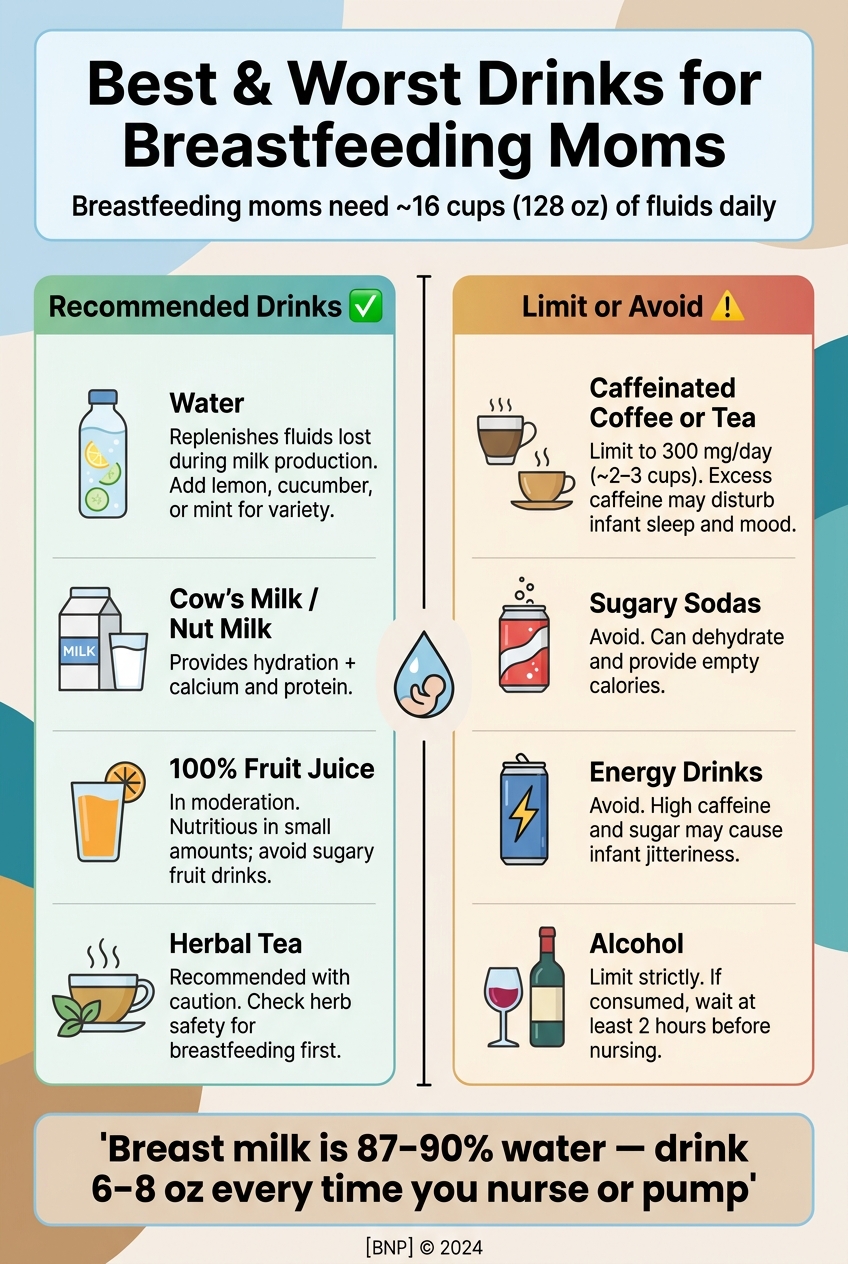
Best & Worst Drinks for Breastfeeding Moms: Hydration Guide
How Much Fluid You Should Drink Each Day
To support milk production and stay healthy, aim for 16 cups (128 oz) of total fluid each day. For comparison, non-pregnant women typically need about 8–10 cups daily, so breastfeeding adds an extra 6–8 cups to account for the fluids lost through milk production.
A helpful habit is to drink an 8-ounce glass of water each time your baby nurses. Since newborns feed around 8–12 times a day, this practice can help you reach your hydration goal. However, remember that drinking more than your body signals through thirst won’t boost milk supply - milk production is driven by demand, not solely by hydration.
Now, let’s explore which drinks are best for meeting your hydration needs.
Best and Worst Drinks for Breastfeeding Moms
Water is the go-to choice for staying hydrated. If plain water feels dull, you can mix it up by adding lemon, cucumber, berries, or mint. Cow’s milk or nut milks are also excellent options, offering hydration along with calcium and protein. You can include 100% fruit juice in moderation, but steer clear of fruit "drinks", punches, or coolers, as they’re packed with added sugars and lack nutritional benefits. Herbal teas can also count toward your fluid intake - just double-check that the herbs are safe for breastfeeding.
Here’s a quick guide to help you make informed drink choices:
| Beverage | Recommendation | Key Reason |
|---|---|---|
| Water | Best choice | Replenishes fluids lost during milk production |
| Cow's/Nut Milk | Recommended | Adds hydration along with calcium and protein |
| 100% Fruit Juice | Moderate | Nutritious in small amounts; avoid sugary fruit drinks |
| Herbal Tea | Recommended (with caution) | Check herb safety for breastfeeding |
| Caffeinated Coffee/Tea | Limit to 300 mg/day (~2–3 cups) | Too much caffeine may disturb infant sleep and mood |
| Sugary Sodas | Avoid | Can dehydrate and provide empty calories |
| Energy Drinks | Avoid | High caffeine and sugar content may cause infant jitteriness |
| Alcohol | Limit strictly | If consumed, wait at least 2 hours before nursing |
For caffeine, stick to a maximum of 300 mg per day - roughly 2–3 cups of drip coffee. Going beyond this limit, such as consuming 10 or more cups, has been linked to irritability and sleep issues in infants.
Practical Ways to Stay Hydrated While Breastfeeding
Drinking Water Around Nursing Sessions
A simple way to stay hydrated while breastfeeding is to drink 6–8 oz of water every time you nurse or pump. Since producing breast milk requires about 750–1,000 ml of fluids daily - and breast milk itself is about 87–90% water - this habit ensures you're replenishing what your body uses. To make this easier, keep a water bottle in every room where you typically feed your baby. You can also ask your partner or someone in your support circle to help refill them. For late-night feedings, having a full bottle on your nightstand can help you avoid waking up dehydrated.
Carla Ornelas, RD at AltaMed Health Services, emphasizes the importance of keeping water close by:
"Every time you're going to feed [your] baby, have someone bring you a large cup of water and just have it next to you at all times."
Beyond just drinking water, adding hydrating foods to your diet can also make a difference.
Foods That Help You Stay Hydrated
Incorporating water-rich foods into your meals and snacks is an easy way to boost hydration. Many fruits and vegetables naturally contain high water content, making them a perfect addition to your diet:
| Food Category | High-Water Examples | Estimated Water Content |
|---|---|---|
| Fruits | Watermelon, cantaloupe, strawberries, oranges | 90–95% |
| Vegetables | Cucumber, lettuce, celery, tomatoes, spinach | 95–96% |
| Prepared Foods | Broths, soups, smoothies, yogurt, real-fruit popsicles | High (variable) |
Small adjustments, like snacking on watermelon or swapping crackers for cucumber slices, can add up over the day. Broths and soups are especially helpful, offering hydration while also supporting postpartum recovery with their nourishing ingredients. These foods work hand-in-hand with your water-drinking habits to keep you hydrated.
Staying Hydrated on a Busy Schedule
When life gets hectic, having a hydration routine can make a big difference. Often, by the time you feel thirsty, mild dehydration has already set in. A good strategy is to drink a full glass of water before each meal to stay on track.
If you're heading back to work, consider packing a water bottle in your pumping bag along with a snack. Herbal teas or an electrolyte mix can also be refreshing options during breaks. To make tracking easier, try using a water bottle with time markers or a hydration app.
For those who find plain water boring, infusing it with lemon, cucumber, berries, or mint can make it more enjoyable. If you’re drinking plenty of water but still feel thirsty and sluggish, it might be due to a mineral imbalance. In that case, adding natural electrolytes can help. Coconut water or a DIY mix of water, a pinch of salt, citrus juice, and a touch of honey can restore balance and keep you energized.
Hydration Problems to Watch For and When to Get Help
Signs of Dehydration or Overhydration
Understanding your body's hydration balance is essential, especially when you're nursing. A quick way to check is by observing your urine color. Pale yellow or nearly clear urine suggests you're well-hydrated. On the other hand, dark yellow or amber urine means you need more fluids. If your urine turns orange or brown, it’s time to seek medical attention immediately.
Other warning signs include persistent headaches, dry mouth, dizziness, and unusual fatigue. Even mild dehydration can affect your milk supply, which might show up as your baby feeding more frequently or seeming unsatisfied after nursing. Drinking too much water can be problematic, too - it might dilute sodium levels, leading to hyponatremia. Symptoms of this include bloating, muscle cramps, frequent nighttime urination, and even reduced milk production.
Tera Hamann, BSN, RN, IBCLC, emphasizes the importance of listening to your body:
"The most important sign to watch is thirst. If you are feeling thirsty, you are not drinking enough."
Your baby can also provide clues about your hydration. Fewer than six wet diapers in 24 hours, a lack of tears when crying, or a sunken fontanelle (soft spot) could indicate your hydration levels are impacting your milk supply.
Situations That Change How Much Fluid You Need
Hydration needs aren’t static - they can shift based on your circumstances. While monitoring thirst and urine color is helpful, certain situations call for extra attention. For example, illnesses like fever, vomiting, or diarrhea can drain your fluids quickly. In these cases, plain water might not be enough, and beverages with electrolytes (like sodium and potassium) can help restore balance. Similarly, nursing twins, dealing with a growth spurt, or exclusively pumping can all increase your fluid requirements.
Here’s a quick guide to how different situations impact fluid needs:
| Situation | Impact on Fluid Needs | Recommended Action |
|---|---|---|
| Hot/humid weather | Sweating leads to fluid loss | Increase water and electrolyte intake |
| Exercise | Higher metabolic and sweat demands | Drink water before, during, and after exercise |
| Fever, vomiting, or diarrhea | Rapid fluid and electrolyte loss | Opt for electrolyte drinks and monitor symptoms |
| Nursing twins or during growth spurts | Increased milk production | Add an extra glass of water per feeding session |
| Postpartum recovery | Healing from blood loss and hormonal changes with a self-care routine | Choose nutrient-rich, hydrating fluids |
When to Talk to a Doctor
Most hydration issues can be managed at home, but some symptoms signal the need for medical help. Contact your doctor if you notice confusion, low urine output, a rapid heart rate, low blood pressure, or jaundice. These may indicate severe dehydration.
Also, if vomiting prevents you from keeping fluids down, don’t wait - seek help immediately. As the WebMD Editorial Team advises:
"If you're experiencing nausea and vomiting that won't stop, you might need to stay in the hospital for a while. There, you will be given fluids and electrolytes by IV."
Dehydration can also worsen postpartum mood issues, leading to irritability, anxiety, and mental fog. If you’re feeling emotionally or physically off, bring it up with your healthcare provider. Discuss your hydration habits, milk supply changes, and any other concerns to get the support you need.
Conclusion
Staying hydrated while breastfeeding is simple in theory but requires consistent effort. Since your body loses a lot of fluids through milk production, replacing this loss with about 13–16 cups of fluids daily is crucial. Of course, factors like weather, activity levels, and how often you nurse can influence your individual needs.
A few practical tips can make hydration easier: drink a glass of water during each nursing session, keep an insulated bottle nearby, and include water-rich foods like watermelon and cucumbers in your diet. These small habits can go a long way in maintaining your fluid levels.
As Brittany Brown, RD, IBCLC, explains:
"Since the body prioritizes making milk, it will continue even if the mother becomes somewhat dehydrated. However, it's still important to avoid dehydration, as we need fluids to produce hormones and flush waste from the body."
Even though your body works hard to protect your milk supply, you might still notice signs of dehydration, such as fatigue or headaches. If staying hydrated feels overwhelming, extra support can make a difference. Nestling offers access to vetted postpartum doulas and lactation consultants who can help with hydration reminders, prepare nourishing snacks, and provide guidance for breastfeeding challenges.
FAQs
Does drinking more water increase milk supply?
Drinking extra water won’t increase your milk supply. Studies indicate that consuming more water than needed to quench your thirst doesn’t lead to higher milk production. Instead, aim to stay hydrated by drinking when you’re thirsty, as dehydration can impact your overall well-being. If you’re concerned about your milk supply, the most effective strategy is to nurse more frequently since milk production relies on supply and demand.
What if I can’t drink 128 oz of fluids every day?
It's perfectly okay if you don’t hit 128 ounces of water every day. Everyone’s hydration needs are different, so it’s best to pay attention to your body. Drink when you feel thirsty, and aim for pale yellow urine - it’s a good sign that you’re staying hydrated. To make it easier, keep water within reach and take sips while nursing your baby. No need to stress over hitting an exact number.
How do I know if I need electrolytes instead of just water?
Water is crucial for staying hydrated, but sometimes plain water isn’t enough. If you’re dealing with ongoing thirst, fatigue, dizziness, headaches, dry mouth, or even shifts in milk supply, it could point to a lack of electrolytes. This is especially true if you’re in a hot environment, physically active, or recovering postpartum. Look for electrolyte options that include sodium, potassium, magnesium, and calcium. To keep things balanced, steer clear of products loaded with too much added sugar.









 Sign up with Google
 Sign up with Facebook