
Breast Milk Storage Guidelines
Breast Milk Storage Guidelines
Storing breast milk safely ensures it retains its nutritional value and remains safe for your baby. Here’s a quick guide to the essentials:
- Room Temperature: Safe for up to 4 hours (77°F or 25°C).
- Refrigerator: Store at 40°F (4°C) or colder for up to 4 days.
- Freezer: Best quality up to 6 months, acceptable up to 12 months (0°F or –18°C).
- Thawed Milk: Use within 24 hours if refrigerated or 1–2 hours at room temperature.
- Containers: Use glass, BPA-free hard plastic bottles, or pre-sterilized storage bags.
- Labeling: Always include the date, amount, and baby’s name if needed.
- Thawing: Use the fridge or a warm water bath - never a microwave.
Proper storage helps preserve milk’s nutrients and protects your baby’s health. Read on for detailed tips and common mistakes to avoid.
OBGYN + Breastfeeding Mom Shares Guidelines for Breastmilk Storage and Use
sbb-itb-9ce2258
Why Breast Milk Storage Practices Matter
Breast milk is an incredible, nutrient-packed fluid filled with antibodies, proteins, and immune-boosting components designed specifically for your baby. But how you store it plays a crucial role in preserving its nutritional and protective qualities. Freshly expressed breast milk contains the highest levels of active immune properties, but over time, refrigeration and freezing can gradually reduce some of these benefits. This makes proper storage essential, as improper practices can lead to a loss of these vital nutrients and even pose safety risks.
Temperature is the key factor in maintaining breast milk's safety. When stored above 77°F (25°C), breast milk can quickly encourage bacterial growth. This is why sticking to recommended storage timelines is so important for your baby's well-being.
"Breast milk has many nutrients tailored to your baby's growing needs. With a little planning, you can continue providing for your baby throughout their infancy." - Heidi Szugye, DO, IBCLC, Pediatrician and Breastfeeding Medicine Specialist, Cleveland Clinic
Risks of Improper Storage
Failing to store breast milk correctly can compromise both its safety and nutritional value. For instance, microwaving breast milk can create uneven heat, which not only risks scalding your baby but also damages essential nutrients. Additionally, avoid using plastic containers marked with the recycle symbol #7, as they may contain BPA, a harmful chemical. Another important point: once feeding begins, bacteria from your baby’s mouth can contaminate the milk. Any leftover milk should be used within two hours or discarded.
Being aware of these risks helps you make informed choices about storage methods, which will be explored further in the next sections.
Choosing the Right Containers for Breast Milk
When it comes to safely storing breast milk, the type of container you use plays a big role in maintaining its quality and reducing contamination risks. Different containers offer varying levels of preservation, so understanding your options can help you make the best decision.
Recommended Storage Containers
The main options for storing breast milk are glass containers, BPA-free hard plastic bottles, and breast milk storage bags. Each has its own advantages and drawbacks, depending on your specific needs.
"Glass is the first choice for breast milk storage. It preserves the components of milk the best." - Heidi Szugye, DO, IBCLC, Pediatrician and Breastfeeding Medicine Specialist, Cleveland Clinic
- Glass Containers: These are the gold standard for preserving milk's nutrients. However, they can be heavy, prone to breaking, and may not be allowed in all daycare settings.
- BPA-Free Hard Plastic Bottles: A durable and practical choice, but make sure they’re labeled BPA-free. Avoid bottles marked with the recycling symbol #7, as they may contain harmful chemicals.
- Breast Milk Storage Bags: These are pre-sterilized, space-efficient, and freeze flat, making them easy to stack. However, they can sometimes leak, so consider double-bagging or placing them in a sturdy plastic bin for added protection.
Avoid using kitchen storage bags, disposable bottle liners, or formula bags for breast milk. They aren't designed for this purpose and can lead to leaks or contamination.
| Container Type | Pros | Cons |
|---|---|---|
| Glass | Best for preserving milk quality | Heavy, breakable, and not always daycare-friendly |
| BPA-Free Hard Plastic | Durable and easy to clean | Must verify it’s BPA-free (avoid symbol #7) |
| Breast Milk Storage Bags | Space-saving, freeze flat, pre-sterilized | Can leak; single use only |
Once you’ve chosen the right container, proper labeling and portioning are crucial for safe storage.
How to Label and Portion Breast Milk
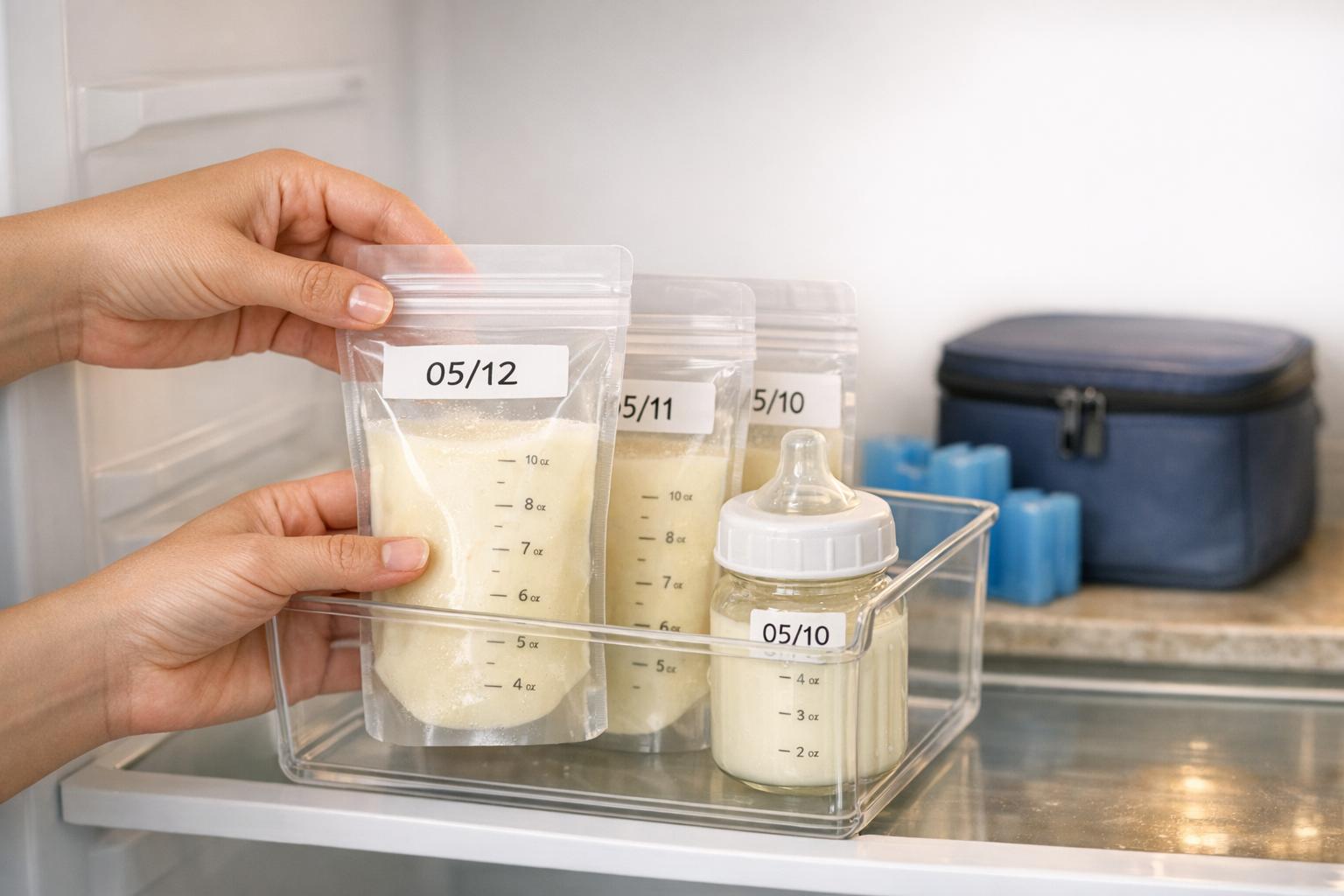
The storage process doesn’t end with picking the right container. Clear labeling and portioning are essential to ensure milk safety and reduce waste. Before refrigerating or freezing, label each container with a waterproof marker. Include the date the milk was expressed, the amount inside, and your baby's name if the milk is for daycare or a childcare provider. For families needing extra help during this transition, postpartum care and support can provide peace of mind. Some parents also note additional details, like the time of expression or medications taken, to track feeding schedules.
Portion milk in amounts of 2 to 4 ounces per container, which aligns with the typical feeding volume. For newborns or smaller feedings, consider 1 to 2-ounce portions to avoid waste.
"Store only 1 to 4 ounces per container. That way you won't waste any. It's easier to thaw a second container of milk than to watch your valuable milk be poured down the drain." - Stanford Medicine Children's Health
When freezing, leave about 1 inch of space at the top of each container to accommodate milk expansion. If using bottles, wait until the milk is fully frozen before tightening the caps. Lastly, follow the "first in, first out" method to use the oldest milk first - this keeps the supply fresh and minimizes waste.
How Long Breast Milk Lasts at Different Temperatures
Breast Milk Storage Times & Temperatures at a Glance
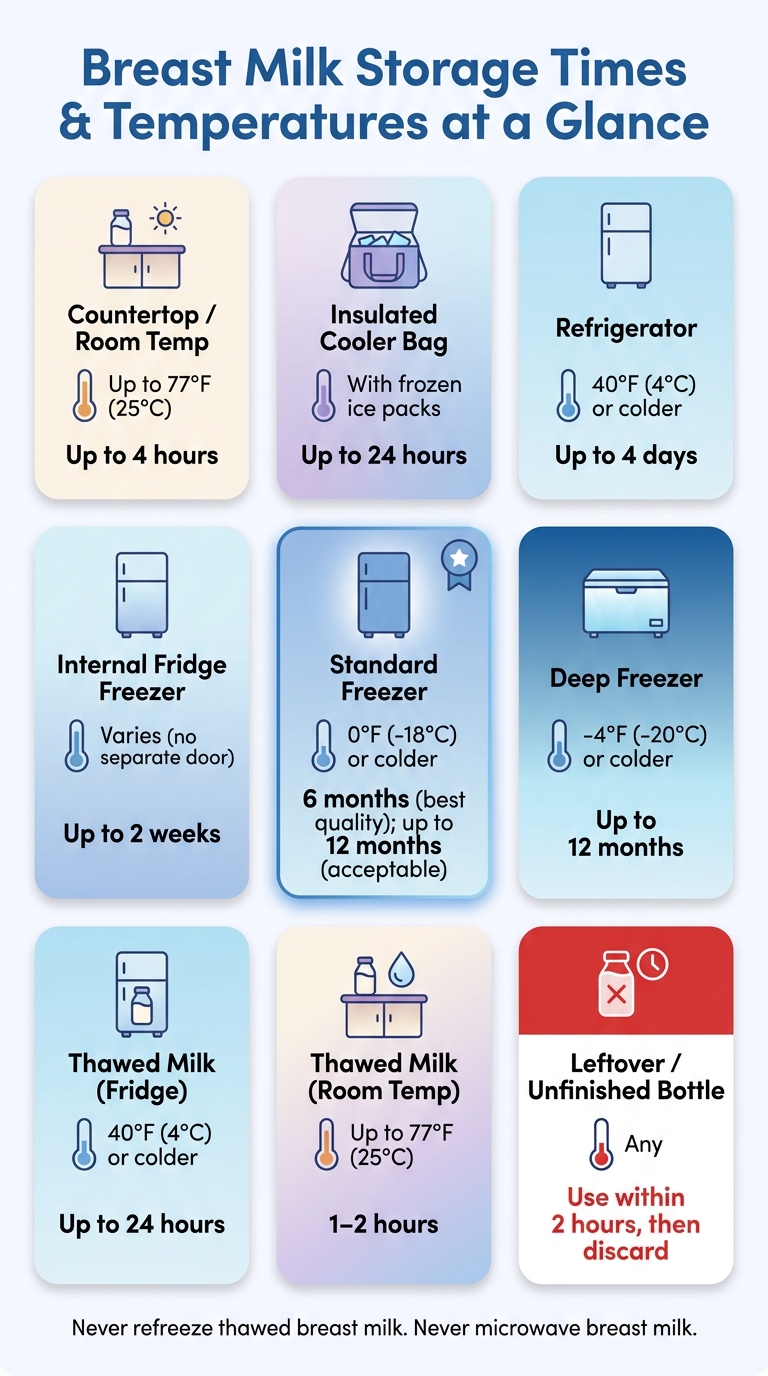
The length of time breast milk remains safe to use depends entirely on the storage temperature. For example, milk stored in a mini-fridge freezer compartment stays fresh for only about 2 weeks, whereas a standalone deep freezer can preserve it much longer.
Storage Duration at a Glance
Here’s a quick guide to how long breast milk can be safely stored, based on the storage method and temperature:
| Storage Location | Temperature | Safe Duration |
|---|---|---|
| Countertop / Room Temp | Up to 77°F (25°C) | Up to 4 hours |
| Insulated Cooler Bag | With frozen ice packs | Up to 24 hours |
| Refrigerator | 40°F (4°C) or colder | Up to 4 days |
| Internal Fridge Freezer | Varies (no separate door) | Up to 2 weeks |
| Standard Freezer | 0°F (–18°C) or colder | 6 months (best quality); up to 12 months (acceptable) |
| Deep Freezer | –4°F (–20°C) or colder | Up to 12 months |
| Thawed Milk (Fridge) | 40°F (4°C) or colder | Up to 24 hours |
| Thawed Milk (Room Temp) | Up to 77°F (25°C) | 1–2 hours |
| Leftover (Unfinished bottle) | Any | Use within 2 hours, then discard |
For optimal quality, milk stored in a standard freezer (with its own separate door) should be used within 6 months, though it can remain acceptable for up to 12 months. Deep freezers, which maintain temperatures as low as –4°F (–20°C), are ideal for keeping milk safe for up to a year.
Thawed milk has a much shorter window for use - 24 hours in the refrigerator or just 1–2 hours at room temperature. The CDC offers this guidance:
"Frozen breast milk that has started to thaw but still contains ice crystals can be refrozen. If your breast milk has completely thawed but still feels cold, put it in the refrigerator and use it within the next day or throw it away."
Where to Place Milk in the Fridge or Freezer
Beyond knowing how long milk can be stored, where you place it in your fridge or freezer matters, too. Always keep breast milk at the back of the shelf in either the refrigerator or freezer. This area maintains a more stable temperature compared to the door, which is exposed to warm air every time it’s opened.
To ensure proper storage, set your refrigerator to 40°F (4°C) or colder and your freezer to 0°F (–18°C) or colder. A small thermometer can help you monitor these temperatures accurately.
If you notice the milk separating into layers - a cream layer on top and a thinner milk layer below - don’t worry. This is completely normal. Gently swirl the bottle to mix it back together, but avoid shaking vigorously to preserve its nutrients and texture.
How to Thaw and Use Frozen Breast Milk
Thawing and handling frozen breast milk the right way is crucial to maintaining its safety and nutritional value.
Safe Thawing Methods
Once you've ensured the milk has been stored properly, the next step is thawing it safely. The two best methods are refrigerator thawing and using a warm water bath. For the refrigerator method, simply transfer the frozen container to the fridge and allow about 24 hours for it to thaw completely. If you're in a hurry, a warm water bath works well - place the sealed container in a bowl of warm water or hold it under warm running water until it reaches a lukewarm temperature.
What you should never do is use a microwave. Microwaving can create uneven "hot spots" that might burn your baby and destroy important nutrients, proteins, and antibodies in the milk.
Handling Thawed Breast Milk
Once thawed, breast milk should be used quickly. If stored in the refrigerator, it must be consumed within 24 hours. At room temperature (up to 77°F), it’s only safe for 1–2 hours. These time limits are shorter than for freshly expressed milk, so careful planning is key. If you need help managing these routines, professional postnatal care can provide hands-on support.
It's also important to avoid saving milk that has already been served to your baby. As Heidi Szugye, DO, IBCLC, a Pediatrician and Breastfeeding Medicine Specialist at Cleveland Clinic, advises:
"To be safe, discard any previously frozen milk that's been heated and served to your baby after one to two hours. Refreezing milk can lead to contamination, so you never want to refreeze milk that's been thawed."
Thawed milk might look or smell different because of lipase activity, which can break down fats. Before feeding, gently swirl the container to mix the fat and liquid layers. If the milk develops a strong soapy odor and your baby refuses it, you can scald fresh milk (heat until small bubbles appear at the edges) before freezing to deactivate the lipase enzyme.
If you're using a warm water bath to thaw milk stored in a bag, make sure the water level stays below the bag's seal to prevent contamination. If the milk appears cloudy or the bag leaks during warming, discard it. Before serving, test the milk's temperature on your inner wrist and feed it to your baby as soon as it’s comfortably warm.
Common Breast Milk Storage Mistakes and How to Avoid Them
Small mistakes in storing breast milk can affect its safety and quality. Understanding what to avoid can help ensure your baby gets the best.
Avoiding Common Storage Errors
A frequent mistake is reusing single-use storage bags or neglecting to regularly check pump tubing for mold. These oversights can compromise milk hygiene.
Another common misstep is mixing freshly expressed warm milk directly with chilled or frozen milk. To prevent this, always cool freshly expressed milk in the refrigerator before combining it with stored milk.
Tips for Better Breast Milk Storage
Here are a few practical tips to streamline your storage routine:
- Use a first-in, first-out system. Place newer milk at the back of your storage area so the oldest milk is easy to grab and use first. This helps reduce waste.
- When traveling, use an insulated cooler bag with frozen ice packs. This can keep milk safe for up to 24 hours.
- At home, freeze milk bags flat to save space. Once frozen, store them upright in a plastic bin for better organization and easier access to the oldest milk.
- Portion milk into 2–4 ounce servings to match typical feeding amounts, minimizing waste. For newborns under six weeks, smaller portions (1–2 ounces) may be more practical since their feeding needs are smaller. Remember, any leftover milk must be used within two hours.
Getting Personalized Support Through Nestling
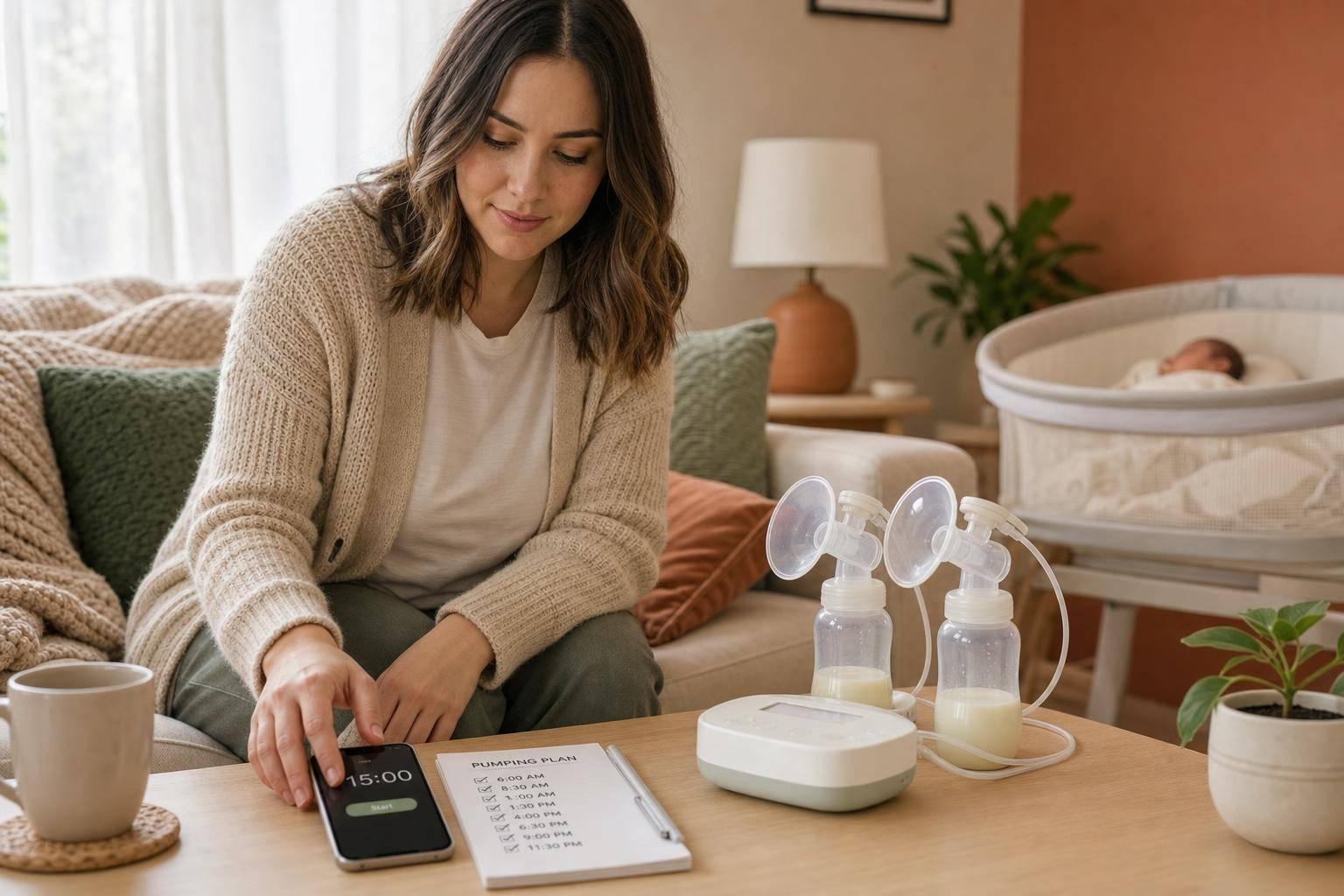
If you're unsure how to adjust your routine or have questions about milk storage, professional guidance can make all the difference. Nestling connects families with experienced lactation consultants who can help you create a pumping and storage plan tailored to your lifestyle. Whether you’re preparing a freezer stash for returning to work or troubleshooting issues like milk with a soapy smell, personalized advice can simplify the process.
Dr. Heidi Szugye, DO, IBCLC, from Cleveland Clinic, emphasizes the importance of planning:
"Breast milk has many nutrients tailored to your baby's growing needs. With a little planning, you can continue providing for your baby throughout their infancy."
Nestling also offers access to postpartum doulas and infant care specialists, giving you well-rounded support during those early weeks of parenthood.
Key Takeaways for Breast Milk Storage
Fresh breast milk can stay safe at room temperature (up to 77°F) for up to 4 hours, in the refrigerator for up to 4 days, and in the freezer for 6 to 12 months. Once thawed, it should be used within 24 hours if refrigerated, or within 1 to 2 hours if left at room temperature. Never refreeze thawed milk.
To maintain quality and safety, label each container with the date of expression and your baby's name. Portion milk into 2–4 ounce servings to make feeding and organizing easier. Store milk at the back of the refrigerator or freezer, where the temperature remains most stable, rather than in the door.
When it’s time to thaw, do so gradually in the refrigerator overnight or by placing the container in a bowl of warm water. Always use the oldest milk first, as its quality diminishes over time.
If you need additional help or personalized advice on pumping schedules or storage, Nestling connects you with experienced lactation consultants.
FAQs
How can I tell if stored breast milk has gone bad?
To determine if stored breast milk has gone bad, pay attention to a few key signs. A sour or unpleasant smell, noticeable changes in color or texture, or an off taste are strong indicators that the milk is no longer safe for your baby. Always trust your senses when checking its quality.
Can I combine milk from different pumping sessions safely?
Yes, it's safe to mix milk from different pumping sessions as long as you handle it properly and follow hygiene standards. Make sure all containers are thoroughly cleaned, and always cool freshly pumped milk in the refrigerator before combining it with milk that's already been stored. This helps maintain its quality and safety.
What should I do if my thawed milk smells soapy?
If your thawed milk has a soapy smell, it might be a result of improper storage or contamination. For your baby's safety, it's important to discard the milk. Make sure to follow proper storage practices to avoid similar problems in the future.



 Sign up with Google
 Sign up with Facebook