
Ultimate Guide to Postpartum Work-Life Balance

Ultimate Guide to Postpartum Work-Life Balance
Balancing work and life after having a baby is tough. You’re healing from childbirth, caring for a newborn, and managing job responsibilities all at once. In the U.S., where 1 in 4 moms returns to work just 10 days postpartum, this challenge is even greater due to the lack of federal paid maternity leave. Here’s what you need to know:
- Recovery takes time: Physical healing can last weeks or months, and emotional shifts like "baby blues" or postpartum depression affect many mothers.
- Work adds stress: 25% of moms return to work within two months, often while breastfeeding and managing newborn care.
- Childcare is critical: Start planning early - finding reliable care can take weeks.
- Support matters: Build a network of postpartum doulas and other professionals, family, and friends to share the load.
This guide offers practical steps to navigate postpartum recovery, manage work, and care for your baby without losing yourself in the process.
Returning to Work After Maternity Leave: Guilt, Boundaries & Finding Yourself Again | The Group Chat
sbb-itb-9ce2258
Understanding Postpartum Needs and Challenges
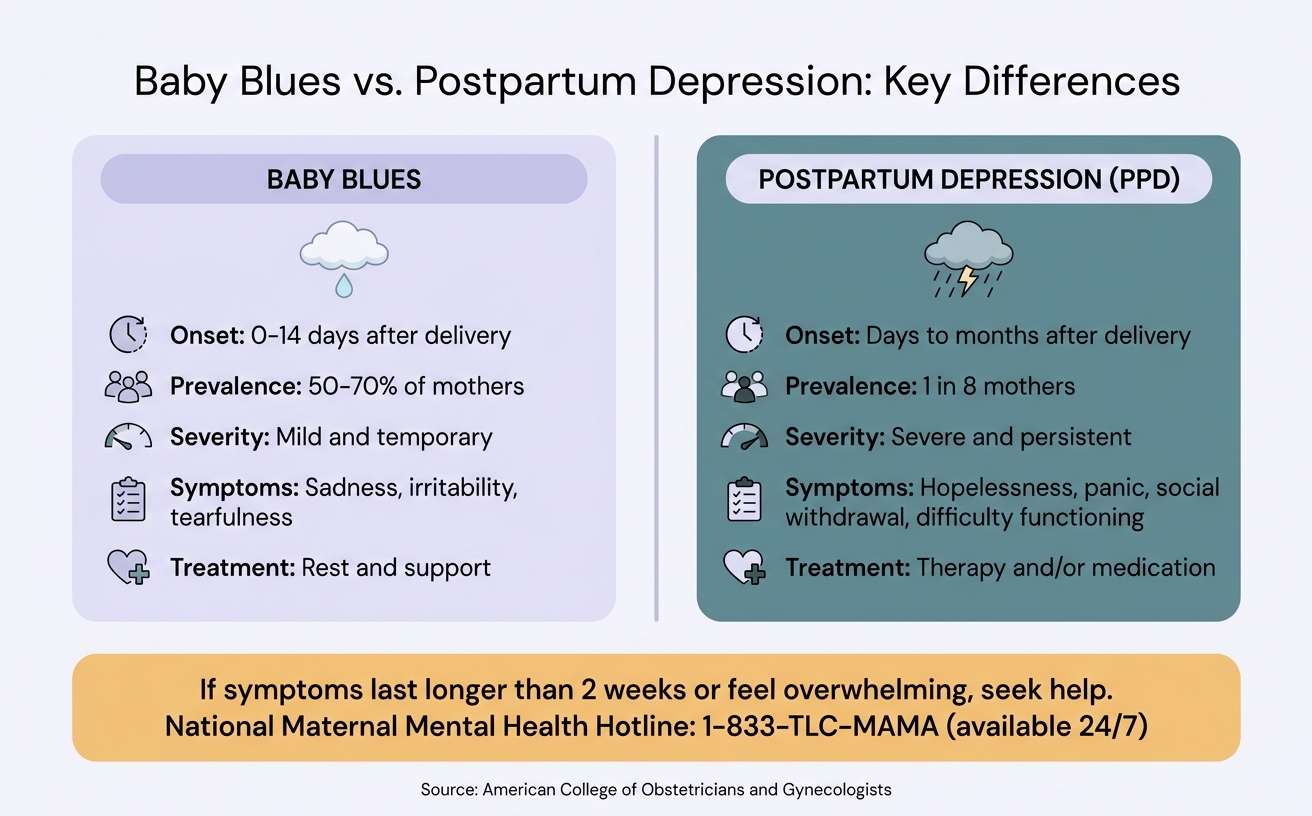
Baby Blues vs. Postpartum Depression: Key Differences
Physical and Emotional Recovery After Birth
Postpartum recovery isn’t just about the time it takes for physical wounds to heal - it’s a process that can stretch far beyond the typical six to eight weeks. For instance, lingering effects like hair thinning and pelvic floor issues can persist for up to a year. Vaginal births often come with perineal soreness, potential tearing (which happens to up to 70% of women), and postpartum bleeding that can last around six weeks. On the other hand, C-section recoveries bring their own challenges, such as incision pain and restricted mobility, with internal stitches sometimes requiring up to 12 weeks to fully heal.
The emotional side of recovery is just as intense. Hormonal shifts after delivery are rapid - estrogen and progesterone levels drop sharply while prolactin rises, often leaving new moms feeling emotionally raw.
"The birth buzz is wearing off, estrogen and progesterone levels are dropping off... That combined with sleep deprivation makes for lots of weepiness and feeling like nothing is going right." - Jocelyn Brown, Licensed and Certified Midwife
It’s no wonder that 50% to 70% of mothers experience the "baby blues" during the first two weeks postpartum. These feelings - marked by sadness, irritability, and tearfulness - are usually short-lived and improve with rest and support. However, postpartum depression (PPD) is a more serious condition that affects 1 in 8 women. Unlike baby blues, PPD can emerge days, weeks, or even months after birth and includes symptoms like persistent hopelessness, panic, and difficulty functioning.
Here’s a quick comparison of baby blues versus postpartum depression:
| Baby Blues | Postpartum Depression (PPD) | |
|---|---|---|
| Onset | 0–14 days after delivery | Days to months after delivery |
| Prevalence | 50–70% of mothers | 1 in 8 mothers |
| Severity | Mild, temporary | Severe, persistent |
| Symptoms | Sadness, irritability, tearfulness | Hopelessness, panic, social withdrawal |
| Treatment | Rest and support | Therapy and/or medication |
If symptoms last longer than two weeks or feel overwhelming, it’s important to seek help. Your OB-GYN is a great first step, and the National Maternal Mental Health Hotline (1-833-TLC-MAMA) offers 24/7 confidential support.
Next, let’s explore how these recovery challenges intersect with the demands of returning to work.
How Returning to Work Affects Your Health
Heading back to work while still recovering - both physically and emotionally - can add a significant layer of stress. More than 25% of U.S. mothers return to work within two months of giving birth, and about 10% do so in just four weeks. This often happens before their hormones have fully stabilized, making the transition even harder.
"Moms returning to work are balancing a lot - you're managing the round-the-clock needs of your newborn alongside a demanding work schedule with deadlines to meet." - Dr. Monica M. Washington, Atrium Health Women's Care
Breastfeeding mothers face additional challenges. Pumping every three to four hours isn’t optional - it’s a physical necessity. Missing a session for a meeting can lead to discomfort, reduced milk supply, or even mastitis. Thankfully, the PUMP Act requires most employers to provide reasonable break times and a private space (not a bathroom) for pumping during the first year postpartum. Knowing your rights can make this transition a bit smoother.
Common Stressors for New Moms
The juggling act of physical recovery, workplace responsibilities, and family life can feel overwhelming. New mothers often find themselves managing a whirlwind of tasks: coordinating childcare, keeping track of feeding schedules, meeting work deadlines, and running a household. This mental load can quickly lead to what experts call "cognitive overload." In fact, 73% of working mothers report feeling guilty about their childcare arrangements, even when everything is going smoothly.
Then there’s the emotional toll of missing milestones. Many moms worry about being at work when their baby smiles for the first time or takes those first steps. This anxiety isn’t just emotional - it’s biological. Your nervous system is wired to stay close to your newborn. Dr. Jana Rundle, a licensed clinical psychologist, offers some perspective:
"Preparation reduces anxiety, but it won't eliminate emotion. That's okay. You can be ready and still grieve this transition."
It’s important to remember that these stressors aren’t a reflection of personal failure - they’re the result of systems that aren’t designed with new mothers in mind.
Building a Realistic Work-Life Balance Plan
Deciding What to Prioritize
Before setting up a schedule, it's essential to figure out what matters most. While your professional hours are usually fixed, motherhood is a round-the-clock role. As one contributor put it:
"I am the Director of Marketing from 9-5, but I am the Director of Motherhood 24/7."
Balance doesn’t mean splitting your time evenly every day. Some days will naturally lean more toward work or family, and that’s okay. Focus on the tasks that bring the most value during work hours, ensure quality family time, and prioritize your own well-being. This approach helps maintain both career growth and a happy home life.
| Priority Category | Practical Action | Tool/Strategy |
|---|---|---|
| Career | Tackle high-priority tasks | Time-blocking & priority flags |
| Family | Build strong connections | Dedicated morning/evening time |
| Health | Take care of yourself | Scheduled self-care & pumping breaks |
| Logistics | Simplify mornings | Evening prep & shared calendars |
Once you've identified your priorities, the next step is to build a schedule that reflects them.
Planning Your Weekly Schedule
With clear priorities, you can create a weekly schedule that works with both your work demands and family life. Instead of sticking to a rigid 9-to-5 mindset, design your week around your baby’s natural schedule. Time-blocking can help you allocate time for focused work, drop-offs, pick-ups, and personal care. Treat these blocks as non-negotiable appointments.
Using a shared digital calendar, like Google Calendar or Cozi, ensures everyone stays in sync. Color-coding tasks - blue for work, green for baby-related activities, and yellow for personal time - makes it easy to see how your week is shaping up. Prepping the night before - laying out clothes, packing the diaper bag, or setting up the coffee maker - can make mornings smoother. As Sarah Guigneaux, Founder of All Speech Mom, explains:
"One less decision in the morning = one less meltdown (yours or baby's)."
If possible, consider a phased return to work. Starting mid-week or working part-time initially can make the transition less overwhelming. These planning strategies help you balance work responsibilities and family needs more effectively.
Once your schedule is set, securing dependable childcare becomes the next key step.
Choosing the Right Childcare
Childcare is a critical piece of the puzzle. Start researching options at least two months before your return, as spots at daycare centers and with in-home caregivers fill up quickly.
When evaluating childcare, don’t just focus on cost. Check licensing, ask about sick-day and emergency policies, and trust your instincts during visits. Daycare centers provide structure and social opportunities for your baby, while in-home caregivers, like nannies or postpartum doulas, offer flexibility and personalized care. Platforms like Nestling (getnestling.com) can connect you with vetted professionals to help establish a routine for your baby during those early weeks.
A great way to prepare is by running a full dress rehearsal a week before your return. Daisy Dowling, Founder and CEO of Workparent, suggests:
"Get up, get dressed as if you were going in, get the baby ready, and go to your office. So on the day of, you'll have debugged the process from a practical perspective."
This trial run can help you identify potential hiccups - like a longer commute or a forgotten diaper bag item - before your first day back. If you’re hiring an in-home caregiver, have them start a few days early while you’re still home. This gives them time to learn your baby’s routine with you there to guide them.
Getting the Right Support During the Postpartum Period
Beyond managing schedules and childcare, having a strong network - both personal and professional - can make a huge difference during the postpartum period.
How Postpartum Professionals Can Help
Recovering from birth is just one part of the postpartum experience. You're also juggling sleep deprivation, feeding challenges, emotional changes, and the transition back to work - all at the same time. This is where trained professionals can step in to help smooth the process.
- Postpartum doulas: They provide hands-on care for your newborn while also offering emotional support to help you adjust.
- Lactation consultants: These experts can guide you through establishing a pumping routine and understanding your rights under the federal PUMP Act.
- Infant care specialists: Whether it's a newborn care specialist or a sleep consultant, these professionals focus on your baby's needs, giving you the chance to rest or concentrate on work.
For families seeking personalized care, Nestling offers access to vetted postpartum professionals, including doulas, lactation consultants, and infant care specialists. Their services are flexible, ranging from daytime and overnight care to live-in support. Each caregiver undergoes thorough background checks and certification validation, ensuring you receive trusted help when you need it most.
"A 'village' of support can offer the resources you need." - Dr. Angelica Glover, OB-GYN and Maternal-Fetal Medicine Specialist
It's wise to book postpartum professionals well in advance, as availability - especially for overnight care and lactation support - can be limited.
Building Your Support Network
Your support system should extend beyond childcare. It includes your partner, employer, colleagues, and even your broader community, all of whom can play vital roles.
At work, having open conversations with your manager and HR about options like flexible hours, remote work, or a phased return can alleviate some of the stress that comes with re-entering the workplace. At home, connecting with other parents - whether through local groups or online communities - provides a judgment-free space to share ideas and find encouragement.
"Seeking support early can make a significant difference in your recovery and overall well-being." - Dr. Portia Cohens, OB-GYN, Atrium Health
For mental health support, the National Maternal Mental Health Hotline (1-833-TLC-MAMA) is available 24/7 for confidential help. Additionally, Postpartum Support International offers free virtual support meetings and expert consultations.
Delegating tasks is another way to expand your support system and lighten the load.
How to Delegate Effectively
Delegation is crucial for maintaining balance and avoiding burnout. Studies show that sharing responsibilities can reduce stress and improve parent-child satisfaction.
The secret to effective delegation lies in being specific. Instead of offering vague help, assign clear tasks like doing laundry, picking up groceries, or walking the dog. If your budget allows, consider outsourcing tasks like house cleaning or grocery delivery to free up more time for yourself and your family.
"Delegation of home and professional tasks is not a sign of deficiency but a medically-validated path to sustainable well-being." - Heloa Medical Team
At work, a phased return can be especially helpful. Starting mid-week or with reduced hours allows you to ease back into your professional routine without overwhelming yourself. Partnering with a colleague or mentor can also help you catch up on what you missed without feeling the pressure to tackle everything at once.
Taking Care of Yourself While Managing Work and Family
When balancing work and family, especially with a newborn, self-care often takes a backseat. However, neglecting your own health can have serious effects - 94% of first-time mothers report experiencing at least one health issue in the first year postpartum. The good news? Taking care of yourself doesn’t have to mean carving out large chunks of time.
Simple Daily Self-Care Habits
Even small, consistent habits can make a noticeable difference. Start by drinking a full glass of water during every feeding session to maintain hydration. If you’re breastfeeding, your body may need an extra 450–500 calories daily to support milk production and recovery. To make this easier, set up a "nursing station" stocked with one-handed snacks like trail mix, cheese sticks, or pre-cut fruit so you always have quick nourishment within reach.
For sleep, aim for at least one uninterrupted 4–5 hour stretch instead of relying solely on fragmented naps. Research shows that a solid block of sleep is much more restorative for mental and physical health. Additionally, try taking a 10-minute walk outside in the morning. This not only helps reset your internal clock but also encourages the release of myokines - nicknamed the "hope molecule" - which support relaxation by boosting brain activity related to calmness.
"Self-care is not selfish - it is clinically protective." - Clara Fontaine, Editor, EasyTot
These small steps can help you build a foundation for setting boundaries that work for you and your family.
Setting Boundaries at Work and Home
Clear boundaries are key to creating routines that work. At your job, block out time for pumping sessions on your shared calendar and stick to a rule of no work emails or texts after 6 p.m.. Thanks to the PUMP Act, employers are required to provide reasonable break times and a private space (not a bathroom) for pumping during the first year after childbirth.
At home, try putting your phone away during dinner to signal that work time is over. As Rachel Glik, Ed.D., LPC, explains:
"Learning to say 'No' makes it so that our 'Yes' is a true one, one we feel good about inside."
Mental Health Practices for Working Moms
While physical self-care is important, protecting your mental well-being is just as crucial. The average working mom juggles over 35 hours of work, 13 hours of household chores, and 12.5 hours of childcare each week. Finding even small moments for mental recovery can make a big difference.
One helpful tool is the P.B.R. method - Pause, Breathe, Relax. For example, take two minutes to reset after a work call before transitioning to parenting duties. At your desk, try the Pomodoro Technique: focus on work for 25 minutes, then take a 5-minute break. This approach can help combat the fatigue that comes from constant multitasking. And when guilt starts to creep in, remind yourself: "I can give what I have today - and that’s enough." These intentional moments not only reduce stress but also support your long-term well-being as both a parent and professional.
If you notice persistent feelings of numbness, anger, or difficulty bonding with your baby, don’t hesitate to reach out for help. The National Maternal Mental Health Hotline (1-833-852-6262) is available 24/7, offering free support to parents across the U.S..
"Your family doesn't just need a present mom, they need a happy one." - Dr. Jill Zechowy, MD
Adjusting Your Balance Plan as Your Family Grows
As your postpartum journey progresses, your approach to balancing work and family life will need to adapt. Each new stage brings changes, whether it’s your baby reaching milestones or your family’s overall routine shifting.
Revisiting Your Balance as Your Baby Grows
What works during the newborn stage might feel outdated by the time your baby is six months old - and that’s completely normal. Harbor offers a helpful perspective:
"For new parents, balance often looks more like a seesaw, one side up while the other waits patiently."
Here’s a quick breakdown of how priorities and strategies can evolve during your baby’s first year and beyond:
| Stage | Primary Focus | Key Adjustment |
|---|---|---|
| Newborn (0–3 mo) | Physical healing & bonding | Use FMLA or paid leave; stick to your pumping routine |
| Infant (3–9 mo) | Routine & childcare | Gradual return to work; align home and daycare schedules |
| Toddler (12+ mo) | Boundaries & engagement | Set after-hours email limits; establish family rituals |
It’s a good idea to schedule quick check-ins with your partner every few weeks - just 15 minutes to ask, "Is this still working for us?" Regular one-on-ones with your manager can also help you reassess your workload and avoid quiet burnout.
As your family dynamic shifts, be prepared for occasional challenges that call for a flexible plan.
Handling Setbacks and Disruptions
Life happens - sleep regressions, illnesses, or job changes can throw your routine off track. Having a backup plan in place can make all the difference. Build a "backup village" of trusted friends, family, or secondary childcare providers who can step in when daycare isn’t an option. Abby Mscisz, a Physician Assistant at Atrium Health Levine Children's, emphasizes the importance of community:
"They say it takes a village, and that's the most accurate statement. Get involved in activities with other parents and kids so your village is wide and welcoming."
If you’re returning to work after a disruption or extended leave, consider starting mid-week. Daisy Dowling, Founder and CEO of Workparent, suggests treating your first two weeks back as "integration and ramp-up time" rather than expecting full productivity. This phased approach helps you ease into your new routine and troubleshoot issues before they become overwhelming.
Making Time for Family
Amid all the scheduling and planning, carving out meaningful family time is essential. This doesn’t have to be elaborate - simple activities like unplugged dinners, weekend walks, or consistent bedtime routines can anchor your week. Using tools like Google Calendar or Cozi to block out family time ensures these moments are prioritized, just like work meetings.
The key is to create a rhythm that works for your family - and to stay open to adjustments as your needs evolve.
Key Takeaways for Postpartum Work-Life Balance
Balancing work and life postpartum isn’t about achieving a flawless split - it’s about discovering a rhythm that works for you. As someone wisely said, "Boundaries aren't selfish, they're survival." This approach forms the foundation for every aspect discussed in this guide.
Start with postnatal care and physical recovery. The postpartum period typically spans 6 to 8 weeks, and trying to do too much too soon can make everything harder. Rest, proper nutrition, and setting realistic expectations are crucial for easing your transition. Since nine out of ten new mothers face significant challenges when returning to work, planning ahead becomes even more important. These basics set the stage for everything else.
Lean on your support system. Whether it’s a partner managing morning drop-offs, a family member stepping in during emergencies, or a professional like a doula or lactation consultant from services such as Nestling, having dependable help reduces the mental load. A strong support system can make all the difference in managing day-to-day demands.
Small habits can have a big impact. Preparing 10–15 freezer meals before returning to work, practicing your morning routine a week in advance, and sticking to a firm end time for your workday are practical steps that help keep chaos at bay. Don’t forget your workplace rights - under the PUMP for Nursing Mothers Act, employers must provide reasonable break times and a private (non-bathroom) space for pumping.
Be flexible with your plan. As Daisy Dowling, CEO of Workparent, advises:
"A realistic mental calculation is to think of your first two weeks back as integration and ramp-up time."
Your plan will naturally shift as your baby grows, your schedule changes, and your priorities evolve. This isn’t a sign of failure - it’s part of the journey.
FAQs
How do I ask for a phased return to work?
To request a phased return to work, treat it as a collaborative discussion that benefits both you and your employer. Be clear about your need for flexibility and suggest a gradual approach, like beginning with part-time hours or working fewer days a week. Come prepared with a detailed plan that highlights how this arrangement will support your recovery and maintain your productivity, while also aligning with your employer's business requirements.
What should I do if pumping breaks aren’t respected at work?
If your pumping breaks aren't being respected, you have legal protections to ensure your breastfeeding needs are met. U.S. laws, including the Fair Labor Standards Act (FLSA) and the PUMP for Nursing Mothers Act, require employers to provide reasonable break time and a private, non-bathroom space to pump for up to one year after giving birth. Start by discussing the issue with your employer or HR department. If the problem persists, you can reach out to organizations like the Equal Employment Opportunity Commission (EEOC) to help enforce your rights.
When should I get professional postpartum help from Nestling?
The ideal time to reach out for professional postpartum support from Nestling is during the "fourth trimester", which covers the first 12 weeks after giving birth. This phase is essential for recovery and adapting to life with your newborn. Nestling offers specialized services like postpartum doulas, lactation consultants, and emotional support to assist with healing, feeding, and overall wellness. Booking ahead ensures you receive care that's customized to your unique needs during this crucial period.









 Sign up with Google
 Sign up with Facebook