
Postpartum Sleep: When to Seek Professional Help

Postpartum Sleep: When to Seek Professional Help
Postpartum sleep deprivation is tough, but you don’t have to face it alone. Here's what you need to know:
- Sleep Challenges: New moms average just 4.4 hours of sleep daily in the first week after childbirth, with only 2.2 hours of uninterrupted rest. Hormonal changes, newborn care, and heightened anxiety make it even harder to recover.
- When to Get Help: Struggling to sleep even when you can? Experiencing severe fatigue, irritability, or physical symptoms like headaches or chest pain? It’s time to seek support.
- Support Options:
- Postpartum Doulas: Help with nighttime care, light household tasks, and recovery.
- Night Nannies: Provide overnight newborn care so parents can rest.
- Sleep Consultants: Create tailored sleep plans for long-term solutions.
If exhaustion is affecting your mental health, relationships, or daily life, don’t wait. Professional care can help you rest, recover, and regain balance.
When to Seek Help: Signs You Need Sleep Support
Physical and Emotional Warning Signs
Figuring out when sleep deprivation has escalated beyond "just part of having a newborn" can be tricky. A key sign is the inability to sleep even when you have the chance. If you're lying awake during uninterrupted moments, it could point to postpartum insomnia rather than the usual sleeplessness tied to caring for a baby.
Certain physical symptoms shouldn't be ignored, such as severe headaches, chest pain, or heart palpitations. Persistent hot flashes and night sweats that keep you awake are also worth addressing.
Mental and emotional signs are just as important. Struggling with memory lapses or difficulty focusing may indicate a deeper issue. On the emotional side, frequent irritability - like snapping at loved ones over minor things - or crying over small setbacks could signal a problem. Feeling constantly on edge or hypervigilant, as if you're always in "fight or flight" mode, is another red flag.
A practical guideline to keep in mind is the "three-by-three rule": if you're having sleep issues at least three nights a week for more than three months, it's time to consult a professional. And if you're having thoughts of self-harm or harming your baby, don't wait - reach out to a healthcare provider immediately.
These physical and emotional struggles can quickly disrupt your daily life and relationships, making it harder to manage even basic tasks.
Impact on Daily Life and Relationships
The effects of sleep deprivation don’t stop when the sun comes up. If exhaustion leaves you barely managing baby care or derails your household routines, it’s a clear sign you might need help.
Sleep loss can also take a toll on relationships. Mood swings and emotional outbursts caused by chronic fatigue often create tension in partnerships. Dr. Dweck explains:
"Anxiety about a newborn's wellbeing, especially if there are medical issues of concern, relationship changes, or financial stress can contribute to sleep loss".
This creates a vicious cycle: stress disrupts sleep, and poor sleep adds to the stress, further straining relationships.
The effects of sleep deprivation can linger much longer than you might expect. Studies show that 41% of mothers continue to experience insomnia symptoms two years after giving birth. Additionally, sleep loss and physical pain are closely connected - chronic lack of sleep can worsen bodily pain for up to two years postpartum. If sleep deprivation is making it hard to care for yourself or your baby safely, it’s time to seek professional support. Addressing these challenges can help restore stability and improve your overall well-being.
sbb-itb-9ce2258
Postpartum Sleep Tips from a Perinatal Psychiatric Nurse Practitioner
Types of Professional Sleep Support Available
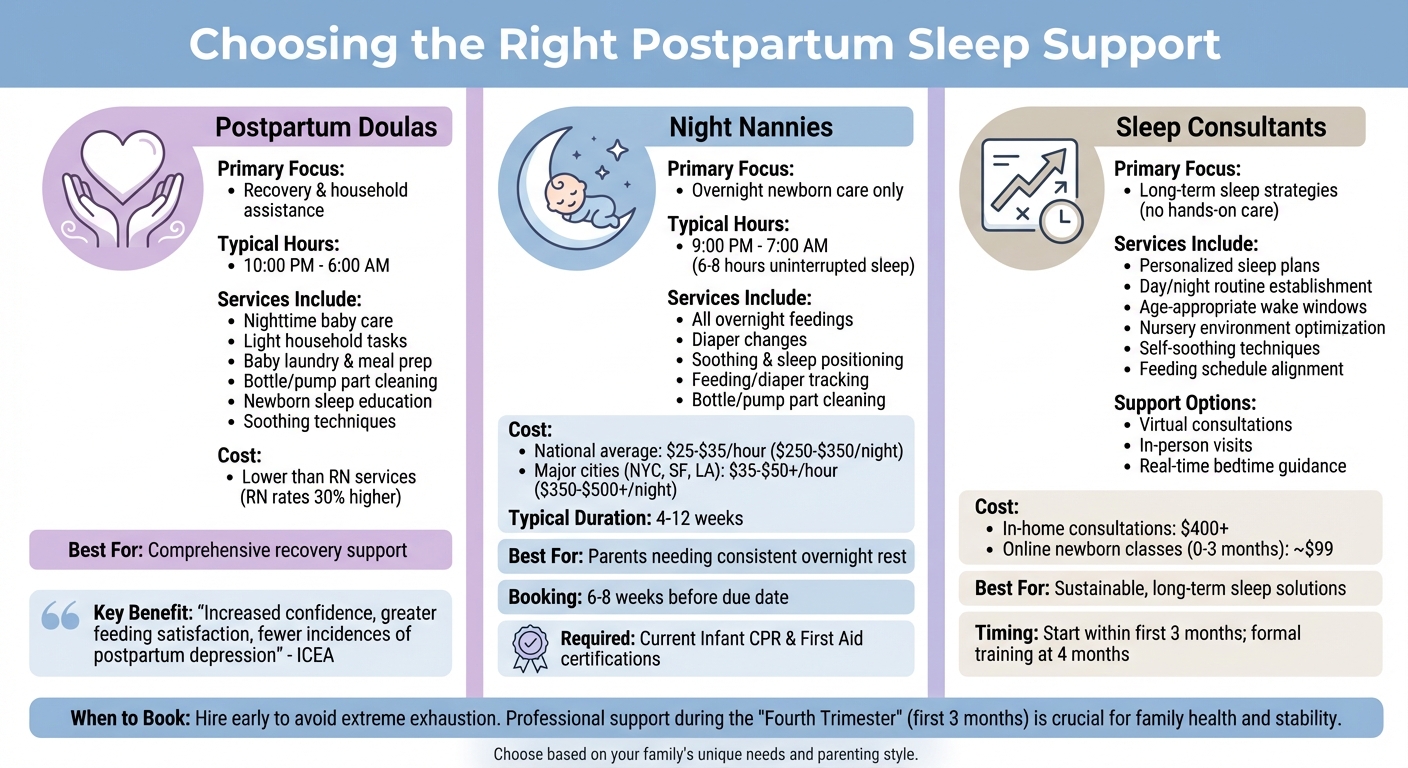
Types of Postpartum Sleep Support: Doulas, Night Nannies, and Sleep Consultants Compared
When sleep deprivation feels overwhelming, it’s worth exploring professional options like overnight care, household assistance, or long-term sleep strategies. These services are designed to help you regain much-needed rest and improve your overall sleep quality.
Postpartum Doulas: Recovery and Household Assistance
Postpartum doulas provide a blend of care for both you and your baby, focusing on your recovery while creating opportunities for rest. During overnight shifts - typically running from 10:00 p.m. to 6:00 a.m. - they manage nighttime care so you can sleep uninterrupted, regardless of your baby’s feeding routine.
Their support extends beyond nighttime care. They assist with light household tasks such as tidying, baby laundry, meal prep, and cleaning bottles and pump parts. Doulas also educate parents about newborn sleep patterns, techniques for soothing issues like reflux, and steps to help babies learn to sleep independently. The International Childbirth Education Association (ICEA) highlights the impact of postpartum doulas:
"The support a postpartum doula provides can have a lasting and important impact on the family. Postpartum support provides families with increased confidence in their new roles, a greater satisfaction in the feeding experience, and fewer incidences of postpartum depression".
While postpartum doulas are generally more affordable than registered nurse (RN)-supported night services, RN rates are about 30% higher due to their medical expertise. To avoid reaching a point of extreme exhaustion, families are encouraged to hire a doula early in the postpartum period.
Night Nannies: Overnight Newborn Care
Night nannies specialize in providing parents with 6–8 hours of uninterrupted sleep by taking over all aspects of overnight newborn care. Their role is more narrowly focused than that of postpartum doulas, centering exclusively on nighttime responsibilities. A typical shift runs from 9:00 p.m. or 10:00 p.m. to 6:00 a.m. or 7:00 a.m., during which they handle feedings, diaper changes, soothing, and ensuring safe sleep positioning.
Night nannies also track your baby’s feeding times, diaper changes, and wake periods, sharing this information to keep you informed about your baby’s habits. Additional tasks often include cleaning and sterilizing bottles and pump parts.
Most families use night nanny services for 4 to 12 weeks. Hourly rates vary depending on location: nationwide, the average ranges from $25 to $35 per hour ($250 to $350 per 10-hour night), while rates in cities like New York, San Francisco, and Los Angeles can climb to $35–$50+ per hour ($350–$500+ per night). As Lela Aylin from the Beverly Team explains:
"Severe sleep deprivation increases the risk of postpartum depression, impairs cognitive function, and strains even the strongest relationships".
To secure your preferred caregiver, book early - ideally 6–8 weeks before your due date. Make sure your nanny holds current Infant CPR and First Aid certifications.
Sleep Consultants: Long-Term Sleep Strategies
Sleep consultants take a different approach, focusing on creating sustainable sleep solutions rather than providing hands-on overnight care. They develop personalized sleep plans tailored to your family’s routine, addressing specific issues that disrupt your baby’s sleep. These plans consider factors like nursery setup, feeding schedules, and your baby’s unique needs.
Consultants help establish consistent day/night routines, age-appropriate wake windows, and ideal sleep environments with adjustments to lighting, temperature, and white noise. They also teach gentle techniques to encourage self-soothing and independent sleep, aligning their strategies with your parenting style. As Kooshlie Care explains:
"A sleep coach will assess your family's routine and identify factors that may be disrupting your baby's sleep. This personalized approach ensures that the recommendations fit your family's unique needs".
Support options vary, including virtual consultations, in-person visits, and real-time guidance during bedtime. In-home consultations typically start at $400+, while online classes for newborns (0–3 months) are around $99. Starting early - within the first three months - can help establish positive patterns before formal sleep training begins at four months. Before hiring a consultant, confirm that their methods align with your parenting preferences, whether you favor gentle techniques or other approaches.
How Nestling Supports Postpartum Sleep Recovery

Nestling helps families connect with verified postpartum caregivers during the crucial early months, particularly the first 90 days. By focusing on safety and tailoring care to individual needs, Nestling ensures parents receive the professional support they need to improve postpartum sleep.
Verified Caregivers for Postpartum and Newborn Care
Nestling holds its caregivers to strict standards. Every caregiver goes through thorough background checks, identity verification, and interviews. Certifications are confirmed through specialized Nestling training, and all services are safeguarded by signed NDAs. The platform offers a variety of experts, including postpartum doulas, infant care specialists, infant nurses, and lactation consultants. Whether you're looking for overnight care, feeding support, or light household assistance, Nestling pairs you with professionals equipped to meet your specific needs.
Personalized and Flexible Care Options
Nestling’s process is simple and designed to fit your life. You share your needs, choose from up to five matched caregivers, and start care immediately. Options include on-demand help, scheduled care, or backup support for unexpected situations like early or late arrivals. If immediate assistance is needed - like help with breastfeeding - you can consult specialists through video chats without leaving your home. While currently available in New York, Nestling has plans to expand to other major U.S. cities. This personalized approach helps create a smoother, more restful postpartum experience.
Benefits of Using Professional Care Services
Professional caregivers can ease the stress and exhaustion that often follow childbirth, aiding your physical recovery. Sophia L. from Astoria reflected on her Nestling experience:
"For six weeks, she was our nighttime superhero, letting me actually sleep and heal. Night and day difference from my first pregnancy when I was running on fumes."
Many parents share similar stories of relief and improved well-being. Skilled care during those early weeks can make all the difference, helping you recover and navigate the challenges of new parenthood with greater ease.
Conclusion: Taking Action for Better Postpartum Sleep
Postpartum sleep deprivation can feel overwhelming, but you don’t have to face it alone. Studies reveal that many new mothers struggle with sleep during those early months, and without addressing the issue, 41% may still deal with insomnia symptoms even two years later. This lack of rest can seriously affect your recovery, mental health, and relationship with your baby.
Acting early can make all the difference. Tackling sleep challenges before they spiral can help prevent postpartum insomnia from becoming a long-term issue and lower the chances of developing anxiety or depression. As Mimi Norris, a Baby & Toddler Sleep Strategist, wisely notes:
"It's extremely difficult to change a sleep situation when you yourself are exhausted".
This highlights the importance of seeking help sooner rather than later.
Getting professional support during the "Fourth Trimester" - those vital first three months - can be a game-changer. This isn’t about indulgence; it’s about ensuring your family’s health and stability. Whether it’s overnight care to help you rest, lactation support to ease feeding stress, or expert advice on baby sleep routines, the right guidance can completely reshape your postpartum experience.
If you're feeling persistently drained, struggling with daily tasks, or emotionally overwhelmed, don’t wait until things hit a breaking point. Services like Nestling connect you with trusted newborn care services that offer immediate solutions, from overnight assistance to tailored care plans. Prioritizing your sleep isn’t just self-care - it’s essential for your family’s well-being.
FAQs
Is this normal sleep loss or postpartum insomnia?
Normal sleep deprivation after childbirth is expected as parents adjust to caring for a newborn, and it typically gets better as routines fall into place. Postpartum insomnia, on the other hand, is different. It involves ongoing difficulty falling or staying asleep, even when the baby is resting. This can stem from hormonal shifts, heightened anxiety, or being overly alert to the baby’s needs. If these sleep issues become overwhelming or persist, seeking help from professionals like postpartum doulas or sleep consultants can be a game-changer. They can assist in creating better sleep habits and addressing any deeper issues contributing to the problem.
How do I choose a doula vs a night nanny vs a sleep consultant?
Choosing the right type of support depends on what you’re looking for.
- Postpartum doulas offer wide-ranging help, providing emotional, physical, and practical assistance for moms and families. They can support breastfeeding, guide newborn care, and even help with some household tasks.
- Night nannies are focused on overnight care, handling nighttime feedings and soothing, so parents can get some much-needed rest. They also help establish good sleep routines for infants.
- Sleep consultants are experts in addressing baby sleep challenges. They work on improving sleep patterns and creating healthy bedtime routines tailored to your family’s needs.
If you want broad, all-encompassing support, a doula might be the best fit. For nighttime relief, consider a night nanny. If sleep issues are your main concern, a consultant can help guide you through solutions.
When should I call my doctor right away about sleep deprivation?
If severe sleep deprivation is affecting your ability to function, if you're having thoughts of harming yourself or your baby, or if you're dealing with ongoing symptoms like extreme fatigue, depression, or anxiety, it's crucial to contact your doctor right away. These signs may point to a need for immediate assistance.









 Sign up with Google
 Sign up with Facebook