
Postpartum Doulas vs. Nannies: Choosing the Right Support

Postpartum Doulas vs. Nannies: Choosing the Right Support
Bringing a newborn home can be overwhelming. Whether you're recovering from childbirth or adjusting to sleepless nights, extra help can make a huge difference. The two most common options are postpartum doulas and nannies, but they serve different roles. Here's a quick breakdown to help you decide:
- Postpartum Doulas: Short-term support focused on the entire family, including physical recovery, emotional well-being, and newborn care education. They empower parents to feel confident and prepared.
- Nannies: Long-term caregivers dedicated to your child’s daily needs and development. They provide consistent childcare and help manage routines.
Quick Comparison:
| Feature | Postpartum Doula | Nanny |
|---|---|---|
| Focus | Whole family | Child-focused |
| Duration | Short-term (3–6 months) | Long-term (months to years) |
| Tasks | Recovery, education, family support | Childcare, meal prep, routines |
| Hourly Rate | $25–$75 | $25–$45 |
| Training | Certified (DONA, CAPPA, etc.) | Experience-based |
Key Takeaway: If you're navigating recovery and need guidance with newborn care, a postpartum doula is ideal. If you're looking for consistent childcare, a nanny may be the better choice. Some families opt for both, starting with a doula and transitioning to a nanny.
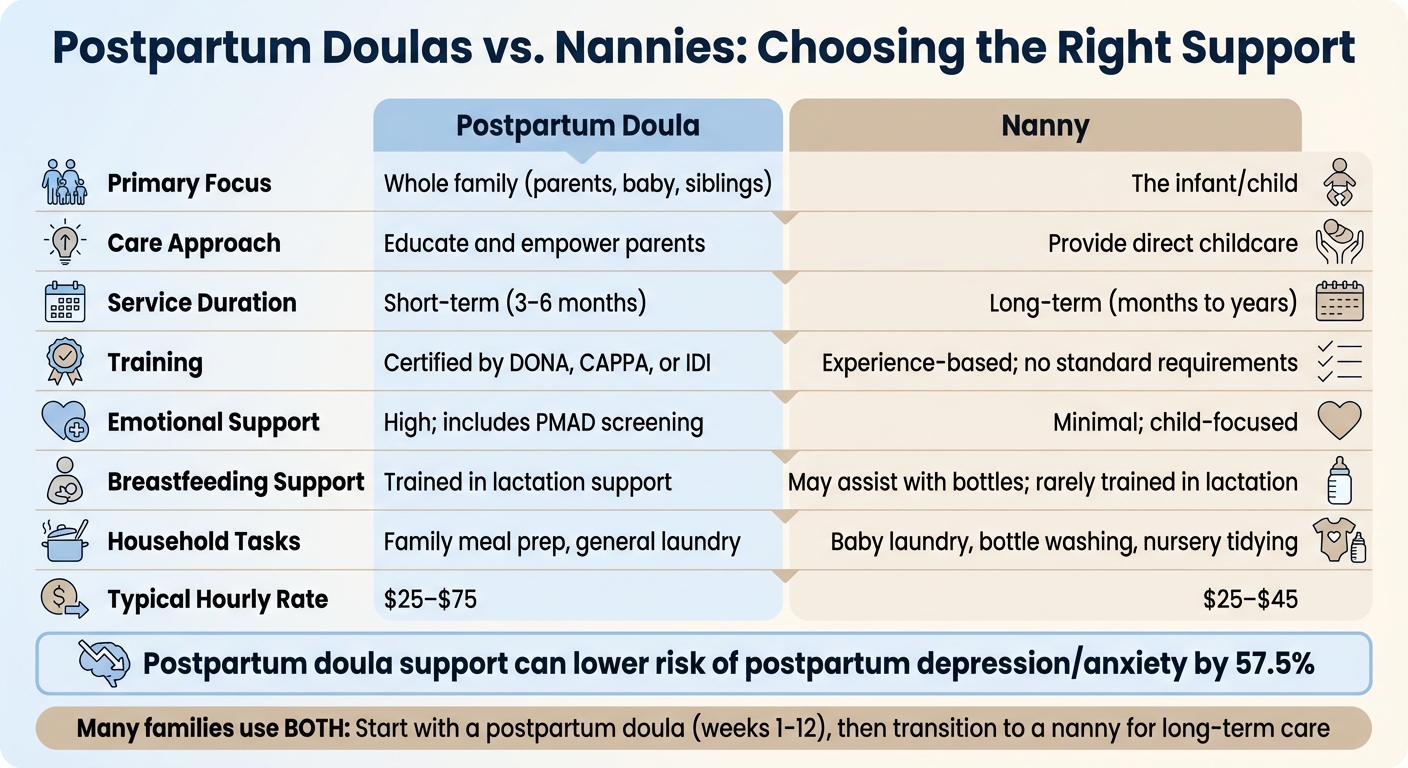
Postpartum Doulas vs Nannies: Key Differences Comparison Chart
What is the difference between a Night Nanny, Night Nurse and a Postpartum Doula?
sbb-itb-9ce2258
What Postpartum Doulas Offer
A postpartum doula provides support for the entire family during the crucial weeks and months following a birth. Unlike caregivers who focus solely on the baby, doulas address the needs of everyone in the household - the birthing parent, partner, and even siblings adjusting to the new addition. As postpartum doula Celina Coppetti puts it:
"A postpartum doula's focus is on supporting the whole family, emotionally, physically, and educationally."
This approach includes helping with physical recovery by preparing nourishing meals, assisting with C-section care, and encouraging rest. They also offer emotional support, creating a safe, nonjudgmental space to process the birth experience. Importantly, they are trained to recognize early signs of perinatal mood and anxiety disorders, which can lower the risk of postpartum depression or anxiety by 57.5%.
Postpartum doulas also focus on teaching essential newborn care skills, such as swaddling, soothing, bathing, diapering, and ensuring safe sleep practices. They provide guidance on breastfeeding and bottle feeding, including pumping techniques and milk storage. Rather than taking over, they aim to empower families. As Pam Skop, a postpartum doula and mental health counselor, explains:
"The idea is for the family to feel empowered once the postpartum doula leaves."
Postpartum Doula Responsibilities
Postpartum doulas typically work 4–8 hour shifts during the day or 8–12 hour shifts overnight. During the day, they focus on education and helping the household establish routines. Overnight, they handle infant care so parents can get much-needed rest.
Their duties include hands-on newborn care education, such as swaddling, babywearing, bathing, and trimming nails. They also assist with feeding, offering tips on latching, positioning, bottle preparation, and milk storage. For physical recovery, they may help with sitz baths, belly binding, and ensuring hydration and nutrition. On a practical level, they prepare nutrient-rich meals, manage laundry, clean bottles and pump parts, tidy up, and help siblings adjust to the new family dynamic.
Best Time to Hire a Postpartum Doula
The timing of hiring a postpartum doula is critical. The first 6 to 12 weeks after birth, often referred to as the "fourth trimester", is when their support is most beneficial. Many families start their search during pregnancy to secure availability, as skilled doulas often book up early. This also gives you time to interview candidates about their certifications (such as DONA or CAPPA), feeding philosophies, and experience with specific situations like multiples or sibling transitions.
For those on a budget, student doulas working toward certification may be an option. They often charge discounted rates, ranging from $15 to $30 per hour, in exchange for evaluation hours. Certified doulas, on the other hand, typically charge $30 to $80 per hour in major U.S. cities, with rates for overnight or specialized care for multiples reaching up to $100 per hour.
What Nannies Provide
A nanny offers long-term childcare, focusing on your child's daily needs and developmental progress. Unlike postpartum doulas, who provide short-term support for newborn care and recovery, nannies are a steady presence in your child's life, often staying with families for years. As Lighthouse Careers puts it:
"A professional nanny is a trained childcare specialist who provides dedicated, personalized care for children in their family home."
Nannies handle day-to-day tasks like feeding, diapering, bathing, dressing, and managing nap schedules. For families needing specialized medical or overnight assistance, professional newborn care services can provide additional expertise during the first few months. As your child grows, their role evolves to support new developmental milestones, ensuring continuity in care and routine.
Nanny Responsibilities
Nannies go beyond basic childcare to integrate daily routines with broader household needs. They plan age-appropriate activities like sensory games, crafts, and reading to encourage learning and development. For older children, nannies assist with homework, coordinate with teachers, and manage transportation to school and extracurricular activities.
Their responsibilities often include child-related tasks like preparing meals, doing the child's laundry, and keeping play areas organized . Many nannies are trained in CPR and First Aid, ensuring they can handle emergencies and follow health and safety protocols.
Elizabeth Malson, founder of the U.S. Nanny Institute, highlights the stability nannies offer:
"Nannies [tend to] have contracted, consistent work for at least three months, but usually a year or more."
In 2026, professional nannies typically earn $25 to $45 per hour. Live-in positions often come with annual salaries ranging from $60,000 to $85,000, along with benefits. If you’re hiring independently, remember to account for an additional 18–25% of gross wages to cover employer taxes like Social Security, Medicare, and unemployment insurance.
Best Time to Hire a Nanny
The best time to hire a nanny is when you’re preparing to return to work and need consistent, reliable childcare. Nannies excel at managing ongoing routines and supporting your child’s developmental needs. Ideally, schedule their start date to overlap with the end of your parental leave or postpartum doula support. This overlap ensures a smooth transition for both you and your child.
Allow ample time for the hiring process, including interviews, reference checks, and a 2- to 4-week trial period to confirm the nanny is the right fit. By planning ahead, you can create a seamless care strategy that meets your family’s needs.
How Postpartum Doulas and Nannies Differ
Choosing between a postpartum doula and a nanny often comes down to understanding their distinct roles and how they align with your family's needs. While postpartum doulas focus on supporting the entire family, nannies are dedicated solely to the child. Here’s a detailed look at how these roles differ.
When it comes to caregiving, their approaches are quite different. Postpartum doulas aim to empower parents by teaching essential newborn care skills. On the other hand, nannies provide consistent, hands-on care for the child.
The emotional support offered by each role also varies. Postpartum doulas are trained to recognize postpartum mood and anxiety disorders (PMADs) and provide compassionate, nonjudgmental support. As Christine Becerra, a Certified Full-Spectrum Doula, puts it:
"A postpartum doula isn't just here for the baby - we're here for the whole family"
In contrast, nannies typically do not address parental mental health or provide related resources.
Household responsibilities further highlight their differences. Doulas often take on tasks like preparing meals for parents and handling general laundry to ease the recovery process. Nannies, however, focus on child-specific duties such as cleaning bottles, washing baby clothes, and organizing play areas. Additionally, the duration of their services differs: doula support is typically short-term, lasting 3 to 6 months, whereas nannies are often hired for long-term care, potentially staying with families for years.
Comparison Table: Postpartum Doulas vs. Nannies
| Feature | Postpartum Doula | Nanny |
|---|---|---|
| Primary Focus | Whole family (parents, baby, siblings) | The infant/child |
| Care Approach | Educate and empower parents | Provide direct childcare |
| Service Duration | Short-term (typically 3–6 months) | Long-term (months to years) |
| Training | Certified by DONA, CAPPA, or IDI | Often experience-based; no standard requirements |
| Emotional Support | High; includes PMAD screening | Minimal; child-focused |
| Breastfeeding Support | Trained in lactation support | May assist with bottles; rarely trained in lactation |
| Household Tasks | Family meal prep, general laundry | Baby laundry, bottle washing, nursery tidying |
| Typical Hourly Rate | $25–$75 | $25–$45 |
Training and Qualifications
Postpartum doulas earn formal certifications from organizations like DONA International, CAPPA, or the International Doula Institute (IDI). These programs follow an evidence-based curriculum that covers topics such as lactation support, physical recovery, and postpartum mood and anxiety disorders (PMADs). Aliza Juliette Bancoff, Founder of the International Doula Institute, highlights the importance of this training:
"As a globally recognized doula training, IDI uses evidence-based curriculum to ensure our certified doulas understand their role in supporting families."
In contrast, nannies typically rely on hands-on experience rather than standardized certifications. Jenna Clarke, an Advanced Certified Newborn Care Specialist at Mālama Momma, points out this distinction:
"There are no set training requirements for nannies, whereas a Newborn Care Specialist or postpartum doula does."
This lack of standardized training for nannies underscores key differences in how their qualifications are verified. For postpartum doulas, certification often plays a crucial role in meeting requirements for insurance coverage and employer benefit programs. Certified doulas also participate in ongoing education, focusing on safe infant sleep practices and feeding. On the other hand, nanny qualifications remain largely unregulated, and continuing education is not a common expectation.
The training priorities for these roles also diverge significantly. Doula education focuses on providing comprehensive family support, including helping mothers recover and encouraging parent–infant bonding. Meanwhile, nannies concentrate on child development, safety, and executing care plans directed by parents.
Cost Differences
When planning for postpartum support, understanding the financial differences between postpartum doulas and nannies is essential. These roles not only differ in cost structure but also in the duration of their services.
Postpartum doulas typically charge hourly rates, ranging from $25 to $50 per hour nationwide, with rates climbing to $75 per hour in high-cost areas like New York City. Many doulas offer short-term packages designed for the first 4–12 weeks after birth. For example, daytime packages often start at $700, while overnight packages can begin at $1,950.
On the other hand, nannies are a long-term commitment with a different pricing model. As of 2026, the national average hourly rate for a nanny is $21.75, translating to about $870 per week for full-time care of one child. However, location plays a significant role in determining nanny rates. For instance, nannies in San Francisco average $29.17 per hour, while those in San Antonio earn closer to $18.37 per hour. Michelle LaRowe, Lead Educator at Global Nanny Training, highlights the importance of planning for regular pay adjustments:
"A 2-3% cost-of-living raise, in addition to a 5-7% merit increase, is fairly standard".
Nannies also come with additional financial responsibilities that families must consider. Unlike doulas, hiring a nanny makes the family a legal employer, responsible for payroll taxes, overtime pay (time-and-a-half for hours over 40 per week), and benefits. Families must also manage workers' compensation and unemployment taxes once a nanny’s annual pay exceeds $3,000. Additional expenses, such as background checks and payroll service fees, further increase the total cost. Gabriela Gerhart, Founder of Motherhood Center, adds:
"It's fairly standard to tack $1-2 onto the proposed hourly rate for common household tasks like meals or laundry for the whole family".
Specialized credentials and services can influence costs for both roles. Certified doulas often charge more than uncertified providers. Families seeking medical-level care may opt for Registered Nurses who provide overnight newborn care at rates of $800 to $1,000 per night. Doulas may also charge extra for specific needs, such as $5 to $10 per hour for twins or triplets, or $5 to $15 per hour for "awake care", where they remain alert throughout the night.
Finding the Right Support with Nestling
Once you've compared roles and costs, the next step is finding the right support. That’s where Nestling comes in. This platform simplifies the process of connecting with caregivers who genuinely meet your needs. Nestling specializes in linking families with vetted professionals, including postpartum doulas trained through well-regarded programs like DONA International and CAPPA. Every caregiver undergoes thorough background and identity checks, personal interviews, reference verifications, and certification reviews before being added to the platform.
The matching process is tailored to your unique situation. Whether you need overnight care, lactation support, or help with multiples, Nestling helps you identify and interview up to five potential caregivers. As Clara G. from Prospect Heights shared, "Nestling was my lifeline. They set up interviews with doulas and gave me questions to ask when my brain was mush." This thoughtful process ensures a smooth transition from selection to ongoing care.
Nestling also stands out with its no-substitute policy, guaranteeing that the caregiver you interview and hire is the one who shows up - no unexpected replacements. And for those unpredictable moments, the platform offers backup care options. Emma S. from the Upper East Side said, "So, our little guy decided to show up 4 weeks early... Nestling promptly delivered. Got us a backup specialist the day we got home. Lifesaver!"
Scheduling is flexible to suit a variety of needs, from daytime and overnight shifts to live-in arrangements. Hourly rates for postpartum doulas range from $35–$75, with New York rates on the higher side. Deposits for hiring are securely held and only released after services are completed. Along with flexible scheduling, Nestling provides proactive support throughout your care journey.
Beyond matching caregivers, Nestling offers ongoing assistance. Families can access on-demand video chats for urgent needs, like breastfeeding challenges. Rachel K. from Tribeca recalled, "In those early, overwhelming days, having Nestling's support on demand was seriously a lifesaver." The platform also maintains a feedback system to monitor caregiver performance and ensure families are satisfied with their care.
Conclusion
Select the doula or nanny for your newborn that best suits your family’s immediate needs. Postpartum doulas focus on helping you recover, building your confidence as a new parent, and teaching you how to care for your baby independently. On the other hand, nannies provide consistent, long-term care for your child’s daily needs.
As Doula Care puts it, “We want to work our way out of a job.” Doulas aim to empower you to feel self-sufficient, while nannies are there to manage ongoing childcare. If you’re navigating recovery, breastfeeding, or the early adjustment to parenting, a postpartum doula can offer comprehensive support during this critical time.
Many families find success by combining both options - starting with a postpartum doula for the first four to 12 weeks to establish routines and confidence, then transitioning to a nanny for long-term childcare. This approach can balance the immediate needs of the postpartum period with the demands of ongoing childcare.
When planning your next steps, think about your recovery, work schedule, and the support you already have. If family isn’t nearby or your partner returns to work quickly, professional help can be a game-changer. Nestling makes this process easier by connecting you with trusted caregivers - whether you need a certified postpartum doula for those first weeks or are preparing for long-term childcare. Their matching process ensures you receive tailored support, from overnight care to lactation guidance.
Choose the right support to make your postpartum experience smoother and better serve your family’s needs.
FAQs
Can I hire both a postpartum doula and a nanny?
Yes, you can hire both, as their roles work well together. A postpartum doula offers emotional support, physical assistance, and guidance to the family during the postpartum phase. On the other hand, a nanny focuses on long-term child care and helps establish daily routines. Together, they provide well-rounded support for both the baby and the parents.
How do I decide between daytime and overnight doula support?
During the postpartum period, it’s important to think about what kind of support your family might need. Daytime doulas can be a huge help by assisting with newborn care, offering breastfeeding guidance, managing light household chores, and providing emotional support. This can give parents more time to rest and bond with their baby.
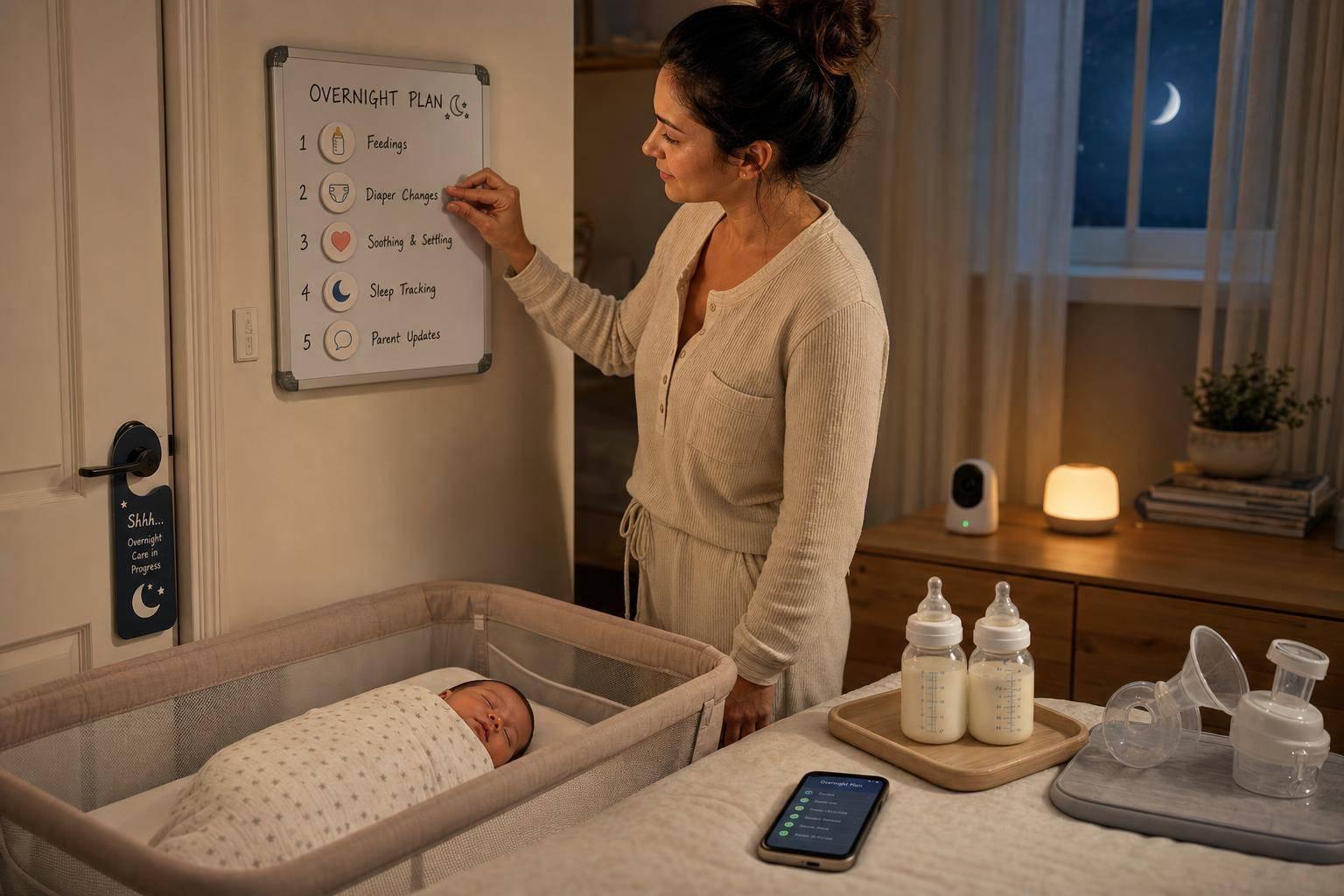
On the other hand, overnight doulas focus on nighttime care, including feedings, diaper changes, and soothing the baby, so parents can get some much-needed sleep and recover more effectively.
If you feel like your family could benefit from both types of support, a combination of daytime and overnight care might be the perfect solution.
What should I ask when interviewing a doula or nanny?
When considering postpartum or infant care professionals, it's essential to ask the right questions to ensure they align with your family's needs. Here are some key topics to cover during your conversation:
- Services Provided: What specific services do they offer? This could include childcare, emotional support, or help with household tasks.
- Training and Certifications: Do they have any formal training or certifications in areas like postpartum or infant care?
- Family Support Approach: How do they contribute to the emotional and physical well-being of the entire family?
- Overnight Care and Chores: What are their policies regarding overnight care or assisting with household chores?
- References and Availability: Can they provide references from past clients, and what does their current availability look like?
These questions will help you understand their qualifications and approach, ensuring they can meet your family's unique needs.






 Sign up with Google
 Sign up with Facebook