
What Does a Night Nanny Do?

What Does a Night Nanny Do?
A night nanny helps parents by taking care of newborns during the night, ensuring parents get uninterrupted sleep. They typically work overnight shifts, managing feedings, diaper changes, and soothing babies back to sleep. For breastfeeding mothers, they assist with nursing and handle burping and settling the baby. Night nannies also log the baby’s activities for parents to review in the morning.
Key Responsibilities:
- Overnight Care: Feeding (bottle or breastfeeding support), diaper changes, soothing, and monitoring the baby’s sleep environment.
- Parental Rest: Allowing parents to sleep through the night to recover physically and mentally.
- Light Baby-Related Chores: Cleaning bottles, tidying the nursery, restocking supplies, and prepping for the next day.
- Morning Updates: Providing care logs detailing the baby’s overnight routine.
Why Hire a Night Nanny?
- Reduces sleep deprivation, which can lead to postpartum depression.
- Supports physical recovery, especially after childbirth or cesarean delivery.
- Helps manage care for multiples (twins, triplets, etc.).
- Assists in establishing healthy sleep routines for babies.
Night nannies are usually hired for 4 to 12 weeks, with shifts costing $250–$500 per night, depending on location. They provide expertise and peace of mind during the challenging early weeks of parenthood.
Main Duties of a Night Nanny
Overnight Infant Care
Night nannies handle all the postnatal care for newborns during the night. For bottle-fed babies, they manage nighttime feedings, while for breastfeeding families, they bring the baby to the mother for nursing. Afterward, they take care of burping, changing diapers, and soothing the baby back to sleep, ensuring the mother gets as much rest as possible.
Between feedings, night nannies focus on creating a calm and safe sleeping environment. They may use techniques like swaddling, gentle rocking, or white noise to help the baby settle. They also monitor room conditions, such as temperature and sleep positioning, to ensure the baby’s safety. In the morning, parents can review detailed care logs, which summarize the baby’s overnight activities. Many night nannies also offer guidance on sleep training, helping babies develop self-soothing skills and healthier sleep patterns over time.
These overnight duties provide a key benefit for parents.
Helping Parents Get Rest
The main purpose of hiring a night nanny is to allow parents to enjoy uninterrupted sleep. This is particularly valuable because severe sleep deprivation has been linked to postpartum depression and reduced mental clarity. By taking on all the nighttime responsibilities, night nannies enable parents to get the deep rest they need for recovery and overall well-being.
Parents can rely on their nanny to manage the night entirely, often closing their bedroom doors to ensure they aren’t disturbed. When morning comes, a quick review of the care log gives parents a clear picture of their baby’s night, helping them start the day on a more refreshed and informed note.
sbb-itb-9ce2258
Other Tasks Night Nannies Handle
Light Household Duties
Night nannies take care of several baby-related chores that help keep things running smoothly for both parents and their little ones. They clean and sterilize bottles, nipples, and breast pump parts used during the night, ensuring they’re ready for use the next day.
Kristin Revere, Founder of Gold Coast Doulas, highlights this aspect of their role: "what your night nanny will take care of is washing baby's bottles and any parts associated with their feedings, as well as tidying up the nursery and baby station before they leave - nope, there's no waking up to a mess from the night before!"
In addition to cleaning, night nannies restock diaper stations, empty diaper pails, and handle related trash. Some may even fold baby laundry, like swaddles, burp cloths, and onesies. However, tasks such as general household laundry or deep cleaning are usually outside their scope unless specifically agreed upon. It’s always a good idea to clarify expectations about these light duties during the initial interview.
By the time their shift is winding down, night nannies ensure everything is set for a smooth start to the day.
Morning Preparation
Once the nursery is in order, night nannies often turn their attention to setting up for the morning. Before wrapping up their shift, typically between 6:00 a.m. and 7:00 a.m., they prepare bottles for the next feedings and tidy up the kitchen or prep area. Parents can then review the care log left by the nanny, giving them a clear picture of the night’s activities and helping them feel ready to start their day.
What Does A Night Nanny Do? Pt. 2 | The New Mummy Company | (2020)

A Typical Night Nanny Shift
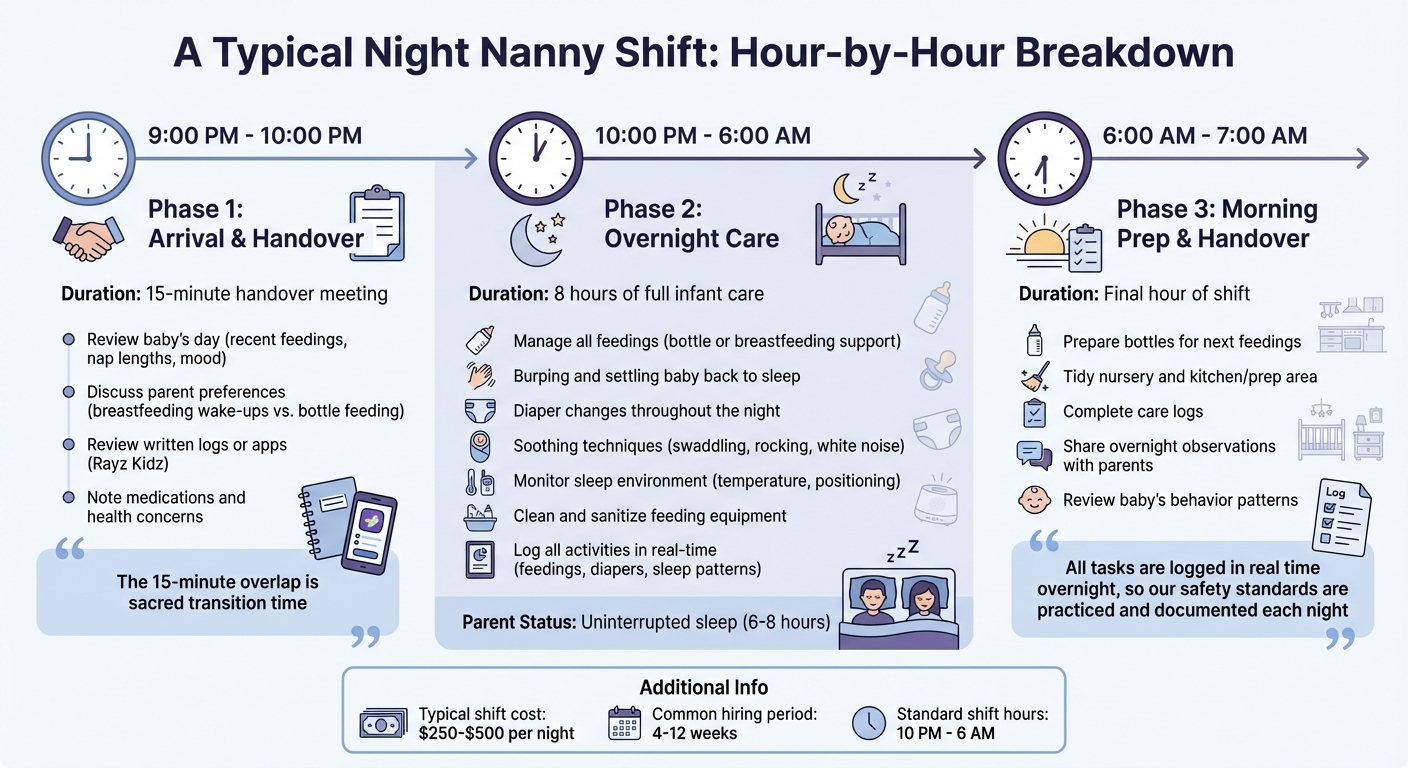
Night Nanny Typical Shift Schedule and Responsibilities
Arrival and Parent Handover
A night nanny's shift generally begins between 9:00 p.m. and 10:00 p.m., starting with a crucial 15-minute handover. This brief meeting ensures the nanny has all the details needed for a seamless night.
During this time, parents share key updates about their baby's day - like recent feedings, nap lengths, and overall mood. They also specify any preferences for the night, such as whether they want to be awakened for breastfeeding or if the nanny should handle all bottle feedings independently. As Adventure Nannies highlights:
The 15-minute overlap is sacred transition time. It's not a buffer for you to be late... it acknowledges their importance and sets a clear, respectful expectation for a professional end-of-day routine.
To ensure nothing is missed, parents are encouraged to use tools like a written log or apps such as Rayz Kidz to record feeding schedules, medications, and any health concerns. Once the handover is complete, the nanny takes over the overnight routine.
Overnight Care Schedule
From 10:00 p.m. to 6:00 a.m., the night nanny takes charge of all infant care, allowing parents a full night of rest. This includes managing feedings - whether bottle-feeding or assisting with breastfeeding - followed by burping and settling the baby back to sleep.
The nanny also handles diaper changes, employs soothing techniques like swaddling or rocking, and monitors the baby's sleep environment to ensure safety and comfort. Keeping hygiene in mind, they clean and sanitize feeding equipment and maintain detailed, real-time logs of feedings, diaper changes, and sleep patterns.
The shift wraps up between 6:00 a.m. and 7:00 a.m. with a final handover. During this time, the nanny reviews the overnight logs and shares any observations about the baby's behavior or emerging patterns. Let Mommy Sleep emphasizes the importance of this documentation:
All tasks are logged in real time overnight, so our safety standards are practiced and documented each night.
This thorough overnight care not only provides parents with peace of mind but also equips them with detailed insights to start their day feeling informed and rested.
Qualifications and Skills of a Night Nanny
Required Certifications and Training
When it comes to hiring a professional night nanny, Infant CPR and First Aid certification is non-negotiable. These certifications ensure a caregiver is prepared to handle emergencies and must be renewed every two years, so always confirm they’re current before making a decision.
Many experienced night nannies go beyond basic training to gain specialized credentials. For instance, the NAPS Night Doula Certificate focuses on evidence-based practices, such as safe sleep guidelines, breastfeeding support, and nursery organization. For those seeking even more advanced qualifications, programs like the Newborn Care Specialist Association (NCSA), NCS Academy, and International Nanny Association (INA) provide in-depth training for newborn care professionals. Additionally, the US Nanny Institute offers accredited certifications in Newborn and Infant Care through NCFE CACHE, further solidifying a nanny’s expertise.
These programs cover a range of essential skills, including safe sleep practices, feeding techniques, soothing strategies, and health monitoring. As Newborn Care Certified puts it:
The NAPS Night Doula Certificate... establishes a national standard for professional newborn and postpartum education in the United States. The program brings structure, safety and accountability to an otherwise unregulated caregiving field.
While certifications ensure technical know-how, personal qualities are just as critical for building trust and providing excellent care.
Important Traits of a Good Night Nanny
Beyond certifications, the best night nannies possess key personal qualities. Traits like patience, attentiveness, and reliability are essential. Patience helps them calmly handle frequent night wakings, while attentiveness ensures they’re always monitoring the baby’s safety.
Equally important are strong communication skills. A great night nanny will provide detailed morning updates and keep thorough logs to help parents track their baby’s sleep and feeding routines. Flexibility is another vital trait - it allows the nanny to align with the family’s parenting preferences, whether that involves gentle sleep shaping or other approaches.
Together, these technical skills and personal attributes create the foundation for exceptional overnight care.
Benefits of Hiring a Night Nanny
Night nannies play a key role in supporting both parental rest and a baby's development, creating a healthier and more balanced environment for the entire family.
Better Sleep and Well-Being for Parents
One of the biggest advantages of hiring a night nanny is the chance for parents to get six to eight hours of uninterrupted sleep - a necessity for physical recovery and emotional health. Without proper rest, mental clarity can decline, and there’s a higher risk of postpartum depression. This service can be especially helpful for single parents, families with multiples like twins or triplets, or those needing to return to work soon after childbirth.
Building Healthy Routines for the Baby
Night nannies do more than just help parents rest - they also focus on creating healthy, long-term routines for the baby. By establishing consistent feeding and sleep schedules, they support the baby’s overall development. Their approach includes minimizing distractions, keeping lights dim, and using effective swaddling techniques to help the baby learn the difference between day and night. As Laura Hunter, LPN, and Jennifer Walker, RN, BSN, from Moms on Call explain:
"Middle-of-night feedings are what we call 'strictly business.' Try to keep distractions minimal."
Additionally, night nannies keep detailed logs of feeding times, amounts consumed, diaper changes, and wakeful periods. This information gives parents a clearer understanding of their baby’s natural patterns and helps ease the transition from feeding every two to three hours to on-demand feeding as the baby grows. These routines also contribute to smoother mornings.
Easier Mornings
A well-rested night leads to calmer mornings. Night nannies provide parents with a full update on overnight activities, ensuring they wake up informed and ready to start their day. This seamless handoff helps create a stress-free morning routine, allowing everyone to begin the day on the right foot.
Conclusion
Night nannies take on all aspects of overnight infant care - from feedings and diaper changes to soothing - allowing parents to enjoy six to eight hours of uninterrupted sleep, which is crucial for recovery and mental health.
In addition to providing much-needed rest, night nannies bring a wealth of expertise to the table. They assist in establishing healthy sleep routines, help babies learn to self-soothe, and offer insights into the baby’s natural rhythms. These contributions make the transition into parenthood smoother and less overwhelming, which is why many families see the value in hiring a night nanny despite the expense.
Most families hire night nannies for a period of four to twelve weeks, with shifts typically running from 10 p.m. to 6 a.m. Fees range from about $250 to $350 per night, or $350 to $500+ in larger metropolitan areas. For many, this is a worthwhile investment in better sleep, improved mental well-being, and expert infant care.
Whether you’re navigating parenthood as a single parent, preparing for multiples, or recovering postpartum, a night nanny can transform those challenging early weeks into a more manageable and balanced experience. Their support offers families the chance to embrace parenthood with greater confidence and energy, making night nannies an essential part of effective postpartum care.
FAQs
How do I know if a night nanny is worth it for my family?
If you're struggling with sleep deprivation after bringing your baby home, hiring a night nanny might be worth considering. A night nanny takes care of overnight duties - like feedings and diaper changes - so you can rest and recharge. This can be especially helpful if lack of sleep is impacting your health, mood, or ability to care for your little one during the day.
The cost typically falls between $25 and $40 per hour, and many families opt to hire a night nanny for a few nights a week during those exhausting first few months postpartum.
What should I ask in a night nanny interview?
When you're interviewing a night nanny, it's important to cover their experience, skills, and how they approach overnight infant care. Here are some key questions to guide the conversation:
-
What is your experience with overnight tasks like feeding, soothing, and diaper changes?
This helps you understand their hands-on experience with the basics of nighttime care. -
How do you handle challenges like fussiness or difficulty settling the baby?
Their answer can give you insight into their problem-solving skills and patience. -
Are you certified in CPR and First Aid?
Safety is non-negotiable, so this ensures they're prepared for emergencies. -
How do you keep parents informed about the baby’s progress?
Clear communication is essential, and this will reveal how they plan to keep you updated.
Asking these questions will help you evaluate their qualifications and whether they’re a good fit for your family.
How do we set clear boundaries on chores and sleep-training?
To establish clear boundaries, outline the night nanny's duties from the start. These typically include overnight infant care, such as feeding, changing diapers, and soothing the baby. However, tasks like household chores or daytime responsibilities should be excluded unless specifically agreed upon. If sleep training is part of the arrangement, decide whether the nanny will help with that process or if it will be handled separately. Open communication early on ensures everyone knows their role, avoids confusion, and promotes consistent care and sleep routines.










 Sign up with Google
 Sign up with Facebook