
Night Nannies and Postpartum Routines

Night Nannies and Postpartum Routines
Night nannies can be a game-changer for new parents navigating the exhausting early weeks of parenthood. These caregivers focus on overnight infant care, allowing parents to get 6–8 hours of uninterrupted sleep - critical for physical recovery and mental well-being.
Here’s what you need to know:
- What they do: Handle feeding, diapering, burping, and soothing during the night.
- Who they help: Parents of newborns, especially those recovering from childbirth, caring for multiples, or balancing work.
- Costs: Typically $25–$35/hour, with total costs ranging from $4,500 to $24,000 depending on the duration and frequency of service.
- Benefits: Reduced sleep deprivation, lower risk of postpartum depression, and smoother transitions to independent newborn care.
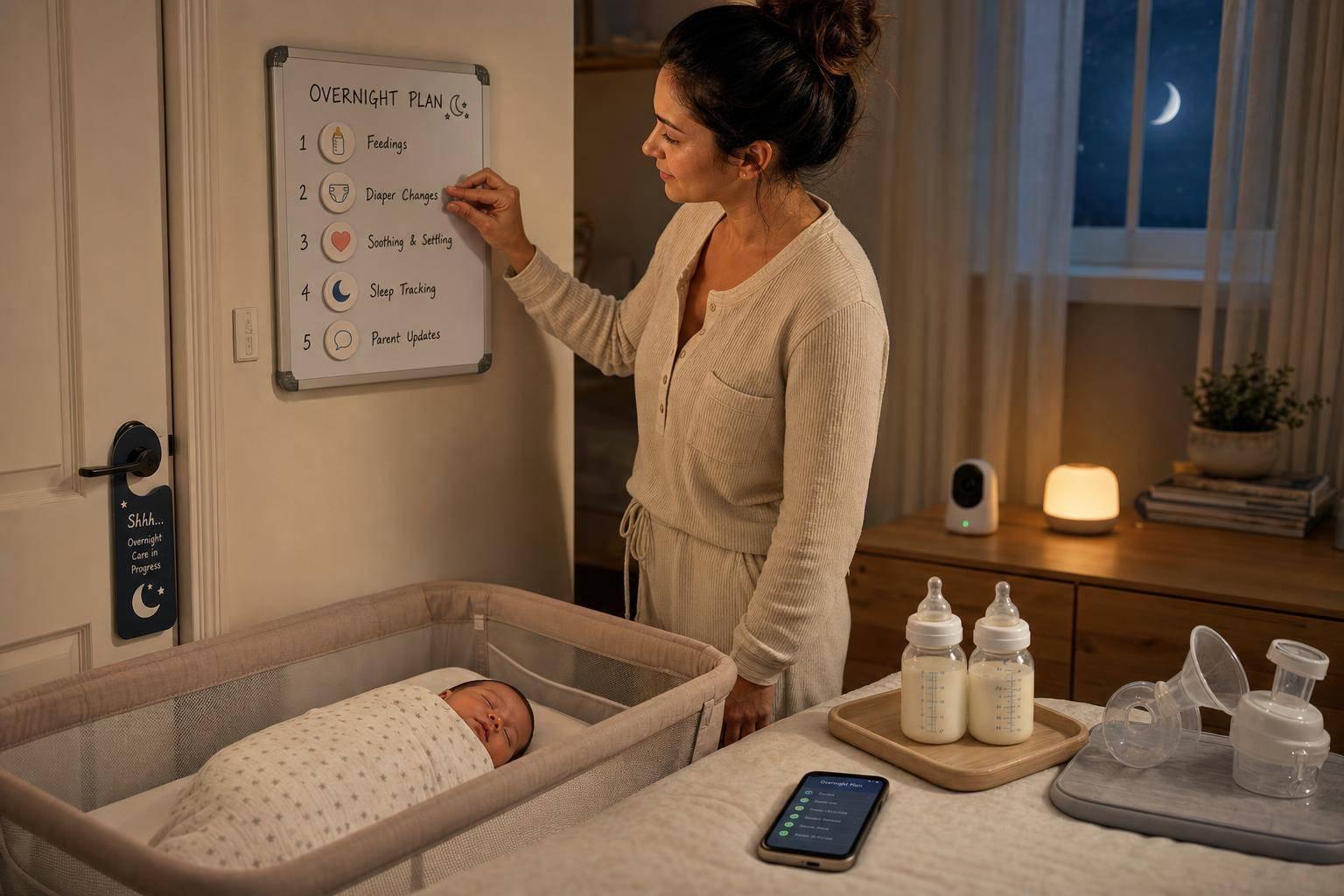
Night nannies also assist in setting up routines, tracking feeding and sleep patterns, and providing morning updates to help parents better understand their baby's needs. Services like Nestling connect families with vetted caregivers, offering tailored overnight care plans that meet individual family requirements.
If you're overwhelmed by sleepless nights, hiring a night nanny might be the solution you need to regain rest and confidence in your parenting journey.
Sleep Challenges New Parents Face After Birth
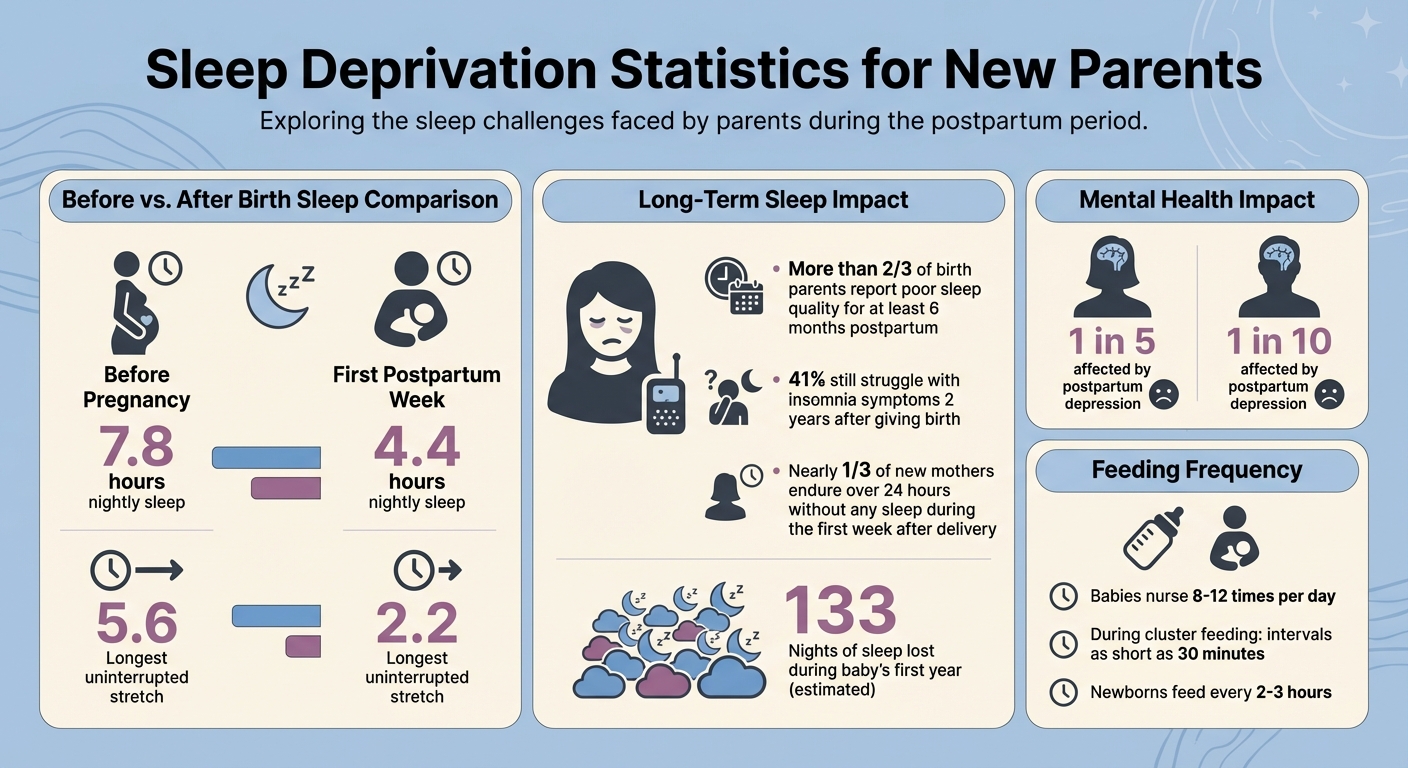
Sleep Deprivation Statistics for New Parents in the First Postpartum Year
Caring for a newborn means feeding them every two to three hours, a routine that leads to "sleep fragmentation." This term refers to repeatedly being pulled out of deep, restorative sleep stages before the body can fully benefit from them. For new mothers, the change is stark: their nightly sleep drops from 7.8 hours before pregnancy to just 4.4 hours in the first postpartum week. The longest uninterrupted stretch? It falls from 5.6 hours to only 2.2 hours.
Even when parents manage to get seven hours of sleep, the fragmented nature leaves them feeling drained. Dr. Teresa Lillis from Washington State University explains:
"These findings explain why new mothers continue to feel exhausted even when they get the recommended 7 or more hours of sleep per night".
The issue is not just about how much sleep parents get but how little of it allows them to reach the deep sleep and REM cycles that are crucial for memory, mood stability, and immune health.
How Sleep Deprivation Affects New Parents
The effects of sleep deprivation go far beyond just feeling tired. More than two-thirds of birth parents report poor sleep quality for at least six months postpartum, and around 41% still struggle with insomnia symptoms two years after giving birth. Shockingly, nearly a third of new mothers endure over 24 hours without any sleep during the first week after delivery. This extreme exhaustion increases the risk of postpartum depression, affecting 1 in 5 birth parents and 1 in 10 non-birth parents.
Sleep deprivation also disrupts basic cognitive functions. Tasks like focusing, making decisions, or managing emotions become overwhelming - all while caring for a newborn. Many parents experience hypervigilance, where their nervous system remains on high alert, making it nearly impossible to relax. On top of this, hormonal shifts, postpartum pain, and night sweats further interfere with sleep.
This combination of physical and mental strain highlights why additional support, like night nannies, can make such a difference.
Disrupted Routines During the Postpartum Period
Trying to establish a routine with a newborn is an uphill battle. Babies nurse 8 to 12 times a day, and during growth spurts, cluster feeding can reduce intervals to just 30 minutes. Since newborns don’t develop a circadian rhythm until about three months old, their unpredictable schedule throws off parents’ internal clocks. This leaves parents feeling like shift workers, forced to stay awake when their bodies are naturally wired to sleep.
The chaos isn’t limited to nighttime. Exhaustion makes it hard to keep up with household chores, personal care, or maintaining social connections. The mental fog from sleep loss makes planning and organization feel impossible, creating a vicious cycle where fatigue prevents parents from building routines that could help lighten the load.
These constant disruptions to sleep and daily life make it clear why outside help is so important during the postpartum recovery period.
sbb-itb-9ce2258
How Night Nannies Support Postpartum Recovery
A night nanny takes over all aspects of infant care from around 10:00 p.m. to 6:00 a.m., allowing parents to get uninterrupted sleep - a crucial factor in mental and physical recovery during the early days of parenthood. As Lela Aylin from the Beverly Team puts it:
"A night nanny exists to solve exactly this problem [sleep deprivation]. They arrive in the evening, take over all overnight infant care, and leave in the morning - giving you six to eight hours of uninterrupted sleep."
Sleep deprivation is no small matter. Without help, parents can lose an estimated 133 nights of sleep during their baby's first year. By hiring a night nanny, families can stabilize their sleep patterns, which reduces the likelihood of postpartum depression and cognitive challenges. But the benefits go beyond just sleep - night nannies also take on detailed infant care tasks throughout the night.
Overnight Newborn Care Tasks
Night nannies manage every aspect of infant care while parents rest. For bottle-fed babies, they prepare and feed bottles. For breastfed babies, the nanny assists with nursing and handles all post-feeding tasks, such as burping, diaper changes, and soothing, to minimize the time a mother needs to be awake. Between feedings, they focus on settling the baby back to sleep using techniques like swaddling, rocking, white noise, and monitoring room temperature to ensure comfort and safety. They also ensure that the baby is always positioned safely for sleep.
In addition to hands-on care, night nannies maintain detailed logs of the night’s activities, including feeding times, amounts, diaper changes, and wake periods. These records become incredibly useful for parents during the morning handoff.
Allowing Parents Uninterrupted Rest
A night nanny’s primary goal is to let parents sleep without disturbances. For mothers recovering from C-sections or labor-related injuries, this means avoiding the physical strain of getting up multiple times a night. Even breastfeeding mothers benefit greatly, as the nanny brings the baby to feed and then takes over burping and settling, limiting the mother’s wake time to just 15–20 minutes.
To make the most of this support, experts suggest parents close their bedroom door and use a white noise machine to avoid waking at every small sound the baby makes. Kristin Revere, founder of Ask The Doula, highlights the customizable nature of night nanny services:
"Your night nanny works for you, meaning you get to tell them how little or how much you want them to be involved with caring for your little one while you get some much-needed rest."
This uninterrupted sleep is what Lela Aylin describes as "a critical component of postpartum mental health recovery". It’s this restorative rest that makes night nannies such an essential support system for families during the exhausting early weeks of parenthood.
Creating Flexible Postpartum Routines with Nestling

Every family's postpartum experience is different. Whether you're managing multiples or navigating unique feeding choices, Nestling understands that no one-size-fits-all approach works. That’s why they treat postpartum care plans as living documents - designed to adapt as your family’s needs shift during the fourth trimester. By building on the traditional night nanny model, Nestling offers a more dynamic and personalized approach to postpartum care.
Vetted Caregivers and Specialist Support
Nestling connects families with highly qualified caregivers, including postpartum doulas, lactation consultants, and infant care specialists. Each caregiver undergoes thorough background checks, reference reviews, and certification verifications before joining the platform. This ensures families can feel confident in the expertise and reliability of the support they receive.
These caregivers seamlessly integrate into your household routine. For breastfeeding mothers, they bring the baby for nursing and then handle tasks like burping, diaper changes, and settling the baby back to sleep - minimizing interruptions to the mother’s rest. For families using bottles, caregivers take care of all nighttime feedings independently. Beyond feeding, their support covers a wide range of needs, such as nutrition guidance, managing visitors, and checking in on parents' mental well-being.
Customized Overnight Care Plans
Nestling’s caregivers are the heart of tailored overnight care, creating routines that adapt to your family’s specific needs. Whether you prefer gentle sleep guidance or a more structured approach, the platform offers flexible scheduling options to accommodate situations like caring for multiples, infants with reflux, or single-parent households.
Each morning, caregivers provide detailed logs outlining feeding amounts, diaper changes, and sleep patterns. This helps parents fine-tune their daytime routines based on actual nighttime activity. As the postpartum period progresses, caregivers continuously adjust care plans to align with the mother’s physical recovery and emotional well-being.
With this adaptable and comprehensive care, Nestling goes beyond the traditional night nanny model, offering new parents the support they need for a smoother and more sustainable recovery.
Sample Night Nanny Schedule
A typical night nanny shift runs about 8–10 hours, usually from 9:00 p.m. to 6:00–7:00 a.m. During this time, parents can enjoy uninterrupted rest while the nanny focuses on providing attentive care for the newborn. Here's a look at how a night nanny's routine fits into a flexible postpartum recovery plan.
Evening Handoff and Nighttime Tasks
The night begins with a quick handoff. Parents share updates about the baby’s feeding schedule, diaper changes, sleep habits, and any specific concerns.
Throughout the night, the nanny takes care of bottle preparation or supports breastfeeding by bringing the baby to the parent for nursing. They handle burping, diaper changes, and soothing duties afterward. Between feedings, they use calming methods like swaddling, rocking, or white noise to help the baby settle back to sleep.
In addition to baby care, night nannies often tidy up the nursery. This includes washing and sterilizing bottles and pump parts, organizing supplies, and ensuring the baby’s station is neat. They also follow safe sleep guidelines from the AAP, ensuring the baby sleeps on their back in a crib free of loose items. Throughout the night, they keep detailed logs of feedings, diaper changes, and sleep patterns.
These tasks not only ensure the baby’s comfort but also create a calm and organized environment for parents to wake up to.
Morning Updates and Routine Adjustments
As the shift wraps up, the morning handoff provides parents with a clear picture of the night. The nanny completes a final feeding and diaper change before sharing updates on the baby’s activities. Lela Aylin, a member of the Beverly Team, explains:
"The morning handoff is your window into what happened overnight. Pay attention to feeding amounts, sleep patterns, and any notes about the baby's behavior".
These logs are incredibly helpful for spotting trends and making adjustments. For example, if the baby consistently wakes at specific times or shows signs of discomfort, parents can address these patterns during the day. Over time, experienced nannies may suggest changes, like tweaking feeding schedules or introducing gentle techniques to encourage longer sleep stretches. This teamwork ensures that the care plan evolves to meet the family’s needs as they grow and adapt.
Long-Term Benefits of Night Nannies for Families
Building Stable Routines and Parental Confidence
Most families hire a night nanny for a period of 4 to 12 weeks. During this time, households often establish a consistent rhythm, which can make life with a newborn feel more manageable.
Night nannies play a key role in helping babies learn to self-soothe and gradually extend their sleep stretches. They also keep detailed logs, tracking when babies naturally get hungry, how long they sleep, and what methods work best to calm them. These insights can be incredibly helpful for parents trying to understand their baby's unique patterns.
This process boosts parental confidence. Instead of second-guessing every cry or feeding decision, parents have both data and hands-on experience to guide them. As Karima Neghmouche, a postpartum support specialist, puts it:
"The investment in this support not only enhances the well-being of the parents but also sets the stage for a positive and fulfilling parenting journey."
The mental health benefits are significant, too. Getting 6 to 8 hours of uninterrupted sleep per night helps reduce the risk of postpartum depression and anxiety. When you're well-rested, you're more engaged and patient during the day, which strengthens early bonding experiences.
This solid foundation makes the transition to independent newborn care much smoother.
Transitioning to Independent Newborn Care
Once routines are established and parents feel more confident, the focus shifts to managing newborn care independently. Night nannies not only give parents the chance to recover through restorative sleep but also prepare them for long-term success.
The goal isn't to depend on a night nanny forever. By the end of the engagement, most families find their baby is sleeping for longer stretches, and they have a clearer understanding of how to meet their baby's needs.
The final weeks with a night nanny are an ideal time to develop a transition plan. You and your partner might divide the night into shifts, or you could use the sleep habits your nanny helped establish to handle wake-ups more effectively. These strategies can make the shift to independent care far more manageable.
The cost of hiring a night nanny typically ranges from $4,500 for three nights per week over six weeks to over $24,000 for five nights per week over 12 weeks. Many families find that the structure, education, and rest they gain during this time make independent nighttime care achievable and far less daunting.
Conclusion
Postpartum recovery doesn’t have to revolve around exhaustion. Bringing a night nanny into the mix can give parents the uninterrupted sleep they need to recover both mentally and physically, while also lowering the chances of postpartum depression and anxiety.
But it’s not just about sleep. Night nannies also help set up lasting routines. Using detailed logs and proven methods, they teach babies to self-soothe and sleep for longer stretches, which can give parents a much-needed confidence boost. As Lela Aylin from the Beverly Team puts it:
"There is no shame in needing help - it is a practical solution to an unsustainable workload".
While the cost can range from $4,500 for a six-week plan to more extensive support packages, the benefits - better family well-being and long-term stability - are undeniable. This kind of expert care helps parents transition smoothly from early postpartum support to managing routines on their own.
For families looking for trusted overnight care, Nestling offers a platform to connect with experienced caregivers. With a thorough vetting process, flexible booking, and personalized care plans, they provide the support families need to thrive during this life-changing phase.
Investing in overnight care isn’t just about rest - it’s about equipping parents with the tools and confidence to embrace the challenges of early parenthood.
FAQs
How do I know if I need a night nanny?
If sleep deprivation is taking a toll on your health or overall well-being, you might want to think about hiring a night nanny. A night nanny specializes in overnight infant care, giving you the chance to get uninterrupted rest during those challenging early postpartum weeks. Many families bring one on board for 4 to 12 weeks to handle nighttime feedings, ease stress, and support recovery. This can be especially helpful if exhaustion is leaving you feeling overwhelmed or increasing your risk of postpartum depression.
Will a night nanny affect breastfeeding or milk supply?
A night nanny plays a helpful role in supporting breastfeeding by taking care of your baby during the night. They can assist in maintaining feeding schedules, which is crucial for keeping up milk supply through consistent stimulation and feedings - especially important in those early postpartum weeks. This kind of assistance can make nighttime feedings feel more manageable while also giving parents the opportunity to get some much-needed rest.
What should I look for when hiring a vetted caregiver on Nestling?
When choosing a caregiver through Nestling, prioritize a mix of experience, compassion, and expertise in postpartum and newborn care. Make sure they’ve completed detailed background checks and have verified credentials. Look for someone who can adapt their services to match your family’s unique needs - whether it’s establishing sleep routines, assisting with feeding, or providing emotional support. Don’t overlook personal compatibility and glowing reviews from other families, as these can help you find a caregiver who truly fits your household.









 Sign up with Google
 Sign up with Facebook