
Checklist for Requesting Flexible Work After Baby
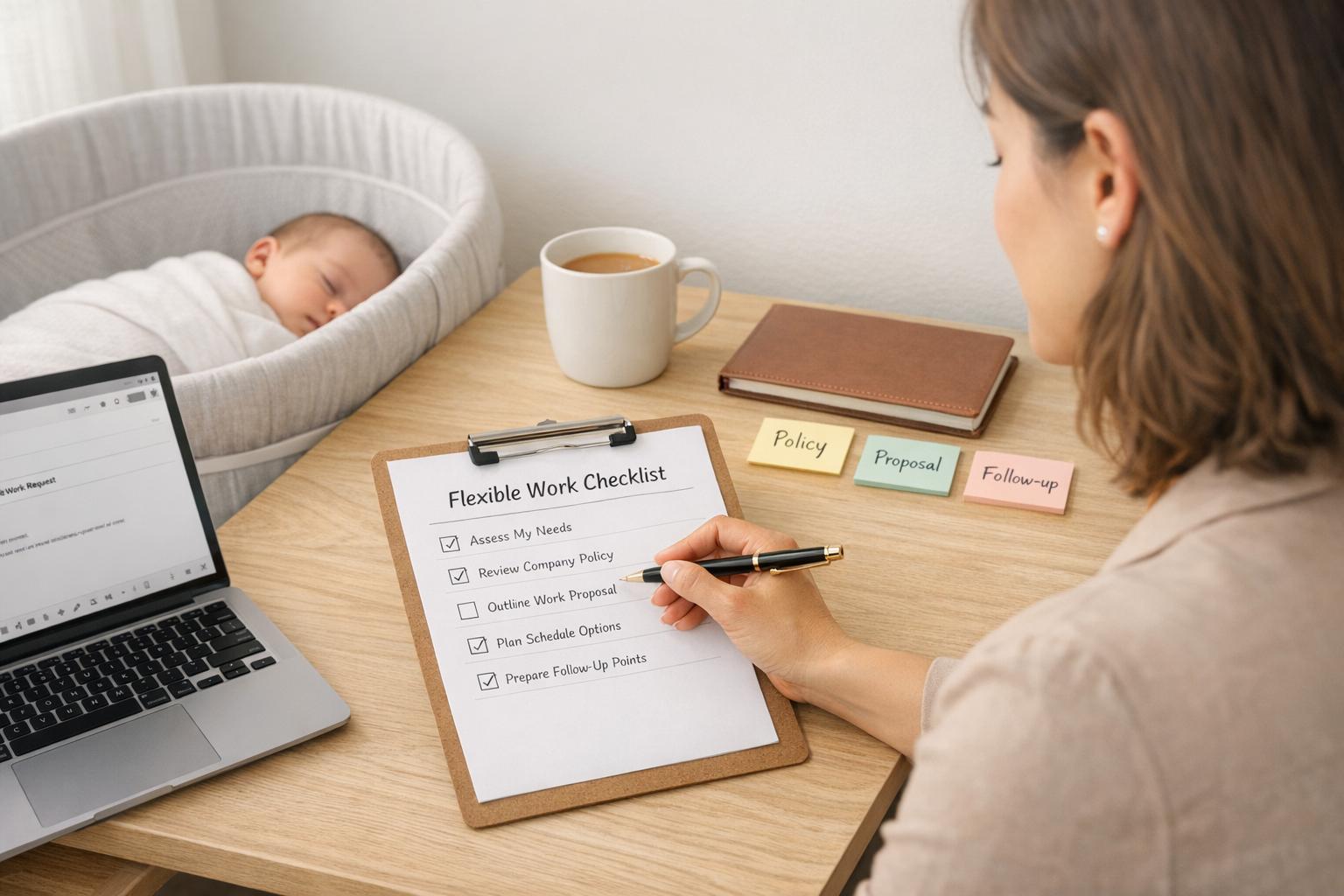
Checklist for Requesting Flexible Work After Baby
Returning to work after having a baby can be challenging, but flexible work arrangements can make it much more manageable. Here's how you can create a strong case for flexibility that benefits both you and your employer:
- Understand Company Policies: Review HR guidelines and internal resources for flexible work options. Look for terms like "Work-Life Balance" or "Alternative Work Strategies."
- Clarify Your Needs: Identify what kind of flexibility works for you - remote work, adjusted hours, or a phased return - and ensure it aligns with your job responsibilities.
- Gather Data: Use statistics and examples to show how flexibility improves productivity and retention. Highlight internal precedents if available.
- Draft a Proposal: Be specific about your request, outline a transition plan, and explain how it supports company goals. Suggest a trial period to ease concerns.
- Prepare for the Conversation: Schedule a formal meeting with your manager, share your proposal in advance, and address potential objections with solutions.
- Follow Up: After the meeting, document the agreement, schedule regular check-ins, and adjust based on feedback.
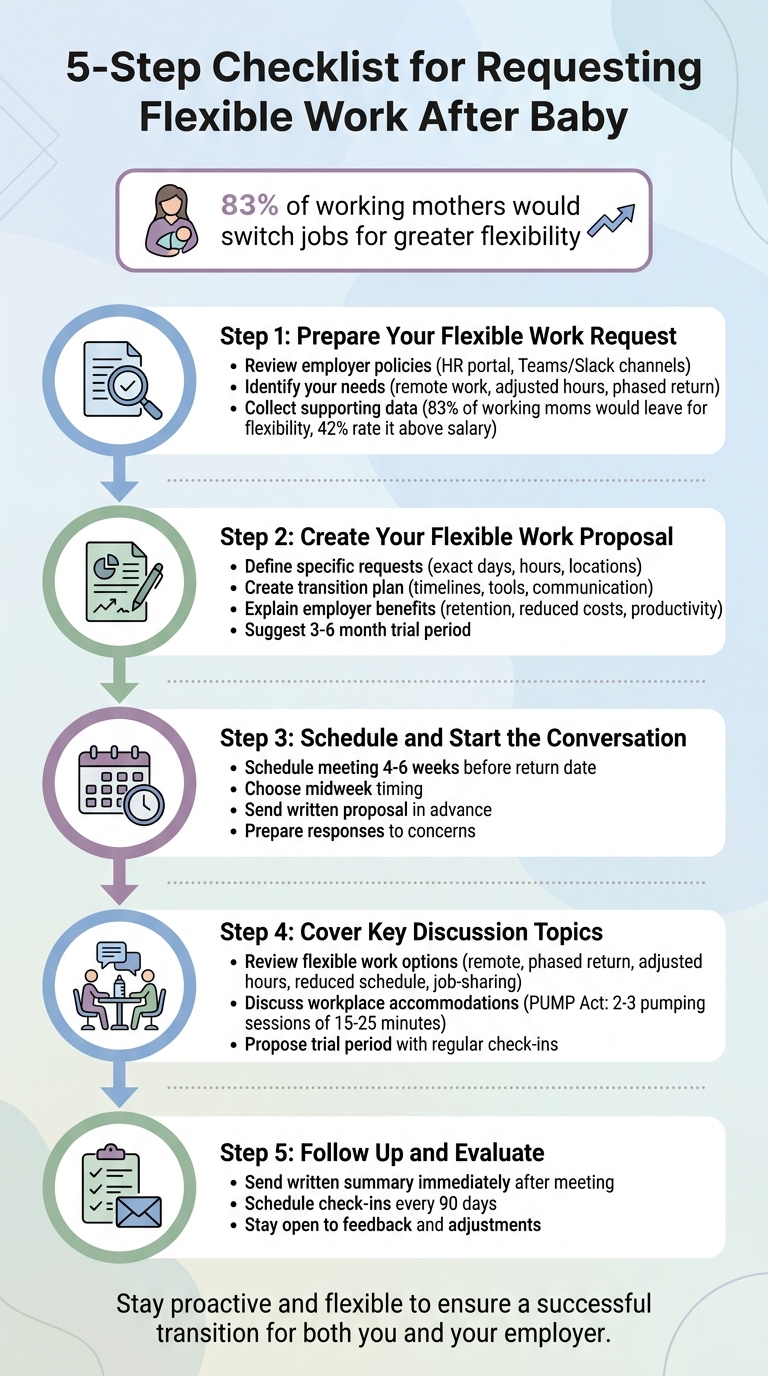
5-Step Checklist for Requesting Flexible Work After Maternity Leave
Step 1: Prepare Your Flexible Work Request
When it comes to requesting flexible work arrangements, preparation is everything. The more familiar you are with your employer’s policies and your own priorities, the stronger your case will be. This involves digging into company policies, understanding your needs, and backing up your request with solid data.
Review Your Employer's Policies
Start by combing through your HR portal for terms like "Alternative Work Strategies", "Caregiving", "Well-being", or "Work-Life Balance." Many companies now bundle flexible work options with broader benefits, such as childcare support or caregiver resources. You may also want to look into postnatal care options to support your physical recovery during this transition.
But don’t stop at policy documents. Explore internal communication channels, like Microsoft Teams groups or Slack channels, that focus on parenting or caregiving. These spaces often provide firsthand advice and insights. You can also reach out to "Well-being Champions" or peer leaders in your company, who can guide you to relevant resources. If your HR team hosts events like open houses, attend them to get direct answers and build connections.
Identify Your Needs and Priorities
Once you’ve reviewed company policies, it’s time to focus on your own needs. Lauren Smith Brody points out that new parents often face a lack of transition time between tasks. Use this insight to reflect on your own time constraints and workload.
Create several flexible work scenarios that could suit your role - options like compressed workweeks, remote workdays, or hybrid schedules. Then, identify the key deliverables of your job and think about how they can be managed effectively under these arrangements. Having alternative plans in place demonstrates that you’ve thought through the logistics.
Collect Supporting Data
To strengthen your case, gather data that highlights how flexibility benefits both employees and employers. For example, research shows that 83% of working moms would consider leaving their job for one with more flexibility, and 42% rate flexibility as more important than salary. These numbers show that offering flexibility isn’t just a perk - it’s a strategy for retaining talent.
Look into how other departments in your company have successfully implemented flexible work arrangements. This can help you build a case based on internal precedents. Shift the focus of your proposal from hours worked to measurable outcomes, like completed projects or sales targets. Additionally, outline how your responsibilities will be managed - whether that’s through cross-training colleagues or staggered shifts - to address any concerns your manager might have upfront.
sbb-itb-9ce2258
Step 2: Create Your Flexible Work Proposal
Draft a clear and concise proposal that outlines your request, explains how the transition will work, and highlights benefits for both you and your employer. Use the preparation and research you've done to shape a practical and compelling argument.
Define Your Specific Requests
Be precise about what you're asking for. Instead of vaguely requesting "more flexibility", detail the exact arrangement you're proposing. For instance, you might suggest working from home on Mondays and Fridays, adopting a hybrid schedule, or shifting to a four-day workweek with 10-hour days. Include the specifics: your proposed work hours, locations, and whether you're suggesting telecommuting, flexi-time, or another arrangement. Use the data you've gathered to support your requests. If you're uncertain about committing to a permanent setup, consider proposing a trial period of 3 to 6 months. This approach reduces the risk for your employer and provides an opportunity to refine the arrangement based on actual results.
Create a Transition Plan
Reassure your employer that the shift will be smooth and your work will remain uninterrupted. Lay out a plan that explains how you'll manage your responsibilities. Include timelines for any necessary handovers, tools you'll use to collaborate effectively (like project management software or virtual meetings), and how you'll maintain regular communication. If your proposal involves fewer or shorter workdays, explain how this structure will help you balance personal responsibilities - such as childcare - while staying productive. Show flexibility by mentioning your willingness to adapt when urgent team needs arise, like attending an important in-person meeting.
Explain Employer Benefits
Focus on how the arrangement benefits your employer. Flexible schedules have been shown to enhance performance, reduce absenteeism, and improve employee retention. If your company faces challenges with turnover, point out that supporting work-life balance can help retain skilled employees, saving the business from the costly process of hiring and training replacements. Additionally, remote or hybrid work setups can cut down on office-related expenses like utilities and workspace costs.
As Aryn Schlichting, Founder of Mountain Careers, aptly says:
"A happy professional is a productive professional".
Tie your proposal to measurable outcomes and align it with your organization's goals. This ensures that your request is framed as a win for the entire company.
Step 3: Schedule and Start the Conversation
With your proposal in hand, it’s time to set up a meeting and start discussing your flexible work plan with your employer.
Set Up a Dedicated Meeting
Aim to schedule a meeting 4–6 weeks before your planned return date. This gives your employer enough time to review your request and make any necessary adjustments. Avoid Mondays, as they’re often hectic, and go for a midweek slot when your supervisor might be more open and focused. Make it a formal in-person meeting or a video call instead of an informal chat. Sending a written summary of your proposed plan ahead of time can also help set the stage for a productive discussion.
Begin with Shared Goals
Start the meeting by emphasizing your dedication to shared workplace objectives. Lori Mihalich-Levin, Founder of Mindful Return, suggests:
"Start the conversation by focusing on your and your supervisor's shared commitments in the workplace".
Shift the focus to how your plan supports both your responsibilities and the company’s goals. This approach frames your request as a practical solution that benefits everyone.
Prepare Responses to Potential Concerns
Think ahead about possible objections and have solutions ready. Practicing your pitch with a trusted colleague can help you feel more confident and refine your responses. Be prepared to address specific concerns like team meetings, client coverage, and staying connected while working remotely. Lauren Smith Brody, Author and Founder of The Fifth Trimester, offers this advice:
"It's much harder for an employer to say no to 'can we try it?'".
Show flexibility by offering to adjust your schedule for critical meetings or urgent team needs. When you’ve anticipated challenges and have answers ready, you’ll be better equipped to guide the conversation effectively.
Step 4: Cover Key Discussion Topics
When you’re in the meeting, it’s crucial to address the main points that will define your flexible work arrangement. A clear checklist keeps the conversation on track and ensures no details are overlooked.
Review Flexible Work Options
Start by exploring the specific arrangements your company offers and how they align with your role. For example:
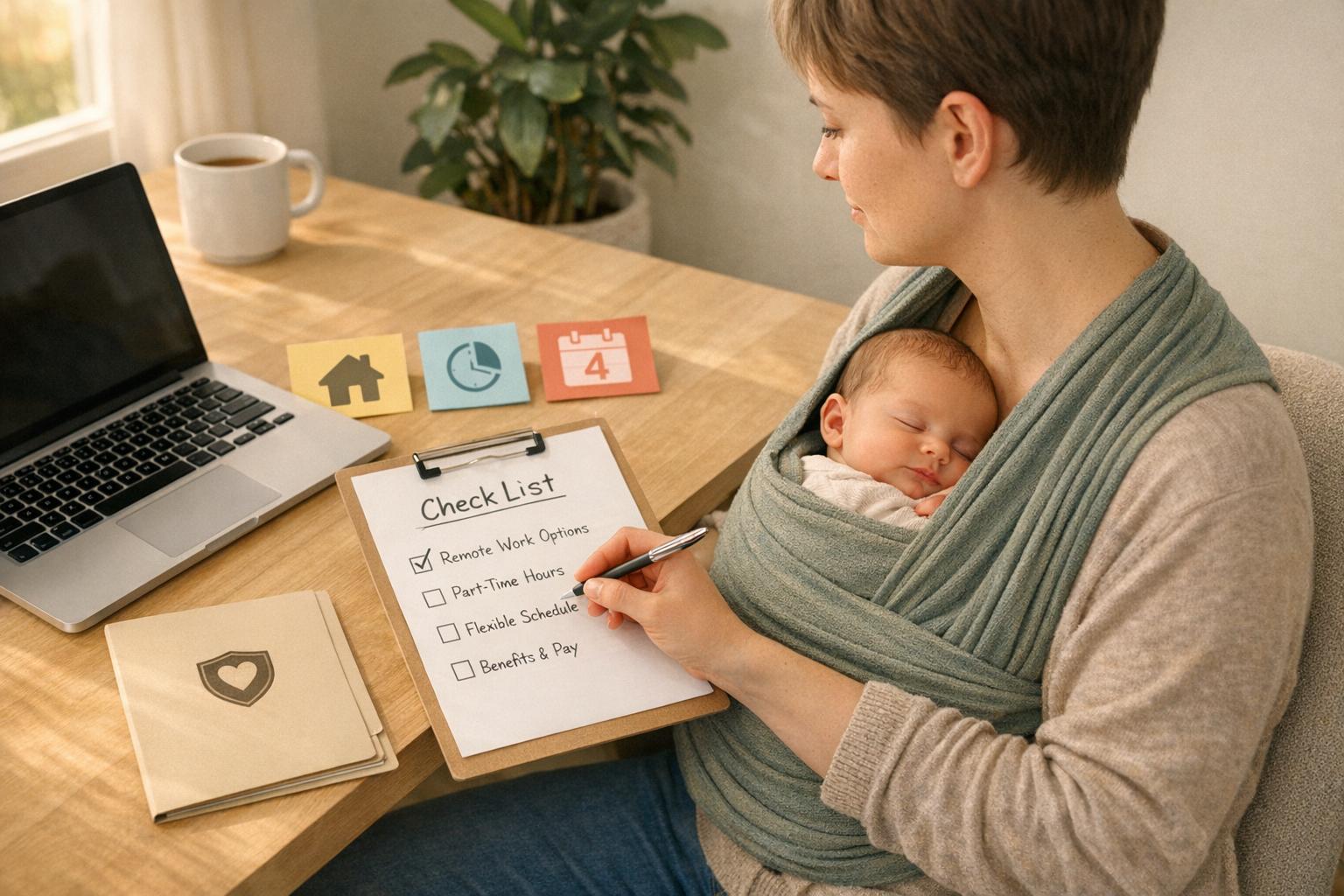
- Remote work: This could mean working from home full-time or on specific days, like Fridays, to manage household responsibilities.
- Phased return: Gradually increase your hours, such as starting part-time for the first month and transitioning to full-time.
- Adjusted hours: Shift your schedule, like leaving at 4:30 PM for daycare pickups.
- Reduced schedule: Work a percentage of full-time hours, like 60%.
- Job-sharing: Split a full-time role with another employee.
Make sure to demonstrate how these changes won’t impact your productivity. Outline a solid communication plan to stay connected, especially for tasks requiring quick turnarounds. Highlight how your schedule will maintain - or even improve - team efficiency. As Elaine Boylan from Adelphi University's Center for Career Development puts it:
"The trick to effectively advocating for flexibility is convincing your manager that the situation benefits the company just as much as it does you".
Position your request around business advantages, such as better employee retention or broader client coverage, instead of framing it purely as a personal need.
Discuss Workplace Accommodations
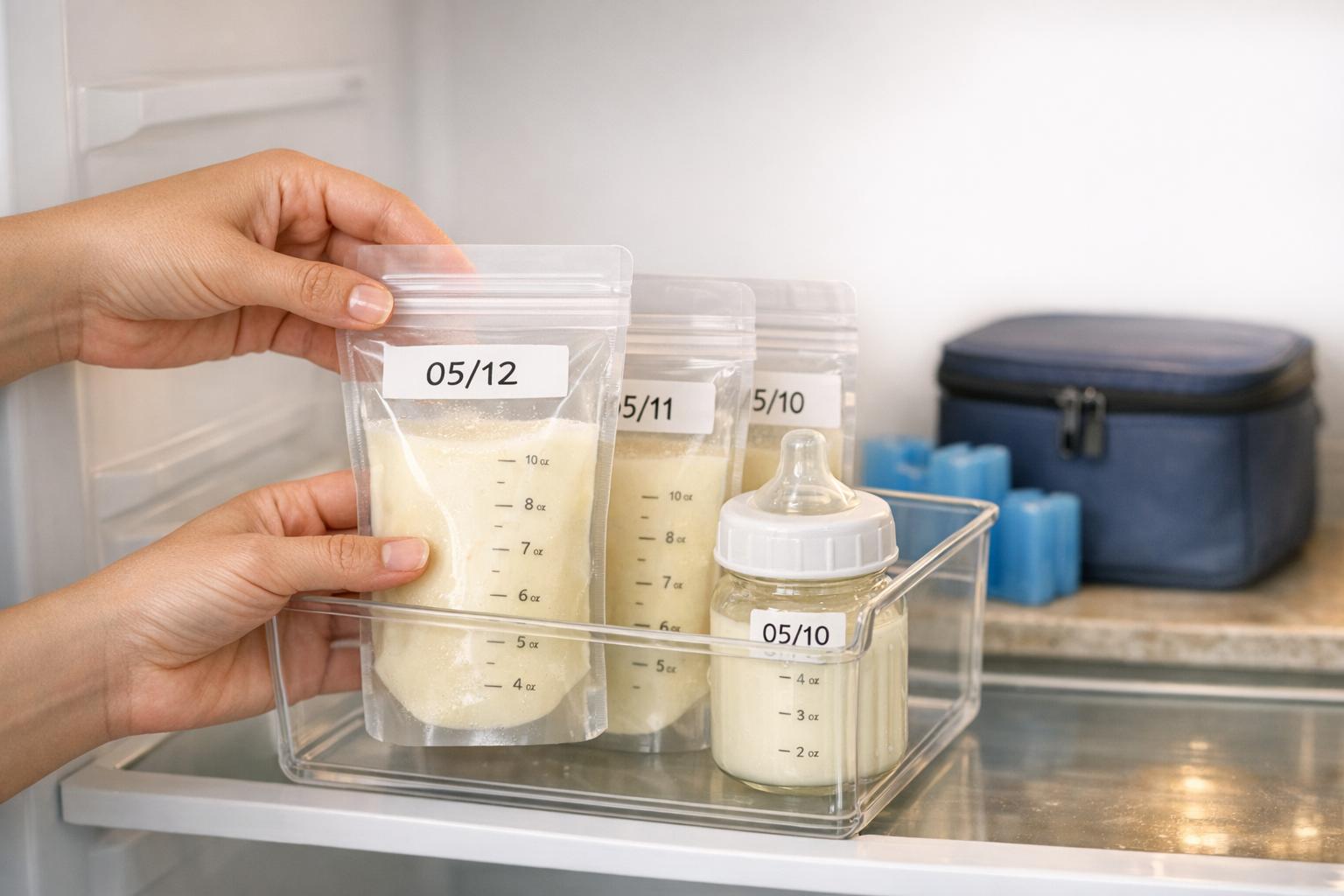
If you require specific resources, especially for breastfeeding, bring them up during the meeting. Under the PUMP Act, most employers must provide reasonable break times and a private, non-bathroom space for pumping during your baby’s first year. Request a lockable room with an electrical outlet, a comfortable chair, and a flat surface for equipment. Typically, you’ll need 2–3 pumping sessions of 15–25 minutes during an 8-hour workday. Also, confirm access to a refrigerator or personal cooler for milk storage. To avoid scheduling conflicts, label these sessions as "Wellness Breaks" on your shared calendar.
If you need adjusted hours for childcare, be specific about your needs - whether that’s a later start for daycare drop-offs or an earlier end to your workday for pickups. The Pregnant Workers Fairness Act (PWFA) may also entitle you to accommodations like flexible schedules or closer parking.
After outlining your needs, propose a trial period to test the arrangement and build mutual confidence.
Suggest a Trial Period
Propose structuring your flexible arrangement as a 3–6 month trial before making it permanent. This lowers the perceived risk for your manager and makes approval more likely. Lori Mihalich-Levin, Founder of Mindful Return, suggests:
"Consider asking for flexibility on a trial basis (perhaps for 3-6 months), to be re-evaluated after a few months. Your supervisor might be willing to commit to something temporary as a trial run".
Plan regular check-ins to review goals and assess how the arrangement is working. Gather data on the outcomes of flexible work to strengthen your case for making it permanent. Use this trial period to show that flexibility can lead to strong performance and an even more effective team.
Step 5: Follow Up and Evaluate the Arrangement
After your meeting, it's time to put your flexible work arrangement into action. This step involves documenting the agreement, staying engaged, and ensuring everything runs smoothly.
Send a Written Summary
Right after your meeting, send a follow-up email summarizing the key points you discussed. Clearly outline the agreed-upon working pattern, whether it’s compressed hours (like a 9-day fortnight), remote work on specific days, or adjusted start and end times. Include details about how you’ll stay connected with your team, especially if remote work is part of the plan. Be sure to confirm the trial period’s length and when you’ll review the arrangement. Wrap up the email by asking your employer to confirm their agreement or provide a timeline for their formal response. Keep a copy of this email, along with any replies, to maintain a clear record of the agreement.
Schedule Regular Check-Ins
From the start, incorporate regular evaluations into your plan. After the initial trial period, schedule check-ins every 90 days to review how things are going for both you and your employer. These meetings should focus on outcomes and deliverables rather than hours worked, showing that flexibility doesn’t come at the cost of productivity. Share concise progress updates that highlight results. As Ruchi Sinha and Carol T. Kulik from Harvard Business Review explain:
"By offering your boss more data and greater accountability, you are likely to lower the sense of risk".
Additionally, use weekly meetings to review progress and ensure expectations remain aligned.
Stay Open to Feedback
Feedback is essential for making a flexible work arrangement successful. Actively seek input from your employer, asking for specific examples of where expectations were met - or not - and adjust your approach as needed. If challenges arise, take the initiative to propose solutions and be flexible enough to modify your schedule temporarily for critical business needs. The University of California, Berkeley emphasizes:
"Regular feedback is vital to the success of a Flexible Work Arrangement".
Track your achievements and maintain records of your collaboration efforts. These will be helpful if you aim to make the arrangement permanent. Remember, success depends on mutual effort, with both you and your manager working together through open communication and transparency.
Conclusion
Championing flexible work starts with aligning your family priorities with clear, measurable work goals. By thoroughly understanding your company’s policies, clearly defining your needs, and presenting a well-thought-out, data-backed proposal, you can set the stage for a productive conversation.
Flexibility can take many shapes - remote work, adjusted hours, or even a compressed workweek. The key is clarity. When you approach the discussion with a clear plan, it frames your request as a mutually beneficial solution rather than a personal favor.
Consider this: 83% of working mothers would switch jobs for greater flexibility. And it’s not just employees who benefit - companies stand to gain as well. As The Mom Project highlights:
"Flexibility makes employees feel empowered and respected. Engaged employees understand how they contribute to a company's success and in turn, tend to take less sick days, stay with a company longer, and add to the longevity of a company's institutional knowledge".
FAQs
When is the best time to ask for flexible work after having a baby?
The ideal moment to ask for flexible work arrangements is when you feel prepared - both physically and emotionally. It’s best to bring up the topic with your employer before you return to work. By discussing your needs and concerns early on, you can explore available options and establish clear expectations for flexibility right from the start.
What should I include in a flexible work proposal email to my manager?
When crafting a flexible work proposal email, make sure to include a few key elements to get your point across effectively:
- State your request clearly: Specify what you're asking for, whether it's flexible hours, remote work, or another arrangement. Be direct so there's no confusion.
- Explain your reasons: Share why you're making this request. For example, it could be due to childcare responsibilities or postpartum recovery. Providing context helps build understanding.
- Outline how you'll stay on track: Reassure your employer by explaining how you'll meet your work commitments and maintain productivity under the proposed arrangement.
Also, show that you're open to collaboration. Mention your willingness to discuss and adjust the proposal if needed. Wrap up on a positive note and offer to meet for further discussion to keep the conversation moving forward.
What can I do if my manager says no to my flexible work request?
If your manager turns down your request, think of it as the start of a negotiation. Focus on how workplace flexibility can help the company, not just you. Offer compromises, such as a hybrid schedule or adjusted hours, to meet both your needs and the team's. Be prepared to tackle any objections and present your case in a way that highlights shared benefits. A constructive conversation, paired with empathy for their perspective, can often lead to a solution that works for everyone.








 Sign up with Google
 Sign up with Facebook