
Managing Night Feeds with a Night Nanny

Managing Night Feeds with a Night Nanny
Nighttime feedings with a newborn are exhausting but essential for their growth. Babies feed every 1–3 hours due to their small stomach size, often disrupting parents’ sleep and well-being. A night nanny can help by taking over nighttime routines, from feeding and diaper changes to soothing the baby back to sleep, giving parents much-needed rest. For breastfeeding mothers, night nannies assist by managing post-feed tasks or bottle-feeding expressed milk, ensuring milk supply is maintained without extra stress.
Here’s how night nannies make a difference:
- Handle nighttime care, allowing parents to sleep longer.
- Create feeding and sleep schedules that evolve with the baby’s age.
- Help reduce night feeds gradually while increasing daytime calories.
- Support breastfeeding and pumping mothers with milk storage and care.
Parents typically hire night nannies for 4–12 weeks, during which babies develop healthier sleep and feeding routines. This short-term support improves both parental recovery and infant care.
Common Night Feeding Problems Parents Experience
Frequent Night Wakings and Exhaustion
The relentless cycle of waking up, feeding, and settling a baby can leave parents feeling drained. Newborns typically need 3–4 feedings each night, with each session lasting anywhere from 15 to 60 minutes. Add in tasks like diaper changes or burping, and the nights can feel never-ending.
Interestingly, not all night wakings stem from hunger. Wet diapers, gas, reflux, or simply wanting comfort can lead to unnecessary feedings. Babies who develop a habit of falling asleep while feeding - known as a "sucking-to-sleep" association - might struggle to soothe themselves back to sleep during natural wake-ups between sleep cycles. This often means parents are called back to help them settle repeatedly, making the nights even more challenging.
Managing Breastfeeding, Pumping, and Formula Feeding at Night
Nighttime feeding routines can vary significantly depending on the method of feeding. Breastfed babies tend to wake 4–5 times per night, while formula-fed babies may wake slightly less, about 3–4 times, as formula takes longer to digest. For parents who exclusively pump, nighttime pumping sessions are critical during the first 8–12 weeks to maintain milk supply. This is because prolactin, the hormone responsible for milk production, peaks between 1 am and 5 am, making milk removal during these hours essential.
Dr. Laurie Jones, founder of Dr. MILK, explains the biology behind this:
"You can't trick your breasts into making more during the day and slowing down at night. Breasts can't tell time; they don't understand emptying every two hours during the day and no emptying at night."
These demands often make nighttime feeding a juggling act, especially for parents trying to balance exhaustion with maintaining a healthy milk supply.
Creating Feeding Routines and Shifting Calories to Daytime
Building a consistent feeding routine can feel like an uphill battle. Newborns don’t yet have a 24-hour internal clock, so their sleep and feeding patterns are driven by hunger rather than day or night cues. Just when parents think they’ve found a rhythm, growth spurts can disrupt everything. During these times, babies often cluster feed, needing frequent, back-to-back feedings, particularly in the evening.
The concept of shifting more calories to daytime sounds appealing, but it’s not as simple as it seems. Babies need to develop larger stomach capacities and the ability to stay content for longer periods between feeds. Until then, parents often find themselves caught between wanting more sleep at night and ensuring their baby gets enough nutrition. This delicate balance highlights how a night nanny can help ease the strain by managing feeding routines and providing much-needed support.
sbb-itb-9ce2258
How a Night Nanny Helps with Night Feeds
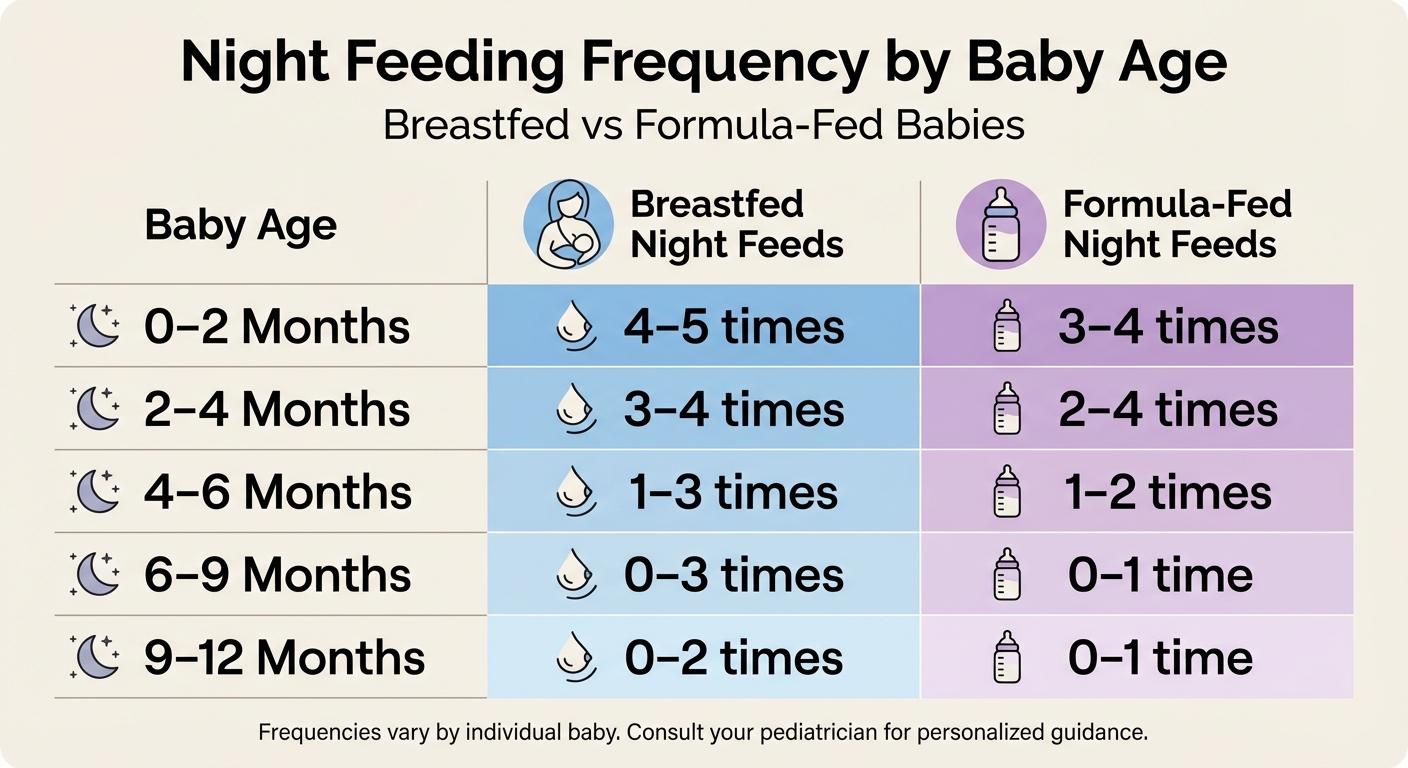
Night Feeding Frequency by Baby Age: Breastfed vs Formula-Fed Babies
Giving Parents Full Nights of Sleep
A night nanny steps in to manage the entire nighttime routine, giving parents the chance to enjoy uninterrupted sleep. Their approach is thorough: they handle diaper changes before feedings and take care of all post-feed tasks, such as burping and soothing, to help the baby settle back into sleep without overstimulation. They also use dim, warm-toned lighting to maintain a calming environment, ensuring the baby can drift off easily during or after feeding.
For breastfeeding mothers, the support is tailored. The night nanny brings the baby to the mother for nursing and then takes over all post-feed responsibilities, allowing the mother to return to sleep quickly.
Night nannies are also skilled at preventing gas-related wake-ups by burping babies promptly. Some may include a "dream feed" between 10:00 PM and 11:00 PM, where they feed the baby while they’re still drowsy. This can help extend the baby’s initial sleep stretch, giving parents a bit more rest.
Creating Age-Appropriate Feeding and Sleep Schedules
Night nannies don’t just focus on the here and now - they also create feeding and sleep schedules that evolve with the baby’s age and development. They understand that a newborn’s needs at 2 weeks differ from those at 4 months, and they adjust routines to match these changes.
One effective method involves shifting more feedings to daytime hours. Feeding every 1.5–2.5 hours during the day helps ensure the baby gets enough calories, which can lead to longer stretches of sleep at night. Night nannies also pay attention to "wake windows", which vary by age. For example, newborns under 4 weeks typically have wake windows of 35–60 minutes, while those 4–12 weeks old can stay awake for 60–90 minutes.
| Baby Age | Breastfed Night Feeds | Formula-Fed Night Feeds |
|---|---|---|
| 0–2 Months | 4–5 times | 3–4 times |
| 2–4 Months | 3–4 times | 2–4 times |
| 4–6 Months | 1–3 times | 1–2 times |
| 6–9 Months | 0–3 times | 0–1 time |
| 9–12 Months | 0–2 times | 0–1 time |
To combat day–night confusion, night nannies expose babies to natural light and engaging activities during the day while keeping nighttime routines calm and low in stimulation. They may also limit individual daytime naps to 2 hours to help preserve nighttime sleep. For older babies who are gaining weight well, nannies might gradually extend the time between night feeds by 15-minute increments or reduce feeding volumes to encourage self-soothing.
Helping Breastfeeding and Pumping Mothers
Night nannies provide specialized care for breastfeeding and pumping mothers, offering much-needed relief during those demanding early weeks. For mothers who pump, night nannies take over bottle-feeding with expressed milk and clean pump parts, lifting a significant burden. This support is especially critical in the first 8–12 weeks when frequent milk removal is essential to establish a solid supply.
Prolactin levels, which drive milk production, naturally peak between 1:00 AM and 5:00 AM. Night nannies ensure that mothers complete a milk removal session during these hours to support supply. As Sara Boudrie, a Registered Nurse and Lactation Consultant at Huckleberry, explains:
"Night feeds for newborns are a big part of early life, and that's by design. Your baby will grow at a breathtaking pace, and their tiny body will need frequent fuel around the clock."
Night nannies also take care of milk storage and organization, easing the mental load for parents. If a mother wakes up feeling uncomfortably engorged, they can assist with short pumping sessions of 5–10 minutes to relieve pressure and prevent complications like mastitis. This comprehensive care protects milk supply and helps mothers maintain their well-being during the exhausting early months.
Night Nanny Techniques for Better Night Feeds
Breaking the Connection Between Feeding and Sleep
Feeding a baby to sleep can lead to a dependency where the baby relies on feeding to drift off again during nighttime awakenings. Night nannies work to break this link by stepping in as non-feeding comforters. They use calming techniques like gentle rocking, singing lullabies, rubbing the baby’s back, or offering a pacifier to help the baby self-soothe without turning to feeding. Kelly Bonyata, IBCLC, explains:
"If your baby appears to be waking only for comfort during the night, she may accept [a caregiver] as the comforter (and won't expect [them] to nurse her)."
Night nannies often delay intervening for a few minutes when the baby wakes, giving the child a chance to self-soothe. When they do step in, they use non-feeding methods to comfort the baby. This gradual approach helps lengthen the time between feeds and encourages the baby to develop independent sleep habits.
Gradually Reducing Night Feeds
Night nannies use specific strategies to reduce night feeds based on whether the baby is breastfed or formula-fed. For breastfed babies, they shorten nursing sessions by 2–5 minutes every other night. For formula-fed babies, they reduce the bottle volume by 20–30 ml (about 1 oz) every other night. After a shortened feed, the nanny takes over with soothing techniques like rhythmic patting or "neck nestling" to help the baby fall back asleep without additional feeding. Melanie Hastings, a Norland Nanny and Sleep Consultant, shares:
"The key is to use a gradual night weaning approach and help your baby develop independent sleep skills. This allows them to transition most of their calories to daytime feeds."
Many pediatricians agree that intentional night feedings can often stop around 3–4 months, once the baby has shown consistent weight gain. By 6 months, formula-fed babies can typically phase out night feeds entirely, while breastfed babies often continue night feeds until about 12 months to maintain milk supply.
To complement this gradual reduction, increasing daytime feeding ensures the baby’s nutritional needs are fully met during waking hours.
Increasing Daytime Feeding for Caloric Needs
Night nannies assist parents in monitoring feeding patterns, using tools like logs or smartphone apps to track how much and how often the baby eats during the day. They also help parents recognize fullness cues, such as the baby slowing down, turning their head away, or unlatching, ensuring that feeds are complete and efficient rather than just light snacking. Dr. Bill Sears, a pediatrician, highlights:
"Babies who get more touch and milk during the day are more likely to need it less at night. The goal of more daytime nursing is to teach baby that daytime is for feeding and nighttime is for sleeping."
To meet caloric needs, nannies structure daytime feeds every 2.5–3.5 hours and may incorporate cluster feeding during the evening hours before bedtime. They also use paced feeding techniques to help the baby regulate milk intake and recognize when they’re full. This approach helps differentiate between hunger-based and comfort-based nighttime wakings, ensuring that night feeds are only given when absolutely necessary. By balancing reduced night feeds with increased daytime nutrition, both the baby and parents can enjoy longer stretches of uninterrupted sleep.
The Benefits of Nestling's Night Nanny Services

Nestling's night nanny services tackle the challenges of nighttime feedings, helping parents get much-needed rest while fostering healthier routines for their families.
Expert Care and Personalized Support
Nestling connects families with highly vetted caregivers who undergo thorough screenings to ensure trust and reliability. Each caregiver signs a non-disclosure agreement, offering families peace of mind when welcoming someone into their home during these tender nighttime hours. The network includes postpartum doulas, lactation consultants, infant care specialists, and infant nurses, all trained to address the unique demands of nighttime feeding and infant care.
Every family receives a customized care plan tailored to their specific needs. Whether managing twins, handling reflux, or preparing to return to work, the plan adapts to their circumstances. Caregivers also keep detailed logs of feedings, diaper changes, and sleep patterns, ensuring parents are fully informed during morning handoffs. Rachel K., a parent who benefited from Nestling's lactation support, shared her story:
"She patiently walked me through some massage techniques and the relief was instant. I mean, who knew you could get that kind of expert help without leaving your couch?"
This thoughtful approach ensures that every family's schedule and concerns are fully addressed, creating a seamless and supportive experience.
Flexible Scheduling and Backup Care
Nestling's flexible scheduling options are designed to meet the evolving needs of families. Parents can choose on-demand or advance booking to fit their routines. Night nannies are available for shifts of 8–12 hours, typically from 9:00–10:00 p.m. to 6:00–7:00 a.m., with the option to schedule them for 3 to 5 nights per week. Additionally, the platform offers backup care for unexpected situations, such as early or delayed infant arrivals, ensuring families have continuous support.
To secure preferred caregivers, families are encouraged to start researching and booking services during the third trimester, ideally 6 to 8 weeks before the due date, as popular providers tend to book up quickly. Payments are handled through a secure platform, eliminating the hassle of cash transactions and ensuring clear financial records.
Access to Lactation Consultants and Newborn Care Specialists
Nestling's network includes lactation consultants who can assist with breastfeeding challenges like engorgement. These experts are available through video chat or in-person visits, providing immediate relief when parents need it most. Certified Newborn Care Specialists go beyond basic overnight care, offering expertise in feeding techniques, sleep training, and developmental milestones. Their support helps establish healthy routines during the critical first 90 days.
Night nannies play a crucial role for breastfeeding mothers, reducing their wake time to just the feeding itself. Sophia L., a parent who used Nestling's services, shared her gratitude:
"For six weeks, she provided the support that allowed me to truly rest"
This level of care helps families build consistent and restorative nighttime routines, benefiting both parents and babies.
Conclusion: Better Nights with Night Nanny Support
Helping Parents Recover with Better Sleep
Night nannies play a key role in addressing the sleepless nights that often come with a newborn. By providing 6 to 8 hours of uninterrupted sleep per shift, they allow parents to recover from the physical and emotional toll of early parenthood. This regular rest doesn’t just help with energy levels - it significantly lowers the risk of postpartum depression and anxiety, while also boosting cognitive function. These benefits are critical during the postpartum period, as Lela Aylin from the Beverly Team highlights:
"Severe sleep deprivation increases the risk of postpartum depression, impairs cognitive function, and strains even the strongest relationships. A night nanny exists to solve exactly this problem".
For many parents, nighttime tasks can take up to 90 minutes per cycle, leaving little room for uninterrupted rest. With a night nanny, breastfeeding mothers wake only to nurse, while the nanny handles everything else. Parents using bottles can often sleep through the night entirely. This deeper, more consistent sleep strengthens emotional well-being, sharpens focus, and improves family dynamics during what can be an overwhelming time.
While parents catch up on rest, night nannies also focus on helping babies develop healthy sleep habits.
Building Healthy Sleep and Feeding Habits in Babies
Night nannies don’t just provide relief for parents - they also help babies establish routines that promote better sleep and feeding patterns. Most families work with night nannies for 4 to 12 weeks, a critical period when babies are developing their circadian rhythms and learning to self-soothe. During this time, nannies keep detailed logs of the baby’s sleep and feeding schedules. These records help parents recognize patterns and spot potential issues, like reflux or gas, that might go unnoticed when exhaustion takes over.
The goal isn’t to create long-term dependency on overnight care. Instead, this short-term support lays the groundwork for lasting, healthy habits. Both parents and babies gain the tools they need for better sleep and feeding routines that continue well after the nanny’s role ends.
FAQs
When is my baby ready to drop night feeds?
Babies are usually ready to stop night feeds when they’ve reached a healthy weight, are growing steadily, and can take in more milk during the day. This milestone often occurs around 3 to 4 months of age, but every baby develops at their own pace. Instead of relying solely on age, it’s better to assess your baby’s overall health and progress. For tailored advice, consider consulting a healthcare provider or postpartum specialist.
How can a night nanny help without hurting my milk supply?
A night nanny helps support your breastfeeding journey by ensuring your baby is fed consistently throughout the night while giving you the chance to rest. They can assist with on-demand feedings, which play a key role in encouraging milk production, and offer guidance on achieving a proper latch and effective feeding techniques. This balance helps keep milk production steady and aids in your recovery - both crucial for breastfeeding success.
What should I ask a night nanny to track overnight?
For your baby’s nighttime care, ask your night nanny to keep track of important details like:
- Feeding times and durations: Note when and how long your baby feeds.
- Milk or formula intake: Record how much your baby consumes during each feeding.
- Sleep patterns: Observe sleep intervals and how long your baby stays asleep between feeds.
- Diaper changes: Log when diapers are changed and any notable observations.
- Behavior after feeding: Monitor your baby’s mood and responsiveness post-feed.
These notes not only ensure your baby’s needs are met but also provide a clearer picture of their overnight care.









 Sign up with Google
 Sign up with Facebook