
Night Nannies vs. Postpartum Doulas: Key Differences

Night Nannies vs. Postpartum Doulas: Key Differences
When deciding between a night nanny and a postpartum doula, it comes down to the type of support your family needs after bringing your baby home:
- Night Nannies: Focus on overnight infant care, including feeding, diaper changes, and soothing, to help you get uninterrupted sleep. They work strictly at night and care only for the baby. Costs typically range from $25–$40 per hour.
- Postpartum Doulas: Offer broader support for the whole family, including physical recovery, emotional well-being, breastfeeding guidance, and light household tasks. They work flexible hours (day or night) and provide hands-on education for new parents.
Quick Comparison
| Feature | Night Nanny | Postpartum Doula |
|---|---|---|
| Primary Focus | Overnight infant care | Family support and recovery |
| Care Recipient | Baby only | Baby, mother, and partner |
| Shift Timing | Overnight only | Daytime and/or overnight |
| Emotional Support | Minimal | High |
| Household Tasks | None or minimal | Light tasks (e.g., meals) |
| Education | Limited | Baby care and feeding tips |
| Hourly Rate | $25–$40 | Varies by region |
If sleepless nights are your biggest challenge, a night nanny might be the solution. If you need emotional support, guidance, or help adjusting to parenthood, a postpartum doula could be a better fit.
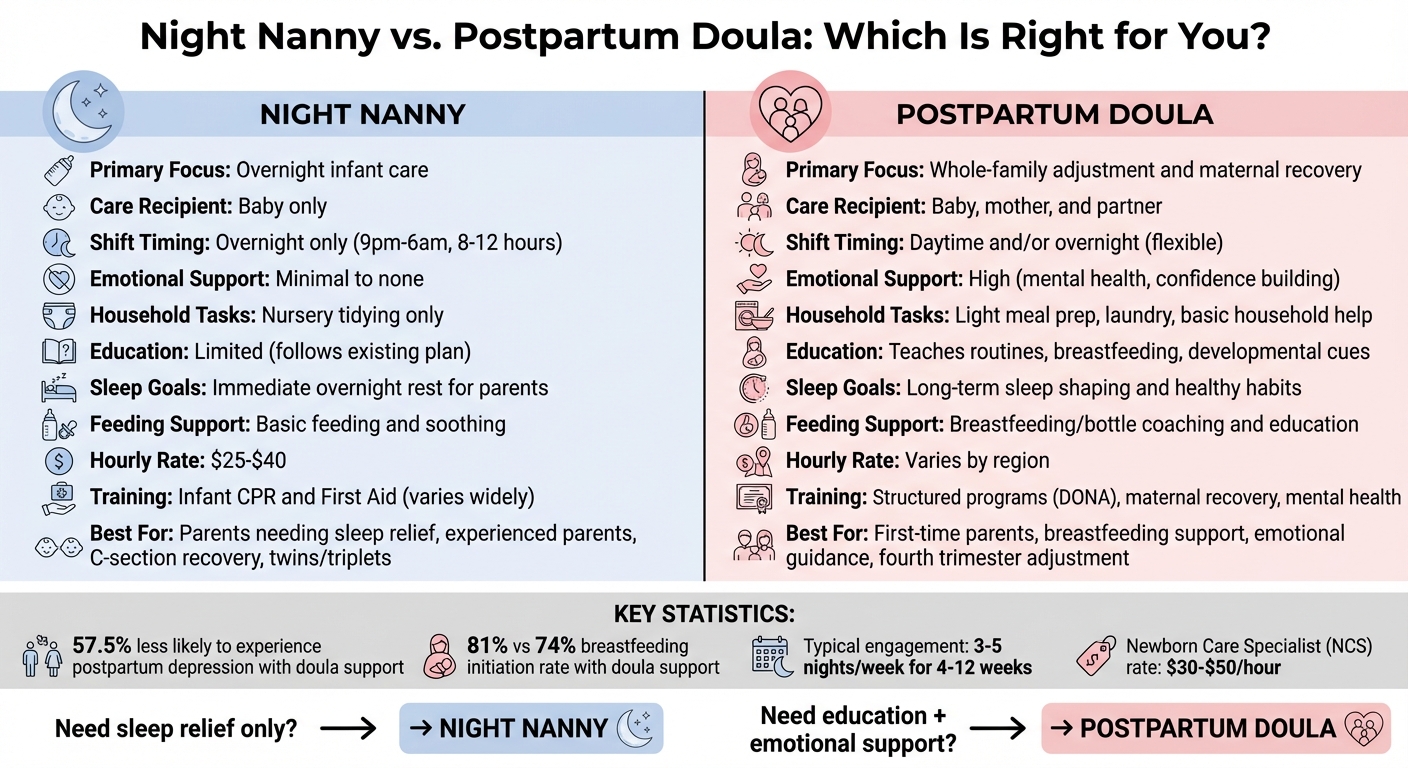
Night Nanny vs Postpartum Doula Comparison Chart
What is the difference between a Night Nanny, Night Nurse and a Postpartum Doula?
sbb-itb-9ce2258
What Is a Night Nanny?
A night nanny is someone who takes care of your baby during the night - typically from 9:00 p.m. to 6:00 a.m. - so you can get six to eight hours of uninterrupted sleep. Their primary focus is meeting your baby’s needs while you rest.
As Josephine Chrouch, Owner of Lullaby Services, explains:
"Night nannies, or night nurses, change, swaddle, soothe, and feed babies, caring for them throughout the night so their parents can get some rest."
What Night Nannies Handle
Night nannies take on a range of tasks to ensure your baby is well cared for during the night. For bottle-fed babies, they prepare and feed bottles; for breastfed babies, they bring the baby to you for nursing, then handle burping and settling so your baby can go back to sleep quickly. They also change diapers, swaddle, rock, and use calming techniques like white noise or gentle motion to soothe your baby.
Additionally, they monitor the sleep environment, ensuring the room temperature is comfortable and the baby is safely positioned. Over time, they can help your baby establish better sleep patterns. Before their shift ends, most night nannies provide detailed logs, noting feeding times, amounts, diaper changes, and periods of wakefulness.
It’s important to note that night nannies don’t offer medical care, daytime childcare, household chores, cooking, or care for older siblings unless specifically agreed upon.
When Hiring a Night Nanny Makes Sense
If sleep deprivation - getting less than four hours of sleep per night - is impacting your recovery or safety, a night nanny can be a game-changer. They’re especially helpful for mothers recovering from C-sections, families with twins or triplets, and single or working parents who need consistent rest.
Most families hire a night nanny for three to five nights a week, typically over a period of four to 12 weeks. This support ensures that both parents and baby can thrive during those challenging early months.
What Is a Postpartum Doula?
A postpartum doula is a trained professional who provides support to families after a baby is born. Unlike caregivers who focus only on the baby, a postpartum doula prioritizes the mother's recovery and the emotional well-being of the entire family. This all-encompassing approach is at the core of their work.
As Oh Baby! Kansas City puts it:
"They're like your wise, nonjudgmental bestie who shows up with snacks and helps you figure out why the baby's crying again."
What Postpartum Doulas Do
Postpartum doulas wear many hats. They help parents understand newborn behavior, establish feeding routines, and learn soothing techniques. At the same time, they provide emotional support and assist with the mother’s recovery. For breastfeeding mothers, they offer guidance and troubleshooting, while for bottle-feeding families, they lend practical assistance.
Studies indicate that parents who receive doula support are 57.5% less likely to experience postpartum depression or anxiety. They are also more likely to start breastfeeding (81% compared to 74%). Beyond emotional and educational support, doulas often take care of light household tasks like cooking and laundry, easing the burden of daily chores during recovery.
Postpartum doulas offer flexible schedules, including daytime and overnight options, to fit your needs. They also answer the countless questions that arise during those first weeks, ensuring you feel supported and informed.
When You Might Need a Postpartum Doula
Hiring a postpartum doula can be especially helpful when you need a mix of emotional, educational, and practical support. First-time parents often turn to doulas for guidance and reassurance as they navigate the early days of parenthood, sometimes called the "fourth trimester."
If you're struggling to establish routines - whether it’s for sleep, feeding, or daily activities - a doula's hands-on teaching can make a big difference. This kind of support is particularly valuable during the first three to four months when you’re learning your baby’s rhythms and adjusting to your new role. When considering a doula, ask if they have dual certifications, such as being both a Postpartum Doula and a Newborn Care Specialist (NCS), as this can provide even broader expertise.
Main Differences Between Night Nannies and Postpartum Doulas
How Their Roles and Focus Differ
The key difference between night nannies and postpartum doulas lies in their focus and the type of support they provide. Night nannies concentrate almost entirely on your baby, managing overnight care to ensure you get uninterrupted sleep. Postpartum doulas, on the other hand, take a broader approach, supporting the entire family with an emphasis on your recovery, emotional well-being, and confidence as new parents.
Mary Pope from Oh Baby! Kansas City puts it this way:
"A night nanny primarily focuses on overnight infant care... [they] may not provide educational or emotional support, and their scope of practice & level of training can wildly vary."
Night nannies typically work evening to early morning shifts, handling tasks like feeding, changing, and soothing your baby. Their role is straightforward: ensure your baby is cared for during the night so you can rest. However, they generally don’t offer guidance or educational support.
Postpartum doulas, in contrast, provide a more holistic form of care. They not only help with baby-related tasks but also guide parents in understanding their baby's cues, establishing feeding routines, and building confidence. Beyond baby care, they assist with light household tasks like meal prep and laundry, helping you maintain a sense of balance during recovery.
When it comes to feeding, night nannies handle the basics - bottle feeds, facilitating nursing, and soothing the baby afterward. Postpartum doulas go a step further, offering hands-on coaching to address breastfeeding challenges, teaching bottle-feeding techniques, and answering your questions.
Comparison Table: Responsibilities and Focus Areas
Here’s a quick breakdown of how the responsibilities and focus areas differ between night nannies and postpartum doulas:
| Feature | Night Nanny | Postpartum Doula |
|---|---|---|
| Primary Focus | Overnight infant care and parental sleep | Whole-family adjustment and maternal recovery |
| Care Recipient | Infant only | Baby, mother, and partner |
| Shift Timing | Strictly overnight (8–12 hours) | Daytime and/or overnight |
| Emotional Support | Minimal to none | High (mental health, confidence building) |
| Household Tasks | Nursery tidying only | Light meal prep, laundry, and basic household help |
| Education | Generally follows existing plan | Teaches routines, breastfeeding, and developmental cues |
| Sleep Goals | Immediate overnight rest for parents | Long-term sleep shaping and healthy habits |
| Feeding Support | Basic feeding and soothing | Breastfeeding/bottle coaching and education |
Understanding these distinctions can help you decide which caregiver best suits your family’s needs during this important time.
Training and Qualifications: Night Nannies vs. Postpartum Doulas
Training and Certification Requirements
When it comes to training, night nannies and postpartum doulas take very different paths, which highlights the unique focus of each role.
Postpartum doulas undergo structured training programs that cover a wide range of topics, including maternal recovery, mental health, and breastfeeding support. These programs follow a standardized curriculum to ensure doulas are well-versed in both infant care and the nuances of family dynamics.
Night nannies, on the other hand, typically hold Infant CPR and First Aid certifications, but their training can vary significantly. It's always a good idea to check a night nanny's qualifications, certifications, and references before hiring.
If you're looking for a higher level of expertise in overnight care, a Newborn Care Specialist (NCS) might be the right choice. Certified through organizations like the NCSA or NCS Academy, these professionals have extensive training in areas like infant care, sleep conditioning, feeding, and safety. Due to their advanced training, NCS professionals often charge $30–$50 per hour, compared to the $25–$40 hourly rate for night nannies. For families needing extra breastfeeding support, seeking out a caregiver with a Certified Lactation Counselor (CLC) credential can be particularly helpful.
The table below outlines the key differences in training and expertise among these caregiving roles.
Comparison Table: Training and Expertise
| Feature | Postpartum Doula | Night Nanny | Newborn Care Specialist (NCS) |
|---|---|---|---|
| Primary Training Focus | Whole family adjustment, maternal recovery, and emotional support | Basic overnight infant care and soothing | Comprehensive newborn management, sleep conditioning, and parent education |
| Common Certifications | Postpartum Doula training (e.g., DONA) and CLC | Informal; holds Infant CPR and First Aid | Certifications from NCSA, NCS Academy, or INA |
| Expertise Level | High in family support and lactation | Varies widely, based on experience | High in specialized newborn care, including addressing reflux and multiples |
| Parent Education | Core part of the role (bathing, swaddling, feeding) | Limited to overnight tips and morning handoffs | Extensive coaching on routines and milestones |
| Typical Hourly Rate | Varies by region | $25–$40 per hour | $30–$50 per hour |
Which Option Is Right for Your Family?
Benefits of Night Nannies
Night nannies take on the demanding overnight responsibilities of caring for your newborn, such as feeding, changing diapers, and soothing, so you can get the uninterrupted sleep you need during those early, exhausting weeks. This approach is especially helpful for parents who already feel confident with newborn care basics but need relief from the sleepless nights.
One of the appealing aspects of night nannies is their affordability, typically costing between $25 and $40 per hour. If you’re not looking for extensive coaching or additional services, a night nanny can provide exactly the support you need without the extra expense of services you might not use.
Benefits of Postpartum Doulas
Postpartum doulas offer more than just overnight care. They take a broader approach, supporting not only your baby but your entire family. From helping you recover physically after childbirth to providing breastfeeding guidance and emotional support, doulas are there to ease the transition into parenthood. They can also assist with light household tasks like preparing meals and doing laundry. As Mary Pope from Oh Baby! Kansas City puts it:
"They're like your wise, nonjudgmental bestie who shows up with snacks and helps you figure out why the baby's crying again".
For first-time parents, the educational aspect of having a doula is invaluable. They teach essential skills like swaddling, identifying hunger cues, and setting up feeding routines, helping you gain confidence as a new parent. Doulas are also a great option for families navigating unique challenges, such as caring for multiples, NICU graduates, or addressing specific feeding issues. Some families even combine services, starting with a highly trained doula or Newborn Care Specialist during the first 4–6 weeks to establish routines, then transitioning to a night nanny for continued sleep support.
Both options have their strengths, and deciding which is right for your family often depends on your specific needs and circumstances.
How Nestling Can Help

Nestling simplifies the process of finding the right care by connecting you with professionals tailored to your family’s needs. Whether you’re looking for a night nanny for overnight support, a postpartum doula for all-encompassing help, or a dual-certified specialist who can do both, Nestling has you covered. The platform ensures quality by conducting thorough background checks, verifying certifications, and creating personalized care plans.
With flexible booking options, you can schedule care in advance or on demand, whether you need daytime, overnight, or live-in support. Nestling also provides backup care options and regularly checks in to make sure the care meets your expectations. To secure top-rated professionals, it’s best to begin your search during the second trimester, as these specialists often book up months ahead.
Conclusion
Deciding between a night nanny and a postpartum doula depends on what kind of support your family needs most during those early weeks. A night nanny specializes in overnight infant care - handling tasks like feeding, changing, and soothing - so you can enjoy uninterrupted sleep. On the other hand, a postpartum doula provides a more holistic approach, offering support for your physical recovery, emotional well-being, and transition into parenthood through hands-on education and help around the house. Recognizing this difference is key to finding the right fit for your family.
If you're a first-time parent looking for guidance on breastfeeding, understanding baby cues, or boosting your confidence, a postpartum doula can provide mentorship along with practical care. For parents who already have experience and primarily need overnight help, a night nanny may be the better choice and is often more budget-friendly. Think about whether you need focused nighttime care or broader family support that includes emotional and recovery assistance. Understanding these distinctions helps you choose the right option for your postpartum needs.
To make the process easier, Nestling connects families with trusted professionals tailored to their specific postpartum priorities. Whether you're looking for a night nanny, a postpartum doula, or someone with dual certifications, the platform manages background checks, certification reviews, and care matching. With flexible booking and backup care options, you can focus on what truly matters - bonding with your baby and recovering after childbirth.
FAQs
Can I hire both a night nanny and a postpartum doula?
Yes, you can absolutely hire both, as their roles work hand in hand. A postpartum doula provides emotional support, guidance, and practical help for the entire family, focusing on recovery and adjustment during the day or night. Meanwhile, a night nanny specializes in overnight infant care, ensuring parents can get much-needed rest. Many families choose to combine these services - relying on a doula for daytime support and a nanny for nighttime care - to create a well-balanced system of assistance.
What should I ask in an interview before hiring one?
When you're interviewing a postpartum doula or night nanny, it's important to cover a few key areas. Start by asking about their certifications and training to understand their qualifications. Next, inquire about the specific services they provide, such as breastfeeding guidance, newborn care, or emotional support for parents. Be sure to discuss their approach to infant care and parental support to see if it aligns with your preferences and parenting style.
You'll also want to confirm their availability, whether you're looking for day shifts, overnight help, or even 24-hour coverage. Finally, ask for references to get a clear picture of their past experience and reliability. These steps can help you choose someone who’s the right match for your family.
Does overnight care work differently if I’m breastfeeding?
Yes, overnight care looks a bit different for breastfeeding mothers. Caregivers, such as postpartum doulas or night nannies, can help by bringing your baby to you for feedings, making sure you're comfortable, and offering support as you recover. Some caregivers may also provide lactation guidance or connect you with specialists if needed. It's important to share your specific needs, as care plans can be adjusted to align with your breastfeeding schedule and the caregiver’s skills.









 Sign up with Google
 Sign up with Facebook