
Swaddling Pros and Cons for Newborns
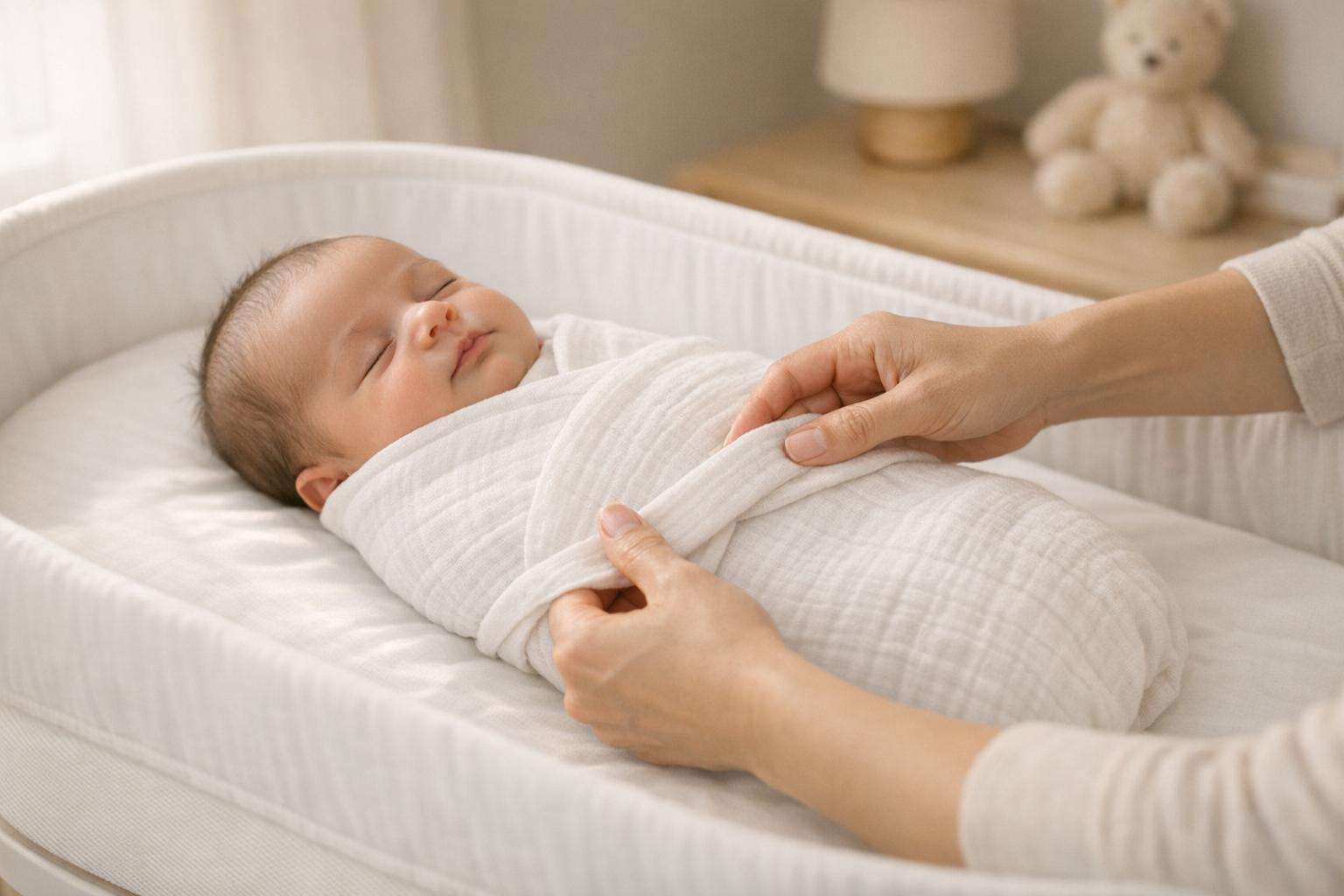
Swaddling Pros and Cons for Newborns
Swaddling is a common practice for newborns, offering benefits like better sleep, calming fussiness, and promoting safe back sleeping. However, it also comes with risks such as overheating, hip issues, and suffocation if done improperly or continued when babies start rolling. Here's a quick breakdown:
Benefits:
- Reduces Moro reflex (startle movements) for better sleep.
- Soothes fussiness and colic by mimicking the womb's snug environment.
- Encourages safe back sleeping, lowering SIDS risk.
Risks:
- Suffocation risk if baby rolls over while swaddled.
- Hip dysplasia from tight leg wrapping.
- Overheating with heavy fabrics or excess layers.
- May delay feeding cues due to deep sleep.
Key Safety Tips:
- Use breathable fabrics like muslin or cotton.
- Ensure the swaddle is snug on top but loose around the hips.
- Stop swaddling when baby shows rolling signs (around 2-3 months).
- Place baby on their back in a safe sleep environment.
Swaddling can be helpful for newborns but requires proper technique and timing to avoid potential dangers. Transitioning to sleep sacks or arms-out swaddles is recommended as babies grow more mobile.
Pros and Cons of Swaddling Your Baby
sbb-itb-9ce2258
Benefits of Swaddling for Newborns
Swaddling offers multiple advantages for newborns, helping them rest better and easing discomfort.
Improves Sleep Quality
Swaddling minimizes sudden limb movements, which can trigger the Moro reflex, allowing babies to sleep more peacefully and for longer stretches. For preterm infants, it also aids in neuromuscular development and motor organization. Additionally, swaddling helps regulate body temperature in babies under 8 weeks old, as their internal temperature control is still developing. Better sleep directly supports their physical and brain development.
These sleep improvements often result in a calmer, more content baby overall.
Calms Fussy Babies
A snug swaddle provides gentle pressure that mimics the comforting sensation of being in the womb. This tactile feedback activates a baby’s natural self-soothing instincts. Dr. Whitney Casares, a board-certified pediatrician and founder of Modern Mommy Doc, explains:
"The snug feel of a swaddle may also help to soothe colicky babies who have a more challenging time resting."
Swaddling can also alleviate colic symptoms like bloating and discomfort. It’s a key part of Dr. Harvey Karp’s "5 S’s" method, which is widely used to calm crying babies, particularly during the challenging "witching hour".
Encourages Back Sleeping
Swaddling not only improves sleep and soothes fussiness but also helps babies feel secure while sleeping on their backs. This is the safest sleep position, recommended to lower the risk of Sudden Infant Death Syndrome (SIDS). By ensuring babies are comfortable on their backs, swaddling reduces the chances of parents resorting to unsafe practices like bed-sharing or tummy sleeping.
Dr. Stephanie Napolitano, a neonatologist at Nationwide Children's Hospital, emphasizes:
"Swaddling your infant can help soothe them by giving them boundaries that they developed inside the birthing parent."
However, it’s crucial to never place a swaddled baby on their stomach or side, as they won’t be able to move their arms to clear their airway if it becomes blocked. The risk of SIDS is highest between 1 and 4 months of age, making proper swaddling techniques especially important during this time.
Risks and Drawbacks of Swaddling
Swaddling can be comforting for infants, but it comes with some serious safety concerns that parents need to keep in mind.
Suffocation and Rolling Risks
One of the biggest risks arises when swaddled babies start rolling over. Dr. Alexander Hamling, a pediatrician at Providence, highlights the importance of timing:
"I think that swaddling is great for young infants, birth to two months of age."
The danger occurs when a swaddled baby rolls onto their stomach. In this position, they can’t use their arms to push up or turn their head to breathe. A 2016 study found a "small but significant" connection between swaddling and an increased risk of SIDS, especially when swaddled babies are placed on their stomachs or roll into that position. In the United States, SIDS was responsible for 1,529 deaths in 2022. Additionally, if the swaddle becomes loose or is wrapped too tightly, it can block the baby’s airway or make it harder for their lungs to expand, leading to breathing difficulties.
To reduce these risks, stop swaddling as soon as your baby shows signs of rolling, like turning onto their side, which typically happens around 2 months of age. Always place swaddled babies on their backs to sleep, and make sure the crib is free of loose blankets, pillows, or toys.
Hip Development Problems
Swaddling can also interfere with healthy hip development. Wrapping a baby’s legs too tightly in a straight position can lead to issues like hip dysplasia or even dislocation. This happens when the femoral head is pushed out of the hip socket, stretching the hip capsule and preventing normal joint development.
The International Hip Dysplasia Institute warns:
"Swaddling infants with the hips and knees in an extended position increases the risk of hip dysplasia and dislocation. It is the recommendation of the International Hip Dysplasia Institute that infant hips should be positioned in slight flexion and abduction during swaddling."
Studies show that using proper swaddling techniques can significantly lower the risk of hip dysplasia. When swaddling, always ensure your baby’s hips and knees are slightly bent and turned out in a "frog-leg" position. The swaddle should be loose enough at the bottom to allow free leg movement. A good rule of thumb is that you should be able to fit two to three fingers between the swaddle and your baby’s chest.
Overheating and Limited Movement
Swaddling with heavy blankets or adding too many layers of clothing can cause overheating, which is dangerous for infants. Opt for lightweight, breathable materials like muslin or cotton gauze, especially in warmer weather. Watch for signs of overheating, such as sweating, damp hair, or flushed cheeks. If you notice these, remove the swaddle immediately.
Extended swaddling can also limit your baby’s movement, which is vital for their motor development. Susan Lattuca, a sleep consultant, emphasizes this point:
"We want their gross motor development to start moving and even their fine motor development. We want their hips to be mobile. So actually having space to move around is good."
Babies need to move their arms and legs during awake time to build strength and coordination. These risks highlight the importance of using safe and thoughtful swaddling techniques, as discussed in the next section.
Swaddling Pros and Cons Comparison
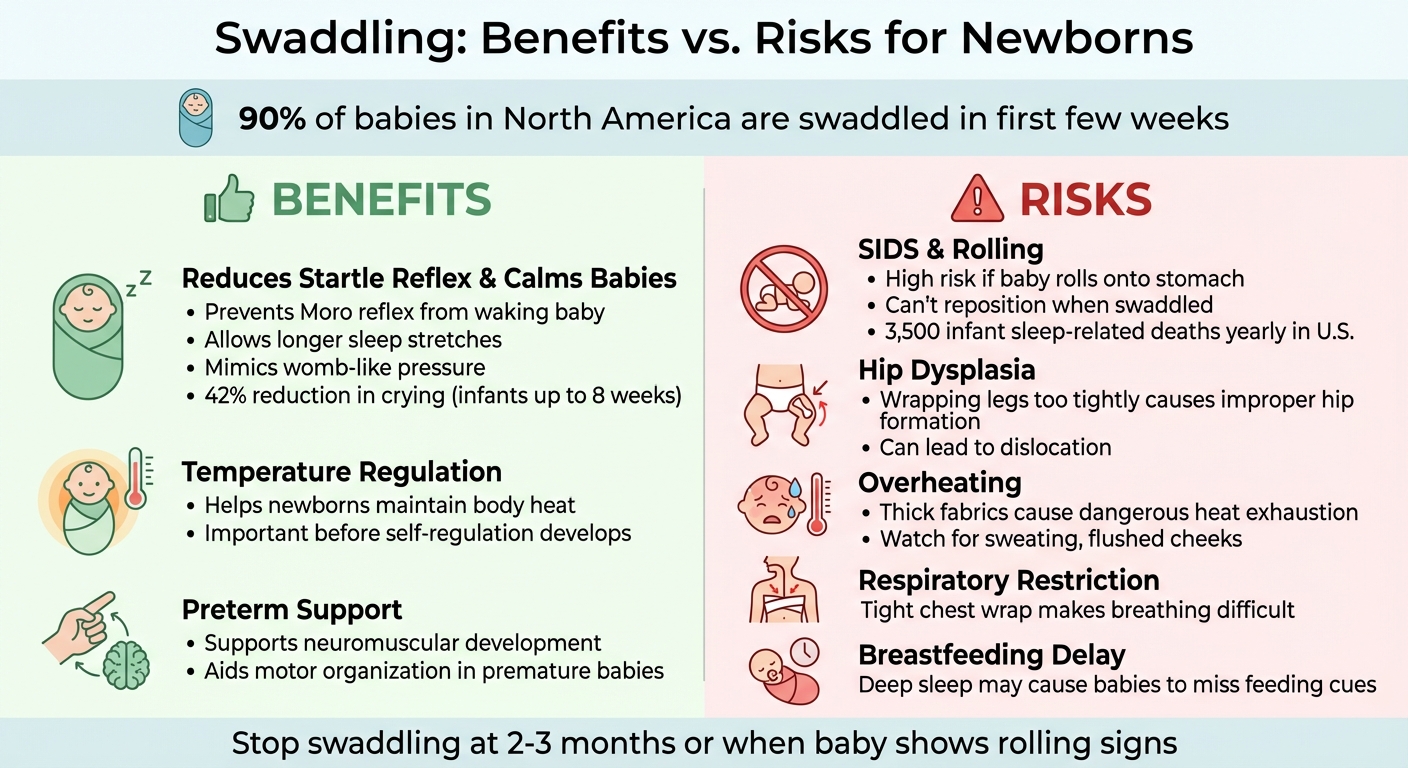
Swaddling Benefits vs Risks Comparison Chart for Newborns
This section provides a side-by-side look at the advantages and risks of swaddling, helping you weigh the options for your newborn. Did you know that about 90% of babies in North America are swaddled in their first few weeks of life?. While swaddling offers comfort and better sleep, it also comes with risks that increase as your baby grows and develops new motor skills, like rolling over.
Swaddling can improve sleep by calming the Moro reflex, which often startles babies awake. In fact, research has shown a 42% reduction in crying among infants up to 8 weeks old. On the flip side, improper swaddling or continuing the practice too long can lead to serious safety concerns. For example, approximately 3,500 infants die each year in the U.S. from sleep-related deaths, including SIDS and suffocation.
The key to safe swaddling lies in timing and technique. Wrapping too tightly around the legs can lead to hip issues, while a loose swaddle can pose suffocation hazards. Below is a detailed comparison of the benefits and risks.
Comparison Table
| Benefit/Risk | Description | Evidence/Source |
|---|---|---|
| Benefit: Reduces Startle Reflex and Calms Babies | Prevents the Moro reflex (involuntary limb movement) from waking the baby, allowing longer sleep stretches. Also mimics womb-like pressure to soothe fussiness or colic. | Healthline, Dr. Whitney Casares |
| Benefit: Temperature Regulation | Helps newborns maintain body heat before they can self-regulate. | Susan Lattuca, Sleep Consultant |
| Benefit: Preterm Support | Supports neuromuscular development and motor organization in premature babies. | 2007 Review of Studies |
| Risk: SIDS and Rolling | Swaddled babies face high risk if they roll onto their stomach and can’t reposition. | AAP |
| Risk: Hip Dysplasia | Wrapping legs too tightly can lead to improper hip joint formation or dislocation. | Healthline |
| Risk: Overheating | Thick fabrics or excessive layers can cause dangerous heat exhaustion. | Parents.com |
| Risk: Respiratory Restriction | A tight chest wrap may make breathing difficult. | Healthline |
| Risk: Breastfeeding Delay | Deep sleep from swaddling might cause babies to miss feeding cues. | 2007 Study |
Swaddling works best for newborns under 2 months, before they start rolling. While it offers clear benefits like better sleep and soothing comfort, the risks - such as SIDS, overheating, and hip issues - make proper technique and timing non-negotiable. Safe swaddling practices are essential for your baby’s well-being as they grow.
How to Swaddle Safely
Swaddling, when done correctly, can help your baby sleep soundly while reducing risks like overheating, hip issues, and suffocation. The key lies in choosing the right fabric, mastering the wrapping technique, and knowing when to stop swaddling. These steps ensure your baby stays safe and comfortable while enjoying the soothing effects of being wrapped.
Select Breathable Fabrics
The material you use for swaddling plays a big role in regulating your baby's temperature and keeping them comfortable. Muslin and cotton gauze are excellent choices because their breathable weave allows air to circulate, keeping your baby cool. These fabrics are ideal for warmer environments or summer months. For cooler conditions, cotton jersey provides a bit more warmth while still allowing airflow. Bamboo fabric is another option, as it naturally helps regulate temperature, staying about 3 degrees cooler than regular cotton.
Avoid thick or heavy blankets that trap heat and reduce airflow. Opt for a swaddle blanket measuring at least 40x40 inches for adequate coverage. Weighted swaddles are a no-go; the American Academy of Pediatrics warns that these can interfere with breathing. Keep an eye out for signs of overheating, like excessive sweating or flushed skin, and remove the swaddle if necessary.
Use Correct Swaddling Technique
Safe swaddling requires wrapping your baby snugly on top while leaving room for movement at the bottom. Contain their arms to help prevent startling, but give their hips and legs enough space to move freely. This allows for a natural "frog-leg" position, which is important for preventing hip dysplasia.
"Swaddling too tightly around the hips and legs can force the baby's legs into an extended position, which increases the risk of hip dysplasia." - SIDS of Illinois, Inc.
After wrapping, make sure you can slide two to three fingers between the blanket and your baby's chest. This ensures the swaddle isn’t too tight and doesn’t restrict breathing. Always leave your baby’s head and neck uncovered, and dress them lightly underneath to avoid overheating. Follow the ABCs of Safe Sleep: place your baby Alone, on their Back, in a Crib with a firm mattress and fitted sheet, in a smoke-free environment.
When to Stop Swaddling
Swaddling should stop as soon as your baby shows signs of rolling, typically between 2 and 4 months. Rolling while swaddled is dangerous because it can lead to suffocation if the baby gets stuck on their stomach without free arms to push up.
"When a baby rolls over when swaddled, they can have an increased risk of suffocation since they can get stuck on their stomachs if their arms are not free." - Whitney Casares, MD, MPH, CEO and founder of Modern Mommy Doc
You should also stop swaddling if your baby frequently escapes the wrap, as loose fabric could cover their face and pose a hazard. Around 3 to 4 months, the startle reflex naturally diminishes, making it a good time to transition to a sleep sack that leaves their arms free. This allows for safer sleep as your baby grows more mobile.
Alternatives and Transitioning from Swaddling
Ensuring your baby’s safety and comfort is always a top priority, especially when it comes to sleep. As your little one grows, moving away from swaddling and exploring alternative options becomes an important step.
Sleep Sacks and Arms-Out Swaddles
Once your baby starts rolling, traditional swaddling is no longer safe. This is where sleep sacks come in. These wearable blankets keep your baby cozy while allowing their arms to remain free. This freedom of movement lets your baby push up or reposition themselves if they roll onto their stomach, reducing the risk of suffocation.
Another option is arms-out swaddles. These allow your baby’s torso to stay snug while giving their arms the freedom to move. When choosing a sleep sack, pay attention to the TOG rating, which indicates how warm the fabric is:
- For rooms between 69°F and 78°F, go for a 0.5 to 1.0 TOG rating.
- For cooler rooms (61°F to 68°F), a 2.5 TOG model is a better choice.
Also, make sure the neck opening fits properly. A good rule of thumb is that no more than two fingers should fit between the fabric and your baby’s neck. This ensures the sleep sack stays in place and doesn’t ride up over their face.
Babies usually adapt to these changes within about three days. You can try the "Cold Turkey" method, where you switch directly to a sleep sack, or ease the transition with the "One-Arm-Out" approach, where you gradually release one arm and then the other.
Get Expert Guidance from Infant Care Specialists
Transitioning from swaddling can feel overwhelming, but you don’t have to do it alone. Infant care specialists can offer tailored advice based on your baby’s developmental stage and unique needs. They can guide you through sleep regressions, help you select the right sleep products, and create a sleep routine that works for your family.
For example, Nestling provides postpartum and newborn care services to support you during this transition. Whether you need overnight assistance or help establishing new sleep patterns during the day, expert guidance can make this shift smoother and less stressful. With the right strategies and support, you can ensure your baby’s safety and comfort as they adjust to their new sleep routine.
Conclusion
Swaddling can help recreate the snug feeling of the womb, calm fussy or colicky babies, and reduce the startle reflex. However, improper swaddling can lead to serious issues like hip dysplasia, overheating, and even an increased risk of Sudden Infant Death Syndrome (SIDS), especially if a swaddled baby rolls onto their stomach.
To swaddle safely, it’s crucial to follow a few key guidelines. Always lay your baby on their back to sleep on a firm, flat surface. Use breathable fabrics like muslin or cotton, and ensure the swaddle is snug but not too tight - there should be enough space to fit two to three fingers between the swaddle and your baby’s chest. Keep the room temperature at or below 72°F to avoid overheating, and watch for signs like sweating or flushed cheeks. Most importantly, stop swaddling as soon as your baby begins to show signs of rolling over, which typically happens around 2 to 3 months of age. By sticking to these practices and seeking advice when needed, you can ensure a safe and smooth transition when it’s time to stop swaddling.
If you’re uncertain about how to swaddle properly or how to transition out of it, don’t hesitate to ask for help. As Dr. Amy W. Anzilotti suggests:
"Ask your doctor or other health care provider to show you how to do it and practice in the office."
Pediatricians, hospital nurses, and infant care specialists can provide hands-on demonstrations and guidance to ensure you're swaddling safely and transitioning effectively to alternatives like sleep sacks.
For families looking for extra support with newborn care, Nestling offers personalized assistance through trained infant care specialists. Whether you need help establishing better sleep routines or overnight support during those challenging first months, expert guidance can make a world of difference for both you and your baby.
FAQs
How do I know if my baby is too warm while swaddled?
To see if your baby is too warm while swaddled, touch the back of their neck or chest. It's common for their hands and feet to feel cool - this happens because of vasoconstriction and doesn’t automatically mean they’re too hot. Keep an eye out for signs of overheating, like sweating or flushed skin, to make sure your baby stays safe and comfortable.
Can I swaddle my baby for naps as well as nighttime sleep?
Yes, swaddling is safe for your baby during both naps and nighttime sleep. It can provide a sense of security and promote more restful sleep for newborns. To ensure safety, make sure the swaddle is snug but not overly tight, and always place your baby on their back for sleep.
What should I do if my baby fights the swaddle or keeps breaking out?
If your baby seems to resist swaddling or frequently breaks out of it, make sure the swaddle is snug enough to feel secure but not so tight that it restricts movement or causes discomfort. Use a breathable fabric to keep your baby comfortable. You might also want to tweak your swaddling technique or consider alternatives like sleep sacks, which can provide a similar sense of security without the need for wrapping.
Keep an eye out for signs that your baby is uncomfortable or starting to roll over, as these are cues to stop swaddling. Safety guidelines generally recommend discontinuing swaddling by the time your baby is around 2 months old. Above all, focus on ensuring your baby feels safe and comfortable during sleep.


 Sign up with Google
 Sign up with Facebook