
How Flexible Backup Childcare Works

How Flexible Backup Childcare Works
Flexible backup childcare is a temporary solution for when your regular childcare plans fall apart, such as a sudden nanny cancellation or daycare closure. This service connects families with pre-vetted caregivers, offering quick, reliable care options tailored to their needs. It’s especially helpful for parents navigating unexpected disruptions like illnesses or work emergencies.
Key Features:
- On-demand booking: Arrange care anytime, often with same-day availability.
- Diverse caregiver options: Includes infant care specialists, postpartum doulas, and lactation consultants.
- Employer benefits: Many workplaces subsidize 10–20 days of backup care annually.
- Flexible care types: Choose between in-home or center-based options.
- Specialized support: Ideal for postpartum families needing overnight help or feeding assistance.
Backup childcare ensures parents can maintain their routines and peace of mind during unpredictable situations.
Discover How Bright Horizons Parents Use Back-Up Care to Support Their Families

sbb-itb-9ce2258
What Is Flexible Backup Childcare?
Flexible backup childcare provides a safety net for parents when their usual childcare plans fall apart. Unlike traditional childcare options that require long-term commitments and fixed schedules, backup care offers on-demand solutions. It allows parents to arrange care quickly, often with pre-vetted caregivers, ensuring peace of mind during unexpected situations.
What sets this type of childcare apart is its convenience and speed. Many services let you book care anytime - day or night - through apps or online platforms, often with same-day availability. If no caregivers are available within the network, some programs even allow you to hire someone you trust, like a family member or friend, and reimburse you, often up to $100 per day.
Main Features of Flexible Backup Childcare
Flexible backup childcare shines with features designed for reliability and ease of use. One standout benefit is 24/7 booking access, so you can secure care whenever the need arises. Caregivers in these programs typically undergo rigorous background checks, reference verification, and certification reviews, saving parents the hassle of lengthy hiring processes. For example, platforms like Nestling take extra precautions, including NDAs for privacy and specialized training for caregivers in areas like infant and postpartum care.
Another key feature is the variety of care options available. Services often provide both in-home care - where a caregiver comes to you - and center-based care in licensed facilities. Some programs even let you request specialized professionals, such as postpartum doulas, lactation consultants, or infant care specialists, depending on your needs. Additionally, many employers offer subsidized backup care as part of workplace benefits, covering 10 to 20 emergency care days per year, which can significantly reduce costs for families.
How It Helps Postpartum Families
For postpartum families, these flexible care options can make a world of difference. The early days with a newborn are often unpredictable and demanding, and backup childcare offers a lifeline when traditional daycare options fall short. Infants require constant attention, from managing feeding schedules to establishing sleep routines, and parents often need overnight support to recover. Backup care ensures that trained professionals are available to step in if your planned support - like a postpartum doula or night nanny - becomes unavailable.
Nestling is a great example of a service tailored to postpartum needs, focusing on the critical first 90 days after birth. Their backup care includes infant care specialists who handle overnight feedings and sleep training, lactation consultants for urgent breastfeeding assistance, and postpartum doulas who support both the baby and the mother. These doulas can help with light household tasks, emotional support, and maternal recovery, easing the burden on new parents.
Parents in New York, for instance, have benefited from on-demand night support and immediate lactation help, ensuring continuous care even when their original plans didn’t work out.
"Infant care specialists support the postpartum experience, offering parents the priceless gifts of restful sleep, guidance, and renewed confidence in their parenting journey."
- Nestling Team
With these flexible and specialized options, families can quickly arrange care that fits their unique needs, providing much-needed relief during a challenging time.
When to Use Flexible Backup Childcare
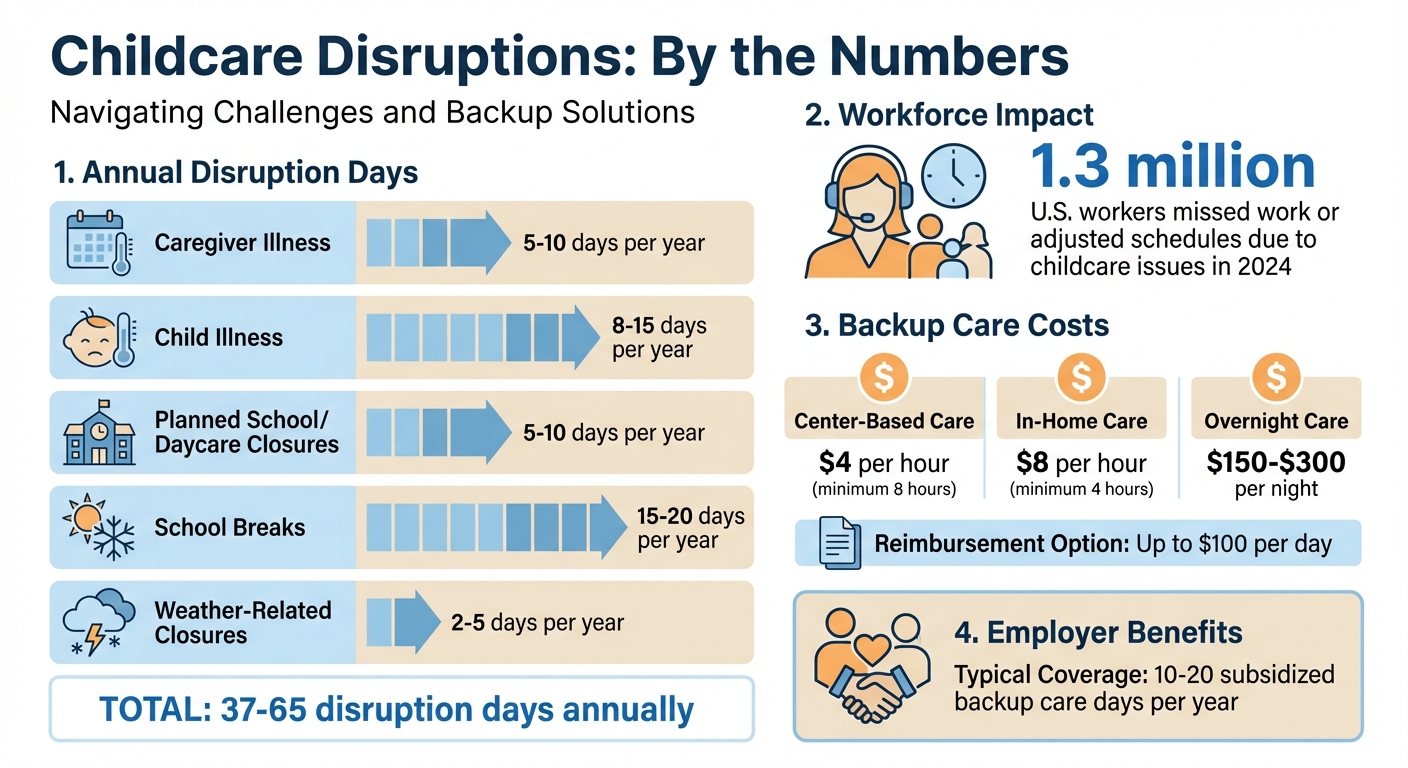
Annual Childcare Disruption Statistics and Backup Care Costs
When your usual childcare arrangements fall through - whether due to a sick nanny, a closed daycare, or an unexpected work emergency - flexible backup childcare steps in to save the day. These moments of disruption make it clear just how essential having a backup plan can be. Let’s explore some common scenarios where backup childcare becomes a lifeline.
Common Situations That Require Backup Care
Childcare disruptions often stem from situations like caregiver illness, which can leave you scrambling for 5–10 days each year when your nanny or babysitter calls out on short notice. Then there’s child illness, which can add another 8–15 days annually when your little one is too unwell for daycare due to a fever or other symptoms. In 2024, 1.3 million U.S. workers missed work or adjusted their schedules because of childcare issues.
Planned closures at schools and daycares are another major factor. Between holidays, teacher workdays, and professional development days, parents face 5–10 days of closures, plus 15–20 days of school breaks throughout the year. And don’t forget about weather-related closures like snow days, which can tack on 2–5 more days without warning. For parents with nontraditional work hours, last-minute work emergencies or schedule changes only add to the challenge. These scenarios highlight why having access to flexible, reliable backup childcare is so important for keeping family life on track.
"Child care disruptions are a defining drag on workforce participation." - The Cariloop Team
Managing Newborn Care Disruptions
Caring for a newborn comes with its own unique set of challenges, requiring even faster responses when disruptions occur. If your night nanny cancels or your lactation consultant isn’t available, it can throw off feeding schedules and sleep routines. This is where trained newborn care specialists come in, providing overnight support and helping parents maintain much-needed rest.
The postpartum period is especially unpredictable. If your regular postpartum doula can’t make it or you encounter feeding difficulties, backup care ensures you’re not left without support. Services like Nestling connect parents with infant care specialists and lactation consultants who can step in on short notice. These professionals are equipped to handle the specific needs of postnatal care, offering peace of mind and practical help during a critical time.
How to Book Flexible Backup Childcare
Booking backup childcare is straightforward - even during emergencies. It involves three key steps: submitting your request, getting matched with a caregiver, and finalizing your booking. Here's how to secure reliable care when you need it most.
Submitting Your Childcare Request
The first step is setting up an account on a backup care platform before you face an urgent need. Provide basic family details and any specific care requirements. When it’s time to request care, you’ll outline the dates and times you need, decide if care should be near your home or workplace, and choose between in-home or center-based services.
- In-home care: Requires a minimum of four consecutive hours.
- Center-based care: Requires a minimum of eight consecutive hours and may involve providing vaccination records and completing facility-specific forms.
If your child has specific needs, like mild illness, make sure to include that information to match with the right caregiver. You can request care up to 90 days in advance for planned situations or even on the same day for emergencies. For last-minute needs (within 24 hours), contacting a consultant directly often speeds things up.
Getting Matched with Verified Caregivers
Once you’ve submitted your request, the platform matches you with caregivers who meet strict safety and training criteria. Many platforms employ caregivers as W2 employees, ensuring regular evaluations, training, and performance monitoring.
If you have a newborn, some platforms, like Nestling, specialize in connecting families with infant care experts, postpartum doulas, and lactation consultants. These professionals are carefully vetted and have documented experience in postnatal care. Whether you need overnight support, help with feeding, or assistance managing multiple children, the matching process considers your specific needs to find the best fit.
"Our people do not want to give their children over to someone who doesn't have an outstanding reputation and a history of quality care." - Vice President of Total Rewards, The Boyd Group
Finalizing Your Booking
To confirm your booking, provide payment details. Most platforms process charges after the service is completed and accept payment methods like credit cards or electronic funds transfers. Subsidized costs typically range from $4 per hour for center-based care to $8 per hour for in-home care.
Prepare an info sheet with emergency contacts, your pediatrician’s details, and your child’s daily routine to share with the caregiver. If plans change, you can usually cancel or adjust your reservation without fees by notifying the platform by 5:00 p.m. local time two business days in advance. If no caregiver is available, some programs offer reimbursements - up to $100 per day - for care you arrange independently.
Types of Caregivers and Service Options
Flexible backup childcare offers various caregiver types designed to suit your family's specific schedule and preferences. These options provide a safety net when your regular care arrangements fall through.
In-Home Care Services
In-home care is a go-to solution when you need personalized and immediate support. These caregivers come directly to your home, offering one-on-one attention. Their responsibilities often include preparing meals, supervising playtime, and ensuring a safe environment. If your child is mildly ill and unable to attend daycare, these caregivers can help by monitoring temperatures and reminding them to take prescribed medications. For families with newborns, platforms such as Nestling connect you with professionals like infant care specialists, postpartum doulas, and lactation consultants. These experts can provide overnight or live-in assistance during those challenging early months. Typically, in-home caregivers require a minimum of four hours per booking, with rates averaging around $8 per hour.
Center-Based and Hybrid Options
Licensed childcare centers are a structured and budget-friendly choice for planned situations like school closures, holidays, or teacher workdays. These facilities are tailored for school-aged children, offering a group setting where they can engage with peers. Most centers require an eight-hour minimum booking, costing about $4 per hour. Before your first visit, you may need to submit vaccination records and complete any necessary forms specific to the facility. Many families find it helpful to combine these options - relying on center-based care for planned gaps while keeping vetted in-home caregivers on standby for unexpected needs. This hybrid approach ensures flexibility for both planned and last-minute situations.
Care for Nontraditional Work Schedules
Families with irregular work hours - such as night shifts or weekend schedules - often benefit most from in-home care. Only a small percentage of childcare centers accommodate these needs: just 8% offer 24-hour or weekend care, 2% provide evening hours, and 6% offer overnight care. In-home caregivers, including overnight nannies or live-in specialists, can seamlessly adapt to your schedule without disrupting your child's routine. For overnight care, rates generally range between $150 and $300 per night, typically charged as a flat fee when the caregiver is on call rather than actively engaged.
Customizing Care for Your Family
Creating Personalized Care Plans
Once you've booked your childcare service, the next step is to tailor the care to fit your family's specific needs. Start by identifying what kind of support you require - whether it's help with a newborn, assistance during postnatal recovery, or even emergency coverage. This helps create a plan that works best for your situation.
Decide on the timing and duration of care. Do you need daytime help while you're working, overnight care to catch up on sleep, or a live-in arrangement for round-the-clock support during the postpartum period? Families navigating the "fourth trimester" (the first 90 days after birth) often focus on maternal recovery and infant care during this critical time. Platforms like Nestling let you customize your team by choosing from professionals such as postpartum doulas, lactation consultants, infant care specialists, or infant nurses, depending on your specific challenges.
To ensure consistency, prepare an info sheet with essential details like your child’s daily routines, house rules, medical information (e.g., allergies, medications, and pediatrician contact), and comfort items. Keep this document easily accessible - like on your refrigerator or stored securely in the cloud - so caregivers can step in seamlessly without requiring extensive instructions during busy or stressful moments. It’s also worth checking your employer benefits, as many companies offer subsidized backup care (usually 10–20 days per year), which parents might not always be aware of.
A well-thought-out care plan sets the stage for a childcare strategy that can adapt and improve over time.
Providing Feedback and Making Changes
Once your care plan is in action, regular feedback is key to keeping it effective as your family's needs evolve. Most services allow you to make cancellations without penalty if done by 5 PM two business days before the scheduled care. Adjustments can be made easily through online platforms, mobile apps, or by contacting 24/7 care consultants for immediate support.
After each session, take time to provide feedback to fine-tune your plan and update caregiver preferences. If your circumstances change, update your care plan right away. Services like Nestling offer a feedback loop that ensures you’re satisfied and allows for quick adjustments if a caregiver doesn’t meet your expectations. This ongoing communication helps you build a reliable backup care system that works when you need it most.
Conclusion
Flexible backup childcare offers a practical solution for handling unexpected disruptions in caregiving. Whether it’s a sudden school closure, a sick caregiver, or an unplanned work commitment, families face an average of 37 to 65 days of childcare interruptions each year. Having a dependable backup plan can save time and reduce stress during these moments of chaos.
The setup is simple: register ahead of time, and when the need arises, you can quickly arrange care with a pre-screened, background-checked professional. You have the flexibility to choose the type of caregiver, set the hours and location, and even provide feedback after each session to refine your experience.
For families adjusting to life with a newborn or navigating postpartum challenges, platforms like Nestling provide specialized support. Their services include postpartum doulas, lactation consultants, and infant care specialists, offering expert assistance tailored to the unique demands of the fourth trimester.
FAQs
How fast can I actually get backup care?
Backup care services can often be arranged quickly - sometimes with as little as 2 hours' notice for in-home care or even on the same day, depending on caregiver availability. However, since availability can vary, it’s always a good idea to plan ahead whenever possible.
What should I prepare to help a caregiver step in smoothly?
Get ready for a smooth transition by assembling a well-organized emergency kit packed with essentials. Here’s what to include:
- Labeled bottles: Clearly mark bottles with your child’s name for easy identification.
- Diapers and wipes: Pack enough to last the day.
- Extra clothing: Include a complete change of clothes in case of spills or accidents.
- Comfort items: Bring along a favorite blanket, stuffed toy, or pacifier to help your child feel at ease.
- Food and snacks: Prepare enough to keep your little one fed and happy.
- Medications: If your child has prescriptions or over-the-counter needs, ensure they’re included and properly labeled.
Don’t forget to label everything with your child’s full name to avoid any confusion. Having these items ready ensures the caregiver can provide the best care for your child throughout the day.
How do employer backup-care days and reimbursements work?
Employers often provide a specific number of backup-care days each year, giving employees the chance to arrange temporary childcare when their usual plans fail. In these cases, employees typically secure the care themselves, pay upfront, and then submit proof of expenses for reimbursement. The reimbursement amount is usually a set daily rate, such as $100 per day, though the total number of reimbursable days depends on the employer. This range commonly falls between 10 and 40 days annually.









 Sign up with Google
 Sign up with Facebook