
Baby Nap Transitions by Age: When to Drop a Nap

Baby Nap Transitions by Age: When to Drop a Nap
Babies' sleep needs change quickly as they grow, moving from frequent naps to fewer, longer ones, and eventually no naps at all. Knowing when to adjust nap schedules is key for healthy sleep habits. Here’s what you need to know:
- Newborn care for babies 0 to 4 months: 4–6 naps daily, with short wake windows of 45 minutes to 1.5 hours.
- 4 to 6 Months: Consolidate to 3 naps as wake windows stretch to 2–2.5 hours.
- 6 to 9 Months: Transition to 2–3 naps with 2.5–3-hour wake windows.
- 12 to 18 Months: Shift to 1 nap as wake windows extend to 4–5 hours.
- 2.5 to 5 Years: Most kids drop naps entirely, replacing them with quiet time.
Signs your baby may be ready to drop a nap include consistent nap refusal, bedtime struggles, or waking earlier than usual. Adjust gradually by extending wake windows and temporarily moving bedtime earlier. Nap transitions often take 2–4 weeks to stabilize, so patience and observation are key.
If you're unsure, tracking sleep patterns over 1–2 weeks can help distinguish between temporary disruptions (like teething or illness) and true readiness for change. Focus on balancing daytime and nighttime sleep to support your baby’s overall rest and development.
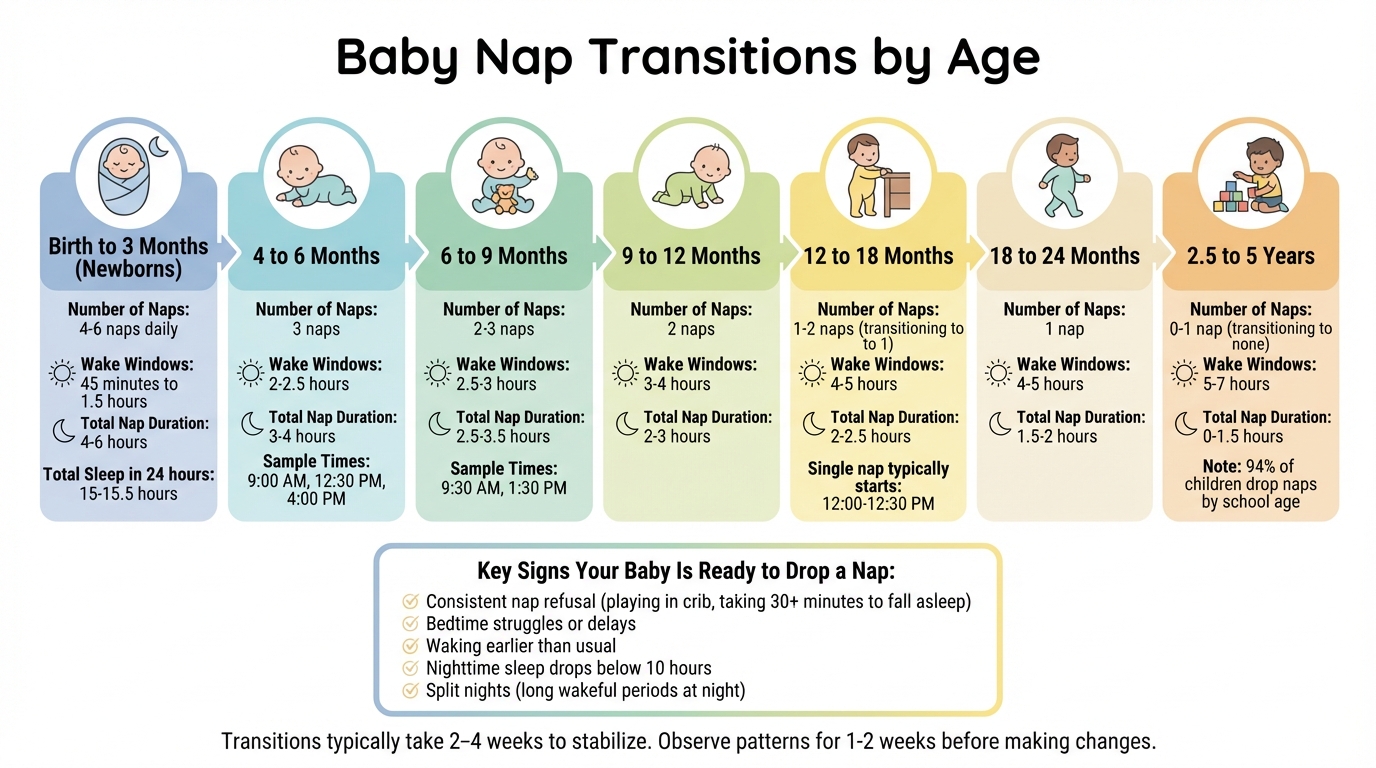
Baby Nap Transition Schedule by Age: Complete Guide from Newborn to 5 Years
The only nap transition how-to you need!
sbb-itb-9ce2258
Signs Your Baby Is Ready to Drop a Nap
Adjusting your baby’s nap schedule can feel tricky, but it’s all about recognizing the right signs and giving it time. If your baby seems ready to drop a nap, you’ll notice some clear patterns - but don’t rush into changes after just one off day. Instead, observe their behavior consistently over one to two weeks (or at least 4–5 days a week) before making adjustments.
One of the biggest indicators is consistent nap refusal. If your baby starts resisting naps, playing in their crib, or taking more than 30 minutes to fall asleep for several days in a row, it could be a sign they need less daytime sleep. For parents seeking personalized infant care in NYC to navigate these transitions, Mandy Treeby, Chief Baby Sleep Consultant at Smart Sleep Coach by Pampers™, highlights this:
If your baby misses a nap and seems unphased, and that happens more than once, it may mean they're ready to drop a nap.
Another clue is bedtime struggles. When babies get too much daytime sleep, they might not feel tired enough to fall asleep at their usual bedtime. This can lead to bedtime delays or long stretches of wakefulness during the night, often called "split nights". If their total nighttime sleep dips below 10 hours, it’s a sign that daytime sleep might be interfering. Dr. Robert Minkus, a pediatrician, explains:
Most babies drop their afternoon nap or combine their two naps into one longer mid-day nap around 12 or 15 months. That usually happens by itself; you don't have to make it happen.
Sometimes, your family’s daily schedule can also signal the need for fewer naps. If naps are pushing bedtime later or making your routine feel too tight, it might be time to reassess. However, keep in mind that not all disruptions mean your baby is ready to transition. Temporary issues like teething, illness, or developmental milestones (like learning to walk) can affect sleep patterns. If your baby still naps in the stroller, car, or while being held, they likely still need that rest and are just going through a phase.
Nap Transitions by Age
Baby nap schedules change rapidly in the first few years, and knowing what to expect can make adjusting their routine much easier. Here’s a breakdown of typical nap transitions by age to help you stay on track.
5 to 4 Naps (Birth to 4 Months)
Newborns usually take 4–6 short naps daily, with wake windows lasting 45 minutes to 1.5 hours. By the time they’re 3–4 months old, most babies consolidate to four naps, sleeping a total of 15–15.5 hours in 24 hours, including 4–6 hours during the day. As their wake windows extend to 1.5–2 hours, an earlier bedtime - sometimes as early as 6:30 or 7:00 PM - can prevent overtiredness. Over time, naps become more structured as wake windows continue to grow.
4 to 3 Naps (4 to 6 Months)
Between 4 and 6 months, babies' wake windows stretch to 2–2.5 hours, leading many to shift to three naps. These naps are often spaced around 9:00 AM, 12:30 PM, and 4:00 PM, totaling 3–4 hours of daytime sleep. If the third nap pushes bedtime past 8:00–8:30 PM, it might signal readiness to drop a nap. As wake windows lengthen further, the next transition begins.
3 to 2 Naps (6 to 9 Months)
From 6 to 9 months, babies typically move from three to two naps as their wake windows expand to 2.5–3 hours. The late-afternoon nap often shortens to 30–45 minutes or is skipped entirely. A common schedule might include naps around 9:30 AM and 1:30 PM, resulting in 2.5–3.5 hours of daytime sleep. If needed, a quick 15–20 minute "catnap" in a stroller or carrier can help bridge the gap. As their first birthday approaches, babies start preparing for a bigger shift in their nap routine.
2 to 1 Nap (12 to 18 Months)
Between 12 and 18 months, toddlers usually transition to one nap as their wake windows extend to 4–5 hours. Signs like resisting the morning nap or bedtime struggles often indicate it’s time to adjust. Gradually delay the morning nap by 15–30 minutes every few days until it starts around 12:00–12:30 PM and lasts 1.5–2.5 hours. Sleep consultant Rachael from Hey Sleepy Baby advises:
Ideally after a couple of weeks the first 2 naps will each lengthen, so bedtime can stay relatively the same. If it's been more than a few days of this and the naps are not consolidating... then the transition could be premature.
On particularly tiring days, an earlier bedtime - around 6:00 PM - can help maintain overall sleep. Eventually, even the single nap will phase out.
1 Nap to No Naps (2.5 to 5 Years)
Between the ages of 2.5 and 5 years, most kids stop napping entirely (94% by school age). Signs include consistently skipping naps without becoming cranky or disrupting nighttime sleep. This shift often happens gradually, with children napping some days and skipping others for weeks or months. Replacing naps with 30–60 minutes of quiet time - reading books or listening to soft music - can ease the transition. On non-nap days, adjusting bedtime earlier can help.
| Age Range | Number of Naps | Wake Window | Total Nap Duration |
|---|---|---|---|
| Birth to 3 Months | 4–6 naps | 45 mins – 1.5 hours | 4–6 hours |
| 4 to 6 Months | 3 naps | 2–2.5 hours | 3–4 hours |
| 6 to 9 Months | 2–3 naps | 2.5–3 hours | 2.5–3.5 hours |
| 9 to 12 Months | 2 naps | 3–4 hours | 2–3 hours |
| 12 to 18 Months | 1–2 naps | 4–5 hours | 2–2.5 hours |
| 18 to 24 Months | 1 nap | 4–5 hours | 1.5–2 hours |
| 2.5 to 5 Years | 0–1 nap | 5–7 hours | 0–1.5 hours |
Tips for Managing Nap Transitions
Managing nap transitions can feel tricky, but a few practical steps can make the process smoother for both you and your baby.
Start by following your baby's wake windows and make gradual adjustments. Instead of dropping a nap all at once, extend wake windows by 10–30 minutes every few days to help them adapt to the new schedule. Dr. Kristin Barrett, a pediatrician at Cleveland Clinic, emphasizes:
Understanding your baby's wake windows can help you to start setting them up for a good sleep routine.
Pay attention to early sleepy cues like yawning, rubbing eyes, or staring off into space. Catching these signs early can prevent overtiredness, making it easier for your baby to fall asleep.
Shift bedtime earlier during transitions. Dropping a nap often means your baby may tire sooner in the evening. Moving bedtime up by 20–60 minutes temporarily can help prevent overtiredness. Infant sleep expert Meg O'Leary explains:
Think of bedtime as a window, not a fixed point. This mental shift alone can reduce so much stress during transition periods.
If your toddler skips their only nap, consider starting the bedtime routine as early as 6:00 PM to maintain a consistent sleep schedule.
Use "bridge" activities to help your baby manage longer wake windows. Activities like going outside, offering a snack, or engaging in water play can keep them entertained and alert. If your baby takes a short nap, you can try soothing them back to sleep to extend their rest. For babies over 6 months, you might find it helpful to "anchor" the first nap at a consistent time each day (e.g., 9:00 AM). This approach can help regulate their internal clock, even if wake windows vary.
Keep in mind that nap transitions often take two to four weeks to fully settle. During this time, it’s normal to toggle between the old and new schedule. Pediatric sleep consultant Mandy Treeby advises:
If you notice [resistance], skip the afternoon nap and move bedtime earlier. If they sleep well at night and don't seem cranky, keep at it!
Finally, maintain consistent pre-nap and bedtime routines. Familiar rituals signal to your baby that it’s time for sleep, even as the timing of naps and bedtime shifts.
How Nestling Can Support Nap Transitions

Nap transitions can feel overwhelming, but having expert support makes all the difference. Nestling connects families with vetted infant care specialists who provide guidance tailored to your baby's unique sleep needs. These caregivers know that nap transitions aren't a one-size-fits-all process - they depend on your child's developmental stage and individual sleep patterns. This personalized approach helps parents better understand their baby’s natural rhythms.
One key area where Nestling shines is helping parents determine the right time for nap changes. Their specialists track your baby's sleep patterns consistently over 5 to 14 days, rather than reacting to a few off days. This careful observation helps distinguish between temporary sleep disruptions and true readiness to drop a nap, avoiding premature transitions that could throw your baby's sleep schedule into chaos.
Nestling’s tailored care plans are designed to navigate the ups and downs of nap transitions. These changes can take time to stabilize - such as the shift from 2 naps to 1, which often takes 4–6 weeks. Having professional guidance during this period can ease the process. Pediatric sleep expert Nicky Barker explains:
Each transition is different and it purely depends on your little one's nap structure... they still need your support.
Nestling also offers flexible booking options, making it easier to access support when you need it most. Whether it's daytime help, overnight care, or assistance with establishing new sleep routines, you can adjust services as your baby's needs evolve. This flexibility is especially helpful during the 1–2 week period when your child’s internal clock adjusts to a new schedule.
Conclusion
Nap transitions are a normal part of a child’s growth and development. These shifts often become noticeable through consistent signs like resistance to naps, trouble falling asleep at bedtime, or waking up earlier than usual. Typically, these transitions follow predictable patterns, such as moving from multiple naps during infancy (around 4–6 months) to eventually dropping the last daytime nap sometime between 2½ and 5 years of age.
Taking a gradual approach can make these transitions smoother. For instance, you can extend wake windows by 15–30 minutes and adjust bedtime earlier to compensate for the change. It’s important to keep in mind that babies aged 4–12 months generally need 12–16 hours of total sleep daily, so maintaining a balance between daytime and nighttime sleep is crucial.
For parents looking for additional help, professional guidance can make a big difference. Nestling offers access to experienced infant care specialists who track sleep patterns and provide tailored advice. With flexible booking options for daytime, overnight, or live-in care, they’re a helpful resource for navigating these changes.
Every baby’s sleep journey unfolds differently. By staying patient, observing your child’s cues, and seeking support when needed, you can handle nap transitions with confidence.
FAQs
How do I know it’s a nap transition and not teething or a milestone?
If your baby’s sleep habits start shifting gradually around the typical age for nap transitions (like 7–10 months), it might be time for a change. Common signs include struggling to fall asleep, resisting naps altogether, or waking up earlier than usual. However, if the changes happen suddenly, they’re more likely connected to things like teething or developmental milestones. Pay close attention to the timing and patterns to figure out what’s really going on.
What should I do if dropping a nap causes early wake-ups or crankiness?
If cutting out a nap results in early wake-ups or extra fussiness, make changes gradually rather than all at once. You can try pushing the nap to a later time or shortening its duration instead of eliminating it entirely. Focus on ensuring your baby gets plenty of nighttime sleep and stick to a consistent bedtime routine. Pay attention to your baby’s signals and remain adaptable, as each child has unique sleep patterns. Remember, transitions like this require both time and patience.
How can I handle nap transitions when daycare has a fixed nap schedule?
Managing nap transitions when your child is on a fixed daycare schedule can feel challenging, but it’s manageable with good communication and some adjustments. Start by discussing your child’s sleep needs with daycare staff. Together, you can create a gradual plan to adjust nap times in a way that works for everyone.
If your child ends up with shorter or missed naps, try incorporating quiet time at home to help them unwind. You might also consider moving bedtime earlier to make up for lost rest. Paying attention to your child’s sleep cues and keeping a consistent routine at home can go a long way in making this transition easier for everyone involved.









 Sign up with Google
 Sign up with Facebook