
Understanding Baby Hunger Cues

Understanding Baby Hunger Cues
Your baby communicates hunger through physical and behavioral signals before crying, which is a late-stage cue. Recognizing early signs like lip smacking, rooting, or hand-to-mouth movements can make feeding smoother and less stressful. Feeding based on these cues, rather than a strict schedule, supports healthy eating habits and strengthens your bond. Here's a quick breakdown:
- Early Cues: Lip smacking, rooting reflex, sucking on hands.
- Active Cues: Restlessness, stronger rooting, soft fussing.
- Late Cues: Crying, clenched fists, body stiffening.
- Fullness Cues: Relaxed hands, turning away, slowing sucking.
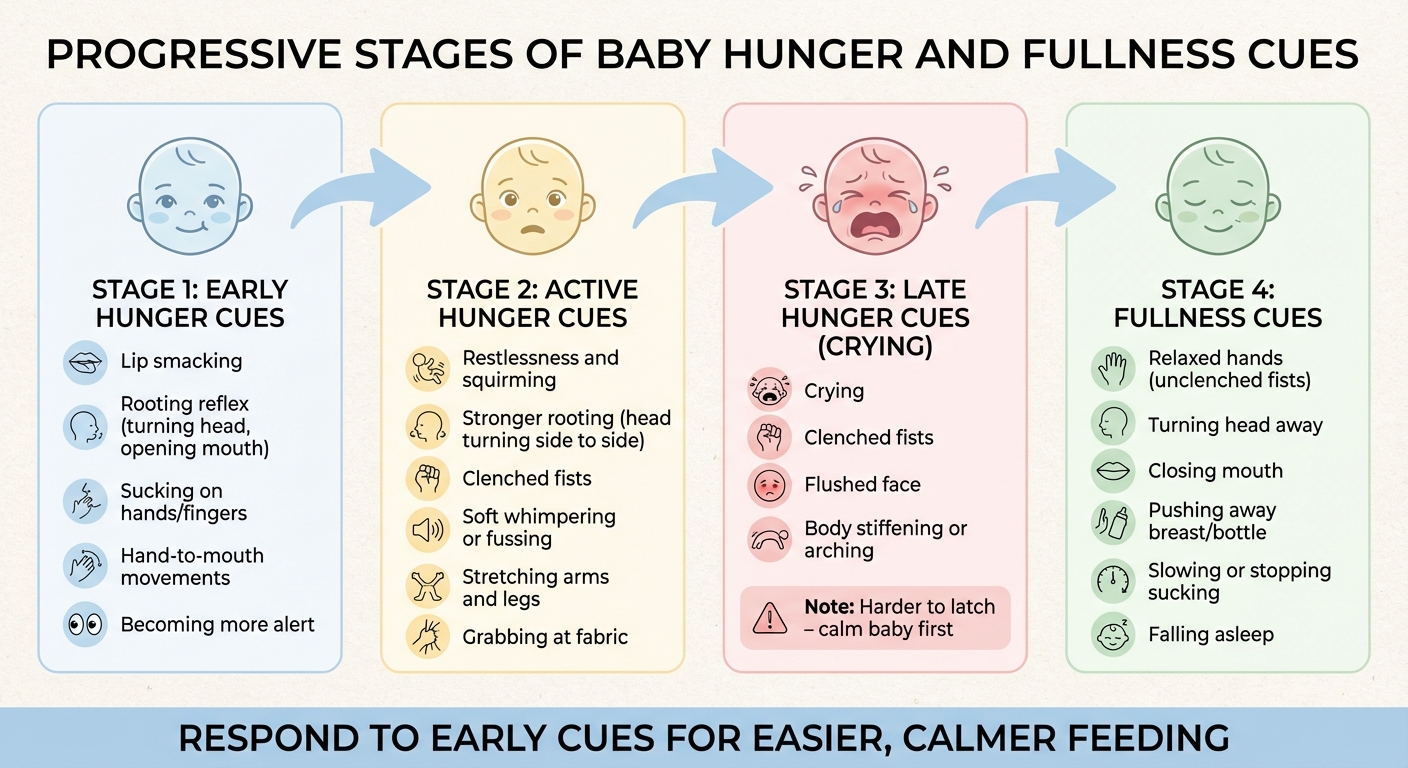
Baby Hunger Cues Stages: Early, Active, Late, and Fullness Signs
Early Hunger Cues
What Early Hunger Cues Look Like
Before your baby starts fussing or crying, they’ll often show smaller, more subtle signs that they’re getting hungry. These include lip smacking, mouth movements, or the rooting reflex - when they turn their head and open their mouth if their cheek is stroked. You might also spot them licking their lips, opening and closing their mouth, or sticking out their tongue.
Another common sign is hand-to-mouth activity. Babies might bring their hands or fists to their mouths and start sucking on their fingers, hands, or even nearby fabric. They may also become more alert, stir from sleep, or briefly open their eyes, signaling it’s time to eat.
Why Responding Early Matters
Recognizing these early signals can make feeding a smoother and more pleasant experience for both you and your baby.
"Breastfeeding is much easier for both mom and baby if mom is able to pick up on baby's earlier hunger cues." - Kelly Bonyata, BS, IBCLC from KellyMom.com
When babies are calm, they tend to latch more easily compared to when they’re upset or crying. Waiting too long to feed can lead to frustration for your baby, making it harder to soothe them and get them to latch. By responding to early hunger cues, you create a more relaxed feeding environment and strengthen the bond between you and your baby. For extra support during these early weeks, many families benefit from postpartum doula services. For breastfeeding moms, being attentive to these cues also helps your body naturally adjust milk production to match your baby’s needs.
Next, we’ll look at the more noticeable hunger behaviors that emerge as your baby’s signals become stronger.
sbb-itb-9ce2258
Active Hunger Cues
Common Active Hunger Behaviors
When early hunger signs are missed, babies shift to more urgent signals. At this stage, they’re not just hungry - they’re ready to eat right now.
You’ll often see your baby becoming noticeably restless. They might squirm, fidget, or even try to move toward your chest or a bottle. The rooting reflex becomes much stronger, with their head turning quickly from side to side and their mouth wide open in search of food .
Hand-to-mouth movements become more intense, with clenched fists and louder sucking replacing earlier gentle gestures. You might also see them grabbing at nearby fabric or objects. Their whole body often tightens up, signaling their focus on finding food.
During this phase, you may hear soft whimpering or light fussing - small vocal hints before crying begins. Stretching their arms and legs more frequently is another sign they’re becoming increasingly alert and focused on eating.
Recognizing these signals early allows you to respond before your baby reaches the late hunger stage, where crying can make feeding more challenging.
How to Respond to Active Hunger
When you spot these active hunger cues, it’s best to begin feeding right away. Your baby is eager to eat but still calm enough to latch effectively. As one expert puts it:
"Responding to cues during the early or active stages is ideal and can make feedings smoother and more enjoyable for both of you."
Delaying at this stage can lead to late hunger, where crying makes latching more difficult. Keeping your baby close ensures you can catch these signals quickly.
If fussing starts to escalate, try calming them with brief skin-to-skin contact or gentle rocking before feeding. These small moments of soothing can help your baby settle enough to latch successfully. Feeding during this active phase, rather than waiting for crying, encourages healthy eating habits and keeps mealtimes more relaxed for both of you.
Crying as a Late Hunger Cue
Why Crying Means Your Baby Is Very Hungry
By the time your baby starts crying, they've already bypassed earlier hunger signals like lip smacking or rooting. Crying isn’t just a sign of hunger at this point - it’s a sign that they’re overwhelmed. Spotting those earlier cues can help avoid the added challenges that come with feeding a crying baby.
Once crying begins, feeding can become much harder. Crying affects your baby’s tongue position and breathing, making it difficult for them to latch properly. They may also swallow air while crying, which can lead to gas, spit-up, or general discomfort. On top of that, the energy they expend crying can leave them too tired to finish their meal. You might notice other signs of distress like clenched fists, a flushed face, or their body stiffening or arching.
To make feeding smoother, it’s important to calm your baby before trying to feed them.
How to Calm a Crying Baby Before Feeding
Feeding a crying baby right away isn’t ideal. Instead, take a moment to soothe them first. Aeroflow Breastpumps explains:
"If your baby does cry, try to soothe them first before offering the breast - they'll latch more easily once calm".
Start with skin-to-skin contact, which can be very comforting. Gentle rocking or rhythmic swaying can also help ease their distress. Soft talking or humming creates a soothing atmosphere. Wait until your baby’s breathing steadies before offering the breast or bottle. These calming steps not only make latching easier but also help turn feeding into a more peaceful experience for both of you.
Newborn Hunger Cues
Fullness Cues
After identifying hunger signals, it's just as important to pay attention to fullness cues to know when your baby is ready to stop feeding.
What Fullness Cues Look Like
Babies have their own way of showing they've had enough, just like they signal when they're hungry. Spotting these signs is key to maintaining a healthy feeding routine.
Take note of your baby's hands - they may start with clenched fists when hungry, but these will relax as they become full. Their whole body will seem more at ease.
Other signs include turning their head away, closing their mouth, or even pushing the bottle or breast away. You might notice your baby slowing down or stopping sucking entirely, releasing the nipple, or unlatching on their own. Some babies may become easily distracted or simply fall asleep during or after feeding, which is a common sign they're satisfied.
These behaviors are clear indicators that your baby is full and it's time to wrap up the feeding session.
Why Recognizing Fullness Matters
Understanding fullness cues is essential for maintaining your baby's natural hunger and fullness rhythm, which helps prevent overfeeding. According to the American Academy of Pediatrics:
"Responding when your baby is hungry can help them develop healthy eating habits, lower their risk of becoming overweight, and make mealtimes easier".
This approach aligns with a responsive feeding routine, promoting balanced nutrition and smoother feeding times.
It's also important to avoid pressuring your baby to finish a bottle if they're showing signs of fullness. By day 10, a newborn's stomach is only about the size of a walnut. Overfeeding can lead to discomfort like stomach pain, bloating, excessive gas, and frequent spitting up. Formula-fed babies might face a slightly higher risk of overfeeding because bottles often have a faster flow, and parents might feel tempted to encourage finishing every last drop.
How Hunger Cues Change as Your Baby Grows
As your baby grows, their hunger signals change, and understanding these shifts can help you adapt your feeding approach to meet their needs.
Hunger Cues in Newborns vs. Older Infants
In newborns (0–2 months), hunger cues are mostly instinctive. You might notice the rooting reflex - where your baby turns their head toward a touch on their cheek - along with behaviors like sucking on hands or fingers, lip smacking, and clenching their fists. During this time, frequent feeding is typical.
By 3–5 months, hunger cues become more deliberate. Babies may make eye contact, follow your movements, or show excitement when food is near. However, hand sucking becomes less reliable as a hunger signal after 6 to 8 weeks, as babies start using their mouths to explore and soothe their gums.
From 6–12 months, hunger signals become more advanced. Your baby might point at food, reach for utensils, lean forward eagerly, or use simple gestures and vocalizations - like clapping or bouncing - to express interest. Around 10–12 months, you can introduce basic signs like "more" or "eat" to help them communicate before they start speaking.
As these cues develop, your feeding approach should grow with them.
Adjusting Feeding Routines as Your Baby Develops
Responsive feeding - paying close attention to your baby's signals instead of sticking to a rigid schedule - can help support their growth and strengthen your connection. By 16 weeks, many babies begin sleeping longer and waking less frequently for night feedings. Once a baby under 4 months gains at least 4 ounces per week, you can typically stop waking them to feed and let them establish their own routine.
When your baby reaches about 6 months and begins eating solid foods, you might notice them showing interest in your meals. They might mimic chewing, reach for your spoon, or open their mouth wide in anticipation. This is the perfect time to introduce easy-to-grip utensils and encourage self-feeding, which helps develop motor skills and self-regulation. As lactation consultant Kristina Arrieta from Texas WIC says:
"Be patient while you're learning your baby's cues. It's OK if you don't know everything he's trying to tell you right away".
Cluster Feeding
Cluster feeding is another way newborns express their feeding needs, often leaving parents wondering why their baby seems to want to eat nonstop during certain times of the day. If your baby seems to crave constant feeding - especially in the evening - you’re likely experiencing cluster feeding, a normal developmental phase.
What Is Cluster Feeding?
Cluster feeding happens when your baby has multiple short feeding sessions in close succession, typically every 30 to 60 minutes, rather than the usual two to four hours. As the Cleveland Clinic describes:
"It's when your baby has several short feeds spaced closer together than you'd expect. For example, instead of nursing every three to four hours, your baby might nurse every hour."
This pattern most often occurs in the late afternoon or evening - commonly between 5 p.m. and midnight, sometimes referred to as the "witching hour." During this time, your baby might nurse every 10 to 60 minutes for several hours straight. While cluster feeding is closely tied to breastfeeding, as it helps stimulate milk production, bottle-fed babies may also exhibit this behavior during growth spurts.
Cluster feeding is temporary, usually lasting a few days to a week. It often coincides with key developmental milestones: the first few days of life (around days 2–5) as your milk transitions from colostrum, and during growth spurts at 2–3 weeks, 6 weeks, 3 months, and 6 months. Your baby’s tiny stomach - holding just 2 to 10 mL per feeding in the first 24 hours - also explains the need for frequent feedings early on.
Managing Cluster Feeding Periods
Navigating cluster feeding can feel overwhelming, but a little preparation can make it more manageable. Before the evening begins, set up a cozy feeding station with essentials like a nursing pillow, water, snacks, and your phone or other devices. Keep in mind that breastfeeding parents need extra calories and hydration during these intense feeding phases.
Using a breathable baby carrier can provide comfort for your baby between feeds while freeing up your hands. If you’re pumping, consider trying power pumping (20 minutes pumping, 10 minutes resting in cycles) to encourage milk supply.
Don’t hesitate to ask for help. Partners or professional newborn care providers can take on tasks like diaper changes, burping, or household chores so you can focus on feeding and resting. Switching up nursing positions - such as the cradle hold, football hold, or side-lying position - can also help prevent nipple discomfort during prolonged feeding sessions. Simplify your evenings by focusing on the essentials and letting some tasks wait.
Finally, keep an eye on your baby’s diaper output to ensure they’re getting enough milk. If you notice fewer than six wet diapers a day or if cluster feeding lasts more than a week, consult your pediatrician. These strategies can help you get through cluster feeding while setting the stage for a smoother feeding routine.
How Nestling Supports Feeding Routines

Understanding your baby's hunger cues is just the beginning. With expert support, you can build a feeding routine that truly fits your family's needs. Nestling connects families with experienced caregivers, including International Board Certified Lactation Consultants (IBCLCs) and infant care specialists, who are equipped to offer personalized guidance during those crucial early weeks. Their expertise helps you navigate feeding challenges and create an approach tailored to your baby's unique needs.
Expert Caregivers for Feeding Support
Nestling's team of lactation consultants and infant care specialists can help address common feeding hurdles, like trouble latching, discomfort during feedings, or concerns about milk supply. They also teach parents how to differentiate hunger cues from other signals, such as tiredness or overstimulation. This distinction is key since crying doesn't always indicate hunger - responding appropriately to each cue helps establish smoother feeding patterns.
These caregivers also emphasize responsive feeding, which involves feeding your baby based on their hunger cues rather than sticking to a rigid schedule. As the American Academy of Pediatrics explains:
"By feeding your baby when they show signs that they're hungry and stopping when they show signs that they're full, you can help provide your baby with a good foundation of healthy eating habits".
This flexible approach not only promotes healthy weight gain but also strengthens the bond between parent and baby. As your baby's needs evolve, Nestling's experts help you adapt your care plan to ensure it grows along with them.
Customized Care Plans
Every baby is unique, and Nestling's personalized care plans are designed with that in mind. By collaborating with lactation consultants and healthcare providers, families can create feeding routines tailored to their baby's developmental stage and individual circumstances. For instance, while healthy newborns often feed on demand, preemies or babies with low birth weight may need more structured schedules to support their growth.
These care plans are designed to evolve. Hunger cues in newborns, like rooting, eventually give way to more deliberate gestures as babies grow. Nestling's caregivers assist parents in tracking these changes, monitoring milestones, and adjusting routines. Whether you're managing cluster feeding, introducing solids around 6 months, or adapting to other developmental shifts, this ongoing support ensures your feeding routine keeps pace with your baby's ever-changing needs.
Conclusion
Your baby's signals are the key to navigating feeding moments with ease. Recognizing early cues like rooting or lip-smacking can make feeding smoother and less stressful. On the other hand, waiting until your baby cries often means they're already upset, which can make latching more challenging and turn feeding into a frustrating experience.
Responsive feeding is about more than just timing - it helps build trust, supports healthy weight gain, and keeps milk supply in tune with your baby's needs. According to the American Academy of Pediatrics, "Responding when your baby is hungry can help them develop healthy eating habits, lower their risk of becoming overweight, and make mealtimes easier". It's just as important to notice fullness cues, as this helps avoid overfeeding and encourages your baby to understand their own hunger and fullness.
Every baby is different, and learning their unique signals takes patience. Some newborns may need gentle waking for feedings, while others might cluster feed during growth spurts. If you're feeling unsure or overwhelmed by your baby's feeding patterns, seeking expert advice can be a game-changer. Nestling offers access to experienced infant care specialists and lactation consultants who can provide tailored guidance, helping you feel more confident and establish a feeding routine that grows with your baby.
FAQs
How do I tell hunger cues from tired cues?
To figure out whether your baby is hungry or just tired, pay close attention to their behaviors. Hunger cues often include actions like sucking on their hands, smacking their lips, or repeatedly opening and closing their mouth. On the other hand, tired cues might show up as yawning, rubbing their eyes, or seeming less engaged and alert. Spotting these signs early can help you respond to your baby's needs more effectively, strengthening your connection with them.
What should I do if my baby is crying before a feed?
If your baby starts crying before a feed, it’s a good idea to respond to their early hunger signals quickly. Delaying too long might leave both of you feeling frustrated. Picking up on these early cues can make feeding a calmer experience, encourage healthy development, and deepen the connection between you and your baby.
How can I avoid overfeeding with a bottle?
To prevent overfeeding, keep an eye out for your baby's early hunger signals. These might include rooting, sucking on their hands, or smacking their lips. It's a good idea to offer the bottle as soon as you notice these signs, rather than waiting until your baby starts crying, which is a later hunger cue. Be mindful of how much formula your baby is drinking and watch for signs that they’re full, such as turning away from the bottle or slowing their sucking. This approach, often called responsive feeding, helps your baby get the right amount of nourishment while avoiding issues like spit-up or discomfort.










 Sign up with Google
 Sign up with Facebook