
10 Postpartum Recovery Tips Every New Parent Needs
10 Postpartum Recovery Tips Every New Parent Needs
The postpartum period is often described as joyful, but for many parents, it is also physically intense, emotionally disorienting, and logistically overwhelming. Between bleeding, soreness, sleep disruption, feeding demands, and the constant needs of a newborn, even basic self-care can feel hard to access.
The video behind this article offers a practical, parent-tested roadmap for early recovery. Its core message is simple: postpartum healing goes better when you prepare in advance, reduce friction in daily routines, and accept help without guilt.
This article expands on those ideas with added context, clearer organization, and practical interpretation for new and expecting parents. It is not a substitute for medical advice, but it can help you think more strategically about your recovery plan.
Key Takeaways
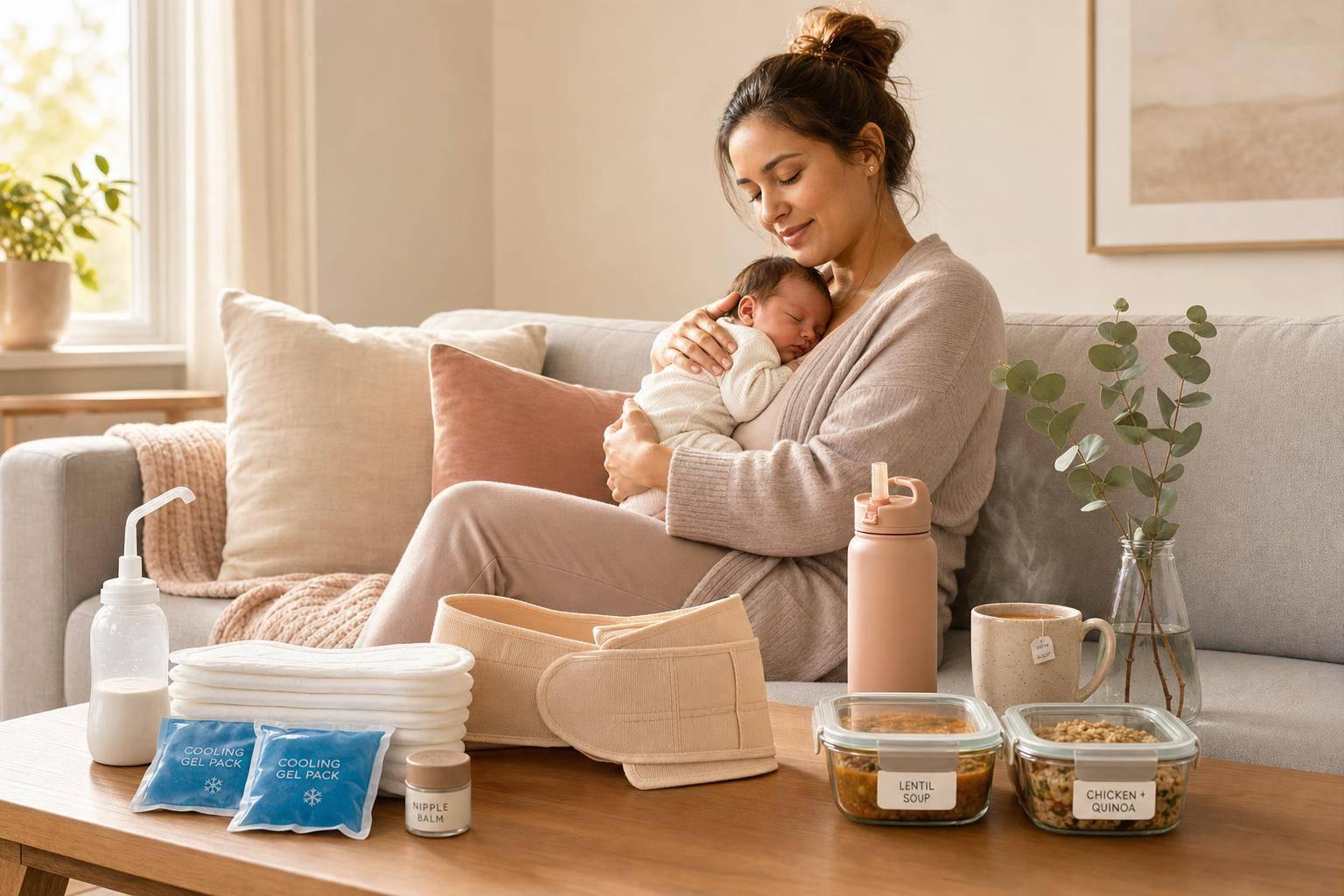
- Set up your bathroom before birth with pads or disposable underwear, a peri bottle, witch hazel products, and provider-approved pain relief items.
- Create a repeatable bathroom routine so using the toilet is less painful and less stressful in the first days postpartum.
- Eat and drink proactively, not reactively; hydration and balanced meals support healing and may also help with energy and milk production.
- Aim for better-quality rest, even if you cannot get long stretches of sleep.
- Support healing tissues physically when coughing, sneezing, or having a bowel movement, especially after a vaginal tear or C-section.
- Take pain seriously; if basic pain management is not enough, contact your provider rather than trying to push through.
- Turn visitors into helpers by keeping a visible household task list.
- Use a mobile recovery station to keep essentials within reach when you are pinned under a sleeping or feeding baby.
- Preparation is part of recovery; the more decisions you make before birth, the less depleted you may feel afterward.
sbb-itb-9ce2258
Why Postpartum Recovery Feels Harder Than Many Parents Expect
One strength of the video is that it speaks plainly about what recovery can actually involve: swollen tissue, incision pain, fear around the first bowel movement, hemorrhoids, fatigue, and the mental fog that comes with around-the-clock newborn care.
That honesty matters. In many families, especially among high-functioning, achievement-oriented parents, postpartum recovery gets treated like something to "get through" rather than something that requires active planning. But the early weeks after birth are not a side note. They are a real medical recovery period.
Whether a baby arrives vaginally or by C-section, your body is healing from a major physical event. The more you can reduce unnecessary strain, the more capacity you preserve for feeding, bonding, and daily functioning.
1. Prepare Your Bathroom Before You Need It
The first tip in the video is one of the most practical: stock the bathroom in advance.
In real life, postpartum care often breaks down not because parents lack information, but because they lack access in the moment. If you finally put the baby down and rush to the bathroom only to realize supplies are scattered across the house, you create more stress in an already vulnerable moment.
What to keep in your bathroom
Based on the video, useful items may include:
- Pads and mesh underwear, or disposable postpartum underwear
- A disposable liner or absorbent pad if desired
- Witch hazel products, such as pads, foam, or spray
- A peri bottle, ideally an angled one
- Provider-approved numbing or pain-relief spray
- Extra underwear and clean towels
The video strongly favors the angled peri bottle because it allows easier rinsing without awkward positioning. That may sound minor, but in postpartum care, ergonomics matter. Small conveniences can make repeated tasks feel less exhausting.
Why this matters
A well-stocked bathroom reduces:
- unnecessary trips back and forth
- time spent standing when you are sore
- frustration during urgent bathroom visits
- the odds that you skip helpful care steps
For urban parents in apartments or multi-level homes, this is especially relevant. If your home setup means supplies are not automatically within reach, consider creating a complete station in every bathroom you may use.
2. Build a Simple Postpartum Bathroom Routine
The video’s second tip moves from setup to execution: have a clear sequence for using the bathroom.
This is important because postpartum discomfort can make even routine tasks feel intimidating. A consistent ritual adds predictability at a time when your body may feel anything but predictable.
A typical routine might look like this
The video describes a process along these lines:
- Prepare your fresh pad or disposable underwear before sitting down.
- Add witch hazel or other soothing products as needed.
- Use a peri bottle while urinating to help dilute the urine and reduce stinging.
- Rinse gently from front to back afterward.
- Pat dry rather than wiping aggressively.
- Put on the fresh pad setup.
The larger lesson
The exact products matter less than the principle: make recovery mechanical, not improvisational. When you are tired, sore, and mentally overloaded, having a routine cuts down decision fatigue.
If you deliver at a hospital, ask before discharge what products are safe to continue at home and how long to use them. Specific timing and recommendations were not specified in the video.
3. Prioritize Nutrition and Hydration Like They Are Part of Treatment
The video emphasizes fueling the body with protein, minerals, vitamins, and fluids rather than surviving on whatever is easiest. That advice is especially useful because postpartum hunger can be intense, and convenience often wins.
There is no shame in eating what is available, especially in the newborn stage. But if every meal is random, you may feel more depleted than necessary.
What the video gets right
The strongest insight here is not perfection; it is accessibility. Parents are more likely to eat balanced meals when food is prepped ahead of time or when others help supply it.
The video suggests:
- thinking ahead about meals
- using support from family and friends
- keeping water anywhere you might feed the baby
- flavoring water if plain water becomes unappealing
It also mentions hearty, iron-rich meals and points out that fluids can come from more than plain water.
A practical interpretation
For overwhelmed parents, the goal is not gourmet recovery. It is to create a minimum viable nutrition system:
- easy protein within reach
- filling snacks you can eat one-handed
- at least one reliable hydration cue in each feeding area
- low-effort meals that do not require much cleanup
For many families, this may be more useful than broad advice to "eat healthy." Specificity lowers the barrier.
4. Stop Chasing More Sleep and Improve the Sleep You Do Get
Telling new parents to "sleep more" is often unrealistic. The video makes a smarter distinction: focus on sleep quality, not just quantity.
That shift is valuable. You may not be able to control how long you sleep, but you may be able to improve the odds that you actually rest when the opportunity appears.
Strategies highlighted in the video
- Leave the baby with someone you deeply trust
- Use earplugs and a sleep mask
- Consider shift-based care with a partner or support person
The emotional logic here matters. If you do not feel safe handing off the baby, your body may stay on alert even when you lie down. Trust is not a luxury in postpartum recovery; it is part of the rest equation.
Why this matters for modern families
Many new parents, particularly in high-demand metro areas, try to optimize everything except rest. They may track feeds, research sleep schedules, and answer texts from well-meaning relatives while running on fumes.
But restorative sleep is not passive. It often requires intentional planning, environmental control, and help from other adults.
5. Use What You Already Have to Reduce Pressure
One of the video’s more creative suggestions is to use a breastfeeding pillow as a seat cushion when perineal swelling, hemorrhoids, or tears make sitting painful.
This advice reflects a broader postpartum principle: repurpose what works. Recovery is easier when you adapt your environment instead of expecting your body to tolerate discomfort.
Why cushioning helps
Pressure can worsen pain in swollen or healing tissue. A supportive cushion may:
- reduce direct contact with sore areas
- make feeding sessions more tolerable
- help you sit longer without increasing strain
If a breastfeeding pillow helps, great. If not, another cushion may work better. The larger goal is pressure relief, not strict adherence to a single product.
6. Physically Support Healing Areas During Strain
The video gives clear advice about "splinting", meaning using gentle pressure to support healing tissues during actions that increase abdominal or pelvic pressure.
This can be especially helpful:
- during bowel movements
- when coughing or sneezing
- when vomiting
- when laughing hard
For vaginal birth recovery
The video describes supporting the perineal area with folded toilet paper or another clean barrier while bearing down.
For C-section recovery
It recommends hugging a pillow, blanket, or other soft item against the incision for support.
Why this is useful
This is one of the most overlooked forms of practical postpartum care. Many parents are told they will feel sore, but few are shown how to move in ways that reduce discomfort.
The broader takeaway: protect healing tissue from unnecessary force. Thoughtful body mechanics can make routine activities less painful.
7. Don’t Under-Treat Pain
One of the most important themes in the video is that parents should not try to be stoic about pain.
That message deserves emphasis. Pain control is not about comfort alone. It affects mobility, feeding, sleep, mood, and your ability to care for your baby.
The video’s pain-management approach
It mentions several common strategies:
- ice for swelling
- over-the-counter medications such as acetaminophen and ibuprofen
- staggering medications if a provider says it is appropriate
- contacting a provider if pain is not controlled
It also stresses not exceeding recommended doses and speaking with a medical professional before taking anything.
Why this matters
In postpartum culture, many parents minimize their pain because they think discomfort is simply the price of birth. But severe or poorly controlled pain can interfere with recovery and may also signal that something needs medical attention.
The right question is not "Can I endure this?" It is "Am I recovering as expected?"
If your pain feels unmanageable, suddenly worsens, or keeps you from functioning, call your provider. The video does not detail warning signs beyond pain itself, so any symptom concerns should be reviewed with a clinician.
8. Turn Visitors Into a Support System, Not an Audience
The video offers a smart social strategy: keep a visible household task list for visitors.
This advice is especially useful because many loved ones want to help but default to holding the baby. Sometimes that is helpful. Often, what the household actually needs is laundry, dishes, groceries, trash removal, or pet care.
What a master list can include
- dishes
- laundry
- trash or recycling
- grocery pickups
- meal drop-offs
- pet care
- tidying common areas
- restocking postpartum supplies
Why this works
When parents are exhausted, delegation becomes harder. A list removes the need to think of tasks on the spot or awkwardly ask for specific help.
It also reshapes the culture of visiting. Instead of guests arriving as consumers of your time and attention, they arrive with a practical role.
For families in dense urban settings, where support may come from friends, neighbors, or hired help rather than nearby relatives, this kind of structure can be especially effective.
9. Create a Portable Recovery Station
The video recommends a rolling caddy or mobile station stocked with essentials for both parent and baby. This is one of the easiest ideas to implement and one of the most likely to improve daily life quickly.
Useful items to include
For baby:
- diapers
- wipes
- burp cloths
- pacifier, if used
For parent:
- water bottle
- one-handed snacks
- nipple cream, if needed
- pain medication, if approved and stored safely
- phone charger
- headphones or earbuds
- remote control
- blanket or extra layer
Why it helps
Postpartum life often traps you in place under a sleeping, feeding, or contact-napping baby. A mobile station reduces the number of moments when you realize you need something but cannot easily get up.
This tip is particularly practical for larger homes, small apartments with limited storage, or households where feeding happens in multiple rooms.
10. Preparation Is a Recovery Tool, Not Just a Birth Tool
The final tip in the video circles back to preparation. That framing is worth keeping: preparing for postpartum is not separate from preparing for birth.
Many expecting parents spend months researching labor and only a fraction of that time planning what happens after they come home. But postpartum tends to be where the day-to-day strain lives.
Areas to prepare before delivery
The video suggests planning ahead for:
- hospital packing
- transportation logistics
- care for pets or other children
- contact information for your support network
- newborn care basics
- breastfeeding support, if relevant to your goals
The deeper insight
Preparation is not about controlling every outcome. It is about reducing avoidable decisions when you are physically healing and mentally stretched thin.
That distinction matters. Newborn life will still be unpredictable. But if your supplies are ready, your helpers are identified, and your home systems are simplified, you may have more capacity for the parts no one can fully plan for.
What This Video Does Especially Well
The source material stands out in three ways:
1. It treats postpartum recovery as hands-on care
Rather than offering generic encouragement, it focuses on concrete actions that make daily life easier.
2. It validates discomfort without dramatizing it
The tone is candid and grounded, which can feel reassuring to parents who are not seeing themselves reflected in idealized postpartum messaging.
3. It centers function
Most of the advice is aimed at helping parents move, rest, use the bathroom, and care for the baby with less suffering. That practical focus is often what new families need most.
A Few Important Limits to Keep in Mind
While the advice is highly usable, some boundaries matter.
- The video is not individualized medical guidance.
- It does not specify timelines for product use, pain duration, or red-flag symptoms.
- It assumes a certain baseline access to supplies and support, which may not reflect every family’s reality.
- It touches on feeding and hydration but does not go deeply into mental health, pelvic floor rehab, or medical complications.
That does not reduce its value. It just means parents should pair practical tips with follow-up care from their OB-GYN, midwife, primary care provider, or other postpartum professionals.
Final Thoughts
The most powerful idea in this video is not any single hack. It is the larger mindset shift: postpartum recovery deserves planning, comfort, and support.
If you are expecting, do not wait until you are exhausted and sore to figure out your system. Set up the bathroom. Stock your recovery supplies. Decide how visitors can help. Make hydration visible. Build a mobile caddy. Talk through shifts with your partner or support person.
And if you are already postpartum, start where you are. Even one or two changes can reduce friction immediately.
The early weeks with a new baby are demanding enough. Recovery gets easier when your environment works with you, not against you.
Source: "Postpartum Recovery Hacks I Wish I Knew Sooner (10 Tips from A Nurse)" - Mama Nurse Tina, YouTube, Jan 1, 1970 - https://www.youtube.com/watch?v=OHyVbE_x2ZA





 Sign up with Google
 Sign up with Facebook