
Induced Lactation for Adoptive Mothers

Induced Lactation for Adoptive Mothers
Yes - adoptive mothers can make milk without pregnancy, but most need a plan, a pump routine, and close medical support. In many cases, milk production takes weeks to months, and results vary from full supply to partial supply to nursing mostly for comfort and bonding. One published example found about 8 ounces a day after 3 months, while many newborns need about 25 ounces a day.
If I were starting this process, I’d keep these points front and center:
- Any amount of milk counts, even if I need donor milk or formula too
- I’d work with an IBCLC, a clinician, and my baby’s pediatrician
- I’d pick a plan based on how much time I have before placement
- I’d expect to pump 8 to 12 times per day, including at least one overnight session
- I’d watch my baby’s weight, wet diapers, and stools more than pump output
- I’d treat medications with care, since some options carry heart, mood, or nerve side effects
Here’s the short version: induced lactation usually comes down to medical screening, choosing a hormonal or non-hormonal plan, building frequent breast stimulation, feeding at the breast when possible, and adjusting based on baby’s intake and my health. Success does not have to mean exclusive breastfeeding. Partial milk supply, nursing with a supplementer, or comfort nursing can still matter a lot.
| Topic | What to know |
|---|---|
| Time needed | Often weeks to several months |
| Supply outcome | Full, partial, or little milk production |
| Core routine | 8–12 pumping/nursing sessions in 24 hours |
| Overnight work | Try 1 session between 1:00 AM and 5:00 AM |
| Feeding support | At-breast supplementer, donor milk, or formula |
| Safety watch-outs | Domperidone is not FDA-approved in the U.S.; metoclopramide can affect mood and cause movement side effects |
| Best progress checks | Weight gain, diaper counts, stool output |
If I were summing up the whole article in one line, it would be this: induced lactation for adoptive mothers is possible, but it works best when I start early, stay consistent, and keep my expectations flexible.
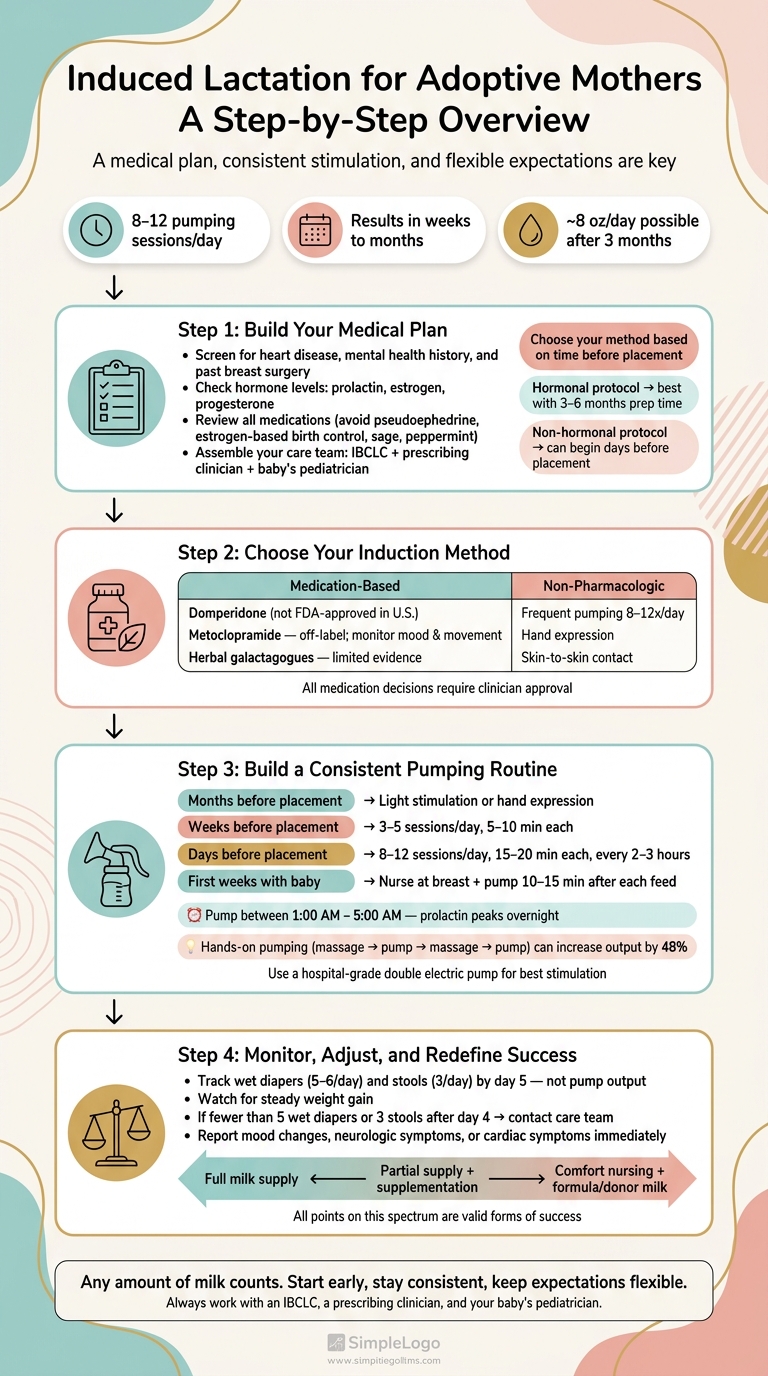
Induced Lactation for Adoptive Mothers: Step-by-Step Guide
I'm adopting a child. Is it possible to induce lactation?
sbb-itb-9ce2258
Step 1: Make a Medical Plan Before You Start
Before you start pumping or try any supplement, get a clinician to review your health, medications, and timeline.
Health Assessment and Medication Review
Your clinician should look closely at any history of heart disease or high blood pressure. Domperidone is not used in the U.S. because of cardiac risk. Mental health matters too. Depression and other concerns need a careful review, since metoclopramide (Reglan), another drug sometimes used off-label, can affect mental health.
Past breast surgery can also change what’s possible. That includes reduction, implants, or mastectomy. These procedures can affect milk-making tissue and ducts, which may limit how much milk you’re able to produce. Hormone levels should be checked as well, including prolactin, estrogen, and progesterone, since you need enough of each for milk production.
Your current medications matter more than many people expect. Some common drugs and herbs can lower supply, including pseudoephedrine, bromocriptine, estrogen-containing birth control, sage, and peppermint. A full review of medications and supplements before you begin can save you from working against your own plan.
That review should help decide whether a hormonal or non-hormonal approach makes sense for you.
Choose a Plan Based on Time Until Placement
The amount of time before your baby arrives is one of the biggest factors here. If you have months to prepare, your options look different than if placement is coming up fast.
| Feature | Hormonal Induction | Non-Hormonal Induction |
|---|---|---|
| Timeline | Ideally several months of preparation, often 3–6 months | Can begin immediately, even days before placement |
| Key Steps | Estrogen/progesterone regimen, then stop estrogen/progesterone, then begin stimulation | Frequent pumping (8–12x/day), hand expression, and skin-to-skin contact |
| Best Fit | Families with a known placement date months in advance | Short-notice adoptions or those avoiding hormonal medications |
As the Academy of Breastfeeding Medicine has noted:
"There exists no standard guidance on inducing lactation for any patient population."
So this isn’t a plug-and-play process. Your plan should match your timeline and your health history.
Once you’ve picked the method, you can shape your pumping routine around it.
Build Your Care Team Before You Begin
Set up your care team before you start. Have these three people in place:
- An IBCLC
- A prescribing clinician
- Your baby's pediatrician
Each person has a clear role. Your IBCLC helps with technique. Your clinician handles medications. Your pediatrician watches your baby's growth and output.
Next, choose the induction method that fits your timeline and health profile.
Step 2: Choose the Right Induction Method
The next move is to pick the method your clinician is willing to support. After that, you can line up the plan with the medicines or stimulation routine it calls for.
Hormonal Protocols and Common Medication Patterns
Hormonal protocols work by copying pregnancy with estrogen and progesterone, then stopping both to trigger milk production. After the hormones stop, breast stimulation ramps up through pumping or nursing. Some clinicians may also talk about adding galactagogues at this stage, which may help increase milk production. Any choice about medication or supplements should go through your clinician.
Domperidone, Metoclopramide, and Herbal Galactagogues
For families in the U.S., prescribing rules matter a lot. Domperidone is not FDA-approved in the U.S. because of cardiac safety concerns.
Metoclopramide (Reglan) is FDA-approved for other uses and is sometimes prescribed off-label to increase prolactin levels. But it can come with downsides, including mood changes such as depression, neurologic side effects like tardive dyskinesia, and gastrointestinal problems.
Herbal galactagogues, such as fenugreek, may sound gentler, but they still need clinician review for safety and possible benefit.
| Method | Evidence | Major Risks | U.S. Status | Monitoring Needs |
|---|---|---|---|---|
| Domperidone | Used in Canadian and international protocols to raise prolactin | Serious cardiac risks, including cardiac arrest and sudden death | Not FDA-approved; banned for human use in the U.S. | Cardiac function and EKG monitoring |
| Metoclopramide (Reglan) | Used off-label to increase milk supply by raising prolactin levels | Mood disturbances (depression), neurologic side effects (tardive dyskinesia), GI issues | FDA-approved for other uses; used off-label for lactation | Mental health and movement disorder screenings |
| Non-Pharmacologic | Based on established biological supply-and-demand mechanisms | Risk of insufficient supply if stimulation is infrequent or latch is poor | N/A - standard of care | Infant weight gain and diaper output |
| Herbal Galactagogues | Limited evidence; not FDA-evaluated for lactation efficacy | Possible allergic reactions or GI distress in mother or baby | Regulated as dietary supplements only | Provider monitoring for side effects and efficacy |
Non-pharmacologic methods, like frequent pumping, hand expression, and skin-to-skin contact, avoid medication-related risks and sit at the center of most plans. They also set up the pumping routine covered in Step 3.
Step 3: Set Up a Pumping Routine and Prepare to Feed at the Breast
Once your medical plan and induction method are set, the day-to-day work starts here. Use the stimulation plan from Step 2 to shape your pumping routine. The aim is simple: copy a newborn’s feeding pattern as closely as you can, which usually means 8 to 12 sessions in a 24-hour period.
A Pumping Schedule from First Sessions to Full Daily Routine
| Timeframe | Pumping Focus |
|---|---|
| Months before placement | Light stimulation or hand expression if advised by your care team |
| Weeks before placement | 3–5 sessions per day, 5–10 minutes each; focus on flange fit |
| Days before placement | 8–12 sessions per day, 15–20 minutes each, every 2–3 hours around the clock |
| First weeks with baby | Skin-to-skin; nurse at breast; pump 10–15 minutes after feeds |
If you want to add one extra tool, power pumping can help. The pattern is straightforward: pump for 10 minutes, rest for 10 minutes, and repeat for 1 hour.
It also helps to pump overnight. Prolactin peaks during those hours, so include at least one session between 1:00 AM and 5:00 AM to help build and keep up supply.
Massage, Hand Expression, and Pump Comfort
A hospital-grade double electric pump usually gives the strongest stimulation.
Flange fit can make or break pumping. If the flange is too large, it can lead to pain and poor milk removal, and that happens more often than people expect. If you notice rubbing, pinching, or bruising, stop and adjust the fit before your next session.
For pumping technique, use hands-on pumping. Massage the breast before you start, pump for several minutes, massage again, and then keep pumping. Research shows this method can increase milk output by 48%.
How to Start Breastfeeding When the Baby Arrives
Once the baby arrives, the focus changes. Now you’re not just building supply. You’re also helping the baby learn to feed at the breast.
Start with skin-to-skin contact as early and as often as possible. It helps trigger oxytocin release, supports let-down, and nudges the baby’s feeding instincts in the right direction.
Offer the breast at every feeding. If your milk volume is still low, an at-breast supplementer can help. It lets the baby get donor milk or formula through a small tube while staying latched, so the breast still gets the stimulation it needs.
Use breast compression during nursing to help move milk through the ducts and increase how much the baby gets during the feed. After nursing, pump for 10 to 15 minutes to keep supporting supply.
Watch your baby’s output for signs that feeding is going well. By day five, look for at least 5 to 6 wet diapers and 3 stools per day. Weight gain and diaper counts are the best signs that baby is getting enough.
Step 4: Adjust the Plan, Protect Your Wellbeing, and Define Success
Common Problems and How to Address Them
Once your routine is in place, the next job is simple: watch what your baby is getting, pay attention to your body, and make changes when needed.
Low supply is common, and partial supply still counts. That matters more than many parents expect. You do not need to judge progress by the number on the pump display alone. A better way to tell whether the plan is working is to look at diaper counts and weight gain.
If your baby has fewer than 5 wet diapers and 3 stools per day after day four, or is not gaining weight at a steady pace, it is time to adjust the plan. In that case, focus on what your baby is showing you, not what the pump bottle says. And if output or weight gain drops, contact your care team right away.
Pain with pumping is another sign to act on early. If pumping hurts, ask an IBCLC to check flange fit and milk removal. If you notice a supply drop or side effect, bring it to the prescribing clinician right away.
When to Change or Stop Medications
Mood changes, neurologic symptoms, or cardiac symptoms need prompt medical review.
If you are thinking about starting, stopping, or tapering a medication like domperidone or metoclopramide, talk with your provider first.
Key Takeaways and Where to Find Support
If progress slows, update the plan with your care team instead of waiting.
Induced lactation takes planning, steady stimulation, and a flexible idea of success. Sometimes success means full milk production. Sometimes it means partial supply plus supplementation. And sometimes it means feeding at the breast for comfort and connection while using other ways to meet nutrition needs. At-breast feeding still supports bonding when supplementation is needed.
Stress can briefly slow let-down, so protect rest and skin-to-skin time.
Nestling connects families with vetted lactation consultants, postpartum doulas, and infant care specialists for breastfeeding and newborn-support needs.
FAQs
Can I start induced lactation without medications?
Yes. You can start induced lactation without medications.
Some protocols use hormonal treatments, but non-medication methods can also help stimulate milk production.
These methods center on frequent nipple stimulation and breast expression. That usually includes regular breast and nipple massage, steady use of a high-quality double breast pump, hand expression, and sometimes visualization or meditation. Frequent, consistent stimulation is the foundation.
How long before placement should I begin?
There’s no single required timeline, but earlier is usually better. Starting sooner gives your body more time to respond.
Many protocols suggest beginning breast and nipple stimulation and massage well before the baby arrives. Then, as your estimated delivery or placement date gets closer, you can move into a regular pumping schedule. A Nestling lactation consultant can help shape a plan that fits your needs and timing.
How do I know if my baby is getting enough milk?
Focus on your baby’s growth and diaper output, not behavior alone. A baby who’s getting enough milk will usually show steady weight gain - about 1 ounce a day during the first 3 months - along with regular wet diapers.
By day 4, you should expect at least 5 wet diapers and at least 3 stools a day.
If you’re worried, Nestling can connect you with a lactation consultant for personalized support.








 Sign up with Google
 Sign up with Facebook