
How Lactation Consultants Support Breastfeeding Success

How Lactation Consultants Support Breastfeeding Success
Breastfeeding problems often start small, then turn into pain, stress, and low milk transfer within days. I’d sum this up like this: an IBCLC helps find the cause, fix the feeding issue, and make a clear plan before things get harder.
Here’s the short version:
- Latch pain can lead to nipple damage, poor milk removal, and breast fullness that gets painful.
- Low or suspected low milk supply is not always true low supply, so weight checks and diaper counts matter.
- Sleepy feeding, poor transfer, or slow weight gain need a close look at both parent and baby.
- Engorgement, blocked ducts, and mastitis often trace back to milk not being removed well.
- Early help matters: a feeding check within 2 to 4 days after hospital discharge can catch issues early.
- Breastfeeding is common to start but hard to keep up: 83% of U.S. parents start, but only 24.9% are exclusively breastfeeding at 6 months.
- Many parents fall short of their own feeding goals: about 60% in the U.S.
What stands out to me is simple: lactation consultants do more than watch a latch for a minute. They review birth history, breast and nipple pain, baby mouth function, milk transfer, pump fit, and feeding patterns. Then they give step-by-step help that fits what is happening right now.
A lactation visit usually covers:
- History: pregnancy, birth, surgery, milk supply concerns, and feeding patterns
- Observed feeding: latch, position, swallowing, comfort, and intake
- Parent factors: nipple condition, breast changes, pain, and stress
- Baby factors: oral anatomy, reflexes, weight gain, and diaper output
- Equipment check: pump flange size, suction, nipple shields, and other tools
- Care plan: feeding changes, pumping plan, hand expression, follow-up, and when to get medical care
The bottom line: if feeding hurts, your baby seems unsatisfied, or weight gain is slow, getting help early can make breastfeeding feel less stressful and more doable for your family.
Below, I’ll walk through how lactation consultants help with pain, latch, supply, engorgement, and early postpartum feeding problems.
Breastfeeding Tips from a Lactation Consultant | UC Davis Children's Hospital
sbb-itb-9ce2258
Who Lactation Consultants Are and What They Check
When latch pain, poor milk transfer, or low supply don't get better, an IBCLC looks at both parent and baby together. International Board Certified Lactation Consultants (IBCLCs) hold the highest internationally recognized lactation credential.
Their job goes far past a quick latch check. They look at the full feeding picture before suggesting any next steps. That whole-pair approach helps them work through harder breastfeeding problems.
What Happens During a Lactation Consultation
A lactation visit usually has three parts: history, observed feeding, and a care plan.
First, the IBCLC takes a detailed history. That includes pregnancy, labor, and birth, along with things like prior breast surgery. Birth events can matter here. For example, a C-section may affect milk production or how an infant feeds.
Next, the IBCLC watches a full feeding session, not just the opening minute. They pay attention to the parent, the baby, the feed itself, and any gear being used:
- Parent: breast anatomy, nipple condition, birth history, and psychological state
- Baby: oral anatomy, including tongue or lip ties, reflexes, weight gain, and diaper output
- Feed: latch depth, positioning, audible swallowing, and milk transfer
- Equipment: pump flange sizing, suction settings, and nipple shield use
Sometimes they also use pre- and post-feed weights to measure intake directly. The point is simple: find out why feeding is going off track before pain, poor transfer, or low weight gain get worse.
After that, the IBCLC builds a care plan based on what they saw. If the issue is tougher, such as persistent pain or low infant weight gain, follow-up visits are often part of the plan.
Where Families Can Get Lactation Support
Families can get lactation support in a few different places. Hospital bedside visits are common right after birth. Outpatient clinics often handle follow-up care in the days and weeks after. Many families also choose in-home visits, and virtual sessions are common too, especially through WIC programs.
Private visits may mean paying out of pocket. Still, the Affordable Care Act requires most private insurance plans to cover breastfeeding counseling and supplies without a copay. Free help is also offered through state WIC programs and community drop-in groups.
For families who want screened, in-home lactation help along with broader postpartum support, Nestling connects parents with credentialed lactation consultants through personalized care plans and flexible scheduling.
Those findings guide the fixes covered in the next section.
How Lactation Consultants Address Common Breastfeeding Problems
Latch Problems, Positioning, and Nipple Pain
A shallow latch can cause severe pain. If nipples look white, compressed, or misshapen after a feeding, that may point to vasospasm.
Lactation consultants look at the full picture. They check anatomical factors like inverted nipples, breast asymmetry, or scarring from prior surgery, then guide parents through positions such as cradle, cross-cradle, football hold, and side-lying. The goal is simple: help the baby get a deep latch so milk moves better and the nipple gets less friction.
Laid-back feeding also helps some parents. In this position, the parent reclines and keeps the baby chest-to-chest, which can make latching feel more natural.
When latch improves, milk transfer often gets better, and pain often drops with it.
Low or Perceived Low Milk Supply
Not every supply worry means milk production is low. Cluster feeding and fussiness are often normal newborn behavior.
To sort that out, consultants look at weight trends and diaper counts. If supply is in fact low, they put together a plan that may include feeding more often, improving breast drainage, adding pumping sessions with a correctly fitted flange, and using skin-to-skin contact to support milk production.
Poor milk drainage can also lead to engorgement and inflammation.
Engorgement, Blocked Ducts, Mastitis, and Feeding Fatigue
When milk isn't removed well, pressure and pain can build and turn into engorgement or mastitis. Consultants help ease engorgement by improving milk removal through latch changes, hand expression, and adjusted feeding timing. They also teach parents what to watch for with mastitis, including fever, redness, and flu-like symptoms.
Feeding fatigue is common, especially in the early weeks. Consultants help lower stress and exhaustion by teaching parents how to spot normal hunger and fullness cues, setting realistic expectations, and connecting families with support groups for hands-on help and social support.
How Lactation Support Leads to Better Breastfeeding Outcomes
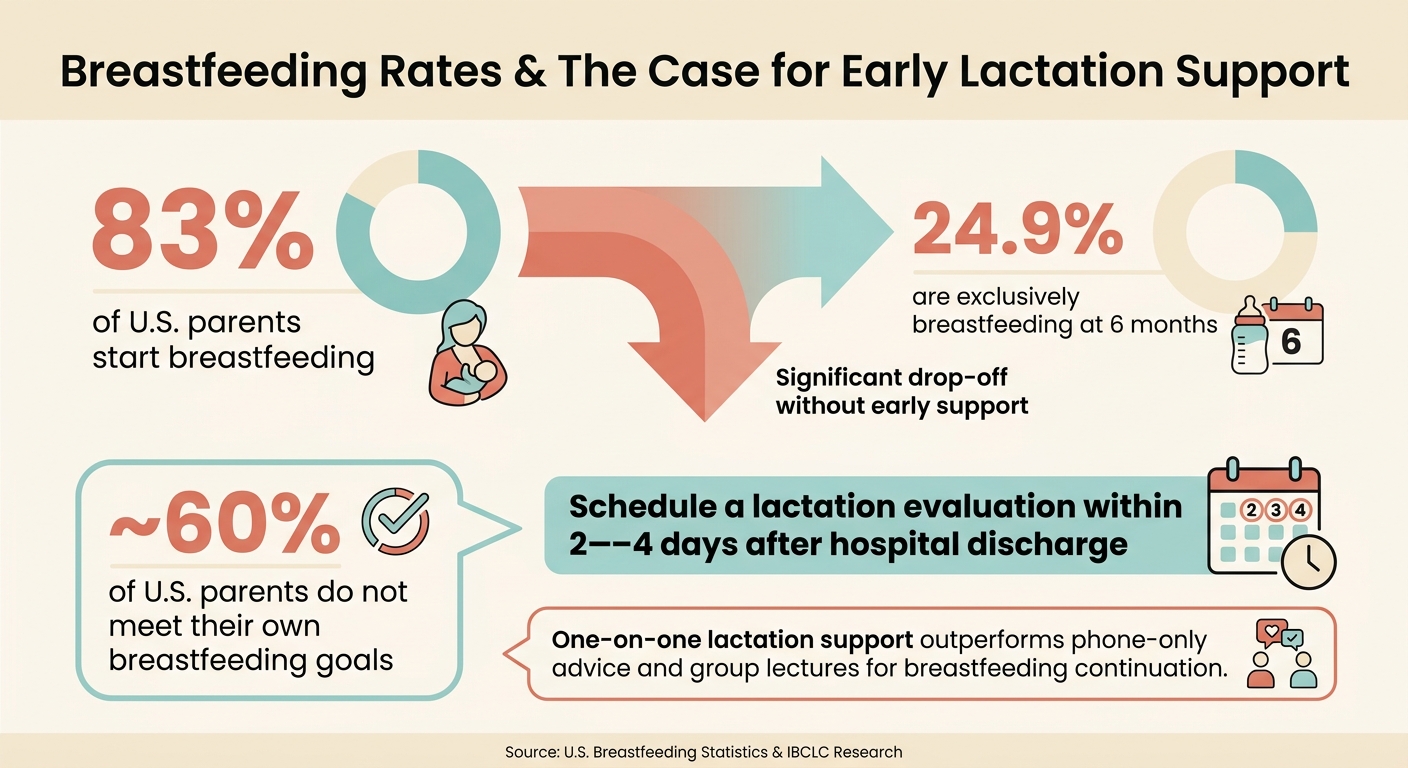
Breastfeeding Rates & Lactation Support: Key Stats Every New Parent Should Know
Why Getting Help Early Makes a Difference
After issues like latch, pain, and milk supply are spotted, timing matters a lot. Breastfeeding rates fall fast when parents don’t get help early: 83% of U.S. parents start breastfeeding, but only 24.9% are exclusively breastfeeding at six months. A lactation evaluation within 2 to 4 days after discharge can spot problems before they grow into bigger setbacks.
One-on-one lactation support also tends to work better than lectures or phone-only advice. Why? Because direct support is personal. It gives parents help that fits what’s happening in the moment, which can make it easier to stick with breastfeeding and continue for longer.
Lactation Support as Part of a Broader Postpartum Care Plan
Early lactation support does more when it’s tied into the rest of postpartum care. Breastfeeding usually goes better when care is connected across the board, including postpartum recovery and pediatric follow-up. For example, linking lactation care with pediatric weight checks can help spot slow weight gain and jaundice early. Adding emotional support matters too, because confidence often gets overlooked - and about 60% of parents don’t meet their personal breastfeeding goals.
Nestling connects families with lactation consultants, postpartum doulas, and infant care specialists for coordinated postpartum support. That kind of connected care can make breastfeeding support work better during the first weeks after birth.
Conclusion: Building a Breastfeeding Plan That Supports Long-Term Success
These strategies tend to work best when families get support early. Breastfeeding issues are often much easier to sort out at the start, before pain, low milk transfer, or supply concerns start piling up. An IBCLC can look at what’s causing feeding problems and offer direct, practical help. The next step is simple: line up support before small issues turn into bigger ones.
Key Takeaways for New and Expecting Parents
Plan ahead with a prenatal consult in the third trimester. Schedule a breastfeeding evaluation within 2 to 4 days after discharge. Get help right away if feeding hurts or your baby seems unsatisfied.
Breastfeeding support works best when it’s part of your postpartum plan from day one. Nestling connects families with vetted lactation consultants and postpartum doulas for coordinated postpartum care.
FAQs
When should I see a lactation consultant?
Consider seeing a lactation consultant if you're having breastfeeding challenges or just have questions about feeding your baby. It can also help to get support before your baby arrives, so you can set clear expectations and feel more prepared for postpartum.
A lactation consultant can help with:
- latch
- milk supply
- positioning
- infant weight gain
- sore nipples
- engorgement
- mastitis
- returning to work
- feeding devices
Nestling connects families with vetted lactation consultants for personalized postpartum support.
How do I know if my baby is getting enough milk?
A lactation consultant can do a weighted feed to check how much milk your baby gets during one nursing session.
A good, comfortable latch matters too. It helps your baby take in a full mouthful of breast milk and feed more effectively. If you're worried about intake, Nestling can connect you with vetted lactation consultants for personal guidance and an assessment.
Can a lactation consultant help with painful breastfeeding?
Yes. A lactation consultant can help figure out why breastfeeding hurts and what to do about it. They look at your baby’s latch, your feeding position, and your baby’s oral anatomy to spot what may be behind the pain.
From there, they put together a care plan based on your situation. That may help with issues like sore nipples, vasospasm, or engorgement. Nestling connects families with vetted lactation consultants for this kind of postnatal support.










 Sign up with Google
 Sign up with Facebook