
5 Ways to Customize Overnight Newborn Care
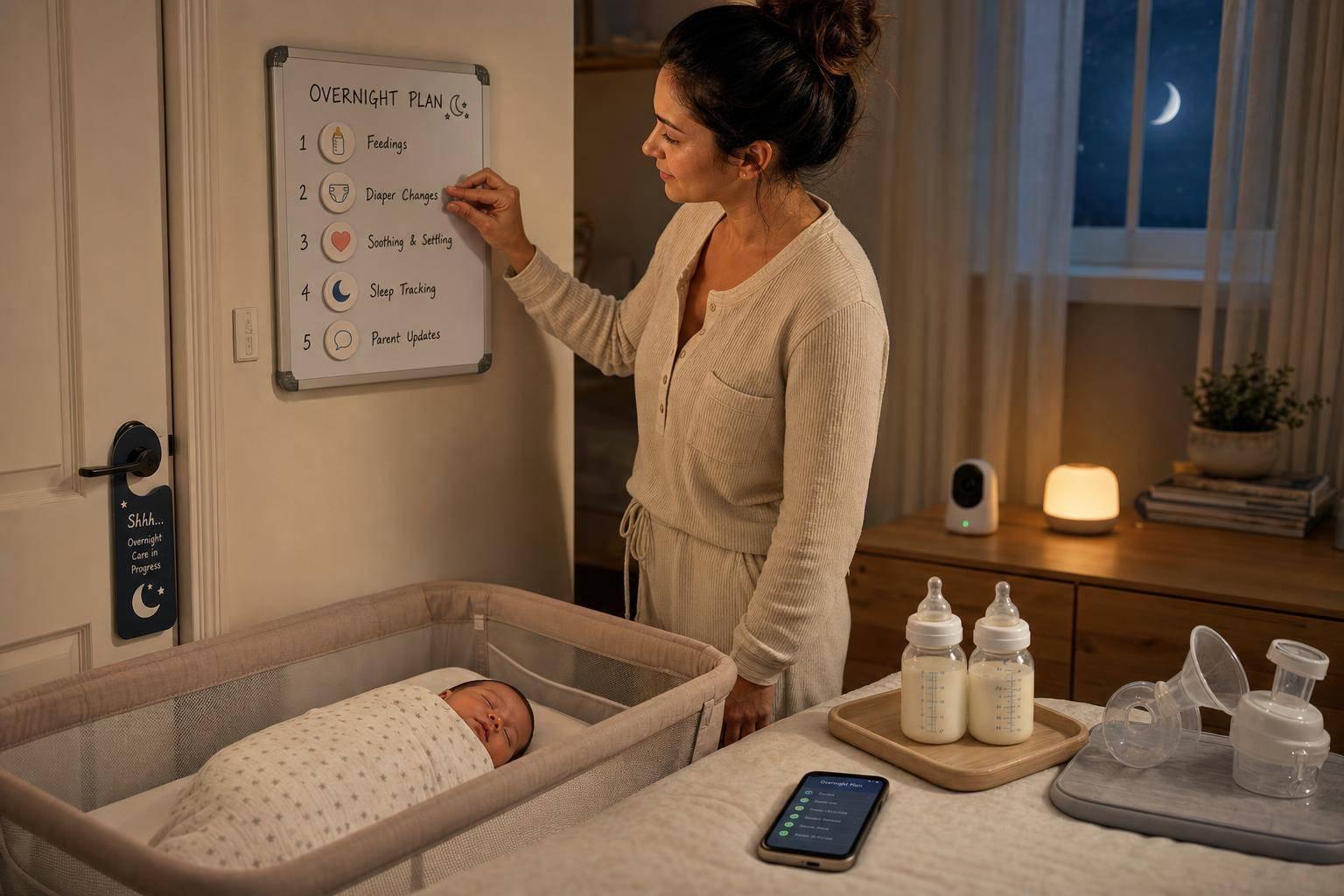
5 Ways to Customize Overnight Newborn Care
If you want overnight newborn care that actually works, set five things up first: feeding, shift hours, task limits, home rules, and plan updates. That’s the core idea.
I’d boil the article down like this:
- Match postnatal care to how you feed your baby
- Pick hours that fit how your home sleeps
- Write down tasks, limits, and privacy rules
- Set up the room, safety steps, and communication plan
- Change the plan as your baby and recovery change
This matters because overnight care usually covers 8 to 10 hours, and even one clear written plan can cut confusion in the middle of the night. The article also points to safe sleep basics like the ABCs: Alone, Back, Crib, plus a nursery temperature of 68°F to 70°F.
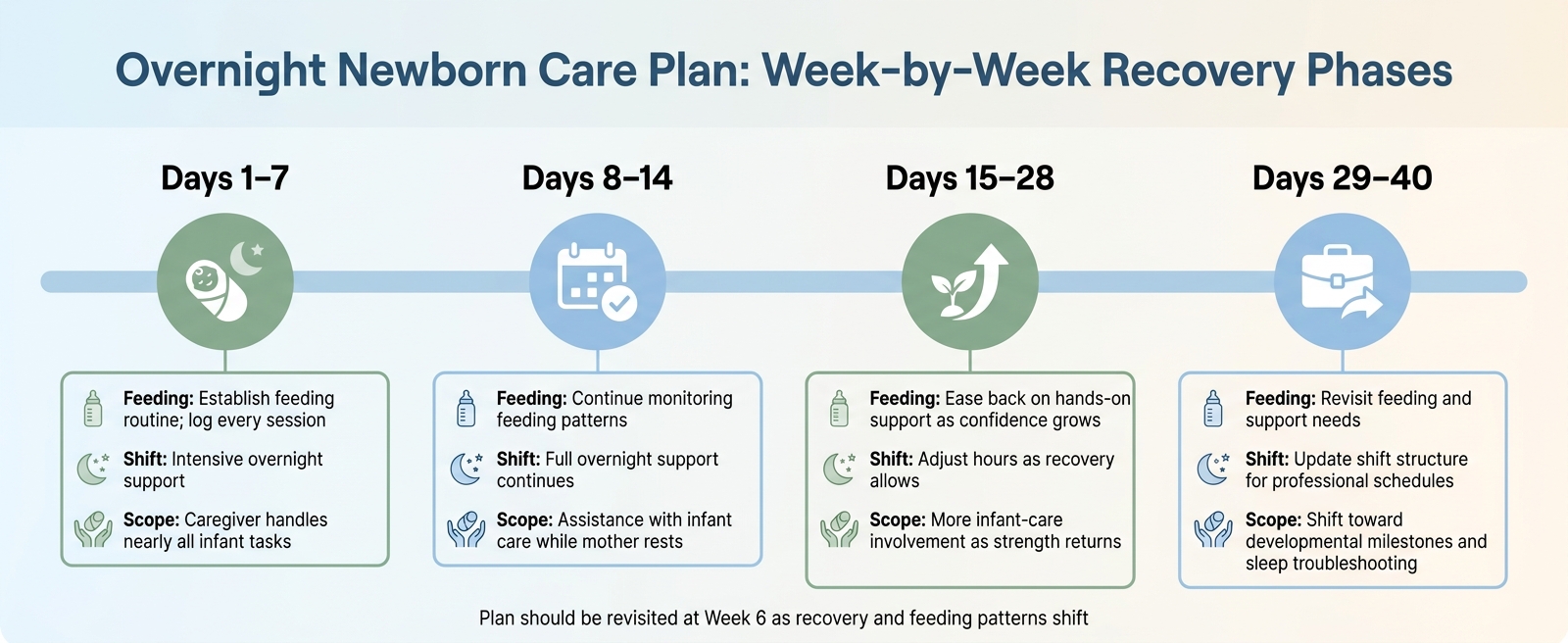
Overnight Newborn Care Plan: Week-by-Week Recovery Phases
What to Expect: Overnight Newborn Care Can Be a Huge Help
sbb-itb-9ce2258
Quick Comparison
| Area | What to decide | Why it matters |
|---|---|---|
| Feeding | Breastfeeding, pumping, bottles, or mixed feeding | Changes who wakes up and who handles feeds |
| Schedule | Fixed nights, rotating coverage, or weekends only | Shapes how much uninterrupted sleep you get |
| Tasks | Feeding help, diapering, soothing, bottle washing, logging | Stops last-minute confusion |
| Boundaries | Off-limits rooms, check-ins, house rules | Helps everyone feel at ease |
| Updates | Week 1 vs. week 3 vs. return to work | Your baby’s needs change fast |
Bottom line: I’d treat overnight newborn care like a written night plan, not just a service. When you make the setup clear from day one, nights tend to run smoother for both parents and caregivers.
Why Personalization Matters in Overnight Newborn Care
Overnight care should fit your recovery, feeding setup, home routine, and comfort level with privacy. One family may need light backup. Another may need a caregiver who takes the lead all night.
Recovery is a big part of that. A mother healing from a C-section may need help lifting the baby and getting around during the night. A breastfeeding parent may want the caregiver to bring the baby in for nursing, then handle burping and settling afterward. A bottle-feeding or exclusively pumping family may prefer the caregiver to take care of every nighttime feeding so both parents can sleep until morning.
Your home setup matters too. Families with older children often need someone who can move quietly and keep nighttime disruptions low so siblings stay asleep. Single parents, parents of premature babies, and families expecting twins often need more hands-on help overnight. And sometimes the biggest factor is simple: scheduling. If the nights are hard to predict, support may need to be more flexible.
Return-to-work plans can shift the whole setup. A parent heading back to work at six weeks usually needs a different overnight routine than someone taking a longer leave. In that stretch before work starts again, steady sleep can make a big difference. Professional postpartum support is linked to lower anxiety, lower depression, and greater confidence in newborn care.
Privacy deserves the same level of planning. Overnight care happens in a very personal space, so many families start with a virtual interview to ask the right questions and get a sense of a caregiver's personality and communication style before inviting them into the home. It also helps to decide early how much interaction you want during the night. Some families want updates and check-ins. Others want things kept quiet and simple. Those choices shape the five options below.
1. Match Overnight Care to Your Feeding Plan
Match the caregiver’s overnight role to your feeding plan. If they know whether you’re breastfeeding, pumping, bottle-feeding, or mixing methods, they can step into your routine without adding extra wake-ups.
Feeding Instructions
Give your caregiver clear written instructions before the first shift. That part matters more than people think. A simple written plan cuts down on guesswork at 2:00 a.m. when everyone is tired.
If you’re breastfeeding, make sure they know how to spot an effective latch. You may also want them to bring the baby to you for nursing, then take the baby back for burping, diapering, and settling. That way, you can get back to sleep faster.
If you’re pumping, include:
- milk storage rules
- bottle prep steps
- how to clean pump parts
For bottle-feeding families, the caregiver can handle overnight feeds from start to finish so both parents can rest. Then spell out what happens after each feed, like burping, diaper changes, and getting the baby settled again.
Scope of Care
Decide how you want the caregiver to soothe the baby after feeds. That might mean white noise, gentle motion, or a pacifier. Also set clear rules for when they should notify you.
Once you’ve agreed on those tasks, write them down in a shared log and stick to the same safety rules every night.
Communication and Safety Plan
A shared digital tracking app can keep parents and caregivers on the same page without a string of late-night texts. Look for tools that let you log feeds, diaper changes, and sleep in a few taps so you can review the night the next morning.
On the safety side, every caregiver should follow the ABCs of safe sleep: baby sleeps Alone, on their Back, in a Crib or bassinet. Keep the nursery between 68 and 70°F and use a sleep sack instead of loose blankets to help prevent overheating.
These are the basic safe-sleep rules for any overnight plan.
2. Choose Shift Times That Work for Your Household
Once feeding roles are set, line up care hours with how your household actually sleeps. The shift window matters just as much as the person covering it. Overnight care often runs in a 10- to 12-hour shift, which gives you a steady block of rest you can plan around.
Shift Structure
Taking turns on overnight duty can help each adult get a longer stretch of uninterrupted sleep. That’s the main goal here: let one adult sleep for a solid block while the other is on duty. Try to protect at least 4–5 hours of uninterrupted sleep each night. It also helps to match overnight hours to your baby’s longest sleep stretch and your feeding routine.
Clear handoffs make the night go a lot smoother. Use one shared log for feeds and diaper changes so the next person knows exactly what happened. That way, no one is standing in the dark at 2:00 a.m. trying to piece things together.
3. Set Clear Tasks, Boundaries, and Privacy Expectations
Once you've set the hours, put the caregiver's duties, limits, and privacy rules in writing. That small step can save a lot of stress later. Vague expectations have a way of turning into awkward moments at 3:00 a.m., and a simple plan cuts out the guesswork for everyone.
Scope of Care
The caregiver's main job includes diaper changes, soothing, feeding support, bottle prep, and bottle cleaning. They should also follow the family's written safe-sleep rules. Parents and clinicians handle medical decisions; the caregiver's role is to report any concerns.
Feeding Instructions
Write down the feeding method, storage rules, feed amounts, burping preferences, and how to log each feed. If you're breastfeeding, decide ahead of time whether the caregiver should bring the baby to you for nursing or use pumped milk so you can stay asleep.
Communication and Safety Plan
Use one shared log for feeds, diaper changes, and sleep windows. That keeps everyone on the same page without a lot of back-and-forth. Once the logging process is set, spell out privacy limits too, so the routine stays smooth and respectful. Platforms like Nestling can help with that kind of coordination through personalized care plans and vetted caregivers.
Privacy Boundaries
Once duties are clear, define where the caregiver can and can't go in the home. List which rooms are off-limits, and review those spaces by video before the first shift. Put it in writing so nothing is left fuzzy later. Clear boundaries can reduce friction and help overnight care feel more comfortable for everyone.
4. Build a Personalized Overnight Setup and Communication Plan
Once roles, boundaries, and privacy are clear, set up the room and the communication plan before the first night. The goal is simple: make the handoff smooth, keep bedtime predictable, and give the caregiver the safety details they need before they arrive.
Feeding Instructions
Write out the bedtime routine in order before the first shift. That way, the caregiver isn't guessing in the moment.
Include the feeding cues they should watch for, like jaw movement, wide-open lips, and steady sucking and swallowing. Those small signs matter. They help the caregiver tell the difference between a baby who's ready to feed and a baby who's fussing for another reason.
If the baby is still upset after feeding, spell out what should happen next. For example, note whether the caregiver should offer a pacifier or bring the baby to you for comfort nursing.
Communication and Safety Plan
Use a shared digital log so feeds, diaper changes, and sleep times all show up in one place. When everyone's looking at the same record, the night tends to run with fewer mix-ups.
Make sure the caregiver has:
- Your contact information
- The pediatrician's number
- Clear instructions on when to wake you and when to handle a routine issue on their own
Set the nursery between 68°F and 70°F. Use a firm mattress with only a tight-fitting sheet, and make sure the caregiver follows the ABCs of safe sleep: Alone, on the Back, in a Crib.
This gives the caregiver a clear path to follow and helps keep the night calm and steady.
5. Update Your Care Plan as Your Baby Grows and Your Recovery Progresses
Once your overnight routine starts to click, don’t leave the care plan on autopilot. What works in the first week often needs a tune-up by week three, because feeding, sleep, and postpartum recovery tend to shift fast.
Feeding Instructions
In the first week, feeding comes first. That usually means more hands-on help and close tracking. As feeds start to feel more predictable, you can scale back the support and adjust the plan when needed. Early help can make it easier for breastfeeding to continue through those first few weeks.
Shift Structure
During the first two weeks, longer overnight coverage often makes the most sense. Later, as recovery improves and daytime activity picks up, those hours can change too.
Scope of Care
As your body starts to recover, the caregiver’s role can shift. Instead of focusing mostly on basic newborn care, support may move toward things like sleep trouble, soothing, or settling routines.
Communication and Safety Plan
Once the routine feels more steady, your shared log doesn’t need to track every tiny detail. At that point, it’s usually better to focus on the updates that still matter. These changes tend to happen step by step, not all in one sweep.
Use the table below to keep track of how the plan may change during each recovery phase.
| Recovery Phase | Feeding Instructions | Shift Structure | Scope of Care |
|---|---|---|---|
| Days 1–7 | Establish feeding and log each session | Intensive overnight support | Caregiver handles nearly all infant tasks |
| Days 8–14 | Continue monitoring patterns | Full overnight support continues | Assistance with infant care while mother rests |
| Days 15–28 | Ease back on hands-on support as confidence grows | Adjust hours as recovery allows | More infant-care involvement as strength returns |
| Days 29–40 | Revisit feeding and support needs | Update shift structure for professional schedules | Shift toward developmental milestones and sleep troubleshooting |
It also helps to revisit feeding instructions, overnight hours, and communication needs when weaning begins or a return to work is getting close. Nestling’s personalized care plans and flexible booking options can help support those updates.
Planning Tables and Checklists
Once your plan starts to come together, these tools help turn it into something you can actually use in the middle of the night. Think of them as your grab-and-go reference for feeds, shift coverage, and care details.
Feeding Plan Comparison
Different feeding setups change what overnight help looks like. In some homes, the caregiver mainly supports the parent. In others, they can handle the full feeding routine.
| Factor | Direct Breastfeeding | Pumping & Bottles | Formula Feeding |
|---|---|---|---|
| Parent wake-ups | Required for every feed | Required for pumping sessions | None if caregiver handles all feeds |
| Prep Needs | Minimal; no bottles or warming required | High - pumping, cleaning parts, and warming milk | Moderate - measuring, mixing, and cleaning bottles |
| Caregiver Role | Brings baby to parent; handles diapering and soothing | Can handle the entire feeding process and bottle prep | Full responsibility for feeding, prep, and cleaning |
| Feeding Cues | Latch and swallow sounds | Bottle pacing and volume | Bottle pacing and volume |
Overnight Schedule Options
Your schedule should fit your week, not the other way around. Some families like a set routine. Others need more flex.
| Option | Description | Best For |
|---|---|---|
| Fixed Nights | Same specific nights every week. | Families with consistent work schedules |
| Rotating Nights | Parents alternate on-duty nights or hours. | Shift workers or households sharing the load equally |
| Weekend-Only | Support on Friday and Saturday nights. | Parents who need recovery sleep after handling weekdays alone |
Task-Preference Checklist
This part matters more than people think. A quick checklist can prevent awkward handoffs and those 2:00 a.m. “Wait, were they supposed to do that?” moments.
Mark each task as included, optional, or not desired before the first shift.
| Task | Included | Optional | Not Desired |
|---|---|---|---|
| Overnight Feeding | [ ] | [ ] | [ ] |
| Diapering & Clothing Changes | [ ] | [ ] | [ ] |
| Soothing: rocking, walking, white noise | [ ] | [ ] | [ ] |
| Bottle washing and sterilizing | [ ] | [ ] | [ ] |
| Activity Logging (App or Paper) | [ ] | [ ] | [ ] |
| Nursery Organization | [ ] | [ ] | [ ] |
Overnight Care Plan Template
A written care plan gives your caregiver what they need up front, without a stream of last-minute questions. Fill it out before the first shift, then tweak it as your baby’s needs change.
| Section | What to Include |
|---|---|
| Feeding Instructions | Method (breast, pumped milk, or formula), amount per feed if applicable, warming preference, burping style |
| Sleep Preferences | Swaddle type, white noise settings, crib vs. bassinet, pacifier use. Follow the ABCs of safe sleep - Alone, on their Back, and in a Crib or bassinet |
| Medical Notes | Vitamin D drops, gas drops, diaper cream, any known allergies or skin sensitivities |
| House Rules | Kitchen and appliance use, guest policy, off-limits areas, shoes-off expectations |
| Emergency Contacts | Pediatrician name and number, nearest 24-hour ER, and a secondary parent or neighbor contact |
With the basics written down, it becomes much easier to follow the plan, update it, and hand it off from one night to the next.
Conclusion
Taken together, these five choices make overnight care easier to use at home. The best overnight plan should fit your feeding goals, your schedule, your recovery, and your baby’s patterns. It should be built around your household, not some generic template.
Use the first week to look for patterns, then check the plan again around 6 weeks as recovery and feeding start to shift. That’s why the first version of the plan should be treated like a draft, not a final rulebook. When the plan lines up with how your home actually works, overnight support is much easier to keep up.
The best overnight care plan is specific enough for tonight and flexible enough to change as your baby grows.
FAQs
When should we start overnight newborn care?
When to start overnight newborn care comes down to your family’s needs and how recovery is going. Some families want help from the first night home. Others wait until sleep gets harder, routines feel shaky, or exhaustion starts to pile up.
There isn’t one “right” timeline. It’s about what helps your household function and gives parents the rest they need.
Nestling can help with that shift by connecting you with vetted caregivers who offer personalized overnight care.
How do we know which overnight tasks to delegate?
Start by getting clear on your postpartum goals. Maybe you want to focus on recovery, build more steady sleep routines, or stay on top of feeding schedules without feeling stretched thin.
Then look at the tasks that wear you down the most. That might be nighttime feedings, soothing your baby when they’re fussy, or handling light household chores. Handing off those jobs can give you more time to rest.
Nestling can help connect you with vetted caregivers who build a personalized care plan around your family’s needs and your baby’s rhythms.
How often should we update our overnight care plan?
Update your overnight care plan as your family’s needs shift and your baby hits new milestones.
It helps to revisit the plan during big transitions, like developmental leaps, changes in sleep or feeding, or a return to work. Nestling can help with these updates through personalized care plans and guidance from postpartum doulas, infant care specialists, and lactation consultants.










 Sign up with Google
 Sign up with Facebook