
Breastfeeding with Hypertension: Safe Practices

Breastfeeding with Hypertension: Safe Practices
Yes - if you have high blood pressure, you can often keep breastfeeding. The main goals are simple: keep your blood pressure under control, watch for warning signs, and keep milk moving through nursing or pumping.
Here’s the short version:
- Breastfeeding is often still possible with chronic hypertension, gestational hypertension, or preeclampsia if your clinician checks your care plan.
- If you feel too sick or weak to nurse, pump instead. A hospital-grade pump can help protect milk supply, especially if you’re away from your baby.
- Stress and separation can lower milk supply. That’s because stress hormones can interfere with prolactin, which helps drive milk production.
- Simple feeding setups can help. Sit in a firm chair, use pillows or arm support, and feed in a quiet space.
- Track blood pressure only if your clinician told you to. Bring your readings to follow-up visits.
- Get urgent care fast for severe headache, vision changes, chest pain, shortness of breath, severe swelling, or a very high reading.
- Do not start, stop, or switch blood pressure medicine on your own. Ask your OB-GYN or cardiologist if each medication fits breastfeeding.
- Rest, fluids, regular pumping or feeding, and a DASH-style eating plan can support recovery and milk supply.
One fact stands out: preeclampsia and eclampsia are major causes of pregnancy-related death, so postpartum warning signs should never be brushed off. At the same time, major health groups still support breastfeeding when it can be done safely.
This article comes down to one message: protect your health first, and keep breastfeeding when it’s safe to do so.
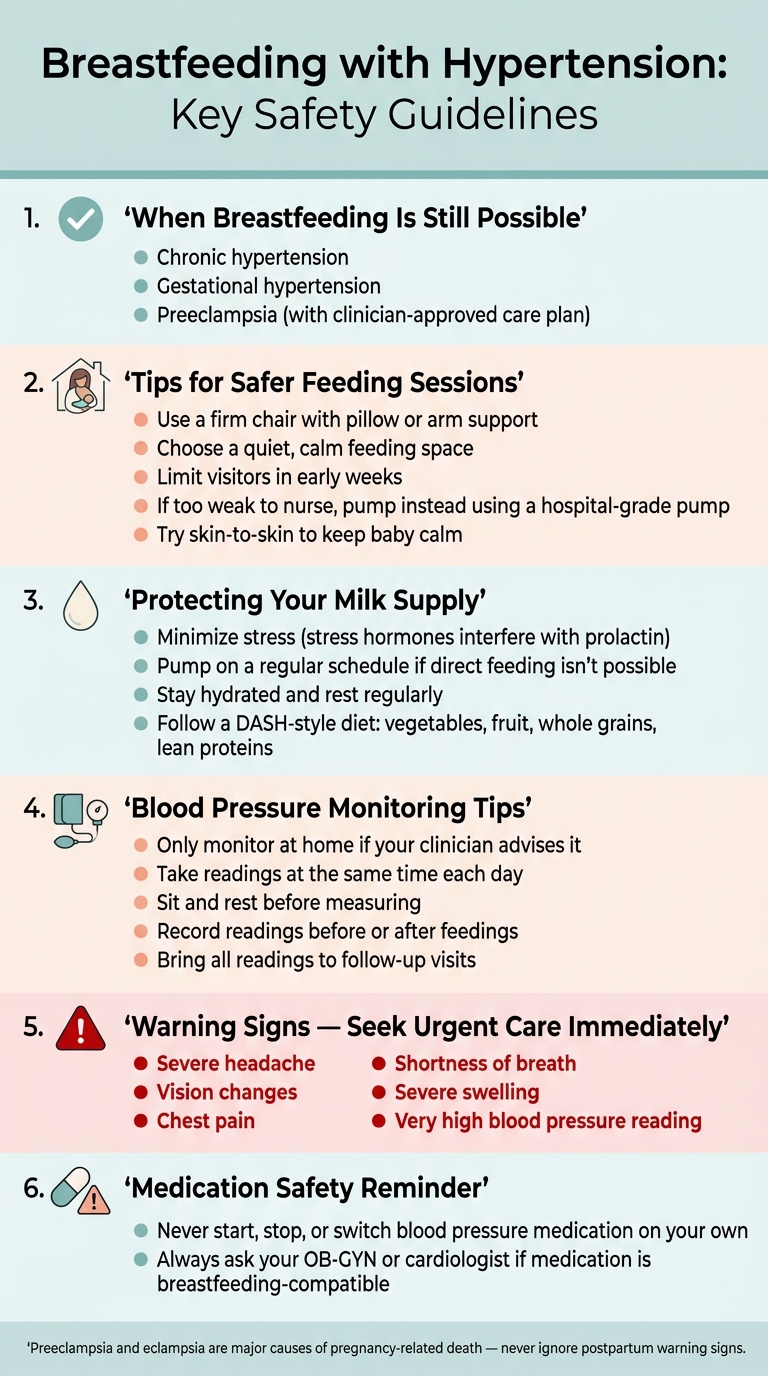
Breastfeeding with Hypertension: Key Safety Guidelines
Can high blood pressure affect your breast milk?
sbb-itb-9ce2258
How to make feeding sessions safer and easier at home
At home, lean on feeding positions and simple routines that make sessions less tiring and a little easier on your body.
Feeding positions that reduce pressure and dizziness
Choose seated positions or use physical supports to reduce the strain of holding your baby's weight. A firm chair, pillows, or arm support can take some of the load off, which matters when you're already worn out. Skin-to-skin can also help your baby stay calm during feeds.
If you're too weak to nurse, express milk and have another adult feed your baby.
Simple habits that keep feeding sessions calm
A quiet feeding space can make a big difference. So can limiting visitors during the first few weeks. Both can lower stress and support milk supply.
If feeding leaves you dizzy or unwell, check your blood pressure before the next session.
Monitor your blood pressure and know when to act
Check your blood pressure at home only if your clinician told you to, and bring every reading to your follow-up visits. Those numbers help guide what to do next during feeding time: continue, pause, or call for medical advice.
How to check your blood pressure correctly between feedings
Take your blood pressure at the same time each day. Sit down, rest first, and record the reading either before a feeding or after a short break. It also helps when your midwife, OB-GYN, and other clinicians are all working from the same plan. If your numbers go up or your symptoms shift, use the warning signs below.
Warning signs that need urgent medical attention
Hypertensive disorders of pregnancy, including gestational hypertension and preeclampsia, need close monitoring after birth. Some symptoms are a sign that this may be more than normal postpartum recovery.
Get urgent medical care if you have:
- A severe headache
- Vision changes
- Chest pain
- Shortness of breath
- Severe swelling
- A very high blood pressure reading
If your symptoms get worse, call your clinician right away.
Preeclampsia and eclampsia are major contributors to pregnancy-related mortality, which is why early recognition matters.
Treatment options and recovery support that work with breastfeeding
If your clinician prescribes treatment, pair it with breastfeeding-friendly recovery support.
Common blood pressure medications and their compatibility with breastfeeding
Before you start, stop, or switch any blood pressure medicine, ask your OB-GYN or cardiologist if it’s compatible with breastfeeding.
That check matters. Even when a medication is commonly used after birth, your care team should confirm that it fits your health needs and your feeding plan.
Recovery habits matter too. Rest, fluids, and regular milk removal can help protect supply while your blood pressure settles down.
How rest, hydration, and regular feeding protect your milk supply
Stress can lower prolactin and reduce milk production.
If direct feeding isn’t possible, pump on a regular schedule to help maintain supply.
Food matters too. A DASH-style eating pattern can help support recovery: vegetables, fruit, whole grains, and lean proteins.
Getting lactation and postpartum help when recovery feels like too much
When fatigue or recovery makes daily care hard to manage, Nestling connects families with vetted postpartum caregivers and lactation consultants for in-home breastfeeding and recovery support.
Conclusion: Keep breastfeeding while protecting your health
Hypertension doesn't mean you have to stop breastfeeding. The World Health Organization encourages mothers to keep feeding even when medical issues come up, because breastfeeding still offers clear benefits for your baby.
What matters most is pairing that with close monitoring. If your blood pressure shifts or you notice warning signs, contact your clinician right away.
Go over every medication with your OB-GYN or cardiologist to make sure it fits your feeding plan. Keep removing milk on a regular schedule to help maintain supply. That mix helps protect your blood pressure and your milk supply.
When recovery feels like a lot, Nestling connects families with vetted postpartum caregivers and lactation consultants for breastfeeding and postpartum support.
FAQs
Can high blood pressure lower my milk supply?
High blood pressure itself doesn't directly lower milk supply. But the stress and anxiety that can come with managing hypertension may affect lactation.
Stress can increase hormones like cortisol, which may suppress prolactin - the hormone your body needs to make milk. If you're worried about supply, Nestling’s lactation consultants can offer personalized support.
Which blood pressure medicines are usually safe while breastfeeding?
Most blood pressure medicines work fine with lactation. But don't assume a given drug is safe without checking first.
Use sources like LactMed, e-lactancia, MotherToBaby, InfantRisk Center, or a lactation consultant for guidance that fits your situation. Nestling can connect you with expert lactation consultants who can help you breastfeed safely.
When should I stop feeding and get urgent care?
Many breastfeeding issues, like sore nipples, engorgement, or plugged ducts, can often be managed at home. But if you have severe symptoms that don’t let up or any signs of infection, get immediate medical attention.
If you feel sick or your symptoms aren’t getting better with usual care, contact your healthcare provider or a lactation consultant right away. Nestling can also help connect you with vetted lactation consultants for one-on-one support.









 Sign up with Google
 Sign up with Facebook