
How Postpartum Plans Save Time for New Moms
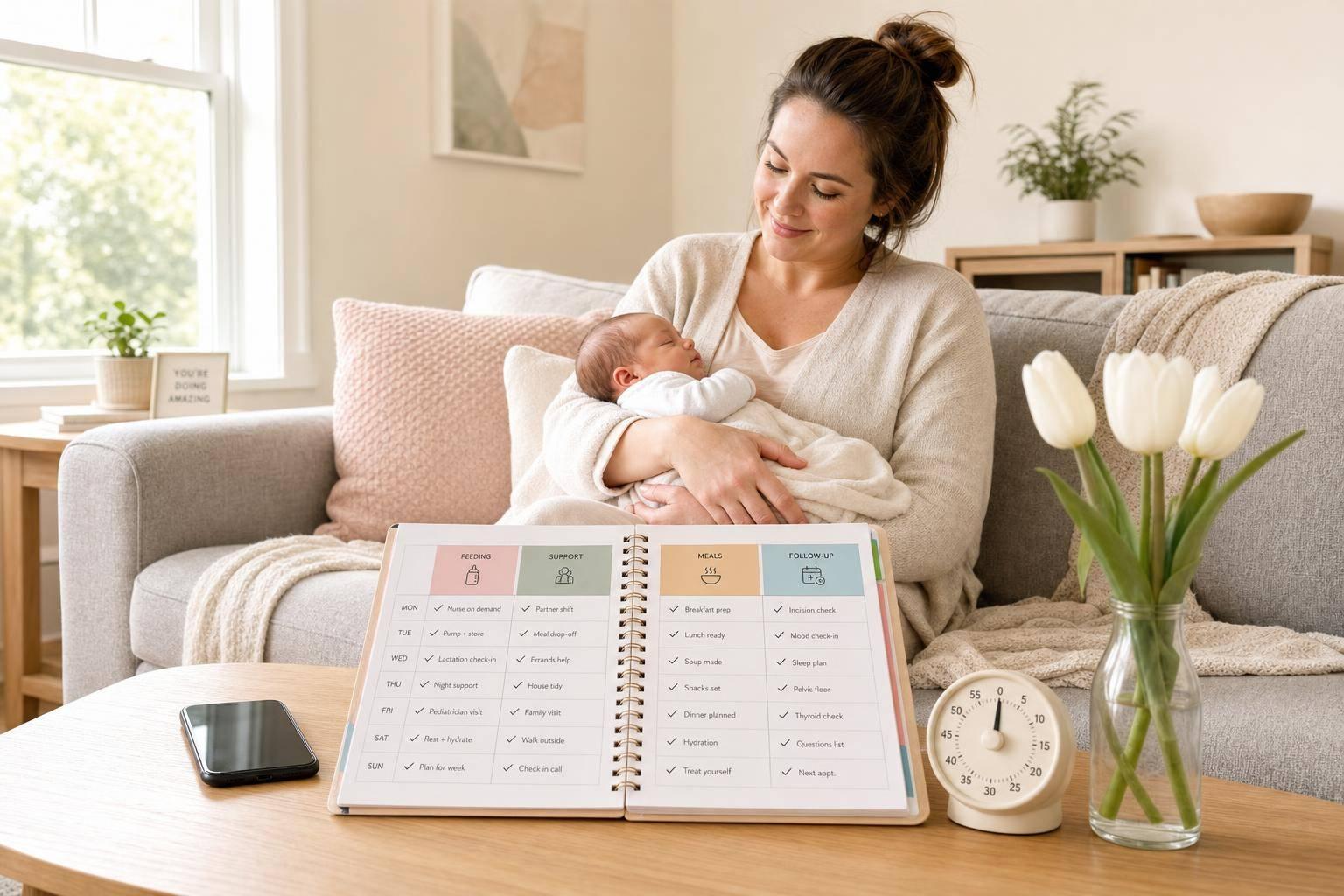
How Postpartum Plans Save Time for New Moms
A postpartum plan saves time by cutting last-minute choices, extra calls, and store runs when you’re tired. If I set up feeding help, meals, household tasks, and follow-up visits before birth, I make the first six weeks easier to get through.
Here’s the short version:
- Planning ahead lowers stress and cuts decision fatigue.
- Pre-booked support means less time spent searching for help.
- Meal and chore plans reduce daily interruptions.
- Phone and telehealth support can save trips, which matters in places where care is hard to reach.
- Written warning signs help me act fast without guesswork.
A few facts stand out:
- More than 35% of U.S. counties have no birthing facility or obstetric clinician.
- A fever of 100.4°F or higher in a baby under 3 months needs prompt medical attention.
- Fewer than 6 wet diapers in 24 hours can be a warning sign for a newborn.
If I want to save time after birth, the main things to decide early are:
- how feeding will work
- who helps overnight
- who handles meals, laundry, and groceries
- when pediatric and maternal visits happen
- who to call for lactation or mental health support
The core idea is simple: the more I decide before the baby arrives, the less I have to figure out on little sleep.
| Part of the plan | How it saves time |
|---|---|
| Feeding plan | Fewer late-night choices and less scrambling for help |
| Household help | Less time spent on meals, dishes, laundry, and errands |
| Pre-scheduled care | Fewer calls and calendar problems after birth |
| Remote support | Less travel for feeding and mental health questions |
| Warning sign list | Less guesswork when something feels off |
This article breaks down which parts of a postpartum plan save the most time and which support options can help most.
What research says about postpartum plans
Lower stress and easier early adjustment
Research on postpartum support points to a simple idea: when there’s a plan, new mothers have fewer choices to juggle in the moment. Social isolation during the postpartum period is linked to higher rates of postnatal and postpartum depression. So when support is built into the plan from the start, mothers spend less time dealing with urgent decisions on their own. That matters because less scrambling means more space for rest and recovery.
How planning reduces daily interruptions
In day-to-day life, this often means fewer disruptions around feeding, meals, and recovery. Planning feeding, sleep, meals, and recovery tasks ahead of time cuts down on last-minute decisions and lowers the number of daily interruptions. Postpartum doulas also help families get the right support sooner, instead of spending time searching by themselves. That kind of ready access can remove a major source of routine friction.
What the evidence shows
Studies tend to track stress, confidence, and access to care more often than exact time saved. So the research supports time savings in an indirect way, not with a fixed number. That’s why the hands-on parts of a postpartum plan often do the heavy lifting: feeding, recovery, support, and follow-up.
sbb-itb-9ce2258
How to Build a Postpartum Plan (From a Labour & Delivery Nurse)
What a time-saving postpartum plan includes
Time-saving postpartum plans start before birth. That’s where most of the time wins come from: a few clear choices made ahead of time, not a bunch of last-minute scrambling.
A good plan should be specific, realistic, and flexible. You don’t need to map every hour. You just need to make the big decisions early so daily life feels less chaotic once the baby is home.
Feeding, newborn care, and maternal recovery
These three areas sit at the center of any postpartum plan.
For feeding, decide in advance whether you’ll use breast, formula, or mixed feeding. It also helps to line up backup support before delivery. If feeding gets hard at 2:00 a.m., you don’t want to start hunting for help then. Connecting with a lactation consultant ahead of time makes it much easier to get support fast if problems come up.
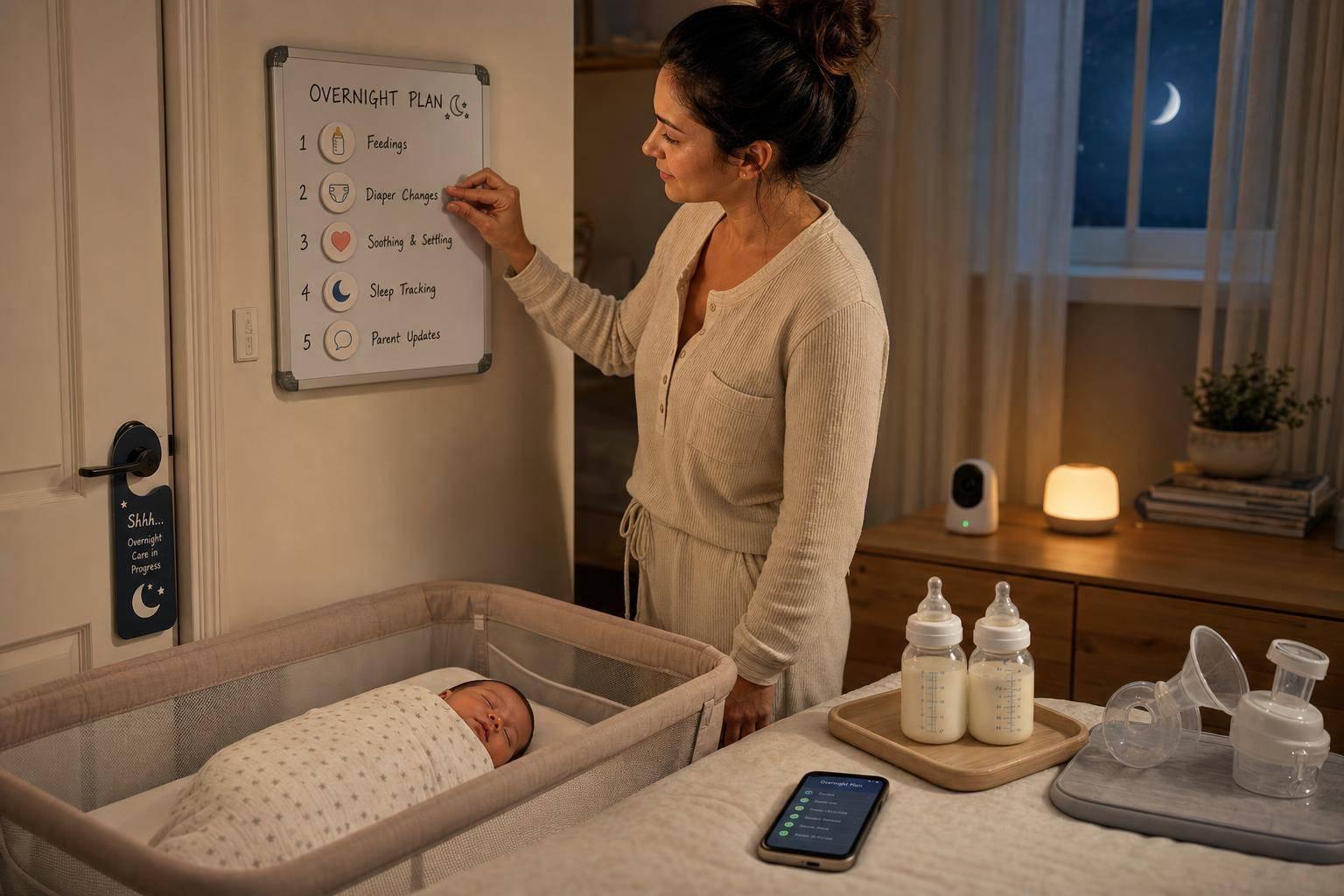
For newborn care, plan around soothing, cue-reading, and overnight coverage that gives parents longer stretches of sleep. Even a loose plan can take a lot of pressure off.
For recovery, think through pain control, pelvic floor care, and mental health screening. These parts often get pushed aside when everyone is focused on the baby, but they matter just as much.
Support network, household tasks, and follow-up care
Set up help before birth, not after. Assign meals, laundry, groceries, and baby-holding ahead of time so people know where to step in.
Pre-scheduling lactation support, pediatric visits, and maternal check-ins before the baby arrives removes logistical friction later. That means less time spent making calls, juggling calendars, or figuring things out when you’re already tired. It also leaves more energy for recovery.
Setting realistic expectations for the first six weeks
The first six weeks tend to go better when families decide ahead of time what doesn’t need to happen. That sounds simple, but it changes a lot.
Use a loose routine instead of a rigid schedule. Keep days bright and active, and nights dim and quiet, to help babies learn day from night. And agree early that non-essential chores can wait. A spotless house is not the goal here.
Write down warning signs before the baby arrives, too. That includes a baby temperature of 100.4°F or higher in a baby under 3 months and fewer than 6 wet diapers in 24 hours. In the moment, that kind of note cuts down on guesswork. It also makes outside support much easier to use.
Which postpartum support models help most
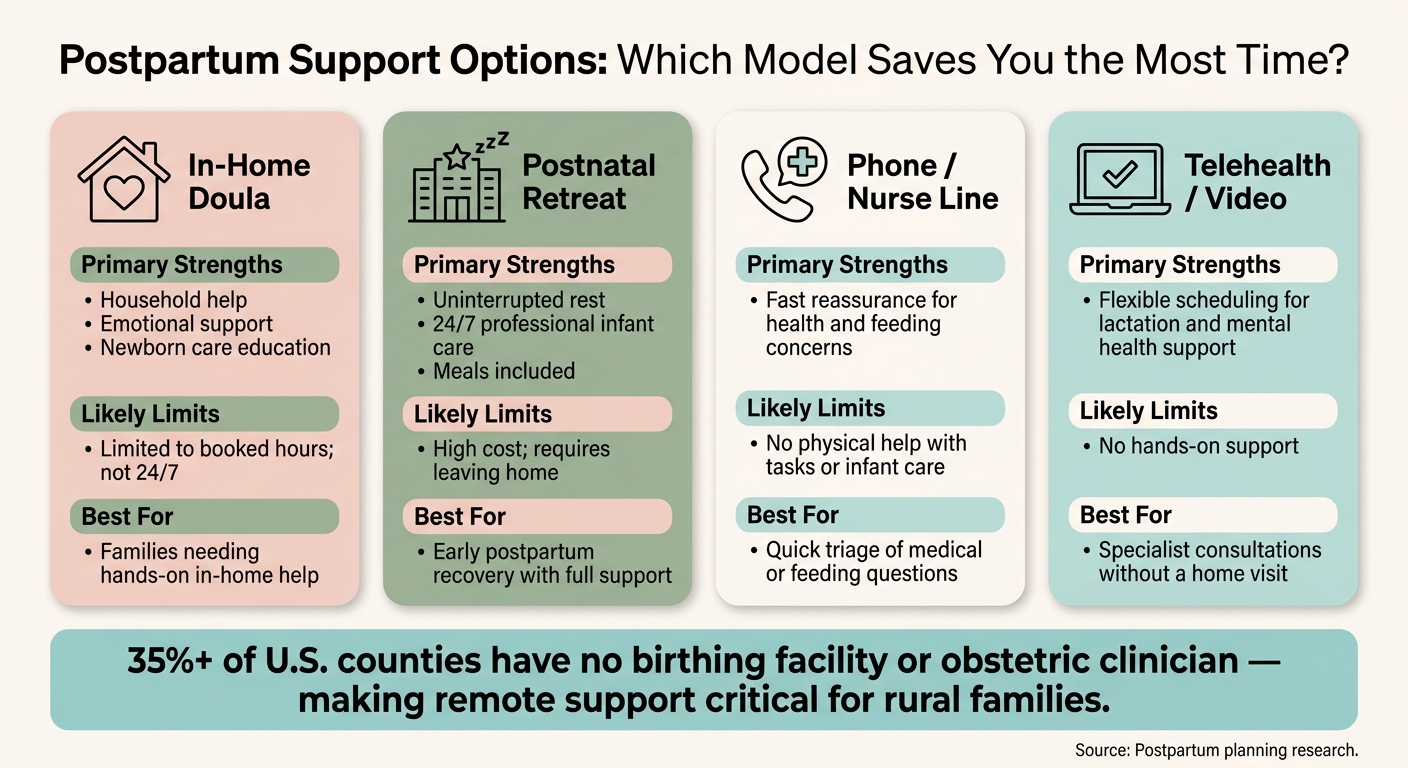
Postpartum Support Options: Which Model Saves You the Most Time?
Families need different kinds of help. What works best often comes down to recovery, budget, location, and how much support friends or relatives can give. The most helpful setups cut chores, travel, and those last-minute choices that drain energy. In plain terms, the biggest time savings usually come from support that trims errands, interruptions, and decision fatigue.
Home visits, phone support, and flexible follow-up
In-home doulas bring help straight to the family, which means fewer trips and less coordination. They provide emotional support and newborn care education. That can ease day-to-day pressure and lower the mental load that comes with healing while caring for a new baby.
Phone and nurse lines help in a different way, but they still matter a lot. A quick call can clear up feeding or health questions before they turn into a longer problem. Telehealth can do something similar for lactation support and mental health check-ins, giving families access to a specialist without needing an in-person visit.
For families in rural areas, remote support may be the most realistic option. More than 35% of U.S. counties have no birthing facility or obstetric clinician. In places like that, phone and telehealth care can make it much easier to get help on time.
Comparing common postpartum care formats
The trade-off is pretty simple: some models bring help to your home, while others take you out of daily responsibilities for a period of time.
| Support Format | Primary Strengths | Likely Limits | Best-Use Situation |
|---|---|---|---|
| In-Home Doula | Household help, emotional support, and newborn care education | Hours are limited to what's booked; not 24/7 | Families needing in-home help |
| Postnatal Retreat | Uninterrupted rest, 24/7 professional infant care, and meals included | High cost; requires leaving home | Early postpartum recovery |
| Phone/Nurse Line | Fast reassurance for health and feeding concerns | No physical help with tasks or infant care | Quick triage of medical or feeding questions |
| Telehealth/Video | Flexible scheduling for lactation and mental health support | No hands-on support | Specialist consultations that don't need a home visit |
How Nestling fits into a postpartum plan
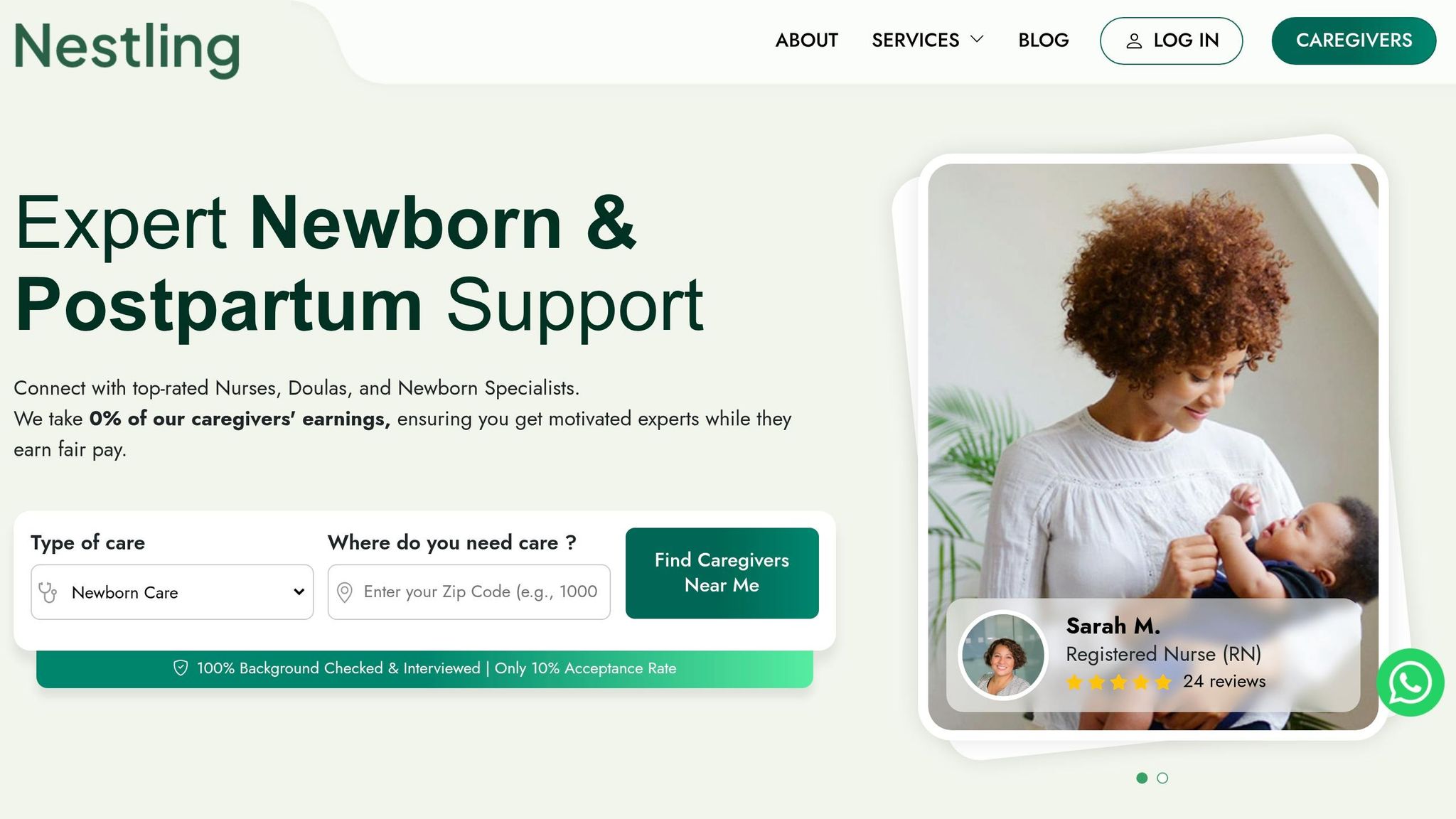
For families who want one place to organize these supports, a vetted care platform can pull them into a single plan. Nestling connects families with vetted postpartum doulas, lactation consultants, and infant care specialists for newborn care, lactation support, recovery help, emotional support, and light household tasks. Caregivers are screened through background checks, reference validation, and certification verification.
Conclusion: Making the postpartum period more manageable
After looking at the main support options, the big takeaway is simple: planning ahead saves time when you’ll need it most. A postpartum plan cuts down day-to-day friction because it removes a lot of last-minute decision-making. When feeding support, household help, recovery time, and follow-up care are set up before birth, families spend less energy trying to piece things together while exhausted.
Key takeaways for expecting and new moms
Name your support network before birth. Be clear about who handles overnight care, who answers feeding questions, and who steps in with meals, laundry, and dishes.
If you want one place to organize that support, Nestling puts key services into a single plan. Nestling connects families with vetted postpartum doulas, lactation consultants, and infant care specialists.
The more you decide before birth, the less you have to figure out when you’re running on little sleep. Even a simple plan for feeding, chores, and follow-up care can protect recovery time and help ease overload.
FAQs
When should I make a postpartum plan?
It’s best to put your postpartum plan together during pregnancy, before the baby arrives and life gets a lot busier.
Planning ahead gives you time to line up the support you may need at home, from expert caregivers like those at Nestling to help with infant care, lactation support, and household tasks. That way, there’s less last-minute stress, and you can spend more of your energy on recovery and bonding with your newborn.
What should be in a simple postpartum plan?
A simple postpartum plan should put rest, healing, and nourishment first while taking some of the pressure out of daily life.
That usually means having help in place for feeding and sleep routines, a plan for nutrient-dense meals, and protected time for physical recovery and emotional check-ins. In plain terms: the less you have to figure out in the moment, the easier those first weeks tend to feel.
Professional support can help too. Lactation consultants and infant care specialists can ease stress, answer questions, and save time when everything feels a bit upside down.
Nestling connects families with vetted caregivers for newborn care, postnatal support, and light household tasks.
How can I get postpartum help if I live far from care?
Living far from in-person support doesn’t mean you have to go through postpartum on your own. Nestling connects families with vetted caregivers, including postpartum doulas, lactation consultants, and infant care specialists.
With personalized care plans and flexible booking, you can get help at home with sleep routines, breastfeeding, recovery, and emotional support.







 Sign up with Google
 Sign up with Facebook