
Daytime vs. Overnight Newborn Care: Key Differences

Daytime vs. Overnight Newborn Care: Key Differences
If you need sleep, choose overnight care. If you need hands-on help during the day, choose daytime care. That’s the short answer.
I’d break it down like this:
- Daytime newborn care helps with feeding, diapering, soothing, naps, and baby-care basics while you’re awake and involved.
- Overnight newborn care handles night feeds, diaper changes, and getting the baby back to sleep so you can rest for longer stretches.
- Daytime shifts are more about learning and daily rhythm.
- Overnight shifts are more about sleep and postpartum recovery.
- Some families need both, especially in the first few weeks home.
One stat stands out: breastfeeding support is linked with 52% continuation at six weeks, compared with 29% without support. And sleep help at night can ease the strain that hits hard after birth, especially after a C-section.
Quick Comparison
| Area | Daytime Care | Overnight Care |
|---|---|---|
| Main goal | Help you through the day | Help you sleep at night |
| Parent involvement | High | Low |
| Common tasks | Feeding help, soothing, bathing, diapering, naps | Night feeds, diaper changes, burping, settling |
| Best for | Learning, routine, sibling flow, daytime support | Sleep loss, recovery, twins, early return to work |
| Common hours | Around 9:00 a.m.–3:00 p.m. | Around 10:00 p.m.–6:00 a.m. |
So if I were choosing, I’d start with one question: Do I need more help staying rested, or more help getting through the day? That answer usually points to the right fit fast.
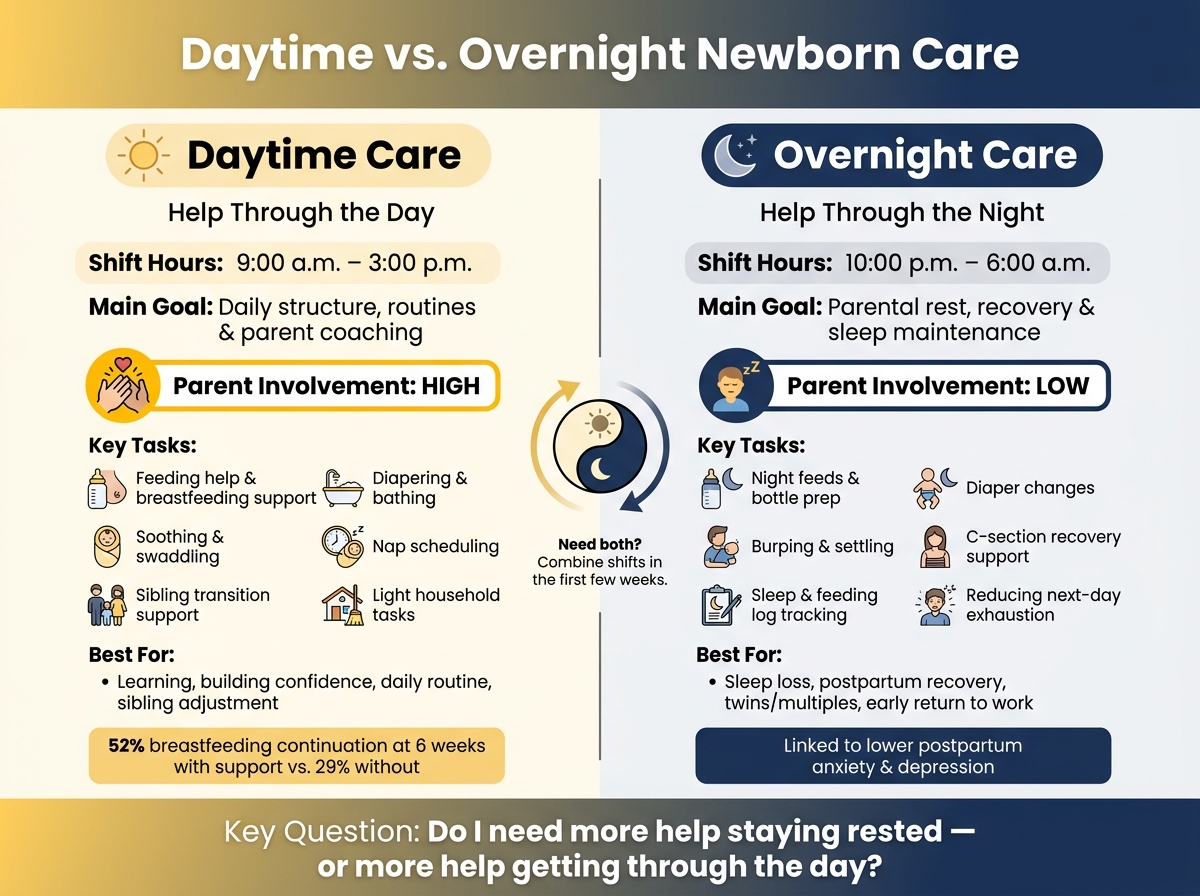
Daytime vs. Overnight Newborn Care: Side-by-Side Comparison
Daytime vs. overnight newborn care: roles and daily responsibilities
The difference is pretty simple: daytime care helps shape the day, while overnight care helps protect sleep. You can see that most clearly in who takes the lead and how involved parents are during each shift.
| Feature | Daytime Care | Overnight Care |
|---|---|---|
| Primary Focus | Daily structure, routines, and parent coaching | Parental rest, recovery, and sleep maintenance |
| Parent Interaction | High - active teaching and hands-on support | Low - focused on reducing nighttime disruptions |
| Common Shift Hours | Typically 9 a.m.–3 p.m. or similar daytime blocks | Typically 10 p.m.–6 a.m. or 12-hour shifts |
What daytime caregivers do during waking hours
During the day, the caregiver helps bring some shape to the chaos. They support feeding, diapering, soothing, and naps. But the main point isn’t just getting through the task list. It’s the guidance that happens alongside it.
A daytime specialist often helps parents read baby cues, swaddle with care, follow safe sleep practices, and handle daytime nap schedules. That kind of support can make a huge difference, especially when every cry seems to mean something different. If it’s part of the agreed scope, the caregiver may also take care of light baby-related tasks like bottle sterilization or baby laundry.
What overnight caregivers do at night
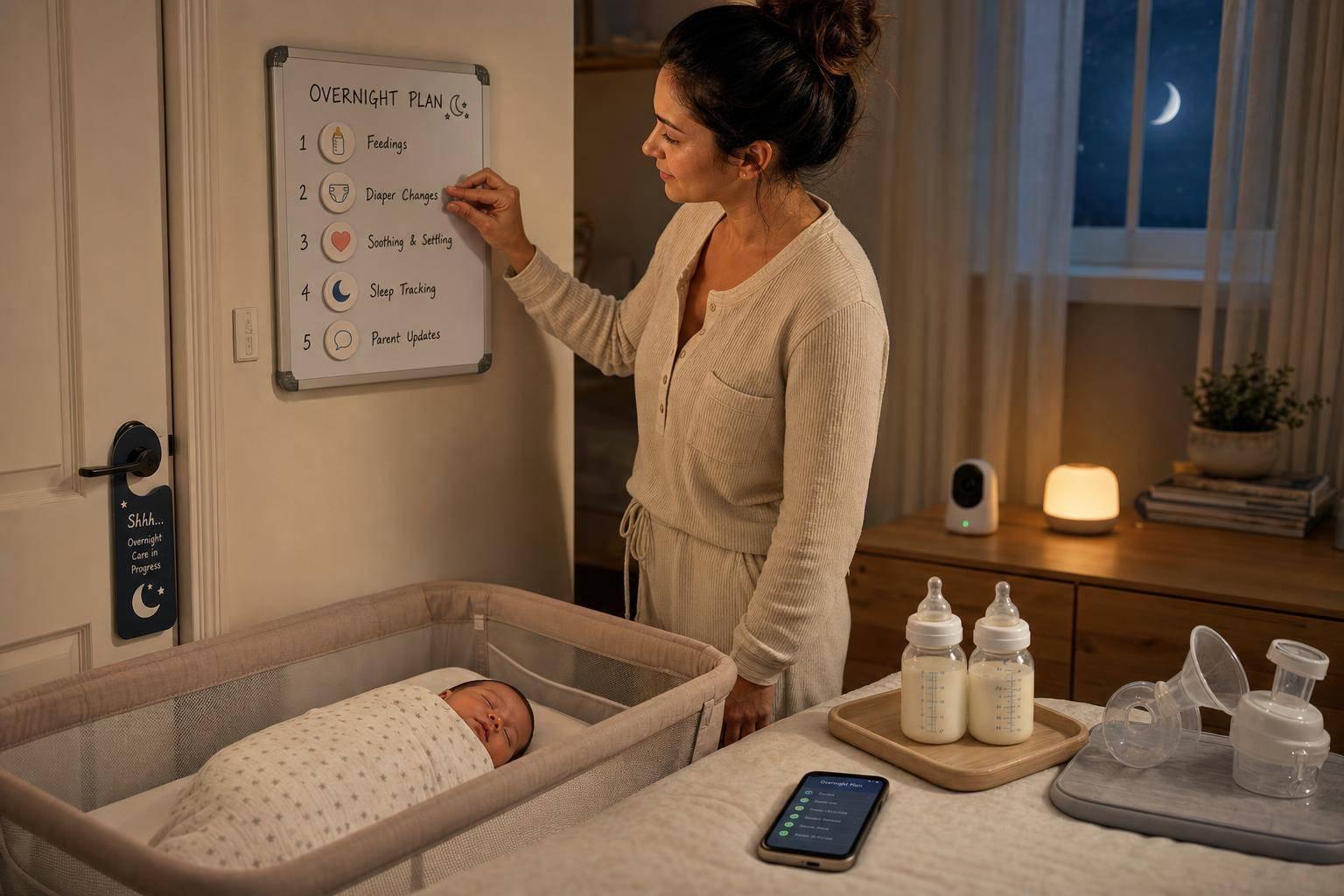
At night, the job shifts. The main goal is to protect sleep and keep disruptions as low as possible.
That usually means handling bottle feeds, or bringing the baby to the parent for breastfeeding, then taking over burping and settling so the parent can get back to sleep fast. Diaper changes, soothing, and getting the baby back down are also part of the role. Overnight specialists often log sleep and feeding patterns through the night too, which gives parents a clear view of what’s happening without having to track every wake-up at 3 a.m.
How parent support changes by shift type
Daytime care usually puts parents and caregivers side by side, on purpose. It’s hands-on, and it often has a teaching angle. Parents stay involved, ask questions, and build confidence as the day goes on.
Overnight care works the other way. In those early postpartum weeks, the caregiver steps in so parents can step out of the loop for a while and get some rest. Daytime care is active and guided. Overnight care is quiet and sleep-centered.
sbb-itb-9ce2258
How each care type affects sleep, recovery, routines, and household flow
Your choice affects sleep, recovery, feeding, and household flow.
Once the duties are clear, the bigger difference is how each shift changes daily life.
| Outcome | Daytime Care | Overnight Care |
|---|---|---|
| Sleep Support | Short parent naps; focus on baby's nap schedule | A longer uninterrupted stretch of rest |
| Recovery Support | Emotional support and light household help | C-section recovery support |
| Household Flow | Sibling transitions, daily structure, and light tasks | Reduces next-day exhaustion for both partners |
That difference tends to show up in two places fast: more confidence during the day and more rest at night.
How daytime care builds confidence and daily structure
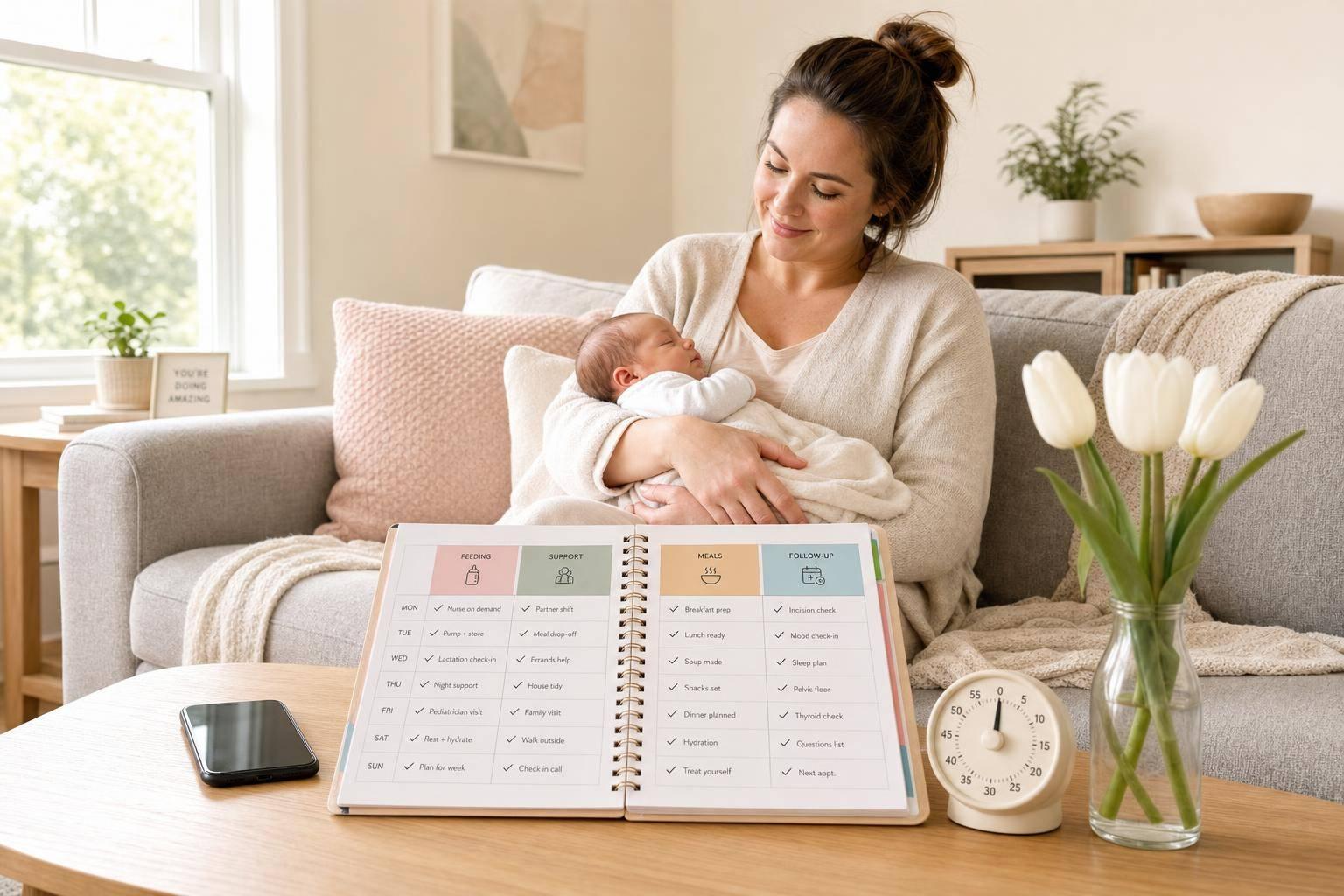
Daytime care helps shape the hours when everything is happening at once. A daytime specialist works with you in real time, so you can spot hunger cues, respond sooner, and build a rhythm that makes the day feel less chaotic.
That kind of side-by-side help can improve breastfeeding continuation - 52% at six weeks, compared with 29% without support. It can also help the household run with less friction. Think older sibling routines, light household tasks, and the small daily jobs that can pile up when you're tired.
And when the day feels more organized, nighttime rest often works better too.
How overnight care supports rest and postpartum recovery
Overnight care deals with one of the hardest parts of early postpartum life: sleep loss. When someone else handles night care, parents have a better shot at getting a longer, more restorative stretch of rest. That saved energy can go straight into healing.
This matters even more after a C-section. If someone else can manage the nursery at night, that isn't a luxury. It's practical recovery support. Professional postpartum support is also linked to lower levels of anxiety and depression.
When combining both types of care makes sense
Some families need both types of support, not just one. A hybrid setup pairs daytime help for skill-building and household flow with overnight help for rest. It's a simple split, but it can work well because each shift covers a different pressure point.
For some families, that means a 30-day recovery period with the focus on healing and learning. Others want a more hands-on setup that also covers light household tasks, so bonding and recovery stay at the center.
How to choose the right type of care for your family
The right choice comes down to where your family needs the most help. If you need support with learning, structure, and daytime routines, daytime care often makes more sense. If you need sleep and a chance to recover, overnight care is usually the better call. Once that priority is clear, the decision gets a lot easier: daytime coaching or overnight rest.
In the U.S., newborn care is usually billed by the hour or by the shift. That means families can pay for the exact coverage they need.
Signs daytime care may be the better fit
Daytime care works well when you want someone with you as you learn the ropes. If you're working through breastfeeding or bottle-feeding, setting up feeding and sleep routines, or getting used to basics like bathing, swaddling, and settling, a daytime specialist can give you hands-on help in the moment.
It can also be a good fit if you have older kids at home who need help adjusting to a new sibling. And if small household tasks are starting to pile up during the day, this kind of support can take some pressure off. On the other hand, if lack of sleep is the main problem, overnight care usually makes more sense.
Signs overnight care may be the better fit
If sleep loss is already hitting hard, overnight care is often the better fit. This can matter even more for parents of twins or multiples, anyone healing after a C-section, or parents going back to work soon after birth. When the main goal is getting deep, restorative sleep so you can function during the day, overnight care speaks directly to that need.
Using Nestling to arrange flexible postpartum support
For families who want flexible scheduling in one place, Nestling connects families with vetted newborn and postpartum caregivers for daytime, overnight, or live-in support. It also offers personalized care plans and flexible booking.
Conclusion: Choose the support that fits your needs
Now that the differences are clear, the choice comes down to what your family needs most right now.
Daytime care is a good fit if you want hands-on help with feeding, soothing, and building daily routines. Overnight care makes more sense if your biggest issue is exhaustion, night feeds, and getting enough rest to recover.
A simple way to think about it:
- If you're worn down and need sleep, choose overnight care
- If you want help with feeding, calming, and daytime structure, choose daytime care
- If both feel urgent, combine shifts during the first few weeks
That’s the point of newborn support: less strain, more stability. The goal isn’t perfection. It’s having enough help to make newborn life feel manageable.
FAQs
How many nights or days of newborn care do most families book?
It depends on your family’s needs. Some newborn care services ask for a minimum of 5 days or nights per week of in-home support.
Many specialists also require at least a 2-week commitment, although some may be flexible if you need help right away. Nestling offers both daytime and overnight care, so families can build a plan that fits their situation.
Can newborn care work with exclusive breastfeeding?
Yes. Newborn care can fit well with exclusive breastfeeding. Postpartum doulas and infant care specialists often support breastfeeding families during the day or overnight.
For example, they can bring your baby to you for nursing, then take over with burping and settling afterward. That means you get a bit more rest without losing sight of your breastfeeding goals.
When should I choose both daytime and overnight care?
Choose both daytime and overnight care if you're juggling a packed schedule, trying to balance work with recovery, or just want steady support during those first days of parenthood.
This setup gives you consistent newborn care around the clock while making space for parents to rest and heal. Nestling helps families find vetted caregivers for daytime routines and overnight support.








 Sign up with Google
 Sign up with Facebook