
When To Hire A Newborn Care Specialist

When To Hire A Newborn Care Specialist
Welcoming a newborn is joyful but exhausting. Between sleepless nights, physical recovery, and adjusting to a new routine, many parents feel overwhelmed. A Newborn Care Specialist (NCS) can help during the first 12-16 weeks of your baby’s life by managing overnight care, creating routines, and offering expert guidance on newborn needs. They’re especially helpful if you’re recovering from a difficult delivery, caring for multiples, or returning to work soon after birth.
Key Benefits of Hiring an NCS:
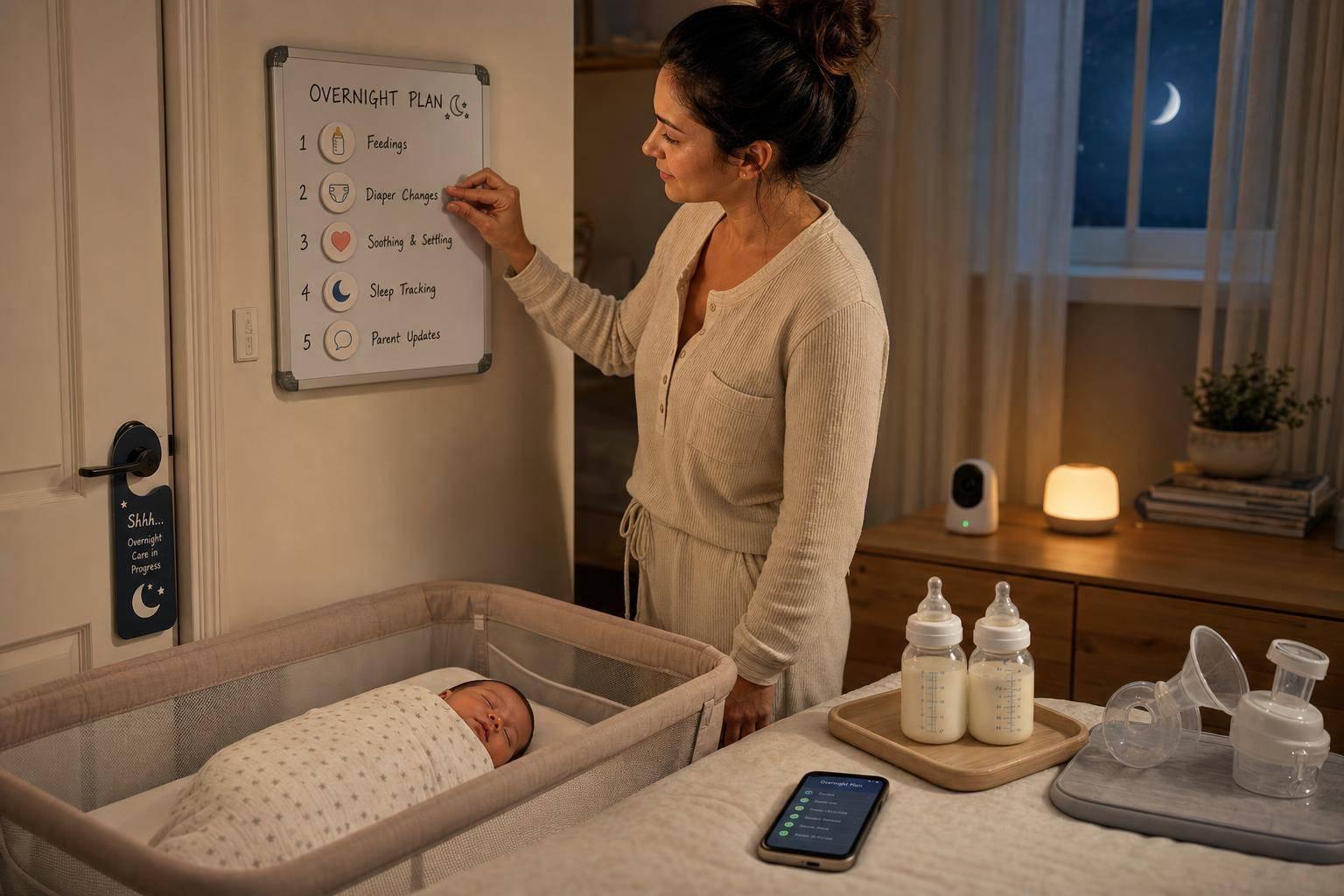
- Overnight Care: Handle feedings, diaper changes, and soothing, so you can rest.
- Expert Guidance: Help with sleep routines, feeding techniques, and newborn care.
- Custom Support: Tailored care for twins, preemies, or babies with special needs.
- Mental Health Support: Reduce stress and improve postpartum recovery.
Start your search early (3-6 months before your due date) to secure the right fit for your family. Hiring an NCS is a practical way to get the support you need during a challenging yet rewarding time.
What is a Newborn Care Specialist and what do they do?
sbb-itb-9ce2258
Challenges New Parents Face
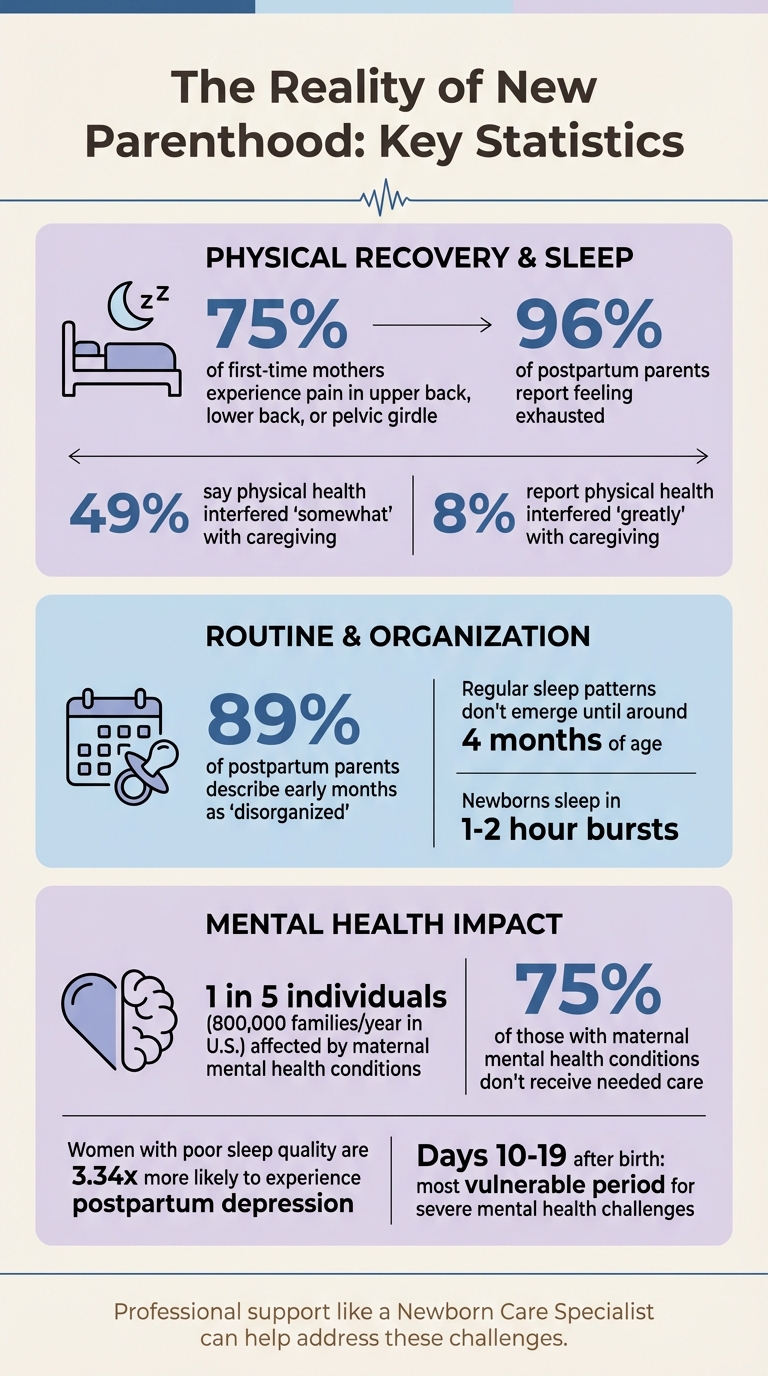
Postpartum Challenges and Mental Health Statistics for New Parents
The postpartum period introduces a whirlwind of physical, emotional, and logistical challenges that can surprise even the most prepared parents. Understanding these hurdles is key to knowing when to seek additional support. Let’s break down some of the most common challenges faced by new parents.
Physical Recovery and Sleep Deprivation
Your body has just been through a physically demanding experience, and recovery takes time. Whether you’ve had a vaginal delivery or a C-section, you might be dealing with incision pain, perineal tearing, or intense uterine contractions (often called afterpains), which can intensify during breastfeeding. On top of that, the strain of carrying your baby and the postural changes from pregnancy can lead to lingering discomfort. In fact, studies show that 75% of first-time mothers experience pain in areas like the upper back, lower back, or pelvic girdle.
Sleep deprivation only adds to the challenge. Newborns sleep in short bursts - usually just one to two hours at a time - which makes restorative sleep nearly impossible. It’s no surprise that 96% of postpartum parents report feeling exhausted. This exhaustion can take a toll on your ability to care for your baby, with 49% of parents saying their physical health interfered “somewhat” with caregiving, and 8% reporting it interfered “greatly”.
"When you go home, you feel like you're in the wilderness."
- Dr. Pervez Sultan, Professor of Obstetrical Anesthesiology at Stanford Medicine
This cycle of physical recovery and chronic exhaustion can slow down healing, as the lack of adequate rest makes it harder for your body to recover while you’re constantly attending to your baby’s needs.
Creating Routines with a Newborn
Figuring out a daily rhythm with a newborn is no small feat. Babies don’t come with a schedule - they operate on their own unpredictable timelines. Regular sleep patterns usually don’t emerge until around four months of age, leaving the first few weeks feeling chaotic. It’s no wonder that 89% of postpartum parents describe the early months as “disorganized”.
Feeding schedules and diaper changes can feel like a guessing game, especially when you’re already running on fumes. Trying to create some structure amidst the constant interruptions can be overwhelming, adding another layer of stress to an already challenging time.
Emotional Stress and Mental Health
The emotional challenges of new parenthood are often underestimated. Mental health conditions are the most common complication during pregnancy and postpartum, affecting 1 in 5 individuals - or roughly 800,000 families - each year in the U.S.. Despite this, 75% of those experiencing maternal mental health conditions don’t receive the care they need.
Emotional struggles can range from the “baby blues,” which typically resolve within two weeks, to more serious issues like postpartum depression, anxiety, OCD, or even PTSD. The period between 10 to 19 days after giving birth is when mothers are most vulnerable to severe mental health challenges. Sleep deprivation plays a major role in worsening these conditions. As Dr. Lauren Osborne, a Reproductive Psychiatrist, explains:
"There is a direct connection between lack of sleep and postpartum depression... The two feed on each other."
- Dr. Lauren Osborne, Reproductive Psychiatrist
On top of this, many parents grapple with feelings of self-doubt, a sense of identity loss, and strained relationships. The emotional and societal impact is enormous, with billions lost annually in productivity due to these challenges.
Acknowledging these struggles is a crucial first step toward understanding how professional support, such as a newborn care specialist, can make a meaningful difference.
When to Hire a Newborn Care Specialist
Deciding when to seek professional help with your newborn can be challenging. With the physical, emotional, and logistical demands that come with a new baby, hiring newborn care services can make a world of difference. While every family’s situation is unique, there are certain scenarios where bringing in an NCS can be especially helpful.
During the First Weeks After Birth
The first few weeks after bringing your baby home often feel like a whirlwind. Between sleepless nights and adjusting to your new routine, it’s easy to feel overwhelmed. Many families choose to hire an NCS right from the start, often on the very first day home. These specialists typically work overnight shifts - usually 8 to 12 hours, such as 8:00 p.m. to 8:00 a.m. - to handle feedings, burping, and diaper changes, giving you much-needed rest. For breastfeeding parents, an NCS can assist with nursing, burping, and changing, ensuring you can focus on recovery. This support is especially valuable if you’re recovering from a C-section or a difficult delivery, when sleep deprivation can feel even more intense.
Some families opt for 24-hour care during these early weeks to allow for maximum recovery before transitioning to overnight-only shifts as they regain their strength. Most NCS contracts last 12 to 16 weeks, covering the critical "fourth trimester" - the first 16 weeks of your baby’s life.
When Caring for Multiples or Babies with Special Needs
If you’re welcoming twins, triplets, or a baby with special needs, an NCS can be more than just helpful - it can feel essential. Managing the feeding and sleep schedules of multiple newborns can quickly become overwhelming, even for the most prepared parents. An NCS brings the expertise needed to establish routines that work for everyone in the family.
"Newborn care specialists... are familiar with normal newborn habits and can be a big help to families especially in need of support, such as those with multiples or premature infants."
- Dr. Amna Husain, Pediatrician
While NCSs aren’t medical professionals, they can follow doctor-prescribed care plans for premature babies or those with medical conditions, offering practical support. For families with multiples, it’s important to note that rates typically increase by $2 to $5 per hour for each additional baby.
When Returning to Work with Limited Leave
In the United States, many parents face the challenge of returning to work just weeks after giving birth due to limited parental leave. In these cases, hiring an NCS can make the transition smoother. Bringing in an NCS several weeks before your return allows them to establish consistent feeding and sleep routines while providing overnight care. This ensures you’re well-rested and better prepared to handle the demands of work and parenting. To secure the right support, start your search 3 to 6 months before your due date.
"Hiring a Newborn Care Specialist isn't about outsourcing parenting. It's about getting support during one of the most physically and emotionally demanding transitions of your life."
Benefits of Hiring a Newborn Care Specialist
When it comes to navigating the whirlwind of challenges that come with a newborn, a Newborn Care Specialist (NCS) can be a game-changer. They provide practical help and emotional support, easing the transition into parenthood and addressing both physical recovery and the demands of caring for a baby.
Support for Physical and Emotional Health
Caring for a newborn is exhausting - physically, mentally, and emotionally. An NCS steps in to lighten the load by managing overnight care, including diaper changes, soothing, and bottle prep, giving parents the chance to get 6 to 8 hours of uninterrupted sleep. This rest is crucial for physical recovery and emotional balance, especially after childbirth. On top of that, they can take on basic household tasks, reducing the strain on parents.
Their role often extends to postpartum health monitoring. Whether it’s assisting with mobility after surgery, ensuring you stay hydrated, or keeping an eye out for signs of postpartum mood disorders, their support can be invaluable.
"New parents who have quality postpartum support tend to heal faster (if they have given birth) and have lower rates of postpartum mood disorders."
- Andrea Hedley, Founder of the Newborn Care Specialist Association
Sleep plays a huge role in mental health, too. Studies reveal that women with poor sleep quality are 3.34 times more likely to experience postpartum depression compared to those who sleep well. By taking over nighttime responsibilities and helping parents feel less anxious about their baby’s every move, an NCS creates a more stable and reassuring environment during this vulnerable time.
But their support isn’t just about giving parents a break - they also serve as a trusted guide for all things newborn.
Professional Guidance on Newborn Care
An NCS brings expert knowledge to help parents confidently navigate newborn care. From feeding and sleep routines to understanding baby cues, they’re there to share practical advice. They can assist with breastfeeding techniques, formula preparation, and proper milk storage, as well as methods like paced bottle-feeding.
When it comes to sleep, they focus on building healthy habits early. This includes setting up age-appropriate "sleep shaping" strategies (from birth to 16 weeks), creating an ideal sleep environment, and managing nighttime wake-ups.
They also teach essential skills like swaddling, bathing, and recognizing your baby’s needs. Instead of rigid schedules, they help establish flexible daily rhythms that work for your family. Along the way, they monitor for common newborn concerns like reflux, gas, colic, jaundice, or mild rashes and guide you on when it might be necessary to reach out to your pediatrician.
With their guidance, parents often go from feeling overwhelmed to feeling prepared and capable. And the care doesn’t stop there - NCSs make sure their support fits your family’s unique circumstances.
Customized Care Plans
Every family is different, and an NCS tailors their approach to meet those specific needs. For families with twins or triplets, they coordinate synchronized feeding and sleeping routines while keeping track of each baby’s progress, from developmental milestones to feeding patterns. For premature babies, they focus on health monitoring and specialized feeding techniques to support growth and development.
They’re also well-versed in working with diverse family structures, including surrogacy, adoption, or LGBTQ+ families. In these cases, they offer specialized support to help with bonding and the transition into parenthood. While most NCS contracts last 3 to 4 months, families with preemies or medical needs often extend their services beyond the "fourth trimester" to ensure ongoing stability.
This personalized approach ensures that families receive the exact care they need, precisely when they need it most. Whether it’s for a few months or an extended period, an NCS adapts to fit the unique dynamics of your household.
How to Find and Hire a Newborn Care Specialist
Hiring a Newborn Care Specialist requires thoughtful planning and a clear strategy. With all the preparations that come with welcoming a baby, this task might seem daunting. However, breaking it into manageable steps can help you secure the right support for your family.
Start Your Search Early
Top specialists are often booked months in advance - sometimes even up to a year ahead. The British Association for Household Staffing (BAHS) advises, "It is good practice to hire your Newborn Care Specialist when your doctor confirms your due date". Starting in your second trimester gives you enough time to interview candidates, check references, and secure your chosen professional. Keep in mind that most specialists require a retainer fee, which can range from 10% to 50% of the total contract amount.
Once you've set your timeline, focus your search on trusted platforms to find qualified candidates.
Use Trusted Platforms Like Nestling

Platforms like Nestling simplify the process by connecting you with pre-vetted Newborn Care Specialists. Their thorough screening process includes background checks, reference validation, and certification verification. Nestling also tailors care plans to your family’s specific needs, whether you’re expecting multiples, have a premature baby, or need help with specialized feeding. They offer flexible booking options, including daytime, overnight, or live-in care, and even provide backup care in case of emergencies. This ensures you have reliable support when you need it most.
Interview and Evaluate Candidates
Once you’ve shortlisted potential specialists, conducting interviews is crucial. Even with pre-vetted candidates, you’ll want to ensure their personality and approach align with your family’s needs. Andrea Hedley, Founder of the Newborn Care Specialist Association, advises:
"The person your good friend recommended... might not be the right fit for you... trust your gut instinct when choosing" - Andrea Hedley, Founder of the Newborn Care Specialist Association
Ask questions to understand their approach, such as, "What is your philosophy on newborn care?" or "How do you support a family's specific feeding choices?" Request at least two recent references to evaluate their reliability and how well they integrate into family life.
It’s also essential to discuss boundaries and responsibilities upfront. Clarify which tasks are included, like baby laundry and bottle sterilization, and which are not, such as cooking for the family or caring for older siblings. Once you’ve chosen a specialist, formalize the arrangement with a written contract that outlines the scope of work, schedule, hourly rate (typically $25–$80), and termination terms.
Conclusion
The first few weeks with a newborn can feel overwhelming, but a Newborn Care Specialist (NCS) brings the expertise and reassurance needed to help you focus on recovery and bonding with your baby. Hiring a newborn care specialist is an investment in your family's well-being during one of the most challenging yet precious times. With their guidance on feeding, sleep routines, and infant care, they help turn the chaotic "fourth trimester" into a period filled with confidence and joy. Their support not only addresses immediate challenges but also sets the stage for long-term family harmony.
The value of an NCS goes beyond just giving you a full night's rest. They’re not there simply to handle overnight feedings or diaper changes - they teach you practical skills, establish routines that stick, and give you the tools to navigate parenthood without the need for frantic late-night Googling.
Andrea Hedley, Executive Director of the Newborn Care Specialist Association, highlights the impact of their work:
"The money they paid for my services was absolutely one of the best things they did for themselves and their children." - Andrea Hedley, Executive Director of the Newborn Care Specialist Association
Choosing professional support isn’t a sign of weakness - it’s a smart way to create a healthier and more balanced family life. Whether you're recovering from a difficult delivery, managing the demands of multiples, or simply looking to start parenthood with expert care, an NCS can make an incredible difference.
FAQs
What should I look for when choosing a Newborn Care Specialist?
When choosing a Newborn Care Specialist, it’s essential to find someone with specific training or certification in newborn care. This means they should be well-versed in key areas like safe sleep guidelines, feeding methods (whether breastfeeding or bottle-feeding), soothing techniques, diapering, and bathing. They should also be prepared to address common newborn issues, such as reflux or colic, while offering practical advice to help parents feel more at ease.
It’s also important to evaluate their experience and caregiving style. Many families value specialists who provide tailored support, respect different parenting approaches, and offer guidance to make the early days of parenthood more manageable.
How can a Newborn Care Specialist help with postpartum mental health?
A Newborn Care Specialist plays a key role in supporting parents during the postpartum period, especially when it comes to mental health. By taking on responsibilities like feeding, soothing, and setting up sleep routines, they help lighten the load of newborn care. This gives parents the chance to rest and recover, which is essential for managing stress, anxiety, and fatigue.
Beyond the hands-on help, they also provide emotional support and guidance. This reassurance can boost parents' confidence in their caregiving abilities. Together, the practical assistance and emotional backing can make the early weeks and months of parenthood feel less overwhelming, helping parents navigate this life stage with greater ease and balance.
How much does it cost to hire a Newborn Care Specialist?
The hourly rate for hiring a Newborn Care Specialist generally falls between $30 and $80, though this can fluctuate depending on several factors. Location plays a big role - urban areas often see higher rates. Additionally, specialists with extensive experience or advanced skills, such as expertise in handling unique newborn needs, tend to charge more. Whether you hire directly or through an agency can also impact the cost.
If you're considering overnight or live-in care, expect the price to increase. These services require extended hours and often involve more tailored, hands-on support. To ensure you find the right match for your family, it’s wise to have an open conversation with potential caregivers about your needs and budget.









 Sign up with Google
 Sign up with Facebook