
Newborn Sleep Schedule: Your First Month Guide

Newborn Sleep Schedule: Your First Month Guide
Newborn sleep is unpredictable, but understanding their needs can make it manageable. During the first month, babies sleep 14–17 hours daily in short stretches of 1–4 hours, waking frequently to eat due to their small stomachs. They lack a circadian rhythm, so day-night confusion is common. Your focus should be on safety and recognizing sleep cues like yawning or fussing. Follow wake windows of 35–60 minutes to prevent overtiredness. Always prioritize safe sleep practices: place your baby on their back in a crib or bassinet without loose items.
Key Points:
- Sleep Duration: 14–17 hours/day in 1–4 hour bursts.
- Wake Windows: 35–60 minutes.
- Feeding: Every 2–3 hours (breastfed) or 3–4 hours (formula-fed).
- Safe Sleep: Back sleeping on a firm, flat surface; no blankets, toys, or pillows.
- Day-Night Confusion: Use bright light and interaction during the day; keep nights calm and dim.
The first month is about responding to your baby’s cues, ensuring safety, and creating a calm sleep environment. Sleep routines will gradually develop as they grow.
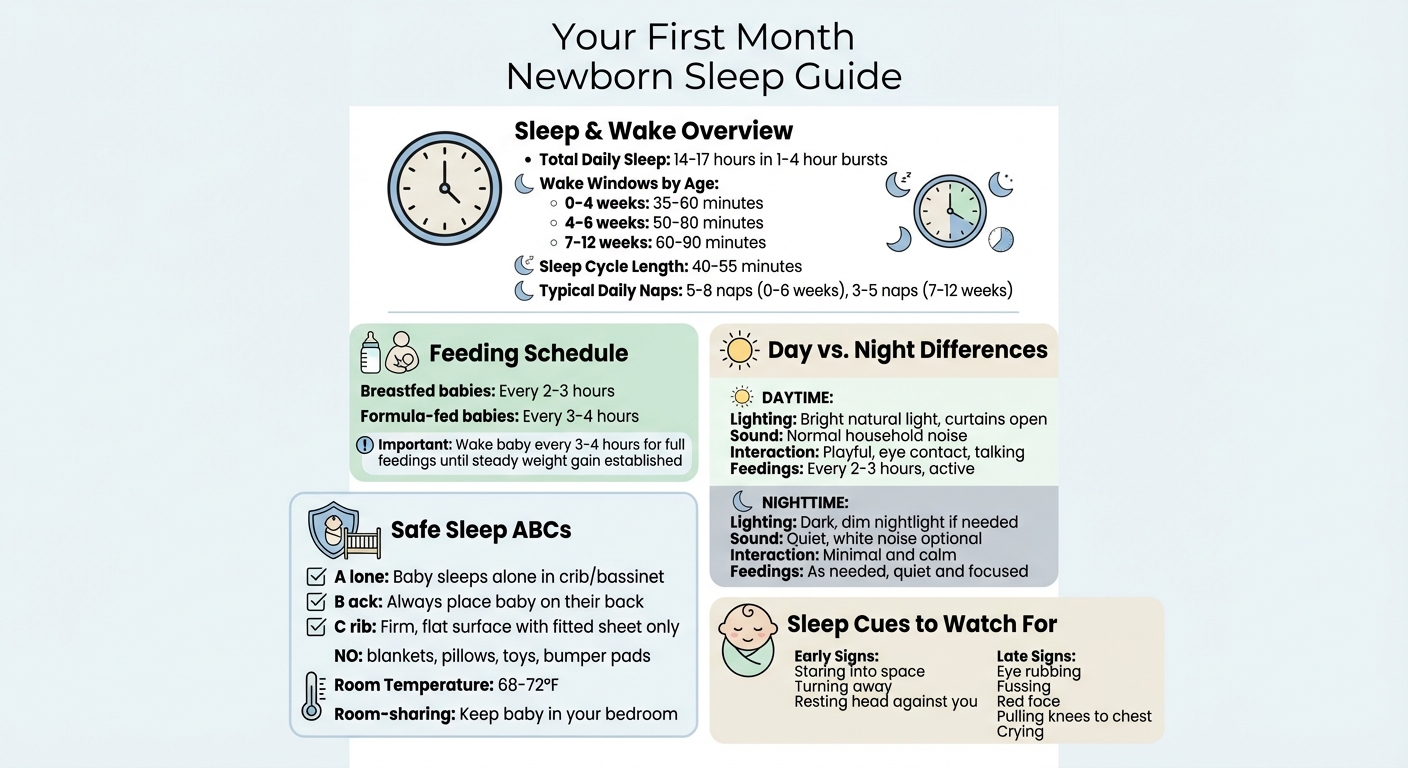
Newborn Sleep Schedule Guide: First Month Wake Windows, Feeding Times, and Day-Night Routines
Step-by-Step Newborn Sleep Schedule for 0–12 Weeks
sbb-itb-9ce2258
What Affects Newborn Sleep in the First Month
Understanding what influences your newborn's sleep can make it easier to meet their needs with confidence. A mix of biological and environmental factors plays a role in shaping their sleep patterns. Let’s dive into how your baby’s natural sleep rhythms and a supportive sleep setup come together during this early stage.
How Newborn Sleep Works
Newborn sleep has its own rhythm, largely driven by hunger and something called sleep pressure. Amber LoRe, Director of Pediatric Expertise at Huckleberry, explains:
"Newborn sleep is usually dictated by sleep pressure... and hunger and is characterized by long and short periods of sleep."
Sleep pressure builds as your baby stays awake, but their tiny stomachs mean hunger often overrides this, leading to frequent feedings - every 2–3 hours for breastfed babies and every 3–4 hours for those on formula.
Newborns also have a simple sleep structure. They alternate between two stages: active sleep (where they might wiggle, grunt, or make noises) and quiet sleep (a deeper, more restful state). Their sleep cycles are short, lasting only 40 to 55 minutes - much shorter than the 90-minute cycles adults experience. During active sleep, your baby might look awake, but waiting a moment before stepping in could give them the chance to settle back down on their own .
Growth spurts can shake things up, too. These developmental milestones often bring more frequent wake-ups and extra feedings.
Once you understand these biological patterns, the next step is creating a safe and supportive sleep environment.
Safe Sleep Guidelines for U.S. Families
A safe sleep environment is essential for your baby’s well-being. In 2022, approximately 3,700 sleep-related infant deaths were reported in the U.S., highlighting the importance of following safety practices. A consistent and secure sleep space not only keeps your baby safe but also helps them settle into healthier sleep habits.
Keep your baby’s room temperature between 68°F and 72°F. Instead of loose blankets, use a wearable sleep sack to reduce the risk of overheating. Check your baby’s skin regularly to ensure they’re comfortable and avoid overbundling, especially in warmer weather.
Normal Sleep and Feeding Patterns
Knowing what to expect with sleep and feeding routines can help you feel more prepared. Feeding schedules directly impact sleep, with breastfed babies typically eating every 2 to 3 hours and formula-fed babies going 3 to 4 hours between feedings. Until your baby establishes a steady weight gain - usually within the first two weeks - wake them every 3 to 4 hours for a full feeding.
Newborns have very short wake windows. During the first month, they’ll usually stay awake for just 35 to 60 minutes at a time. By weeks four to eight, these windows may extend slightly to 60 to 90 minutes .
| Factor | Typical Range |
|---|---|
| Wake Windows (0–4 weeks) | 35–60 minutes |
| Sleep Cycle Length | 40–55 minutes |
| Breastfeeding Frequency | Every 2–3 hours |
| Formula Feeding Frequency | Every 3–4 hours |
Feeding frequently during the day ensures your baby gets enough calories, which can help them sleep longer at night. Aim for full feedings instead of small, frequent snacks to keep them more satisfied. During the day, keep interactions bright and engaging, while nighttime feedings should be calm and dimly lit. This contrast helps your baby start to develop their internal clock.
Setting Up a Sleep Routine and Environment
Establishing a consistent sleep setup and responding to your baby's sleep cues can make those early days a little smoother. While newborns aren’t ready for strict schedules, you can create gentle patterns that align with their natural sleep rhythms. Let’s dive into spotting sleep signals and creating a restful environment for your little one.
How to Spot Sleep Cues and Time Naps
Babies have their own way of signaling when they're ready to sleep - it’s just a matter of learning to recognize the signs. Early cues might include staring off into space, an unfocused gaze, turning away from stimulation, or resting their head against you . If you miss these early signs, more obvious signals, like eye rubbing, fussing, a red face, pulling knees to the chest, or even hysterical crying, may follow. Once overtired, babies produce cortisol, a stress hormone that can make it harder for them to settle and stay asleep.
Sleep consultant Brittney Stefanic explains:
"Up to 6 weeks it is typical that little ones are unable to stay up beyond the 35 to 40 minute mark".
In general, wake windows tend to be shortest in the morning and gradually lengthen as the day goes on . When you notice early sleep cues, it’s a good idea to transition your baby to a quiet, dimly lit room about 20–30 minutes before naptime. Place your baby in their sleep space when they show signs of tiredness but before they actually fall asleep . To maintain a healthy nighttime sleep routine and ensure they’re eating enough, limit any single nap to no more than 2 hours .
| Age | Wake Window | Typical Daily Naps |
|---|---|---|
| 0–4 Weeks | 35–60 minutes | 5–8 naps |
| 4–6 Weeks | 50–80 minutes | 5–8 naps |
| 7–12 Weeks | 60–90 minutes | 3–5 naps |
Once you’re able to spot these cues, the next step is to create a safe and comforting sleep environment.
Creating a Safe Sleep Space
Your baby’s sleep space should not only feel secure but also follow safety guidelines. The ABCs of safe sleep are a great place to start: babies should sleep Alone, on their Backs, in a Crib, bassinet, or play yard. Use a firm, flat mattress with a snug fitted sheet, and keep the sleep surface bare - this means no blankets, pillows, bumper pads, quilts, or toys . Avoid using weighted blankets, weighted swaddles, sleep positioners, car seats, feeding pillows, or infant loungers for sleep.
Room-sharing is recommended for at least the first few months, so keep your baby’s crib or bassinet in your bedroom. To ensure safety, make sure there are no cords, window blind strings, or wall hangings within reach of the crib.
Teaching Day-Night Differences
Newborns don’t have an internal clock yet, and their circadian rhythm doesn’t fully develop until around 8–12 weeks . You can help them start to differentiate between day and night by aligning your routines with their natural cues. During the day, keep your home bright with natural light and allow normal household sounds - talking, laundry, or even vacuuming . Daytime feedings should be active, and you can offer them every 2–3 hours to help your baby take in more calories earlier in the day .
At night, the approach changes. Keep feedings and diaper changes quiet, calm, and as quick as possible. Use dim lighting and limit interactions to help signal that it’s time for rest .
| Feature | Daytime | Nighttime |
|---|---|---|
| Lighting | Bright natural light; curtains open | Dark; use a dim nightlight if needed |
| Sound | Normal household noise | Quiet; white noise optional |
| Interaction | Playful, with eye contact and talking | Minimal and calm |
| Feedings | Every 2–3 hours; active | As needed; quiet and focused |
Establishing a simple bedtime routine can also help set the stage for better sleep. Activities like a diaper change, putting on pajamas, swaddling, and singing a lullaby can create a calming atmosphere. While babies may not fully recognize these routines until about 8–12 weeks, it’s never too early to start .
Solving Common First-Month Sleep Problems
The first month with a newborn can feel like a whirlwind, especially when it comes to sleep. Many of the sleep challenges you’ll face are completely normal and temporary. With a few practical tips, you can make these early weeks more manageable.
Fixing Day-Night Confusion
Newborns don’t yet have a developed circadian rhythm, so they tend to sleep more during the day and stay awake longer at night.
To help your baby adjust, keep the daytime environment bright and active. Open the curtains to let in natural light, and don’t stress about regular household noises. During wake times, engage your baby with simple interactions and focus on full feedings every 2–3 hours. This approach ensures your baby gets enough calories during the day, which can help prevent them from "reverse cycling" - waking more often at night to feed.
Cara Dumaplin, founder of Taking Cara Babies, explains:
"Prioritizing daytime calories helps babies get on track with their days and nights, stay on their growth curve, and start working toward a longer stretch of sleep at night."
At night, create a calm and quiet atmosphere. Use dim lighting during feedings and diaper changes, avoid too much eye contact, and keep stimulation to a minimum. This contrast between day and night helps your baby recognize the difference.
From there, you can tackle another common hurdle: frequent wakings and short naps.
What to Do About Frequent Waking or Short Naps
It’s common for one-month-olds to wake frequently at night and take short naps. Naps can range from 20 to 120 minutes, and many 4-week-old babies still wake 3 to 4 times a night for feedings.
Overtired babies often produce cortisol, a stress hormone that makes it harder for them to settle. To avoid this, follow recommended wake windows. Babies under 4 weeks old should be awake for 35–60 minutes at a time, while those between 4 and 12 weeks can handle 60–90 minutes of awake time. These wake windows help your baby settle more easily and start connecting their sleep cycles.
You might notice your baby moving or making noises during sleep. Instead of rushing to intervene, pause for a moment to see if they settle on their own. As they grow, try placing them in their crib when they’re drowsy but still awake. This helps them gradually learn how to fall asleep independently.
Helping Babies with Gas or Discomfort
Gas or general discomfort can also disrupt your baby’s sleep. Look for signs like pulling their knees to their chest, a flushed face, intense crying, or fussiness. First, check if they’re hungry, wet, or too hot or cold. Make sure their sleeping environment is comfortable.
To ease discomfort, try soothing techniques like rocking, patting, or holding your baby upright. Gentle stroking or using a white noise machine can also help create a calming atmosphere. A fan set to circulate air softly can mask sudden noises that might startle a sensitive baby.
If your baby remains difficult to soothe or seems fussy for much of the day, Cara Dumaplin suggests:
"If your newborn is consistently difficult to soothe or is fussy for large portions of the day, start by aiming for slightly shorter wake windows. If that doesn't seem to help, reach out to your pediatrician."
If you notice persistent crying, fever, or other signs of illness, contact your doctor to rule out any underlying issues.
How Nestling Can Help with First-Month Sleep

The first month with a newborn can be overwhelming, especially when it comes to sleep. Nestling connects you with trusted experts who provide hands-on support, making those sleepless nights a little easier to manage.
Expert Guidance on Baby Sleep and Care
Nestling offers access to a team of postpartum doulas, lactation consultants, and infant care specialists who are thoroughly vetted through background checks, references, and certifications. These professionals help you spot early sleep cues, preventing overtiredness before it becomes an issue. They also share practical tips for tackling day-night confusion, like introducing your baby to natural daylight and everyday household sounds during the day while keeping nighttime interactions quiet and soothing.
Tailored Sleep and Feeding Plans
Every baby is unique, and Nestling experts create personalized sleep and feeding plans based on your baby's specific needs, including age, weight, and nutrition. These plans are designed to work with age-appropriate wake windows and routines like "Eat, Play, Sleep". Lactation consultants also play a key role, ensuring your baby gets full feedings every 2–3 hours. This approach helps your baby gradually sleep for longer stretches as their stomach capacity increases.
Flexible Support When You Need It
Newborn sleep patterns are anything but predictable, and that's where Nestling shines. Whether you need help on-demand or prefer scheduled support, their flexible options ensure you can access professional care whenever needed. Caregivers are not only certified but also adhere to American Academy of Pediatrics safe sleep guidelines. With backup care and a secure payment system, Nestling provides a reliable way to navigate the unpredictable early weeks of parenthood.
Conclusion: Starting Your Baby's Sleep Journey
The first month is all about laying the groundwork. Sleep patterns will be unpredictable as your baby's circadian rhythm starts to take shape. Focus on what you can manage: keep wake windows between 30–90 minutes, pay attention to signs like yawning, and provide full feedings every 2–3 hours during the day.
This aligns well with the "Eat, Play, Sleep" approach, which helps balance activity during the day with calmness at night. The cycle offers a flexible yet structured routine. Keep daytime bright and engaging, while ensuring nights are quiet and dim to support your baby’s natural internal clock. Since the American Academy of Pediatrics introduced the "back-to-sleep" recommendations in 1992, the SIDS rate has decreased by more than 50%.
"While we don't expect any regularity in terms of a schedule at this age... sleep can be pretty chaotic during the newborn period." - Amber LoRe, Director of Pediatric Expertise
This stage is temporary. By putting your baby down drowsy but awake and ensuring consistent daytime feedings, you're setting the stage for longer, more peaceful sleep in the future. Nestling’s experts are here to guide you through those sleepless nights and help you navigate the day-night transitions, offering tailored support to make this phase feel a little easier.
Your baby is already sharing their needs through subtle cues. Learning to interpret these signals while practicing safe sleep habits is the key focus of this first month - and you don’t have to tackle it alone. Nestling is here to support you every step of the way.
FAQs
How can I help my newborn understand the difference between day and night?
Newborns come into the world without an understanding of day and night. Their internal clock, known as the circadian rhythm, is still in the early stages of development. Typically, they sleep about 16–17 hours a day, but this rest often comes in short bursts. As a result, they may wake just as often at night as they do during the day.
To gently help your baby distinguish between day and night, focus on creating contrasting environments. During the day, keep things lively - open the curtains to let in natural light, speak in an upbeat tone, and engage your baby with activities like feeding and play. At night, aim for a soothing atmosphere. Use dim lighting, speak softly, and keep stimulation to a minimum during feedings or diaper changes. With time and consistency, these small but meaningful cues can guide your baby toward a more regular sleep pattern.
How can I create a safe sleep environment for my newborn?
Creating a safe sleep space for your baby is one of the most important steps you can take to reduce the risk of Sudden Infant Death Syndrome (SIDS) and other sleep-related dangers. Always place your baby on their back for naps and nighttime sleep on a firm, flat surface - such as a safety-approved crib, bassinet, or play yard - fitted with a tight-fitting sheet. Keep the sleep area free of pillows, blankets, stuffed animals, or bumper pads, as these items can increase the risk of suffocation.
Here are a few additional tips to promote safer sleep:
- Room-share, don’t bed-share: Keep your baby’s sleep area in your room for at least the first 6 months, but always on a separate surface.
- Dress your baby in lightweight clothing or a sleep sack, and keep the room temperature between 68–72°F to avoid overheating.
- Ensure your home and car are smoke-free, as exposure to smoke can raise the risk of SIDS.
By putting these practices into action, you can create a secure and cozy sleep environment for your baby during their earliest months.
How can I recognize when my newborn is ready to sleep and respond effectively?
Recognizing when your newborn is ready for sleep can make a big difference in establishing a healthy sleep routine. Babies often give clear signals when they're tired, such as fussiness, yawning, rubbing their eyes, or even looking away. Responding to these signs quickly can help avoid overtiredness, which can make falling asleep much more challenging for them.
Once you notice these cues, try gentle soothing techniques like rocking, swaddling, or offering a feed, as newborns typically need to eat every 2–4 hours. Creating a calming pre-sleep routine can also work wonders. Simple steps like dimming the lights, softly singing a lullaby, or a short cuddle can help signal that it's time to wind down. However, if your baby’s sleep patterns suddenly change or they seem unusually fussy, it’s a good idea to consult your pediatrician to rule out any underlying issues.
By paying close attention to your baby’s needs and responding with care, you can create a comforting atmosphere that encourages healthy sleep habits from the start.








 Sign up with Google
 Sign up with Facebook