
Newborn Hunger Cues: What to Watch For

Newborn Hunger Cues: What to Watch For
Newborns communicate hunger through subtle cues before crying, which is a late sign. Recognizing these early signals can make feeding smoother and more effective.
Key Takeaways:
- Early hunger cues: Lip smacking, rooting (turning head toward touch), hand-to-mouth actions, and gentle stirring.
- Active hunger cues: Squirming, fussing, and searching for food with an open mouth.
- Late hunger cues: Crying, frantic movements, and difficulty calming down.
- Feeding frequency: Newborns typically eat 8–12 times daily, with breastfed babies feeding every 2–4 hours and formula-fed every 3–4 hours.
- Fullness cues: Relaxed hands, turning away, slowing down sucking, or falling asleep.
Acting on early signals helps prevent distress, improves feeding efficiency, and strengthens the bond with your baby. If feeding challenges arise, consult a lactation expert or pediatrician for support.
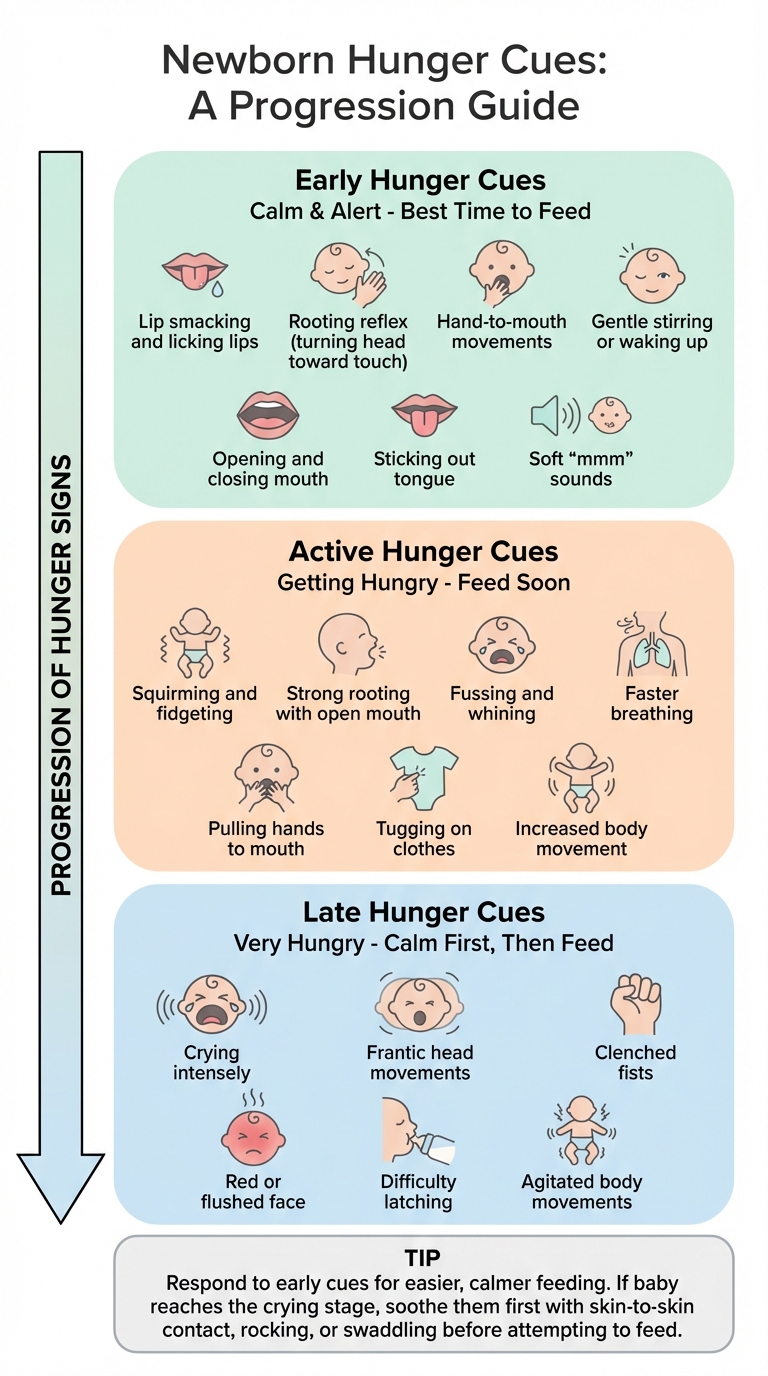
How Newborn Hunger Cues Work
What Are Hunger Cues?
Hunger cues are your baby’s first way of letting you know they’re hungry - long before they start crying. In those early weeks, many of these signals are purely instinctual. For example, the rooting reflex prompts your baby to turn their head toward anything brushing their cheek, instinctively searching for a nipple. Similarly, the sucking reflex kicks in automatically when something touches their mouth. These built-in behaviors are nature’s way of ensuring your baby can find food, even when they’re still half-asleep.
"Feeding in these early days is more than just a basic need - it's a whole new skill your baby is learning." - The Lactation Network
As your baby grows, their hunger cues become more deliberate and expressive. What starts as reflexive behaviors like lip-licking or hand-sucking evolves into rooting, fussing, and head bobbing. Experts recommend responsive feeding - also known as feeding on demand - which involves watching for these cues and responding promptly rather than adhering to a strict feeding schedule. This approach allows you to align with your baby’s natural rhythms and ensures they get the nourishment they need when they need it.
How Often Newborns Need to Eat
Newborns typically eat 8–12 times every 24 hours. Breastfed babies often nurse every 2–4 hours, while formula-fed babies tend to feed every 3–4 hours. These are general patterns, not rigid rules - your baby’s tiny stomach, about the size of a marble at birth, grows to roughly the size of a golf ball by day 10. This small capacity means frequent, smaller meals are completely normal.
"Babies don't know clocks!" - Karrie Locher, RN and Certified Lactation Counselor
In the early weeks, some newborns may be too sleepy to show clear hunger signals. If your baby hasn’t woken up or shown signs of hunger within three hours, you might need to gently wake them for a feeding. Once they’ve established steady weight gain - around 4 ounces per week for babies under four months - you can usually let them decide their own feeding schedule. As they grow, both their feeding patterns and hunger cues will naturally evolve.
How Hunger Cues Change as Babies Grow
As your baby’s feeding intervals stretch with growth, their hunger cues also become more intentional. For instance, the rooting reflex - one of the most recognizable early cues - begins to fade around 3–4 months of age. Hand-sucking, which is a reliable hunger sign in newborns, becomes less dependable by 6–8 weeks. At this stage, babies gain better motor control and start exploring their hands with their mouths for other reasons, like curiosity or teething.
"After around 6-8 weeks of the newborn period, your baby eating or sucking his hands is not always a reliable sign of hunger. During 6-8 weeks of age, your baby will begin to gain more control over his hands and explore his newfound dexterity with his mouth more frequently." - Dr. Harvey Karp, MD, FAAP
As your baby’s stomach grows, their feeding frequency decreases. By 2–6 months, many babies eat every 3–4 hours. By 6–12 months, when solid foods are introduced, feedings often drop to 4–5 times a day. Understanding these shifts helps you adjust your approach and continue meeting your baby’s needs as they grow.
sbb-itb-9ce2258
Newborn Hunger Cues
Early Signs Your Baby Is Hungry
Spotting early hunger cues before your baby starts crying can lead to smoother and more effective feeding sessions. These calm, alert signals are the perfect opportunity to offer a feed, laying the groundwork for a more relaxed experience for both you and your baby. Early cues work alongside the more active and late hunger signs, creating a full picture of your baby's feeding needs.
Body Movements and Waking Up
Hunger signs often begin while your baby is still drowsy. You might see them stirring in their sleep, stretching their arms or legs, turning their head side to side, or slowly opening their eyes. These subtle movements are your baby's way of saying they're ready to eat.
"Infants latch and feed more effectively when they're calm and alert. Paying attention to your newborn's hunger cues and responding quickly can help prevent frustration for both of you."
– Dr. Nicole Avena, Ph.D.
If you pick up on these cues while your baby is still calm, offering a feed right away can make latching easier and avoid any fussiness. Along with body movements, your baby’s mouth can also give you important feeding signals.
Mouth Movements
Look out for signs like lip smacking, licking their lips, opening and closing their mouth, or sticking out their tongue. Another key sign is the rooting reflex - when your baby turns their head toward anything that touches their cheek. A gentle stroke on their cheek can confirm this reflex and indicate they’re ready to eat. Noticing these early mouth movements can help keep your baby calm and make feeding go more smoothly.
Hand movements can also reinforce these hunger signals.
Hand-to-Mouth Actions
A classic hunger cue is when your baby brings their hands or fingers to their mouth and starts sucking. They might also suck on their clothing or make soft "mmm" sounds. For newborns under 6–8 weeks old, hand-sucking is a reliable sign that it’s time to feed.
"When a mild hunger begins, you'll start to see early signs your baby is hungry, such as putting his hand to his mouth, and making mmmm sounds."
– Dr. Harvey Karp, MD, FAAP
Pay close attention to these hand-to-mouth actions and respond promptly to keep feeding stress-free for both you and your baby.
Active and Late Hunger Signs
Active Hunger Signs
As hunger grows, your baby's signals become more noticeable and active. Beyond the earlier, subtle cues, you’ll see clearer signs that your baby is ready to feed. One common behavior is strong rooting - your baby may turn their head side to side with an open mouth, actively searching for a nipple. You might also notice their whole body getting involved, with squirming, fidgeting, and wiggling. Another telltale sign is when they pull their hands or fists toward their mouth and start sucking on their fingers.
At this stage, your baby might begin fussing, whining, or even breathing more quickly. Some babies may even try to position themselves for feeding by tugging on your clothes or leaning back as if preparing to nurse. These cues clearly signal that it’s time to feed, and responding quickly can make the process smoother and help your baby latch more calmly.
"Ideally, you want to start the feed before your baby starts crying. Once an infant is over-hungry, they may have a harder time latching or calming down to feed."
– Dr. Mona Amin, Pediatrician
Acting promptly when these active hunger signs appear can help avoid frustration for both you and your baby. If these cues are missed or ignored, they may escalate into more distressed late hunger signals.
Late Hunger Signs
If hunger cues are overlooked, your baby may reach a distressed state, with crying as a late-stage indicator. Signs of this escalation include frantic head movements, intense crying, a flushed or red face, and clenched fists. At this point, your baby may struggle to latch effectively and could swallow air, which might make them even more uncomfortable.
"Crying is a late indicator of hunger – breastfeeding is much easier for both mom and baby if mom is able to pick up on baby's earlier hunger cues."
– Kelly Bonyata, BS, IBCLC
Before attempting to feed, it’s important to calm your baby. Techniques like skin-to-skin contact can help regulate their heart rate and temperature. Gentle rocking, soft talking or "shushing" sounds, and swaddling can also provide comfort and security. Once your baby is relaxed, offer the breast or bottle. If you're feeling overwhelmed, postpartum doula services can provide hands-on support with feeding and newborn care. A calm baby is more likely to latch effectively and feed comfortably.
Telling Hunger Apart From Other Needs
Newborns often use similar signals to communicate different needs, making it essential to interpret their cues within context. Understanding these subtle differences can help you respond effectively and provide the care your baby requires.
Hunger vs. Tiredness
Both tired and hungry babies may fuss, but their body language can reveal what they really need. A sleepy baby often looks distant, avoids eye contact, and may have reddish eyebrows. Other signs include yawning, rubbing their eyes, or pressing their face into your shoulder. On the other hand, a hungry baby is usually alert and actively searching for food. Look for rooting movements (turning their head with an open mouth), lip smacking, or hands moving toward the mouth.
If your baby fusses but refuses to feed, they’re likely tired. Sleepiness can also show up as haphazard sucking, where there’s little swallowing, and their eyes remain closed. During active sleep cycles, babies may mimic hunger cues like rooting or opening their mouths. Take 30–60 seconds to observe whether they’re truly awake and hungry or simply dreaming. Additionally, pay attention to their hand-sucking behavior to differentiate hunger from self-soothing.
Hunger vs. Comfort Sucking
Hand-sucking is a reliable hunger cue in the first few weeks, but as babies grow - around 6–8 weeks - they gain better motor control and start exploring with their hands . Hunger-related sucking is often accompanied by clenched fists and a tense posture. In contrast, comfort sucking usually happens when a baby is relaxed, with open palms, and may be a way to self-soothe when overstimulated.
"After the newborn period, hand sucking is not as reliable an indicator of hunger. Starting at around 6-8 weeks, baby will begin to gain more control over his hands and will soon begin to explore his hands and everything else using his mouth." – Kelly Bonyata, BS, IBCLC
If your baby becomes fussy within an hour or two of a full feeding, try soothing them with a swaddle or pacifier first. If hunger cues persist after calming measures, consider offering more milk.
Hunger vs. Discomfort
Fussiness caused by gas, reflux, or a dirty diaper can sometimes mimic hunger, but discomfort has its own telltale signs. Look for behaviors like pulling their legs toward their belly, arching their back, stiffening their arms, or showing skin flushing. Pain-related crying often sounds like a scream and may happen at predictable times, such as during evening colic episodes.
Before assuming your baby is hungry, check for signs of physical discomfort like a dirty diaper or gas. You can also use the "hand test": clenched fists often indicate hunger or tension, while relaxed, open palms suggest your baby is full or content. If your baby continues crying after being comforted, rocked, or changed, it might be a late hunger cue, signaling it’s time to offer a feeding. Recognizing these signs quickly can help you decide whether feeding or another form of comfort is needed.
Signs Your Baby Is Full
Understanding when your baby is full is just as important as recognizing their hunger cues. It helps maintain a healthy feeding routine and avoids unnecessary overfeeding.
A baby who’s full often shows clear physical signs: their hands relax and open, their arms and legs go limp, and their jaw softens. Behaviorally, they might turn their head away from the breast or bottle, push it away, or keep their mouth firmly closed to signal they’ve had enough. You’ll also notice their sucking slows down or becomes sporadic. Many babies will simply fall asleep or let go of the breast when they’re satisfied.
It’s crucial to respect these signals. Forcing your baby to finish a bottle, even when they’re showing they’re done, could lead to overeating and might impact their relationship with food later on. Being mindful of their cues supports healthy feeding habits.
"Ignoring your baby's fullness cues can lead to poor habits in the future and possibly even difficulty maintaining a healthy weight." – Happy Baby Organics
When your baby shows they’re full, it’s time to stop feeding. There’s no need to insist they finish a bottle or hit a specific amount - most babies are naturally good at regulating how much they need. Remember, a newborn’s stomach is tiny, holding less than one ounce at birth. By one month, it expands significantly, growing 5 to 7 times larger.
Pay attention to these fullness cues, and if you’re ever unsure about your baby’s feeding patterns, don’t hesitate to seek advice from a professional.
When to Get Professional Help
Feeding challenges can feel overwhelming, and knowing when to seek expert help is key to ensuring your baby's health and your peace of mind.
Pay attention to these warning signs: if your newborn feeds fewer than 8 times in 24 hours, falls asleep within 3 minutes of starting a feed, or is difficult to wake for feeding. Other concerns include fewer than 6–8 heavy wet diapers a day, fewer than 2 soft, yellow stools daily during the first 4–6 weeks, or if a baby under 4 months isn't gaining at least 4 ounces per week. These could be indicators that professional guidance is necessary.
"If you find that your newborn is eating less than 8-12x per day, falling asleep very quickly into the feed and is difficult to rouse before feeds, you're concerned about their weight gain or aren't noticing ample diaper output... enlist the help of an IBCLC." – The Lactation Network
Sometimes, your baby's feeding cues can be tricky to interpret. If you're unsure whether your baby is feeding effectively, or if they seem to nurse frequently without appearing satisfied, it's a good idea to consult an International Board Certified Lactation Consultant (IBCLC). These professionals can assess milk intake, address latching challenges, and guide you in understanding your baby's feeding patterns.
For personalized support, platforms like Nestling connect families with certified caregivers, including IBCLCs and postpartum doulas. These experts specialize in newborn care and feeding, offering tailored advice on everything from latch techniques to feeding schedules. With verified professionals and flexible booking options, you can access the help you need, exactly when you need it, to feel more confident in meeting your baby's feeding needs.
Conclusion
Recognizing your newborn's hunger cues can turn feeding into a smoother, more confident experience. By noticing early signs like lip smacking, mouth movements, or hand-to-mouth gestures, you can respond before your baby becomes upset. A calm baby tends to latch more effectively, making feeding less stressful for both of you.
As Kelly Bonyata, BS, IBCLC, explains: "Crying is a late indicator of hunger – breastfeeding is much easier for both mom and baby if mom is able to pick up on baby's earlier hunger cues". Acting on these early signals not only makes feeding easier but also strengthens the trust between you and your baby, setting the stage for healthy feeding habits.
Beyond hunger cues, recognizing signs of fullness - such as relaxed hands or turning away - ensures you're tuned in to your baby's needs. These moments of responsive feeding are about more than just nutrition; they build a foundation of communication and emotional security, helping your baby develop important self-regulation skills.
If feeding challenges arise or you’re unsure about interpreting your baby’s signals, reaching out for guidance can make all the difference. An IBCLC or pediatrician can provide valuable support tailored to your situation. Additionally, resources like Nestling connect you with trusted professionals who offer personalized postpartum and newborn care, helping you navigate these early weeks with confidence.
FAQs
How can I tell if my newborn is hungry or just tired?
Newborns express their needs in various ways, and understanding the difference between hunger and tiredness cues can make caring for them much smoother. Hunger cues are often centered around the mouth. Your baby might start smacking their lips, sucking on their hands, or rooting toward your chest. If these early signals go unnoticed, they may become more active - pulling at clothing, fidgeting - and eventually resort to crying as a late hunger signal.
In contrast, tiredness cues tend to show up as shifts in alertness. You may notice your baby yawning, rubbing their eyes or ears, avoiding eye contact, or becoming unusually quiet. A tired baby might appear "glazed over", uninterested in interaction, and won't display the mouth-driven behaviors associated with hunger.
Not sure which it is? Offer a quick feed. A hungry baby will latch eagerly, while a sleepy one may turn away or fall asleep. Since hunger and tiredness can sometimes overlap - especially in those early weeks - paying attention to patterns over time can be a big help. For tailored advice on understanding your baby's cues, Nestling offers access to expert postpartum caregivers who can guide you through feeding and sleep routines with ease.
What should I do if my baby is crying because they’re hungry?
Crying is often a late hunger cue, which means your baby has likely been hungry for some time. To comfort and feed your little one, gently pick them up and offer either the breast or bottle as soon as you can.
If your baby is especially upset, try soothing them first. Skin-to-skin contact, gentle rocking, or speaking in a calm voice can help settle them enough to start feeding. As you get to know your baby, you’ll begin to notice earlier hunger signals, like sucking on their hands or smacking their lips. Recognizing these signs early can make feeding a smoother, less stressful experience for both of you.
How do I know when to get professional help for my newborn’s feeding issues?
If your newborn isn’t gaining at least 4 ounces per week, has persistent feeding difficulties like trouble latching, cries frequently even after feeding, or shows signs of dehydration (such as fewer wet diapers or dry lips), it’s time to seek professional help. Feeling overwhelmed or unable to establish a consistent feeding routine is also a good reason to reach out for support. Your pediatrician, a lactation consultant, or a postpartum care specialist can provide guidance tailored to your situation.
For more personalized assistance, platforms like Nestling offer access to trusted experts, including lactation consultants and postpartum doulas, who can help address feeding challenges and provide the support you need during this critical time.










 Sign up with Google
 Sign up with Facebook