
Baby Sleep Training: Day and Night Routines

Baby Sleep Training: Day and Night Routines
Helping your baby sleep independently starts with creating consistent day and night routines. These routines help babies distinguish between active daytime and restful nighttime, making it easier for them to fall asleep and stay asleep. Here’s what you need to know:
- Start sleep training between 4–6 months when babies’ sleep patterns become more predictable.
- Babies need 9–12 hours of nighttime sleep and naps during the day. A structured routine supports this.
- Daytime routines involve wake windows (time a baby can stay awake) and activities like feeding, tummy time, and play.
- Nighttime routines include calming activities like a bath, reading, and putting your baby in the crib “drowsy but awake.”
- Sleep training methods vary, from the Ferber Method (gradual check-ins) to Cry It Out (no intervention). Consistency is key.
Better sleep benefits the whole family, improving mood and reducing stress for parents. Stick to routines, adjust as needed, and seek professional guidance if challenges arise.
How I ACTUALLY Got my Baby to Sleep for 12 Hours (Step by Step Sleep Training guide)
sbb-itb-9ce2258
Why Day and Night Routines Matter
Newborns don’t come with a built-in sleep–wake clock. Their circadian rhythm takes a few months to develop. Establishing consistent routines helps babies distinguish between day and night - daytime is for light and activity, while nighttime is for calm and rest.
By 8–9 weeks, babies start releasing melatonin and cortisol on a more predictable schedule. Having a structured routine during this time can help consolidate their sleep, leading to longer, uninterrupted stretches at night. These routines lay the groundwork for understanding and managing your baby’s natural sleep cycles.
How Baby Sleep Cycles Work
Getting familiar with your baby’s sleep patterns can help you see why routines are so crucial. Unlike adults, who cycle through sleep every 90 minutes with about 25% spent in REM sleep, babies have much shorter cycles - about 40 minutes - with nearly 50% in REM. This active sleep is essential for brain development, but it also means babies wake up more frequently between cycles.
Consistent routines can teach babies to self-soothe during these brief awakenings. For example, placing your baby in their crib while they’re "drowsy but awake" encourages them to associate the crib with sleep and learn to settle themselves.
Sleep stages evolve as babies grow, as shown in the table below:
| Age | Total Sleep (24 hours) | Typical Sleep Pattern |
|---|---|---|
| 0–2 Months | 16–18 hours | 7–9 short naps; wakes every 1–3 hours for feeds |
| 2–4 Months | 14–16 hours | 3–6 hour stretches at night; 3–4 daytime naps |
| 4–6 Months | 12–15 hours | 6–8 hour stretches at night; 3 daytime naps |
| 6–12 Months | 11–15 hours | 9–12 hours at night; 1–2 daytime naps |
These evolving patterns highlight the importance of structured schedules to support healthy sleep habits.
Benefits of Consistent Daily Schedules
Predictable routines aren’t just about better sleep - they also provide emotional security. Regular schedules can support brain development and improve executive functioning as babies grow.
Another big advantage of routines is preventing overtiredness. If babies stay awake too long, their bodies release cortisol, making it harder for them to relax and fall asleep. Keeping wake windows appropriate for their age - like 60–90 minutes for babies aged 4–12 weeks - can help prevent these cortisol spikes and avoid that dreaded "second wind."
Well-rested babies tend to be happier, easier to soothe, and more open to learning and interaction. For parents, consistent schedules can mean better sleep, reduced stress, and even a lower risk of postpartum depression. As Mindell & Williamson explain in Sleep Medicine Reviews:
Bedtime routines... create a sense of consistency for babies, which reassures them and helps them feel safe to sleep.
Creating Daytime Routines That Work
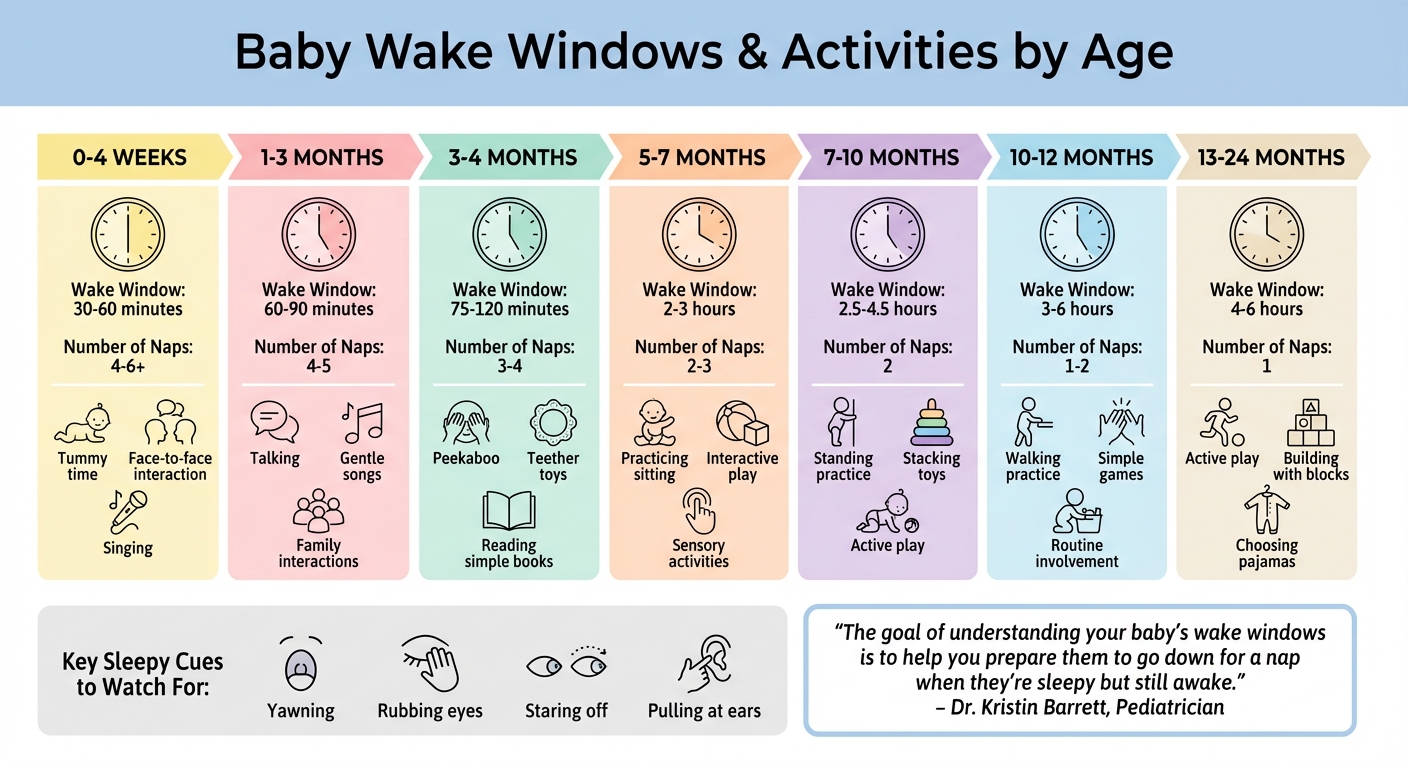
Baby Wake Windows and Sleep Schedules by Age (0-24 Months)
A daytime routine works best when it aligns with your baby’s natural rhythms. A key part of this is understanding wake windows - the periods your baby can stay awake before becoming overtired. Dana Obleman, creator of The Sleep Sense™ Program, explains it this way:
A wake window is a period of time in which a newborn can tolerate being awake without overtiredness setting in.
Wake windows include everything your baby does while awake - feeding, diaper changes, tummy time, and play. If your baby stays awake too long, they may have trouble settling down. On the other hand, if the wake window is too short, they might not build up enough sleep pressure to fall asleep easily. Below, we’ll break down age-specific wake windows to help you plan your baby’s day.
Wake Windows and Activities by Age
As your baby grows, their wake windows will naturally lengthen. For instance, a newborn might only handle 30–45 minutes of awake time, while older babies can stay awake for much longer stretches. The table below provides general guidelines:
| Baby's Age | Wake Window Duration | Typical Number of Naps | Suggested Activities |
|---|---|---|---|
| 0–4 weeks | 30–60 minutes | 4–6+ | Tummy time, face-to-face interaction, singing |
| 1–3 months | 60–90 minutes | 4–5 | Talking, gentle songs, family interactions |
| 3–4 months | 75–120 minutes | 3–4 | Peekaboo, teether toys, reading simple books |
| 5–7 months | 2–3 hours | 2–3 | Practicing sitting, interactive play, sensory activities |
| 7–10 months | 2.5–4.5 hours | 2 | Standing practice, stacking toys, active play |
| 10–12 months | 3–6 hours | 1–2 | Walking practice, simple games, routine involvement |
| 13–24 months | 4–6 hours | 1 | Active play, building with blocks, choosing pajamas |
Keep an eye out for sleepy cues like yawning, rubbing eyes, staring off, or pulling at ears - these signals mean your baby’s wake window is ending. Dr. Kristin Barrett, a pediatrician at Cleveland Clinic, explains:
The goal of understanding your baby's wake windows is to help you prepare them to go down for a nap when they're sleepy but still awake. That's how they can start to learn to self-soothe and fall asleep independently.
If naps are consistently short or your baby seems unusually fussy, try adjusting their wake windows by 15 minutes in either direction to find the right balance.
Sample Schedules for Feeding, Naps, and Play
Once you’ve nailed down appropriate wake windows, you can structure your day with predictable feeding and nap times. Starting the day with a consistent wake-up time - usually between 7:00 AM and 8:00 AM - helps set the tone for the rest of the day. For newborns, the “Eat, Play, Sleep” cycle is a great framework. Feed your baby shortly after they wake up, then engage in play to build sleep pressure and avoid creating a habit of feeding-to-sleep.
During wake windows, try to maximize exposure to natural light and everyday household noises. This helps your baby learn the difference between day and night. Use this time for tummy time (which has been linked to longer nighttime sleep stretches), sensory play, and social interaction. When you notice sleepy cues, transition to a calm environment with blackout curtains and white noise to signal that it’s time to sleep.
For the evening, cluster feeding between 5:00 PM and 8:00 PM can help ensure your baby’s stomach is full before bedtime, promoting longer nighttime sleep. Some parents also find success with a “dream feed” between 10:00 PM and 11:00 PM - feeding the baby right before the parents go to bed.
To maintain a healthy balance, limit daytime naps to around two hours. If your baby sleeps too long during the day, they might develop day/night confusion. In this case, try exposing them to bright light during daytime activities and keeping nighttime interactions calm and brief. These small adjustments can make a big difference in helping your baby build a healthy sleep routine.
Setting Up Nighttime Routines
A consistent bedtime routine sends a clear signal to your baby that it's time to sleep. The trick is to keep it calming and predictable. Dr. Heidi Szugye, a pediatrician and IBCLC at Cleveland Clinic, explains it perfectly:
Your goal should be to set up a nice and consistent bedtime routine that is calming and will help them wind down. Follow the routine every night and your baby will begin to understand when it's time to sleep.
Bedtime routines usually last between 20 and 45 minutes. Start at the same time each evening and follow the same sequence of activities. This repetition helps your baby's internal clock recognize when it’s time to settle down. Try feeding your baby about 15 minutes before putting them in the crib - this ensures they’re satisfied but not relying on feeding to drift off.
Once the routine is in place, focus on creating a sleep-friendly environment.
Preparing the Sleep Environment
Safety first: your baby should sleep alone on their back in a crib equipped with a firm, flat mattress and a fitted sheet. Room sharing is recommended for at least the first six months, but avoid bed sharing. This practice can lower the risk of SIDS by up to 50%.
Keep the room quiet, dark, and slightly cool. Dress your baby in one more layer than you would wear for comfort and opt for a wearable blanket (also known as a sleep sack) instead of loose blankets. Remove all soft objects from the crib, such as pillows, stuffed animals, bumper pads, and quilts. Additionally, ensure the crib slats are no more than 2 and 3/8 inches apart - roughly the width of a soda can - to prevent your baby's head from getting stuck.
If you need to check on your baby during the night, use a low-wattage nightlight or dimmer to maintain a sleep-friendly atmosphere. Avoid bright overhead lights, as these can signal wake time to your baby.
Once the environment is set, it’s time to establish a bedtime routine.
Building a Bedtime Routine
A good bedtime routine is simple and repeatable. Start with a warm bath 60–90 minutes before bed - this can help trigger relaxation and prepare your baby for sleep. After the bath, change them into a fresh diaper and pajamas, then engage in quiet activities like reading a book or singing lullabies in a dimly lit room.
Interestingly, studies show that lullabies can help babies relax, even if sung in a language they don’t understand. These soothing moments not only ease the transition to sleep but also support language development. On the other hand, avoid screens, loud play, or anything overly stimulating right before bed. Research indicates that for every minute a 13-month-old spends on a touchscreen during the day, they lose one minute of nighttime sleep.
When it’s time to put your baby in the crib, make sure they’re drowsy but still awake. This helps them learn to self-soothe and fall asleep on their own. Avoid placing them in the crib already asleep, as this can interfere with their ability to develop independent sleep habits. Dr. Szugye underscores the importance of sticking to what works:
Consistency really is the key. Once you get a routine that works, stick with it. You don't want to make drastic changes that could disrupt the routine or lead to new, bad habits.
Sleep Training Methods Explained
Once you've established reliable day and night routines, the next step in helping your baby learn to self-soothe is choosing a consistent sleep training method. It's important to pick an approach that feels right for your family and stick with it for at least a week. As Dr. Angela Holliday-Bell puts it:
"The best sleep training method is the one that all parents and caregivers will stick with. Consistency is key."
Before starting, check with your pediatrician to make sure your baby is healthy, meeting weight milestones, and free from any issues like reflux or sleep apnea. Most babies are ready for sleep training between 4 and 6 months, as their circadian rhythms develop and they begin to self-soothe. Here’s a breakdown of some popular methods to help you decide which might work best for your family.
Ferber Method (Check and Console)
The Ferber Method, also called graduated extinction, is a middle-ground approach between full intervention and letting your baby cry without comfort. After your bedtime routine, place your baby in the crib while they're drowsy but still awake, and leave the room. If they cry, wait for a set amount of time before briefly checking in. During check-ins, offer soothing words or pats, but avoid picking them up or feeding them. Gradually increase the time between visits - starting with 3 minutes, then 5, then 10. Many parents see results in 7 to 10 days.
It's worth noting that every baby reacts differently. If your little one becomes more distressed during the check-ins, you might need to tweak your approach. The gradual nature of this method relies heavily on consistency, which is key to making it work.
Cry It Out (Extinction) Method
The Cry It Out method is straightforward but can be emotionally challenging for parents. After completing your bedtime routine, place your baby in the crib while they're awake, say goodnight, and leave the room. You don't return until the next scheduled feeding or morning. This method often works quickly, with many babies adjusting within 3 to 4 days.
Sticking to the plan is critical - any unplanned intervention can confuse your baby and set back progress. Research supports the safety of this approach in the long term. Like all methods, consistency is the foundation of success.
Fading (Chair or Camping Out) Method
The Fading Method takes a gentler, slower approach. After placing your baby in the crib while drowsy but awake, sit in a chair next to the crib until they fall asleep. Over the next several nights, gradually move the chair farther away - from beside the crib to the middle of the room, and eventually to the doorway - until you're completely out of sight. This method helps babies adjust to falling asleep on their own but may take up to four weeks for full results.
Some babies may find a parent's presence distracting or unsettling, so watch how your baby responds and adjust if needed. The gradual reduction of your presence works best when done consistently over time.
Pick Up Put Down Method
The Pick Up Put Down method is the most hands-on approach. Start by placing your baby in the crib while they're drowsy but awake. If they cry or become upset, pick them up to soothe them until they're calm. Then, place them back in the crib - even if they're not fully asleep. Repeat this process until your baby eventually falls asleep on their own.
This method is often a good fit for younger babies (around 4 to 8 months old) and for parents who want to avoid prolonged crying. However, it can require a lot of patience, especially in the beginning. Dr. Nilong Vyas offers this advice:
"The key is to stay consistent even when it gets hard. Especially when parents are using the more gentle approaches, sometimes hiring a sleep coach can be beneficial to help keep parents accountable and supported."
Some families find that combining aspects of different methods works best for their baby. Regardless of the approach you choose, the common thread is consistency. Commit to your chosen method for at least a week before deciding whether to make adjustments.
How Nestling Supports Your Baby's Sleep

Navigating sleep training can feel like a daunting task, and having professional support can make all the difference. Here's how Nestling's expert specialists create tailored strategies and provide flexible solutions to meet your baby's sleep needs.
Working with Infant Care Specialists
Nestling takes established routines and builds on them with expert guidance to improve sleep training outcomes. By connecting families with experienced infant care specialists, Nestling ensures that each family receives practical, hands-on expertise in sleep training and routine development. These specialists assess your baby's specific needs by considering factors like the nursery environment, current routines, and your baby’s temperament. This personalized approach ensures that the guidance provided aligns with your family’s unique situation.
While gentle sleep training methods may take time, the specialists provide the accountability and support you need to stay consistent, even during tough nights. They’re available to answer questions, conduct regular check-ins, and help ease the natural anxiety that often accompanies sleep transitions. Feedback from families highlights how these tailored schedules not only reduce stress but also boost parental confidence throughout the process.
Custom Sleep Plans and Flexible Support
Nestling focuses on creating sleep plans that suit your family’s specific goals and circumstances. Specialists design these strategies with your baby’s developmental stage in mind - whether you’re working with a newborn (0–4 months), an older baby (5–24 months), or a toddler (2–4 years). This ensures that the methods are both age-appropriate and realistic. Beyond choosing the right sleep training approach, they also look at daytime factors like wake windows and feeding schedules to optimize nighttime sleep.
The flexibility of Nestling’s support options is another key feature. You can book specialists for daytime, overnight, or even live-in care, ensuring help is available whenever you need it. Whether you’re establishing a new routine or dealing with challenges like sleep regressions, these specialists provide ongoing support to keep your family moving forward. This adaptable approach is especially helpful when your baby’s sleep patterns shift or when unexpected hurdles - like frequent night wakings or early mornings - occur.
Solving Common Sleep Training Problems
Sleep training is rarely a smooth ride from start to finish. Babies go through developmental changes, growth spurts, and other phases that can temporarily throw off their sleep patterns. Knowing how to handle these common challenges can help you stay on track with your sleep training goals.
Managing Sleep Regressions
Sleep regressions can be frustrating. They disrupt previously established sleep routines, leading to more frequent night wakings, shorter naps, and resistance at bedtime. These disruptions often coincide with developmental milestones, like learning to roll over, sit up, or crawl, and usually last about one to two weeks. The first major regression often happens around 4 months as your baby’s sleep cycles mature and their circadian rhythm starts to develop. Later on, regressions may be tied to separation anxiety, which is common around 8 months, or physical discomfort caused by teething or growth spurts.
In fact, about 30% of babies between 4 and 6 months old have difficulty falling or staying asleep. The best way to handle these phases is to stick to your routine. A consistent bedtime sequence - like a bath, a book, and a lullaby - can signal to your baby that it’s time to wind down for the night. Encourage self-soothing by putting your baby down while they’re drowsy but still awake, and create a sleep-friendly environment: dark, cool, and quiet, with white noise if needed to block distractions.
"How the parents respond to sleep regressions can determine how long the regression will last. A swift end to a sleep regression can be ensured if the parent responds to the needs of the infant and allows them to fall asleep independently again." – Nilong Vyas, MD, MPH, Pediatrician
During the day, exposure to natural light and regular feeding schedules can help minimize nighttime disruptions. If separation anxiety is an issue, practice short daytime separations and establish a predictable goodbye routine. For teething relief, try a cold, damp washcloth or a gentle gum massage before bedtime. When your baby wakes up during the night, keep interactions calm and brief to reinforce the idea that nighttime is for sleeping, not playing.
Whether it’s a regression or frequent wake-ups, a consistent, low-intervention approach is often the most effective.
Reducing Night Wakings and Early Wake-Ups
Frequent night wakings are often linked to sleep associations, such as rocking, nursing, or holding your baby until they’re fully asleep. When babies wake naturally between sleep cycles, they look for those same conditions to fall back asleep.
"If your baby can fall asleep in bed without assistance when first laid down, it's more likely that he or she will fall asleep on his or her own after waking in the middle of the night." – Mayo Clinic Press
To break this pattern, try an Eat-Wake-Sleep routine. This means feeding your baby right after they wake up rather than just before sleep, so they don’t associate eating with falling asleep. By around 9 months, most babies can sleep 8 to 10 hours without a nighttime feed, though some may still need one feeding to support growth. Keep in mind that sleep training and night weaning are separate processes - your baby can learn to self-soothe even if they still need nighttime nourishment.
For early wake-ups, the same self-soothing strategies apply. If your baby consistently wakes too early, it might be a sign that their bedtime isn’t syncing with their natural rhythm. Gradually push bedtime later by 15-minute intervals to help reset their internal clock. Limiting daytime naps to no more than two hours can also help build enough sleep pressure for the night. Make sure your baby gets plenty of natural light during the day, as this can improve sleep quality at night. When early waking happens, give your baby 30–60 seconds to self-settle. If you do need to intervene, keep the interaction as low-energy as possible - dim lights, minimal talking, and no eye contact.
"What's boring, you ask? Keep the room dark, use a soft voice if you need to talk, keep the room quiet... and try your darndest to keep from extended eye contact and smiles!" – Dr. Harvey Karp, MD, FAAP, Happiest Baby
No matter the challenge, sticking to a consistent sleep routine is key to navigating regressions, night wakings, and early risings.
Conclusion
Building healthy sleep habits for your baby starts with establishing clear day and night routines. By creating consistent environmental cues, you help your baby distinguish between active daytime and restful nighttime. This consistency plays a big role in regulating sleep-related hormones, which typically begin to follow a daily rhythm around 8 to 9 weeks of age.
One effective strategy is placing your baby in the crib drowsy but awake. This approach encourages self-soothing, laying the groundwork for independent sleep. Research shows that behavioral sleep interventions improve sleep quality within three months and have no long-term negative effects. In fact, a five-year study confirmed that sleep training does not harm a child’s emotions, stress levels, behavior, or attachment to parents.
The importance of consistency in routines cannot be overstated. When challenges arise, seeking professional guidance can make a difference. Services like Nestling provide tailored sleep plans and ongoing support to help families stay on track. Dr. Nilong Vyas, MD, MPH, Pediatrician, emphasizes the importance of sticking to routines:
The key is to stay consistent even when it gets hard. Especially when parents are using the more gentle approaches, sometimes hiring a sleep coach can be beneficial to help keep parents accountable and supported.
With the right routines, a little patience, and expert guidance when needed, every baby can learn to sleep independently. This not only promotes lifelong healthy sleep habits but also ensures you get the rest you deserve.
FAQs
When is the best time to start sleep training my baby?
Most babies are prepared for sleep training between 4 and 6 months of age. Around this time, they usually start developing the skills to self-soothe and drift off to sleep on their own. Introducing sleep training earlier may not yield results, as newborns are still adjusting to irregular sleep and feeding schedules.
That said, every baby is unique. Look for cues that your baby might be ready, like sleeping for longer stretches at night or settling into a more consistent daily routine. If you’re uncertain about the timing, it’s always a good idea to check in with your pediatrician for guidance tailored to your baby’s needs.
How can I teach my baby the difference between day and night?
Helping your baby learn the difference between day and night starts with establishing routines that align with natural light and activity patterns. During the day, let in plenty of sunlight by opening the curtains and keeping the room bright. Engage your baby with playful activities and allow the usual household sounds to create a lively, wakeful environment.
At night, shift to a calm and quiet atmosphere. Dim the lights, speak in soft tones, and reduce stimulation as much as possible. If your baby needs a feeding or diaper change during the night, handle it gently and avoid prolonged play or interaction to help them settle back to sleep.
Sticking to these routines consistently will gradually teach your baby to distinguish between day and night, laying the foundation for better sleep habits.
What makes a good bedtime routine for babies?
A solid bedtime routine for babies lays the groundwork for a peaceful and predictable sleep environment. The key is consistency. Start by dimming the lights, reducing noise, and engaging in calming activities like reading a short story or softly singing a lullaby. These small, soothing actions gently signal to your baby that it’s time to wind down.
Stick to a set bedtime and follow the same steps each evening. After feeding and changing, place your baby in their crib while they’re still awake but feeling sleepy - this encourages them to learn self-soothing. Keep the room quiet, interactions minimal, and lighting low to help your baby distinguish between day and night. For newborns, sharing a room during the first six months not only promotes better sleep habits but also adds an extra layer of safety.








 Sign up with Google
 Sign up with Facebook