
Baby Feeding Amount Converter
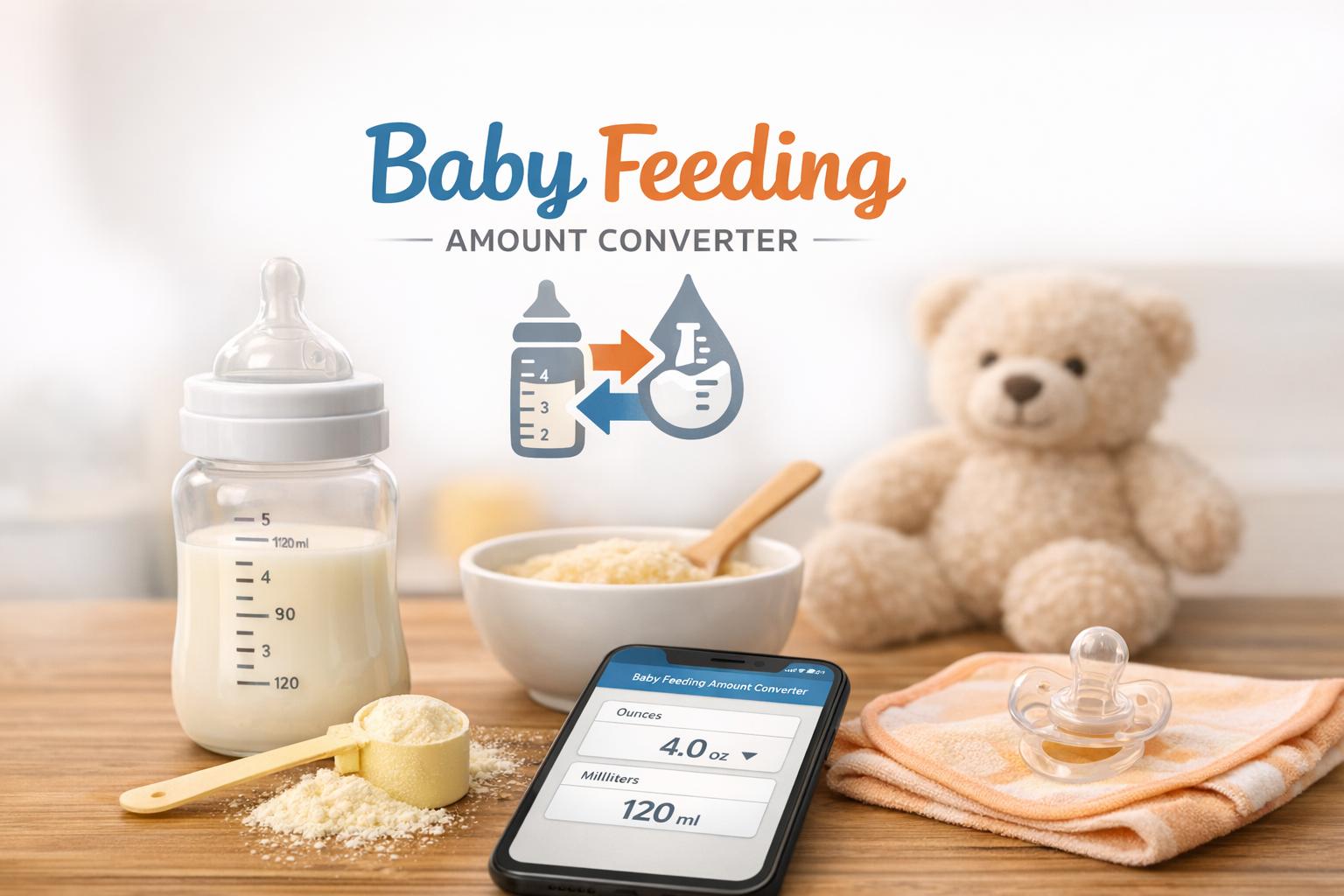
Baby Feeding Amount Converter
Baby Feeding Made Simple with Unit Conversion
Welcoming a newborn into your life is a beautiful journey, but it comes with a learning curve—especially when it comes to feeding. Whether you’re preparing formula or expressing breast milk, getting the measurements right is key to your baby’s health. That’s where a tool for converting feeding amounts between ounces and milliliters can be a game-changer for new parents.
Why Measurements Matter in Infant Care
Babies rely on precise portions for their tiny tummies, and instructions often vary between metric and imperial units. A bottle might be marked in milliliters, while a formula scoop is measured in ounces. This mismatch can lead to confusion, especially during those bleary-eyed midnight feeds. Having a quick way to translate these units ensures you’re always on point, giving you one less thing to worry about.
Tips for Feeding Success
Beyond tools, chat with your pediatrician regularly about your baby’s needs. Keep a log of feeding times and amounts to spot patterns. And remember, every baby is different—some days they might want a bit more, others a bit less. Trust your instincts alongside reliable resources to navigate this rewarding phase of parenthood.
FAQs
Why do I need to convert feeding amounts for my baby?
Different baby bottles, pumps, or formula instructions might use different units—some in ounces, others in milliliters. If you’re traveling or using gear from another country, these measurements can vary too. This tool helps you quickly make sense of it all so you’re not stuck doing math in the middle of a late-night feed. Just pop in the number, pick your units, and you’re good to go. It’s all about making sure your baby gets the right amount without the hassle.
Is the conversion accurate for both formula and breast milk?
Yep, the conversion itself is just a matter of units—1 ounce equals 29.57 milliliters, no matter if it’s formula or breast milk. The tool uses this standard rate and rounds to one decimal place for clarity. That said, remember that this is purely a measurement tool. How much to feed your baby is something to discuss with your pediatrician, as every little one has unique needs.
Can I use this tool for other liquids besides baby feeding?
Technically, sure—the math works for any liquid since it’s a straight unit conversion. But we’ve designed this tool with parents in mind, specifically for formula and breast milk. If you’re measuring something else, like water or juice, it might be better to use a general kitchen converter. Our focus here is keeping things simple and relevant for baby care, with a little reminder to align feeding amounts with medical advice.




 Sign up with Google
 Sign up with Facebook