
Ultimate Guide to Postpartum Sleep Recovery

Ultimate Guide to Postpartum Sleep Recovery
Postpartum sleep deprivation is real and challenging. New parents lose up to 1,000 hours of sleep in the first year, with many mothers getting only 3.2 hours of uninterrupted rest per night. This lack of sleep affects healing, hormones, mental health, and even bonding with your baby. Here’s how to improve your sleep and self-care routine:
- Prioritize rest: Aim for a 4–5 hour block of uninterrupted sleep daily (“anchor sleep”).
- Daytime naps: Sleep when your baby sleeps, even if it’s just for 30 minutes.
- Bedroom setup: Keep it dark, cool (65–68°F), and screen-free before bed.
- Nighttime routine: Pump milk so your partner can handle feedings, or split nighttime duties into shifts.
- Morning sunlight: Get 10–15 minutes of sunlight daily to reset your body clock.
- Seek help: Family, postpartum doulas, or newborn care specialists can assist with nighttime care.
If sleep issues persist beyond two weeks or include symptoms like anxiety, sadness, or intrusive thoughts, consult a doctor. Sleep isn’t just about rest - it’s key to recovery and well-being.
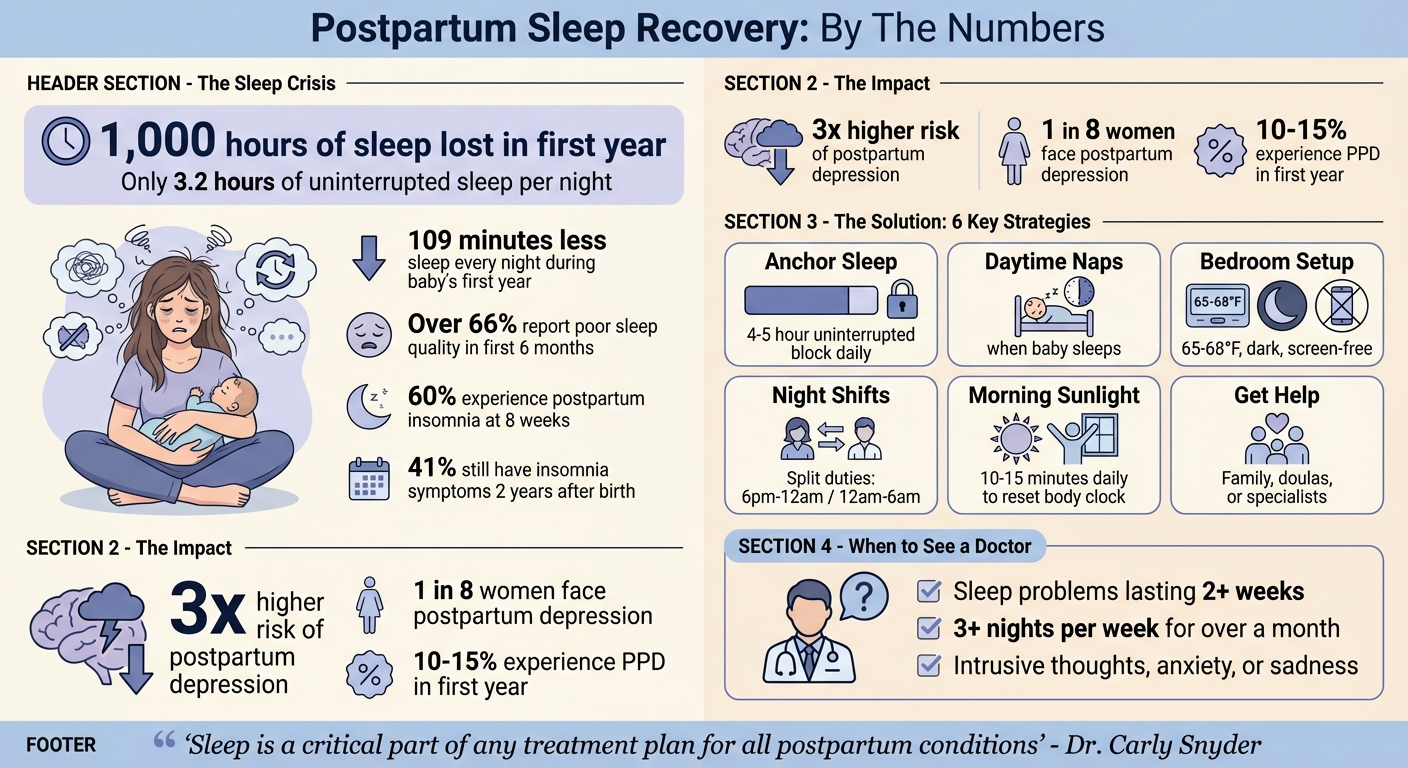
Postpartum Sleep Deprivation Statistics and Recovery Tips
Postpartum Sleep Tips from a Perinatal Psychiatric Nurse Practitioner
sbb-itb-9ce2258
Practical Strategies for Better Postpartum Sleep
Making small, intentional adjustments can help you close the gap on much-needed rest. The goal is to secure at least one uninterrupted sleep cycle each day. This idea, often called "anchor sleep", involves getting a solid four-hour block of rest, which allows your brain to reset and complete essential sleep cycles. This stretch of continuous sleep is far more beneficial than trying to piece together shorter, fragmented naps throughout the day.
Getting Rest During the Day
Take advantage of your baby's sleep schedule by sleeping when they do. Newborns often sleep in short cycles, and these moments might be your only chance to rest. Use them wisely to start chipping away at your sleep deficit. The most important thing? Put rest above everything else. Household chores can wait - your well-being comes first.
If you find it difficult to fall asleep during these windows, don’t stress. Simply lying down and relaxing can still be restorative. Ironically, letting go of the pressure to "fall asleep immediately" often makes it easier to drift off naturally. To maximize the benefits of these breaks, plan for uninterrupted naps by asking for help with baby care during key times. Don’t hesitate to set boundaries with visitors - politely delaying visits until you’ve settled into a routine is perfectly okay.
Keep naps short and sweet - ideally 30 minutes or less - and avoid napping too late in the day, as this can interfere with your nighttime sleep. These daytime rest periods are like stepping stones, helping you build toward better nighttime recovery.
Setting Up Your Bedroom for Better Sleep
Transform your bedroom into a sleep sanctuary by keeping it cool, quiet, and dark. Postpartum hormonal changes can lead to night sweats, so maintaining a comfortable temperature is key. Aim for a thermostat setting between 65°F and 68°F, and choose breathable bedding materials like organic cotton, bamboo viscose, or Tencel to stay cool.
Light exposure, especially from screens, can disrupt your melatonin levels and throw off your natural sleep rhythm. Use blackout curtains or a sleep mask to block any light, and cover or remove devices that emit light. Better yet, keep electronics like smartphones, laptops, and TVs out of the bedroom entirely - or at least power them down 30 to 60 minutes before bed. To minimize noise disturbances, try a white noise machine, a fan, or soothing sound recordings like rainfall. If your partner is handling nighttime feedings or diaper changes, consider having them do so in another room, allowing you to stay in a restful state.
A well-prepared sleep environment sets the stage for a calm and effective bedtime routine.
Building a Nighttime Routine That Works
A consistent bedtime routine helps signal your body that it’s time to wind down. Start by creating a screen-free buffer - disconnect from all electronics 30 to 60 minutes before your intended bedtime. Avoid caffeine after lunch and skip alcohol in the evening, as both can disrupt your sleep and make it harder to achieve restful slumber. If you wake up during the night, resist the urge to check the clock. Knowing how much sleep you’ve lost can increase anxiety and make it harder to fall back asleep.
If you’re breastfeeding, consider pumping during the day so your partner can handle one nighttime feeding, giving you a longer stretch of uninterrupted rest. Another option is to divide the night into shifts - one parent covers 6 p.m. to midnight, while the other takes over from midnight to 6 a.m. - ensuring each of you gets a block of potential rest. Learning safe side-lying nursing positions can also help you rest while feeding.
The goal is to establish a routine that guarantees at least one solid block of restorative sleep each night.
Getting Help to Improve Your Sleep
Recovering from postpartum sleep deprivation is crucial for your physical and mental well-being. Establishing a reliable support system can make a significant difference. Research shows that over two-thirds of new parents experience poor sleep quality in the first six months after childbirth, and about 1 in 8 women face postpartum depression. Seeking help - both from loved ones and professionals - can ensure you get the uninterrupted sleep you need.
Sharing Nighttime Duties with Partners and Family
Splitting nighttime responsibilities with your partner or family members can help you secure a vital 4–5 hour block of uninterrupted sleep. This stretch is critical for reaching restorative REM and deep non-REM sleep cycles. According to a study in Seminars in Perinatology, replacing fragmented sleep with a consolidated period of rest can improve psychiatric symptoms in just a few days.
A team-based approach often works well. Coordinate duties based on each partner's natural sleep habits - if one person stays up late, they can handle late-night feedings, while an early riser takes over in the morning. To reduce interruptions, the off-duty partner might sleep in a separate room with white noise or earplugs.
For breastfeeding parents, partners can pitch in by bringing the baby for nursing and then taking care of tasks like burping, diaper changes, and soothing, so you can return to sleep quickly. By the third week, consider incorporating pumped breastmilk for one or two feedings to secure a 5-hour sleep block. Additionally, delegate chores like laundry, meal prep, and cleaning pump parts to create more opportunities for rest.
"Allowing mom uninterrupted sleep - even for a few hours - can make a world of difference."
– Dr. Jill Wagner, OB-GYN, Atrium Health Wake Forest Baptist
Engaging Professional Care
Beyond family support, professional caregivers - such as Newborn Care Specialists (NCS) - can provide valuable assistance. These experts handle feedings, diaper changes, soothing, and light household tasks, giving you uninterrupted rest while helping establish consistent routines. This support also builds confidence in your parenting skills.
Overnight care typically costs around $550 for 10 hours, while daytime in-home support starts at approximately $510 for six hours. Services like Nestling connect families with postpartum doula services, lactation consultants, and infant care specialists. These professionals create personalized care plans and offer flexible booking options. All caregivers undergo rigorous background checks, reference verification, and specialized training to ensure you're in good hands.
Check with your health insurance provider or employer benefits program to see if postpartum doula care or lactation services are covered, which can help offset costs.
"Birthing parents should think of self-care sleep as something that they do for the baby in addition to themselves."
– Dr. Lauren Osborne, Reproductive Psychiatrist, NewYork-Presbyterian/Weill Cornell Medical Center
Understanding Your Body Clock and Sleep
To improve postpartum sleep recovery, it’s essential to sync your internal rhythm - or circadian rhythm - with your daily routine. This 24-hour internal clock, managed by a specific part of the brain, regulates crucial functions like alertness, hormone release, and even body temperature. When your circadian rhythm aligns with the natural cycle of daylight and darkness, your sleep becomes more refreshing. But with a newborn’s feeding schedule every 2–3 hours, your sleep often becomes fragmented, throwing your internal clock out of sync.
This disruption isn’t just about feeling exhausted - it can also increase the likelihood of postpartum depression and anxiety. Since the adult circadian rhythm averages about 24.2 hours, it relies heavily on consistent light exposure to stay on track. Without these cues, your sleep–wake cycle can become erratic.
Here’s the encouraging part: you can use light to recalibrate your internal clock. Morning sunlight, for instance, is a powerful signal that halts melatonin production and prompts the release of cortisol, helping you wake up and feel energized. Even small changes to your light exposure can make a noticeable difference in your sleep quality and daytime energy levels.
Using Morning Sunlight to Sleep Better at Night
Start your day by opening the curtains or stepping outside for a quick walk. This simple act tells your brain it’s daytime, boosting your alertness and setting the stage for better sleep later. Natural light is incredibly effective for resetting your internal clock - far more so than any supplement or medication.
If you’re breastfeeding or pumping in the early morning, try to do it near a window where sunlight can reach you. Even just 10–15 minutes of bright morning light can help, and doing it at the same time every day strengthens your body’s rhythm.
On the flip side, limiting screen time before bed is just as important. The blue light from phones, tablets, and computers suppresses melatonin and delays your ability to fall asleep. If you need to use your phone during nighttime feedings, use the dimmest setting or a red-light filter to minimize disruption.
"An adult's natural internal clock is on average 24.2 hours. We use external stimuli to help entrain this rhythm daily to 24 hours. Changing the amount and times of sunlight exposure, or changing our routines, can send signals to our 'master clock' and shift our natural circadian rhythms."
– Dr. Lulu Guo, Sleep Medicine Physician
Light Therapy for Sleep Problems
If natural sunlight isn’t an option - whether it’s winter, early morning, or you’re stuck indoors - light therapy boxes can step in. These devices simulate outdoor light and are particularly helpful for mothers dealing with postpartum depression or ongoing insomnia. Using a light therapy box for 20–30 minutes shortly after waking, perhaps while eating breakfast or pumping, can help align your circadian rhythm.
Light therapy is a widely recognized, non-medication option for addressing misaligned sleep patterns. Considering that 10% to 15% of women experience postpartum depression during the first year after childbirth, tackling sleep disruption is crucial, as it’s both a symptom and a contributing factor. If you’re struggling with mood swings alongside sleep issues, consult your healthcare provider to see if light therapy might be a good fit for you.
"Most of the time when people can't sleep, they look towards an over-the-counter supplement or medication to fix the problem. However, for most people small changes to one's sleep routine and habits will be the most effective way to get a better night's rest."
– Dr. Dustin Cotliar, Sleep Physician
When to See a Doctor About Sleep Problems
Sometimes, even the best self-care routines aren’t enough to improve sleep. Knowing when to seek professional help is important. While postpartum exhaustion is normal, consistently struggling to sleep - even in a calm, quiet environment - could point to insomnia. A significant warning sign is lying awake for long periods, unable to fall asleep, despite having the opportunity to rest.
If sleep difficulties, persistent sadness, or excessive worry continue for more than two weeks - beyond the typical "baby blues" period - it's time to consult a doctor. Postpartum insomnia is more common than many realize, affecting around 60% of women eight weeks after giving birth.
Be alert for other signs, such as intrusive thoughts, heightened anxiety, or excessive concern about your baby’s safety. Additional symptoms may include irritability, loss of appetite, or feeling so overwhelmed that simple tasks feel impossible.
"Many parents describe feeling extremely fatigued and sleepy, but battling worry and dread that their baby might wake up at any minute, which gets in the way of falling asleep."
– Elizabeth Culnan, PhD, DBSM
If you experience thoughts of self-harm, panic attacks, or difficulty bonding with your baby, seek help immediately. These are signs that professional support is necessary.
Signs of Postpartum Insomnia
Postpartum insomnia goes beyond the usual exhaustion of new parenthood. It’s not just about feeling tired - it’s about being unable to sleep, even when the chance arises. This often includes a racing mind or frequent awakenings throughout the night.
If sleep disruptions occur at least three nights a week for over a month, it’s time to see a doctor. Research shows that 41% of parents still report insomnia symptoms, like unrefreshing sleep, even two years after childbirth. This isn’t always a problem that resolves as your baby grows older.
Another potential issue is postpartum thyroiditis, which affects about 10% of women. Its symptoms - like fatigue and sleep trouble - can mimic typical postpartum exhaustion, making it easy to overlook. A simple blood test can rule this out.
Keeping a sleep diary for a week or two can also help. Track your bedtime, wake-up time, naps, and caffeine intake. This information can help your doctor identify the root causes of your sleep issues and recommend tailored treatments.
Treatment Options That Work
Once postpartum insomnia is identified, there are effective treatments to help you regain control of your sleep. One of the most recommended therapies is Cognitive Behavioral Therapy for Insomnia (CBT-I). Unlike medications, CBT-I focuses on addressing the anxious thoughts and habits that disrupt sleep.
If your sleep problems are linked to postpartum depression, light therapy for 20–30 minutes each morning can help reset your circadian rhythm. In some cases, medications like antidepressants or short-term sleep aids may be recommended. If you’re breastfeeding, your doctor will choose options that are safe for both you and your baby.
"Sleep is a critical part of any treatment plan for all postpartum conditions. Medications, therapy, and a support network are important, but women need sleep to fully recover."
– Dr. Carly Snyder, Reproductive and Perinatal Psychiatrist
Regular screenings at follow-up appointments with your OB-GYN or pediatrician are a good opportunity to address sleep concerns. Tackling these issues early can prevent them from becoming long-term problems and improve your overall well-being during this challenging time.
Conclusion: Making Sleep a Priority After Birth
Getting enough sleep after giving birth isn't just a luxury - it's a necessity for both your physical recovery and mental well-being. On average, new mothers lose about 109 minutes of sleep every night during their baby’s first year, with over two-thirds reporting poor sleep quality in the first six months postpartum. This lack of rest doesn’t just leave you feeling drained - it slows healing, triples the risk of postpartum depression, and can make it harder to be the patient, responsive parent you aim to be.
The strategies outlined in this guide - like working out a tag-team system with your partner, improving your sleep environment, and soaking up morning sunlight - can help. But they’re most effective when paired with a strong support network. Dr. Lauren Osborne, a Reproductive Psychiatrist at NewYork-Presbyterian/Weill Cornell Medical Center, emphasizes this beautifully:
"Birthing parents should think of self-care sleep as something that they do for the baby in addition to themselves".
Incorporating these approaches into your daily life can pave the way for better sleep and a smoother recovery.
If nighttime responsibilities feel overwhelming, professional help can be a game-changer. Services like Nestling connect families with experienced postpartum doulas and infant care specialists who can take on tasks like overnight feedings and soothing, giving you the chance to enjoy much-needed 3- to 4-hour stretches of uninterrupted sleep. Seeking help isn’t a weakness - it’s a smart step toward ensuring you have the rest you need to recover and thrive.
FAQs
What are some effective ways to handle sleep deprivation after having a baby?
Coping with sleep deprivation as a new parent is no easy feat, but there are ways to make it more manageable. One of the simplest strategies? Rest when your baby sleeps. Even short naps during the day can help you recharge. Setting up a calm, sleep-friendly environment - think a dark, quiet, and cool bedroom - can also make a big difference in improving the quality of your rest.
Don’t forget to lean on your support system. Sharing nighttime responsibilities with your partner or a trusted caregiver can give you those much-needed longer stretches of sleep. If things feel overwhelming, you might want to consider reaching out to postpartum care providers, like doulas, who can assist with newborn care and help ease your burden.
Sleep disruptions won’t last forever. Focus on taking small, manageable steps and make self-care a priority during this demanding period. However, if the fatigue feels unrelenting or overwhelming, it’s a good idea to consult a healthcare professional to check for issues like postpartum insomnia or other sleep-related concerns.
How can I create a nighttime routine to improve sleep after having a baby?
Establishing a nighttime routine can make a world of difference in improving sleep and recovery after childbirth. Start by sticking to a consistent bedtime schedule. Incorporate calming activities like taking a warm bath, doing some light stretches, or practicing deep breathing exercises. These small rituals help signal to your body that it’s time to wind down. Also, steer clear of screens and bright lights before bed - they can make it harder for your mind to relax.
Creating the right sleep environment is just as important. Keep your bedroom dark, cool, and quiet. Blackout curtains can block out light, while a fan or white noise machine can help drown out distractions. Don’t hesitate to lean on your partner, family, or postpartum caregivers to get some uninterrupted rest. Even short bursts of quality sleep can go a long way during this challenging time.
Recovery is a process, so give yourself grace and make rest a priority whenever you can.
When should I consider getting professional help for postpartum sleep problems?
It’s common to face sleep difficulties in the first few weeks after having a baby. However, if these challenges don’t improve or start to get worse, it might be time to reach out for professional support. Some key signs to look out for include ongoing trouble falling or staying asleep, constant exhaustion, noticeable mood swings, or feeling overwhelmed even after trying self-care methods.
When these problems begin to disrupt your daily routine or emotional health, talking to a healthcare provider becomes crucial. Persistent sleep issues could point to underlying concerns like postpartum insomnia or mood-related conditions. Getting help early can make a big difference in your recovery and help ensure both you and your baby are doing well.









 Sign up with Google
 Sign up with Facebook