
Breastfeeding Success with Doula Guidance

Breastfeeding Success with Doula Guidance
Breastfeeding can be challenging, but postpartum doulas make a big difference. They provide hands-on help, emotional support, and consistent care during the critical postpartum period. Research shows that mothers with doula support are more likely to start and continue breastfeeding successfully.
Key Findings:
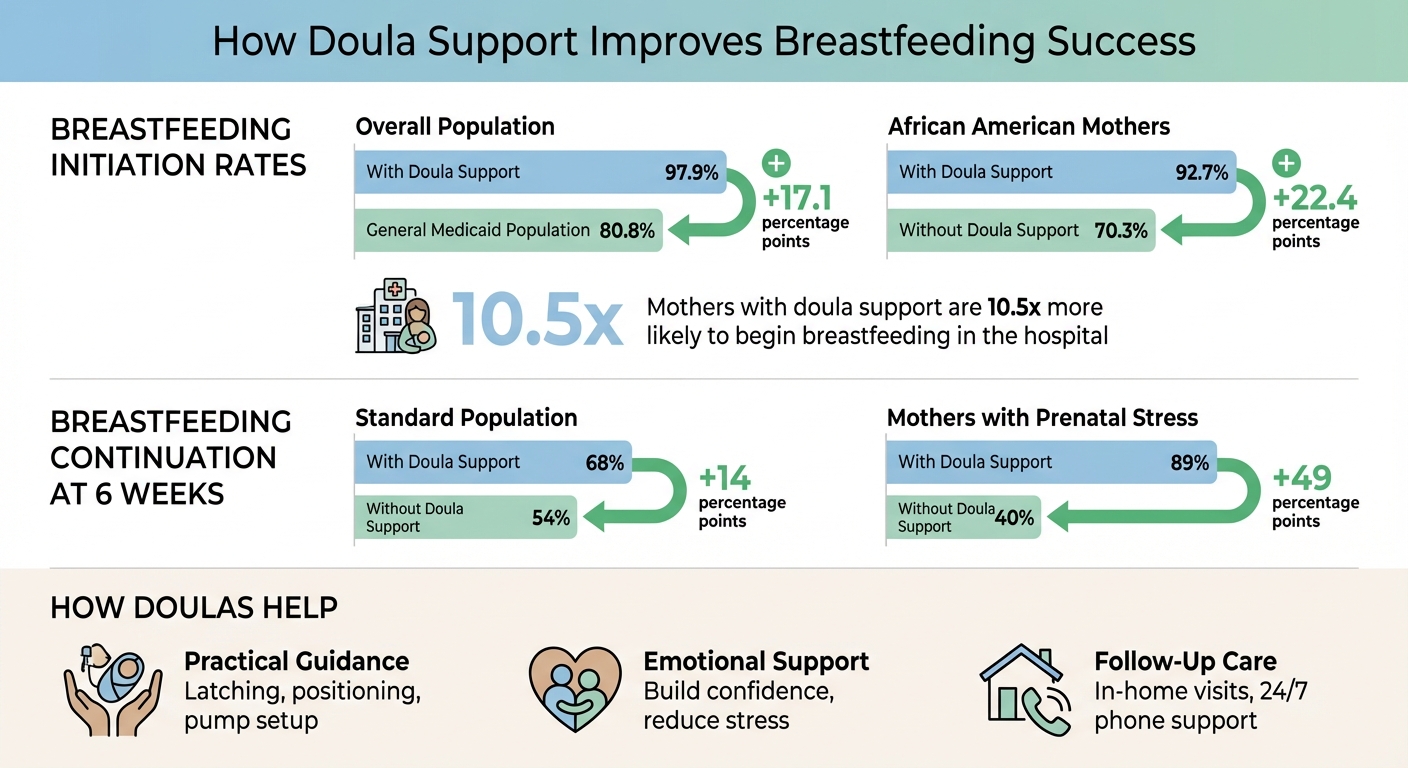
- 97.9% of mothers with doula support initiated breastfeeding, compared to 80.8% in the general Medicaid population.
- African-American mothers supported by doulas had a 92.7% breastfeeding initiation rate, far higher than the 70.3% average.
- Doula-supported mothers were 10.5 times more likely to begin breastfeeding in the hospital.
- At 6 weeks postpartum, 68% of mothers with doula support were still breastfeeding, compared to 54% without.
How Doulas Help:
- Practical Guidance: Help with latching, positioning, and pump setup.
- Emotional Support: Build confidence, reduce stress, and address concerns.
- Follow-Up Care: In-home visits and 24/7 phone support ensure ongoing assistance.
Doula care bridges the gap in postpartum support, helping mothers navigate breastfeeding challenges and achieve their goals. While more research is needed to explore long-term impacts, the evidence so far highlights the value doulas bring to new families.
Doula Support Impact on Breastfeeding Rates: Key Statistics
Research Findings on Doula Support and Breastfeeding
Studies on Breastfeeding Initiation
Research consistently shows that having a doula significantly increases the likelihood of breastfeeding initiation, even among diverse populations.
For example, a study conducted by BWP Doulas in Central Alabama analyzed 120 women who received doula support between 2013 and 2014. Their outcomes were compared to 3,782 Medicaid-covered births where no doula was involved. The findings were striking: mothers with doula support were 10.5 times more likely to begin breastfeeding in the hospital. Black mothers in particular benefited greatly, with a 7.8 times higher likelihood of initiating breastfeeding compared to those without doula assistance.
Another randomized trial at an urban university hospital focused on 248 low-income African American mothers under the age of 22. Led by researchers Renee C. Edwards and Sydney L. Hans, the study revealed that 64% of mothers in the intervention group started breastfeeding, compared to 50% in the control group. This 14-percentage-point difference emphasizes how having a consistent doula presence throughout pregnancy and the postpartum period can positively shape early feeding decisions.
These findings don’t just stop at initiation. Evidence also shows that doula support plays a key role in extending breastfeeding duration and improving milk production.
Studies on Breastfeeding Duration and Milk Production
Doula support has been linked to longer breastfeeding durations and a quicker onset of milk production, with more mothers producing milk within the first 72 hours postpartum. This early milk production is a crucial factor for sustained breastfeeding success.
One study focusing on low-income first-time mothers found that 68% of those with doula care were still breastfeeding at 6 weeks postpartum, compared to 54% who received standard care. For mothers dealing with prenatal stress, the impact was even more dramatic: 89% of those with doula support continued breastfeeding at 6 weeks, versus just 40% without support. These results highlight how doulas can help mothers navigate challenges that might otherwise lead to early weaning.
Further supporting these findings, the Edwards and Hans trial showed that 29% of young mothers with doula support continued breastfeeding past 6 weeks, compared to only 17% in the control group. The study also found that feeding practices were influenced: only 6% of doula-supported mothers introduced complementary foods like cereal before 6 weeks, compared to 18% of mothers without support. Edwards noted that "the intervention's success may lie in the relationship that develops between doula and mother based on shared cultural background and months of prenatal home visiting".
Broadening the scope, a 2025 meta-analysis conducted by the U.S. Preventive Services Task Force reviewed 90 randomized clinical trials. It found that breastfeeding support interventions, including doulas and peer supporters, increased the likelihood of any breastfeeding at 6 months by 13% and exclusive breastfeeding at 6 months by 46%. The Task Force concluded that "breastfeeding support and education provided during pregnancy and postpartum by professionals and peers is associated with an increase in the proportion of individuals still breastfeeding and exclusively breastfeeding at 6 months of followup".
These studies highlight the critical role doulas play in supporting mothers throughout their breastfeeding journey, from initiation to long-term success.
sbb-itb-9ce2258
Let's Talk: Doulas and Black Maternal Health
How Doulas Help Mothers Breastfeed Successfully
Research highlights how doulas play a vital role in supporting breastfeeding mothers, offering help in three key areas: practical techniques, emotional reassurance, and ongoing personalized care.
Practical Help with Breastfeeding Techniques
Doulas provide hands-on guidance to address the physical challenges of breastfeeding. They help mothers achieve a proper latch and explore various breastfeeding positions to find what feels most comfortable for both mom and baby. For mothers with specific challenges, like inverted, flat, or large nipples, doulas offer tailored advice to navigate these unique situations.
They also assist with breast pump setup, ensuring the flange size is correct for both comfort and effective milk expression. Doulas teach milk storage methods and how to maintain pump parts properly. Preventative care is another focus - they share tips for nipple care and strategies to avoid issues like engorgement or mastitis.
One of the most valuable lessons doulas impart is recognizing early feeding cues in infants. By teaching mothers to identify signs of hunger before the baby becomes upset, doulas help reduce stress and promote smoother feeding sessions. Partners are often included in these lessons, empowering them to actively support the breastfeeding journey and create a nurturing home environment.
While technical guidance is essential, doulas also provide the emotional support new mothers often need.
Emotional Support and Education
The emotional aspect of doula care is equally impactful. During prenatal visits, doulas build trust by listening to mothers' concerns and dispelling common myths about breastfeeding. This early connection helps moms feel more prepared and confident before their baby arrives.
Doulas are especially valuable during stressful situations, such as cesarean births or when anesthesia is involved - moments that might disrupt breastfeeding initiation. Their constant emotional support helps mothers manage anxiety and stay committed to breastfeeding, even when challenges arise.
In addition to emotional reassurance, doulas act as connectors to specialized resources. They link mothers to International Board Certified Lactation Consultants (IBCLCs) for complex feeding concerns, mental health professionals for postpartum depression or anxiety, and local breastfeeding support groups. For mothers in marginalized communities, doulas often provide support that aligns with their cultural and linguistic needs, which has been shown to improve outcomes .
This emotional connection naturally extends into personalized, ongoing care.
Follow-Up Care and Personalized Support
What sets doulas apart is the continuity of care they offer. Unlike hospital-based support, doulas provide in-home follow-up visits, which can range from 1.5 to 12 visits during the first three months postpartum . These visits allow doulas to address challenges in the mother’s home environment, offering practical solutions tailored to her specific needs.
Additionally, doulas often provide 24/7 phone support, ensuring mothers have access to immediate help whenever breastfeeding issues arise. This consistent availability reinforces the technical and emotional guidance provided earlier, helping mothers stay on track with their breastfeeding goals. Doulas also encourage adherence to health recommendations, such as waiting to introduce solid foods until the appropriate age.
For families seeking a more structured approach, platforms like Nestling (https://getnestling.com) connect mothers with vetted postpartum doulas and lactation consultants. These services offer personalized care plans, flexible scheduling, and the kind of continuous support that research shows can make a real difference in breastfeeding success.
Limitations in Current Doula Research
The evidence suggesting that doula care supports breastfeeding is encouraging, but there are notable gaps in the research. These limitations make it challenging to draw firm conclusions and temper the optimism surrounding current findings.
One major issue is selection bias. Most studies allow mothers to decide whether to work with a doula, rather than assigning them randomly. This means the results may be skewed toward mothers who are already highly motivated to breastfeed. While the benefits highlighted in these studies are significant, this bias makes it harder to generalize the findings to a broader population.
Another challenge is the small sample sizes used in many studies. Some research includes only small groups, such as 44 or 120 participants. These limited numbers reduce the reliability of the results. For example, one study faced tracking issues, with just 10.5% of participants providing follow-up data. Such methodological hurdles restrict our ability to fully understand the impact of doula care on breastfeeding outcomes.
While doula support appears to consistently improve breastfeeding initiation, its influence on breastfeeding duration and exclusivity is less clear. For instance, a trial involving young African American mothers found that initiation rates rose to 64% with doula support compared to 50% in the control group. However, by four months postpartum, very few mothers in either group were still breastfeeding. Similarly, a 2017 Cochrane review analyzing doula care across 17 countries found no clear effect on breastfeeding rates, which contrasts with findings from smaller U.S.-based studies.
Other factors complicate the research further, such as variations in doula training related to lactation support and inconsistencies in data collection intervals, which can lead to recall bias. These issues underscore the need for more robust studies. Larger, randomized trials are essential to better understand the long-term effects of doula care on breastfeeding success and to confirm its potential benefits.
Conclusion: Doula Support for Breastfeeding Success
Doulas play a crucial role in bridging the gap in postpartum care, especially when it comes to helping mothers start and maintain breastfeeding. Research highlights that mothers with doula support experience breastfeeding initiation rates as high as 97.9% overall and 92.7% among African American mothers. This is a significant improvement compared to the general Medicaid population, where rates are 80.8% overall and 70.3% for African American mothers.
The support doulas provide goes beyond just practical advice. They help with proper positioning and latch techniques, offer emotional reassurance, and ensure continuous care during the critical transition from hospital to home. For mothers experiencing prenatal stress, having a doula can dramatically improve breastfeeding rates at six weeks - from 40% to 89%.
"Access to culturally-appropriate doula care may facilitate higher rates of breastfeeding initiation... universal breastfeeding initiation is a goal within reach." - Katy Backes Kozhimannil, PhD, MPA
These statistics and expert insights emphasize the importance of consistent postpartum care. Nestling offers families access to carefully vetted postpartum doulas and lactation consultants, providing essential support during those early, often overwhelming weeks at home. Their services include personalized care plans, hands-on breastfeeding guidance, emotional support, and even assistance with light household tasks - ensuring mothers feel supported in every aspect.
While more research is needed to explore the long-term impact on breastfeeding duration, the current evidence is clear: doula support significantly improves early breastfeeding success. For families across the United States, trained doulas provide the expertise and care needed to make breastfeeding a more achievable and positive experience.
FAQs
How can a doula help with breastfeeding challenges?
Postpartum doulas offer practical, one-on-one support to help new moms with breastfeeding. They guide mothers on achieving a proper latch, finding comfortable positions, and tackling common challenges like soreness or milk supply concerns. Their goal is to provide immediate, hands-on help that boosts confidence during this critical time.
When more specialized help is required, doulas can refer moms to certified lactation consultants, ensuring families receive the right level of care and support for their unique situation.
How does doula support improve breastfeeding rates among African American mothers?
Doula support has been shown to make a real difference in breastfeeding outcomes for African American mothers, especially among younger and low-income families. Research shows that mothers who had doula visits were more likely to begin breastfeeding and keep breastfeeding beyond six weeks compared to those without this kind of support. For example, one study focused on African American mothers under the age of 22 found that 64% of those with doula care started breastfeeding, compared to just 50% of those without. The difference was just as clear for longer-term breastfeeding - 29% of mothers with doula support continued past six weeks, compared to only 17% without.
More broadly, studies confirm that doula care plays a key role in increasing breastfeeding rates in underserved communities, including African American mothers. For families seeking this kind of guidance, platforms like Nestling offer access to experienced postpartum doulas and lactation consultants. These professionals provide personalized support to help new parents tackle breastfeeding challenges and build confidence along the way.
Why is more research needed on how doulas impact long-term breastfeeding success?
Research indicates that postpartum doulas can play a role in improving breastfeeding outcomes, particularly when it comes to starting and maintaining exclusive breastfeeding in the early days. However, there’s a gap in understanding how this support affects breastfeeding over the long haul - both in terms of duration and sustained exclusivity. More studies, especially those involving diverse populations and environments, are needed to paint a clearer picture of the extended benefits that doula care might offer.










 Sign up with Google
 Sign up with Facebook