
What to Expect from a Night Nanny in the First 6 Months: Duties, Costs & Peace of Mind

Recovery from childbirth takes time and energy. Thus, caring for your newborn starts feeling instantly testing, especially during the first six months, when it's already hard to maintain a routine.
The first six months with a newborn, while exciting, are utterly challenging for both parents.
This is the main reason why most parents and families hire a night nanny right away and get the proper support during these challenging days.
Understanding the role of a night nanny, why hire a night nanny, and how she helps can guide you to make an informed decision
In this blog, we will take a closer look at what a family can expect from a night nanny during the first six months after childbirth.
What Does a Nanny Do?
A nanny is a professional who is trained to provide support to the family. She helps in taking care of the baby, preparing simple meals, and playing and interacting with the baby.
They also help in maintaining the tidiness of the spaces the baby occupies. A nanny’s primary responsibility is to provide a safe, caring, and organized environment for the growing newborn baby.
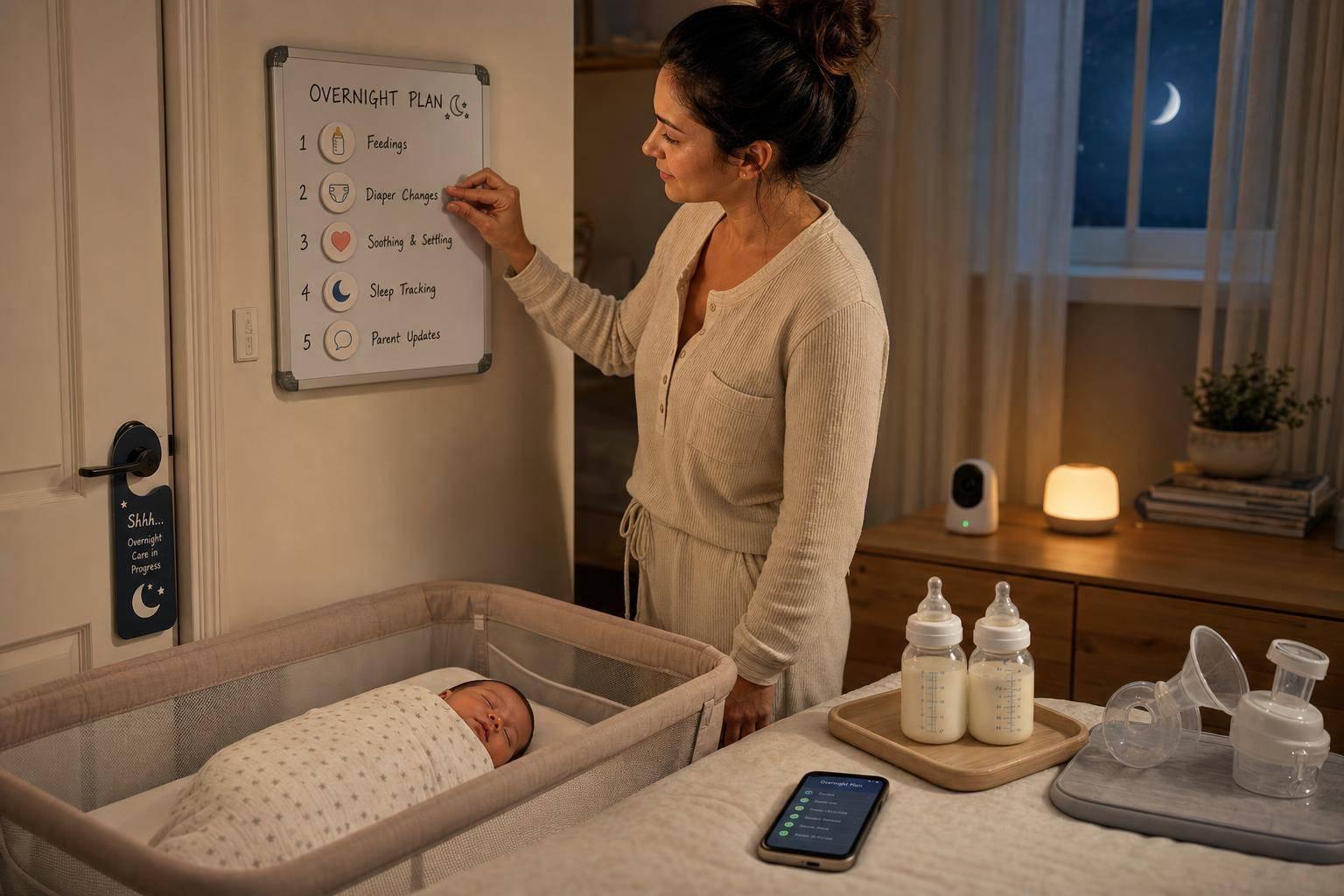
At night, however, the responsibilities change. A night nanny for newborns does overnight care while parents are asleep. Instead of focusing on play or daytime activities, they do the essential work of feeding, burping, changing, soothing, and putting the baby back to sleep.
What is a Night Nanny?
A nighttime nanny is a type of trained caregiver who comes in the evening and stays until the next morning, usually from 9 p.m. to 7 a.m.
Some of her primary duties include:
- Feeding the baby (or bringing the baby to the mother for breastfeeding).
- Burping, soothing the baby back to sleep, and changing the diaper.
- Watch for any signs of illness or discomfort.
Duties of a Night Nanny in the First 6 Months
These duties change as the baby grows. Here is how they look:
- Provides overnight care to ensure the baby’s comfort and safety.
- Feeds, burps, and soothes the baby back to sleep.
- Changes diapers and maintains a clean and hygienic environment.
- Establishes healthy sleep and feeding routines.
- Tracks sleep, feeding, and diaper schedules for consistency.
- Supports gentle sleep training as the baby grows.
- Prepares and sanitizes bottles and baby essentials.
- Keeps the nursery tidy and organized.
- Monitors developmental changes and reports concerns to parents.
- Offers emotional support and guidance to new parents.
- Helps parents get adequate rest and recover during the postpartum period.
How Much Does a Night Nanny Cost?
One of the most common questions parents have is 'How much does a night nanny charge?'
- Night nanny hourly rate: On average, you can expect $25–$45 per hour, depending on location and experience.
- Full night nanny packages: Many families hire a nanny for a flat overnight rate, usually ranging from $200–$350 per night.
- Factors that affect cost:
- Region (urban centers are more expensive).
- Nanny’s certifications or specialized newborn training.
- Whether you have a singleton, twins, or multiples.
Benefits of Hiring a Night Nanny
Sleep is the main reason that instantly comes to mind for so many people when you ask what the primary advantage of having a night nanny is. But sleep is only one of the many reasons:
- Emotional and physical rest: Parents recover better when they sleep adequately.
- Healthier routines: Babies often adapt more quickly to consistent sleep patterns.
- Bonding during the day: Well-rested parents are more present and engaged.
- Support for working parents: Those returning to work or without nearby family find night nannies invaluable.
The option to hire nighttime nannies is not a privilege but a necessity for many families during the challenging first few months.
How to Choose the Right Night Nanny?
Many families prefer nannies who have experience caring for newborns, possess first aid skills, or are certified sleep trainers. It is advisable to obtain feedback about the nanny and discuss details such as nursing and rest schedules before finalizing the agreement.
A few families even undertake a limited number of trial nights before they make a longer contract. This gives both parties a sense of assurance.
Alternatives to a Night Nanny
Of course, not every family will decide to hire a night nanny. Some parents have a daytime nanny extend their hours to cover a few hours of the night.
Some families also consider hiring a postpartum doula for a better recovery after childbirth, and in some cases, a night nurse for medical support, along with overnight care for the newborn.
Conclusion
The arrival of your baby adds hugely to the dynamics of your family’s life. In the first six months, like every parent, you will experience intense emotions – beautiful to some, overwhelming and challenging to others.
Adding a night nanny to your support team can alleviate a fair amount of this anxiety. With the night nanny as your support, you won’t have to fret over feeding, soothing, helping the baby to establish sleep patterns, or keeping track of the baby’s overall health. You will get practical and emotional support with a trained professional by your side.
Frequently Asked Questions
1. What is a night nanny’s role when it comes to newborn care?
The night nanny is responsible for feeding and burping the baby, diaper changes, soothing the baby to sleep, and keeping a watchful eye over the baby throughout the night.
2. What is the rate of payment for a night nanny?
The payment for a night nanny is usually in the range of $25−$45 hourly, or $200/$250−$350 for a full night. Payment varies by experience, location, and if you have a singleton or twins, or multiples.
3. What is the difference between a full-night nanny and a part-time nanny?
The difference is that a full night nanny keeps the entire night shift, while part-time nannies are free to cover a few hours and leave.
4. Do nannies assist with sleep training during the night shift?
A lot do, especially around the ages of 4 to 6 months, by assisting with gentle sleep training.
5. When is the ideal time to hire a night nanny? Is it right after birth or at a later time?
You can hire right away to help with postpartum recovery, or wait a few weeks after the routine of the newborn is established.









 Sign up with Google
 Sign up with Facebook